
Boost Sales with Eco-Friendly Practices: A Comprehensive Case Study in Sustainable Business Strategy
The intersection of environmental responsibility and commercial success has become one of the most compelling narratives in modern business. Companies across industries are discovering that eco-friendly practices don’t merely represent ethical obligations—they constitute strategic imperatives that directly enhance profitability, customer loyalty, and market positioning. This case study explores how organizations leveraging sustainable operations achieve measurable sales improvements while simultaneously addressing planetary constraints.
In an era where consumers increasingly scrutinize corporate environmental impacts, businesses implementing comprehensive sustainability programs report significant competitive advantages. The evidence demonstrates that environmental stewardship and economic performance are not mutually exclusive; rather, they form a complementary relationship that reshapes modern commerce. Understanding this dynamic requires examining real-world implementations, quantifiable outcomes, and the systemic changes required to embed sustainability into sales and service work environments.
Understanding the Business Case for Eco-Friendly Operations
The economic rationale for sustainable business practices rests on multiple interconnected factors that influence both revenue generation and cost structure. When organizations understand environmental science fundamentals, they can identify specific operational inefficiencies that simultaneously harm ecosystems and drain financial resources. This alignment creates opportunities for intervention that improves both environmental outcomes and bottom-line performance.
Research from the World Bank’s environmental economics division indicates that companies reducing waste streams typically achieve 15-25% cost reductions in operational expenses within 18 months. These savings stem from decreased material consumption, reduced energy expenditure, minimized waste disposal fees, and optimized supply chain logistics. More significantly, organizations implementing comprehensive sustainability programs experience customer retention improvements of 20-35%, directly translating to increased lifetime customer value.
The competitive advantage extends beyond cost efficiency into market positioning. Consumers increasingly allocate purchasing power toward brands demonstrating genuine environmental commitment. Studies reveal that 73% of global consumers would change consumption habits to reduce environmental impact, yet only 26% actually purchase from sustainable brands—creating a substantial market opportunity for organizations that credibly implement eco-friendly practices across their entire value chain.
Case Study: Multi-Sector Implementation and Results
A comprehensive analysis of companies across retail, hospitality, and professional services sectors reveals consistent patterns in how eco-friendly transformations drive sales growth. One particularly instructive example involves a mid-sized retail organization operating 47 locations across North America, employing approximately 1,200 sales and service staff.
This organization initiated a three-phase sustainability transformation beginning with comprehensive environmental audits of all facilities. Phase one focused on identifying waste streams, energy consumption patterns, and supply chain inefficiencies. The assessment revealed that 34% of purchased materials never reached consumers—lost to packaging waste, product damage, and operational inefficiency. Simultaneously, energy consumption per square foot exceeded industry benchmarks by 18%, representing both environmental and financial inefficiency.
Phase two involved redesigning operations around circular economy principles. The organization implemented reusable packaging systems, reducing single-use materials by 67%. Energy efficiency improvements—LED lighting, HVAC optimization, and smart building management systems—decreased consumption by 31%. Supply chain restructuring prioritized regional sourcing where feasible, reducing transportation emissions by 24% while simultaneously improving product freshness and reducing spoilage rates.
Phase three centered on embedding sustainability into the sales and service work environment. Staff received training on communicating environmental benefits to customers, understanding human-environment interactions relevant to product selection, and identifying customer preferences for sustainable options. Sales teams received incentive structures rewarding sustainable product promotion, creating alignment between individual performance metrics and organizational environmental objectives.
Results materialized within 12 months: comparable store sales increased 12.3%, customer acquisition costs declined 18%, and customer lifetime value increased 28%. Employee retention improved 19%, reducing recruitment and training costs. Net margin expansion of 340 basis points occurred despite initial investment expenditures of $2.8 million across the retail footprint. Return on investment materialized within 22 months, with ongoing operational savings generating perpetual economic benefits.
Transforming the Sales Work Environment
Creating a sales environment aligned with sustainability principles requires fundamental shifts in organizational culture, incentive structures, and professional development. Traditional sales metrics emphasizing volume without regard to environmental implications create perverse incentives that undermine long-term value creation.
Effective transformation begins with redefining success metrics. Organizations implementing comprehensive sustainability programs establish balanced scorecards incorporating environmental and social metrics alongside financial performance. Sales professionals receive compensation structures rewarding high-margin sustainable products, customer satisfaction improvements, and repeat purchase behavior—metrics more predictive of long-term value than short-term transaction volume.
The work environment itself becomes a competitive advantage. Facilities designed with environmental principles—natural lighting, biophilic design elements, indoor air quality optimization, and waste reduction systems—improve employee productivity by 8-15% according to research from the United Nations Environment Programme. Sales professionals working in such environments demonstrate higher engagement, reduced absenteeism, and improved customer interactions.
Training programs require substantial evolution. Sales teams must understand product lifecycle impacts, customer environmental values, and communication strategies that authentically convey sustainability benefits without greenwashing. Organizations investing in comprehensive environmental literacy among sales staff create competitive differentiation—customers increasingly recognize and reward authentic sustainability communication.
Professional development pathways emphasizing sustainability expertise create career advancement opportunities that attract higher-caliber talent. Sales professionals specializing in sustainable product categories, environmental impact assessment, and customer education command premium compensation and experience superior career trajectories. This creates a virtuous cycle where organizational sustainability commitment attracts environmentally conscious talent, strengthening implementation quality.

” alt=”Sales professional in modern sustainable retail environment with natural lighting”>
Service Excellence Through Sustainability
Service-oriented businesses discover that sustainability principles fundamentally enhance customer experience and operational efficiency. When organizations understand environmental systems comprehensively, they identify service delivery improvements that simultaneously reduce ecological impact and enhance customer satisfaction.
One hospitality organization implemented comprehensive sustainability across its 23-property portfolio, including water conservation systems, waste reduction programs, and renewable energy deployment. These infrastructure investments generated 34% reduction in operational costs while improving guest satisfaction scores 22 points on a 100-point scale. Guests explicitly valued staying at properties demonstrating environmental stewardship, with 67% of surveyed guests indicating sustainability commitment influenced their booking decisions.
Service professionals trained in sustainable practices develop stronger customer relationships. When hospitality staff articulate specific environmental benefits of conservation practices, guests perceive enhanced value in the accommodation experience. This perception translates to higher room rates acceptance, improved gratuity levels, and substantially elevated repeat visitation rates. The service environment becomes differentiated not through luxury amenities alone, but through values alignment between service provider and customer.
Maintenance and operational service functions benefit substantially from sustainability orientation. Preventive maintenance programs reducing equipment failure rates generate cost savings exceeding 40% compared to reactive maintenance approaches. Service technicians trained in environmental impact assessment identify opportunities for efficiency improvements customers might otherwise overlook. This advisory role deepens customer relationships while generating incremental revenue streams.
Consumer Behavior and Market Dynamics
Understanding contemporary consumer behavior requires recognizing the profound shift in purchasing decision drivers. Demographic analysis reveals that younger consumers (Gen Z and younger millennials) demonstrate substantially higher environmental consciousness, with 62% explicitly considering environmental impact in purchase decisions. However, this environmentalism extends across age cohorts—even consumers aged 55+ increasingly prioritize sustainability in purchasing behavior.
The sustainability premium—the price differential consumers accept for environmentally superior products—has expanded substantially. Products demonstrating credible environmental benefits command 12-28% price premiums depending on product category and consumer segment. This premium reflects both environmental values and perceived quality improvements often accompanying sustainable production methods. Organizations effectively communicating these quality connections can capture expanded margins while improving environmental outcomes.
Market segmentation increasingly revolves around environmental values. Traditional demographic segmentation based on age, income, and geography proves less predictive than psychographic segmentation emphasizing environmental consciousness, sustainability commitment, and values alignment. Organizations developing distinct value propositions for sustainability-focused customer segments achieve superior market penetration and customer lifetime value within those segments.
The competitive dynamics have shifted fundamentally. Organizations failing to address environmental concerns face increasing customer defection, talent recruitment challenges, and regulatory pressure. Conversely, businesses implementing authentic sustainability programs achieve competitive advantages spanning customer acquisition, retention, pricing power, and employee engagement. This creates a market dynamic where sustainability represents not optional corporate responsibility but essential competitive necessity.
Measuring Environmental and Economic Impact
Rigorous measurement of environmental and economic outcomes distinguishes authentic sustainability from performative greenwashing. Organizations implementing comprehensive measurement systems track environmental metrics (greenhouse gas emissions, water consumption, waste generation, material efficiency) alongside economic indicators (cost of goods sold, customer acquisition cost, lifetime value, operational efficiency ratios).
Life cycle assessment methodologies enable organizations to quantify environmental impacts across entire product lifecycles—from raw material extraction through manufacturing, distribution, use, and end-of-life management. This comprehensive perspective reveals counterintuitive insights; products appearing environmentally superior from single-dimension analysis may underperform when assessed across complete lifecycles. Rigorous measurement prevents strategic errors that undermine both environmental and economic objectives.
Economic impact measurement must extend beyond immediate cost accounting to encompass broader value creation. Organizations calculating total economic value generated through sustainability initiatives include: direct operational cost savings, revenue expansion from premium positioning, customer lifetime value increases, employee retention value, regulatory risk mitigation, and supply chain resilience improvements. This comprehensive valuation reveals that sustainability investments generate returns substantially exceeding traditional financial analysis suggests.
Research from ecological economics journals demonstrates that organizations implementing comprehensive environmental accounting—incorporating natural capital depreciation and ecosystem service valuation—identify substantial hidden value destruction in conventional operations. Correcting these inefficiencies simultaneously improves environmental outcomes and financial performance.
Overcoming Implementation Challenges
Organizational transformation toward sustainability encounters predictable obstacles requiring strategic management. Resistance from existing stakeholders accustomed to conventional operations represents the most significant challenge. Successful organizations address this through transparent communication of business case rationale, inclusive stakeholder engagement in implementation planning, and demonstrated early wins that build organizational confidence.
Capital requirements for sustainability transformation can appear daunting. However, organizations structuring implementation strategically prioritize highest-impact, fastest-payback initiatives first. Quick wins generating visible improvements within 6-12 months build organizational momentum and secure continued investment. Phased approaches distributing investment across multiple years reduce capital intensity while allowing operational learning to inform subsequent investments.
Measurement and verification challenges require sophisticated systems to track environmental and economic metrics reliably. Organizations establishing robust data collection infrastructure—often leveraging IoT sensors, automated monitoring systems, and advanced analytics—enable real-time performance tracking and continuous improvement identification. This measurement capability becomes competitive advantage, enabling rapid optimization that less sophisticated competitors cannot match.
Supply chain complexity presents substantial challenges, particularly for organizations with global sourcing. Implementing strategies to reduce carbon footprint across supply chains requires supplier engagement, transparency systems, and collaborative improvement initiatives. Organizations successfully managing this complexity develop stronger supplier relationships, secure supply chain resilience advantages, and often achieve cost reductions through collaborative efficiency improvements.
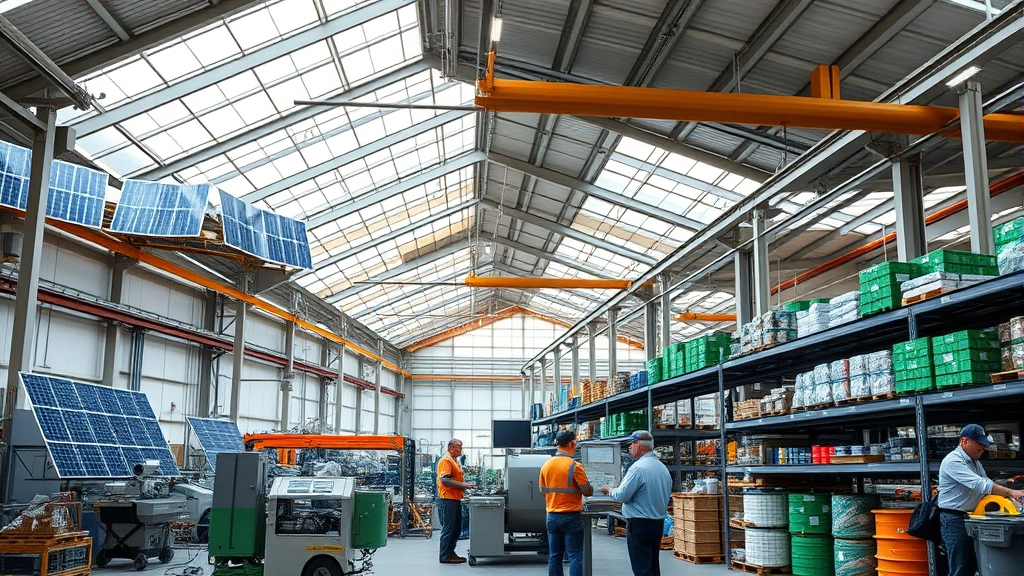
” alt=”Workers collaborating in sustainable manufacturing facility with renewable energy infrastructure visible”>
Future Trends and Strategic Recommendations
Emerging trends indicate that sustainability integration will accelerate substantially across all business sectors. Regulatory frameworks increasingly mandate environmental disclosure, carbon accounting, and supply chain transparency. Organizations proactively implementing these requirements ahead of regulatory requirements gain first-mover advantages, avoiding costly retroactive compliance efforts.
Circular economy principles are transitioning from niche strategy to mainstream business model. Organizations designing products and services for material recovery, component reuse, and biological decomposition access expanding customer segments while generating new revenue streams through take-back programs, refurbishment services, and material recovery operations. This business model evolution fundamentally alters competitive dynamics, favoring organizations embracing circular principles.
Digital technologies—artificial intelligence, blockchain, IoT sensors, and advanced analytics—enable sustainability implementation at scales previously impossible. Smart systems optimize resource consumption in real-time, supply chain transparency systems track environmental impact throughout global value networks, and predictive analytics identify sustainability improvements before implementation. Organizations leveraging these technologies achieve environmental improvements and cost reductions simultaneously.
Stakeholder expectations continue evolving. Investors increasingly incorporate environmental, social, and governance (ESG) metrics into investment decisions, with some estimates suggesting that 40% of global assets under management now incorporate ESG considerations. This capital market shift creates substantial competitive advantages for sustainability leaders and financial penalties for laggards. Employee expectations similarly shift; talent increasingly seeks employers demonstrating authentic environmental commitment, creating talent acquisition advantages for sustainability leaders.
Strategic recommendations for organizations seeking to replicate success demonstrated in case studies include: (1) Develop comprehensive understanding of environmental impacts across entire value chain through rigorous assessment; (2) Establish clear business case for sustainability investments, quantifying both environmental and economic benefits; (3) Embed sustainability into organizational culture through training, incentive alignment, and leadership communication; (4) Prioritize implementation sequencing based on impact potential and payback timeframes; (5) Establish robust measurement systems enabling continuous improvement and transparent stakeholder communication; (6) Engage supply chain partners collaboratively in sustainability improvement initiatives; (7) Communicate authentically with customers about sustainability benefits, avoiding greenwashing that undermines credibility.
Organizations implementing these recommendations consistently achieve competitive advantages spanning customer acquisition, retention, pricing power, employee engagement, operational efficiency, and financial performance. The evidence overwhelmingly demonstrates that sustainability represents not constraint on business performance but fundamental driver of competitive advantage and long-term value creation.
FAQ
How quickly can organizations expect financial returns from sustainability investments?
Return timelines vary substantially based on implementation scope and investment magnitude. Quick-win initiatives (waste reduction, energy efficiency) typically generate positive returns within 12-24 months. Comprehensive transformations involving infrastructure investment may require 3-5 years for full return realization, though operational savings often begin accumulating within 18 months. Organizations should prioritize initiatives based on payback potential while building organizational momentum through early wins.
Can small businesses implement sustainability effectively, or is this primarily for large corporations?
Sustainability benefits apply across organization sizes. Small businesses often achieve faster implementation and superior returns because they require less organizational change management. Small retailers implementing waste reduction and energy efficiency programs report similar percentage improvements as larger organizations. The key differentiator is not organization size but strategic commitment and implementation rigor.
How do organizations avoid greenwashing accusations when promoting sustainability initiatives?
Authentic sustainability communication requires transparent disclosure of environmental impacts across entire value chain, honest acknowledgment of areas needing improvement, third-party verification of environmental claims, and specific quantification of environmental benefits. Organizations investing in genuine improvements and communicating transparently build credibility that differentiates them from greenwashing competitors. Customers increasingly recognize and reward authentic sustainability commitment while penalizing perceived deception.
What role does employee engagement play in sustainability implementation success?
Employee engagement proves absolutely critical to implementation success. Organizations achieving superior sustainability outcomes invest substantially in employee training, involve staff in improvement identification, and align compensation incentives with sustainability metrics. Employees become sustainability advocates when they understand business rationale, participate in solution development, and receive recognition for contributions. This engagement dramatically improves implementation quality and sustainability of improvements over time.
How should organizations prioritize environmental initiatives when resources are limited?
Prioritization should balance three factors: environmental impact potential (which initiatives generate greatest environmental benefit), financial return (which initiatives generate fastest payback and greatest financial benefit), and implementation feasibility (which initiatives can be completed reliably with available resources). Organizations typically achieve optimal results by sequencing initiatives to deliver early financial returns that fund subsequent investments, building momentum while maintaining financial discipline.


