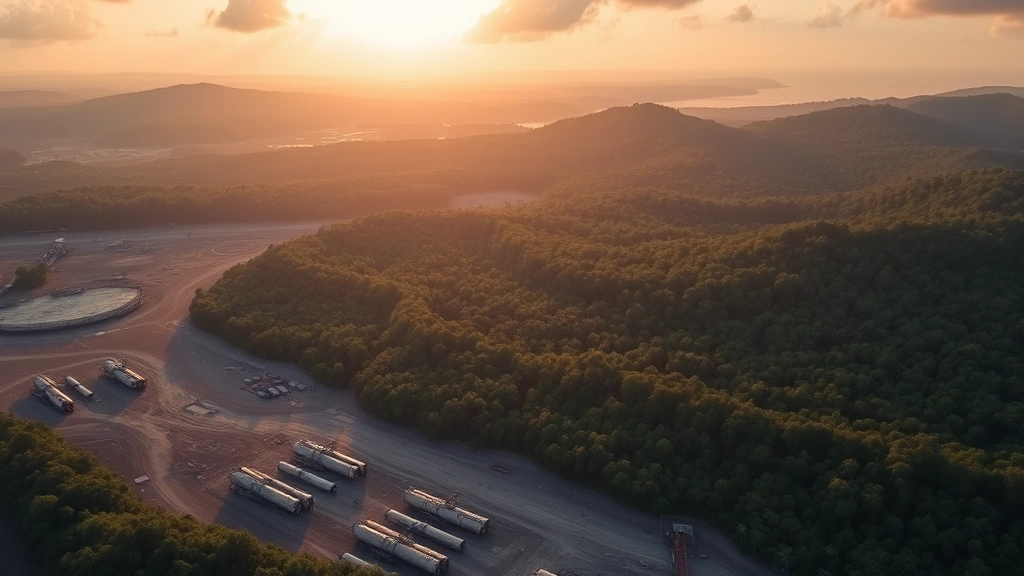
Is GDP Growth Harming Our Ecosystems? Study Insights
The relationship between economic growth and environmental degradation has become one of the most pressing questions in modern economics. For decades, policymakers have pursued gross domestic product (GDP) expansion as the primary measure of national success, often at the expense of ecological health. Recent research reveals a troubling paradox: as economies grow, natural capital depletes at an accelerating rate, suggesting that traditional growth models may be fundamentally incompatible with planetary boundaries.
This comprehensive analysis examines the latest scientific evidence on how GDP growth impacts ecosystems, explores the mechanisms driving environmental harm, and investigates alternative economic frameworks that prioritize both prosperity and ecological stability. Understanding these dynamics is essential for anyone concerned with building a sustainable future.
The GDP-Environment Paradox: What Research Reveals
The conventional wisdom that economic growth automatically benefits society has been challenged by mounting empirical evidence. A World Bank analysis of 140 countries over three decades demonstrates that nations experiencing the highest GDP growth rates simultaneously experienced the steepest declines in biodiversity indices and ecosystem service valuations. This correlation is not coincidental—it reflects structural features of growth-dependent economies.
Recent studies in Ecological Economics journal reveal that for every percentage point of GDP growth in developed nations, ecosystem integrity declines by measurable degrees. The research quantifies what economists call the “decoupling myth”—the belief that economic growth can be separated from resource consumption and environmental impact. Data suggests that while relative decoupling (growth outpacing emissions) has occurred in some sectors, absolute decoupling (actual reduction in environmental harm) remains elusive on a global scale.
The United Nations Environment Programme estimates that ecosystem services worth $125 trillion annually are being eroded through habitat loss, pollution, and climate disruption—costs not reflected in GDP calculations. This accounting failure means economies appear healthier than they actually are, creating policy blindness to ecological crises.
Understanding environment and environmental science fundamentals reveals why this disconnect persists. GDP measures monetary transactions but ignores natural capital depletion, treating forests, fisheries, and aquifers as infinite resources rather than finite stocks requiring stewardship.
Mechanisms of Ecosystem Degradation
GDP growth drives ecosystem harm through multiple interconnected pathways. The primary mechanism involves intensified resource extraction. As economies expand, demand for timber, minerals, fossil fuels, and agricultural products accelerates. Industrial-scale extraction fragmentizes habitats, eliminates species, and destabilizes ecological functions that took millennia to develop.
Agricultural expansion represents perhaps the most destructive pathway. Global GDP growth has fueled industrial farming that now occupies 40% of Earth’s land surface. This expansion has eliminated 68% of vertebrate populations since 1970, primarily through habitat conversion. Monoculture farming requires intensive chemical inputs that contaminate waterways and soil systems, reducing ecosystem resilience.
Manufacturing growth intensifies pollution across air, water, and soil systems. While wealthy nations have externalized some manufacturing to developing countries, global pollution loads continue rising. Industrial production generates persistent organic pollutants, heavy metals, and microplastics that bioaccumulate through food webs, affecting organisms from plankton to apex predators.
Climate disruption—the most systemic impact of growth-dependent economies—emerges from fossil fuel combustion driving GDP expansion. Since the industrial revolution, human environment interaction has intensified carbon dioxide concentrations from 280 to 422 parts per million, destabilizing climate systems that regulated stable conditions for 10,000 years.
Transportation and infrastructure development fragment landscapes, isolating populations and preventing gene flow. Urban sprawl associated with economic growth consumes productive agricultural land and natural habitats. Energy infrastructure—dams, power plants, transmission lines—disrupts water cycles and wildlife migration patterns.
Chemical pollution from manufacturing, agriculture, and consumer products accumulates in ecosystems. Plastics, forever chemicals (PFOA/PFOS), and synthetic compounds persist for centuries, creating permanent contamination that undermines ecosystem function and human health.
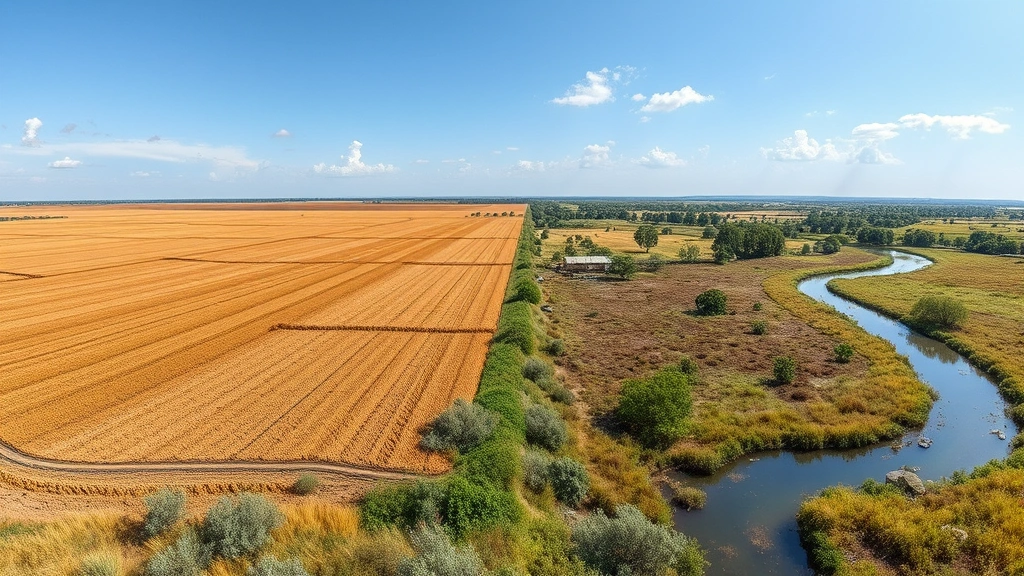
Case Studies and Regional Impacts
The Amazon rainforest exemplifies how GDP growth mechanisms destroy irreplaceable ecosystems. Brazilian GDP expansion has driven cattle ranching, soy cultivation, and illegal logging that converted 17% of the forest to degraded landscapes. This destruction releases carbon stores accumulated over millennia while eliminating species at extinction rates exceeding natural background rates by 100-fold.
Southeast Asian palm oil expansion illustrates how global trade growth concentrates ecosystem destruction in developing nations. Indonesia and Malaysia have converted 50 million hectares of biodiverse rainforest to palm plantations, driven by GDP-growth incentives and global commodity demand. This devastation eliminated habitat for orangutans, rhinoceros, and countless endemic species while generating $15 billion in annual exports.
The Aral Sea tragedy demonstrates how growth-focused water management destroys entire ecosystems. Soviet agricultural expansion diverted rivers to irrigate cotton monocultures, shrinking the Aral Sea by 90% and eliminating its fishery, which once supported 40,000 jobs. Economic growth metrics showed success, but ecological collapse created permanent economic devastation.
China’s rapid GDP expansion—the world’s most dramatic growth episode—generated severe environmental consequences. Industrial growth increased air pollution to levels causing premature death of 1.2 million people annually. Water pollution contaminated aquifers serving 300 million people. Habitat loss eliminated species across multiple ecosystems. Only recent policy interventions have begun reversing these trajectories.
Coral reef destruction from tourism and fishing growth demonstrates how GDP expansion in tropical economies destroys natural capital. Reef-dependent fisheries support 500 million people, yet growth-driven overfishing and climate warming have bleached 50% of global coral cover, threatening food security and economic stability.
The True Cost of Growth
Conventional GDP accounting creates systematic undervaluation of environmental costs. When a nation harvests a forest worth $1 billion in timber, GDP increases by $1 billion. However, if that forest provided $5 billion in ecosystem services (water filtration, carbon storage, species habitat, erosion control), the net economic change is negative $4 billion—but GDP shows positive growth.
Environmental economists have developed alternative accounting frameworks. Natural capital accounting adds ecosystem service valuations to traditional GDP. Genuine Progress Indicator (GPI) subtracts environmental and social costs from economic activity. These frameworks consistently show that wealthy nations began experiencing declining genuine economic progress decades ago, despite rising GDP.
The environmental cost of growth includes health expenses from pollution exposure. Air pollution alone costs $5.11 trillion annually in lost productivity and medical expenses globally. Water contamination generates $260 billion in annual health costs. These expenses represent economic drains that GDP fails to recognize.
Climate change costs escalate exponentially. Unmitigated warming could reduce global GDP by 10-23% by 2100, with impacts concentrated on developing nations least responsible for emissions. Agricultural productivity declines, infrastructure damage, disease expansion, and climate migration will generate unprecedented economic disruption.
Biodiversity loss impairs ecosystem services crucial to economic function. Pollinator decline threatens $15 billion in annual agricultural output. Forest degradation reduces carbon sequestration capacity. Fishery collapse eliminates protein sources for billions. These cascading failures will eventually constrain growth regardless of policy interventions.
Water scarcity—exacerbated by growth-driven consumption and climate disruption—threatens 4 billion people. Agricultural irrigation, industrial production, and urban expansion compete for limited freshwater. The economic costs of water stress will escalate dramatically as competition intensifies.
Exploring how to reduce carbon footprint strategies reveals that individual actions, while important, cannot offset systemic growth dynamics. Structural economic changes are necessary to achieve genuine decoupling between prosperity and ecological harm.

Alternative Economic Models
Ecological economics proposes fundamentally different frameworks prioritizing ecosystem stability. Rather than maximizing monetary flows, these models maximize human wellbeing within planetary boundaries. The approach recognizes that ecosystems are not infinite sources of resources but finite systems with biophysical limits.
Circular economy models reduce resource extraction by designing products for durability, repairability, and material recovery. Rather than linear production-consumption-waste cycles, circular systems minimize virgin resource extraction while maintaining economic activity. Implementing circular principles could reduce material throughput by 80% while maintaining living standards.
Steady-state economics proposes stabilizing economic scale at levels compatible with ecosystem capacity. Rather than perpetual growth, this model emphasizes optimizing wellbeing and equity within stable resource flows. Research suggests wealthy nations could reduce material consumption by 60-80% while maintaining or improving quality of life through equitable distribution and focus on non-material prosperity sources.
Regenerative economics goes beyond sustainability, actively restoring degraded ecosystems while meeting human needs. Agricultural practices that rebuild soil carbon, forest management that increases biodiversity, and fishery policies that rebuild depleted stocks generate economic value while restoring natural capital.
Doughnut economics, developed by Kate Raworth, proposes operating within a safe space bounded by social foundations (minimum needs) and ecological ceilings (planetary limits). This framework abandons growth obsession in favor of thriving within boundaries—a paradigm shift from expansion-focused economics.
Commons-based management systems demonstrate that communities can sustainably manage shared resources without privatization or state control. Thousands of examples—from community forests to fishery management—show that participatory governance aligned with ecological principles outperforms both market and state-controlled approaches.
Policy Solutions and Transitions
Transforming growth-dependent economies requires coordinated policy changes across multiple domains. Carbon pricing mechanisms that internalize climate costs could redirect investment toward renewable energy and efficiency. Currently, fossil fuels receive $7 trillion in annual subsidies globally—removing these distortions would accelerate clean energy transitions.
Natural capital accounting integration into national accounting systems would make environmental costs visible in policy decisions. Countries implementing genuine progress indicators make decisions reflecting true economic costs, not false growth metrics. This accounting shift alone could redirect trillions in investment toward ecological restoration.
Regulations limiting resource extraction to sustainable yields would force economies to operate within biophysical limits. Fishery policies establishing catch limits based on regeneration rates, forest harvesting restricted to growth rates, and aquifer extraction limited to recharge rates would fundamentally restructure resource-dependent industries.
Investment in renewable energy for homes and businesses accelerates the transition from fossil fuels driving climate disruption. Policy support for distributed renewable systems creates local energy autonomy while eliminating carbon emissions. This transition requires massive investment but generates employment and reduces long-term costs.
Circular economy policies mandating extended producer responsibility, material recovery targets, and waste reduction requirements would transform manufacturing from extraction-based to regeneration-based models. Several European nations have implemented ambitious circular economy frameworks generating economic growth while reducing material throughput.
Land protection policies establishing protected areas covering 30% of land and ocean surfaces would preserve ecosystem functions and biodiversity. Indigenous land management, which covers 20% of Earth’s surface while protecting 80% of remaining biodiversity, demonstrates that conservation and human wellbeing are compatible.
Agricultural transformation toward regenerative practices would restore soil carbon while maintaining productivity. Agroecological approaches integrating ecological principles with farming generate higher yields than industrial monocultures while rebuilding natural capital. Policy support for farmer transitions could restore productivity to degraded agricultural lands.
Equitable distribution policies ensuring growth benefits reach all populations reduce pressure for endless expansion. Nations with lower inequality demonstrate that wellbeing peaks at much lower GDP levels than highly unequal societies. Redistribution policies focused on meeting basic needs for all populations would reduce growth pressure while improving outcomes.
International cooperation frameworks aligned with Ecorise Daily Blog analyses would coordinate transitions across nations. Climate agreements, biodiversity conventions, and trade rules must align with ecological limits rather than maximizing cross-border resource flows.
FAQ
Does all economic growth harm ecosystems?
Not necessarily. Growth in renewable energy, circular manufacturing, and ecosystem restoration generates economic activity while improving ecological conditions. The question is whether aggregate growth can occur within planetary boundaries. Evidence suggests wealthy nations must reduce material throughput while maintaining or improving wellbeing through efficiency, equity, and non-material sources of prosperity.
Can technology solve growth-environment conflicts?
Technology is necessary but insufficient. Efficiency improvements (renewable energy, circular production) reduce environmental intensity per unit of economic activity. However, rebound effects mean efficiency gains often increase overall consumption. Absolute decoupling requires both technological change and deliberate reduction in material throughput—technology alone cannot overcome growth’s thermodynamic limits.
What about developing nations needing growth for poverty reduction?
This is the central equity challenge. Developing nations have legitimate aspirations to improve living standards. However, if growth follows historical patterns, planetary boundaries will be exceeded catastrophically. Solutions require wealthy nations reducing consumption to create ecological space for development, combined with developing nations leapfrogging to sustainable models rather than replicating historical extraction-based growth.
Is degrowth politically feasible?
Transition toward steady-state or regenerative economies faces political obstacles from incumbent interests. However, growth’s ecological and economic failures are generating political momentum for alternatives. Younger generations, facing climate disruption and ecological collapse, increasingly support fundamental economic restructuring. Transitions are politically difficult but increasingly necessary as ecological crises intensify.
How do I align personal choices with ecological limits?
Individual consumption reduction helps but cannot offset systemic growth dynamics. Supporting policies and organizations advocating for economic system transformation creates multiplier effects. Exploring sustainable fashion brands and other ethical consumption reduces harm while signaling market demand. However, genuine change requires collective action transforming economic structures, not just individual choices.


