Is GDP Growth Hurting Ecosystems? Study Insights
The relationship between economic growth and environmental degradation has become one of the most pressing questions in contemporary policy debates. As nations pursue higher Gross Domestic Product (GDP) figures, evidence increasingly suggests that traditional growth metrics may be masking severe ecological costs. Recent studies reveal a troubling pattern: economic expansion often correlates directly with resource depletion, biodiversity loss, and climate destabilization. Understanding this disconnect between financial prosperity and planetary health is essential for developing sustainable economic models.
For decades, policymakers have treated GDP growth as a universal indicator of national success. However, ecological economics challenges this assumption, demonstrating that conventional accounting ignores the value of natural capital, ecosystem services, and irreversible environmental damage. This article explores the latest research findings, examines the mechanisms through which growth damages ecosystems, and investigates whether decoupling economic prosperity from environmental harm is genuinely possible.
The GDP-Ecosystem Paradox
GDP measures the total monetary value of goods and services produced within a nation during a specific period. It has become the dominant metric for assessing economic health and national progress. Yet this measure fundamentally misrepresents true wealth when environmental costs go unaccounted. A country can achieve impressive GDP growth while simultaneously depleting finite natural resources, degrading soil quality, polluting waterways, and destroying habitats that provide irreplaceable ecosystem services.
The paradox emerges from accounting frameworks that treat natural capital as infinite and externalize environmental costs. When a nation harvests timber from old-growth forests, that extraction counts as income in GDP calculations. The loss of carbon sequestration capacity, watershed protection, and biodiversity habitat appears nowhere in official statistics. Similarly, industrial pollution that causes respiratory disease increases GDP through healthcare spending—a perverse incentive structure that rewards damage.
Research from ecological economics scholars demonstrates that when environmental degradation is properly valued and subtracted from GDP, many “growing” economies are actually shrinking in terms of genuine wealth. Studies by the World Bank on adjusted net savings accounts reveal that several resource-dependent nations have experienced genuine wealth decline despite rising nominal GDP. This fundamental accounting error has guided policy decisions for generations, resulting in systematic ecological destruction.

Mechanisms of Ecological Damage
Economic growth typically operates through increased production and consumption, both of which require resource extraction and generate waste. The mechanisms linking growth to ecosystem harm operate across multiple pathways:
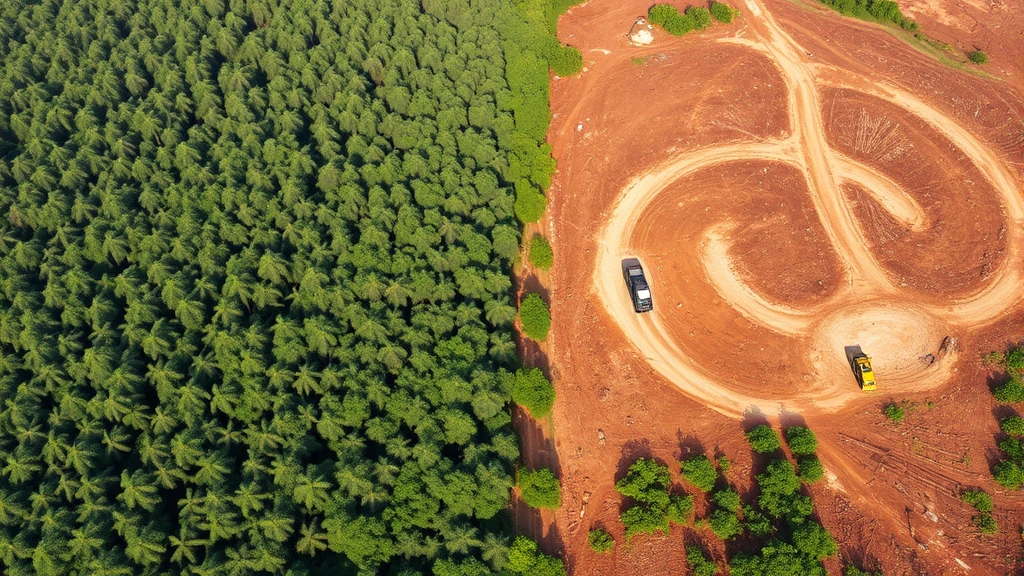
- Resource Extraction: Expansion of mining, logging, and fishing industries to supply growing consumption demands directly removes natural capital. Tropical deforestation accelerates as agricultural production expands to meet rising food consumption in wealthy nations.
- Agricultural Intensification: Higher GDP growth correlates with industrial agricultural expansion, which requires chemical fertilizers and pesticides that contaminate waterways, degrade soil, and harm non-target species essential for pollination and pest control.
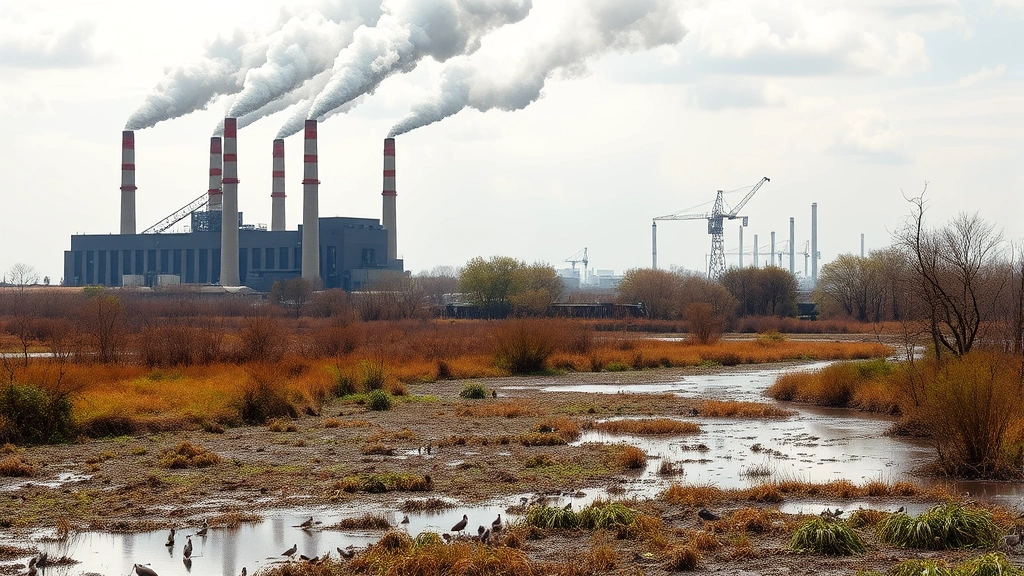
- Energy Consumption: GDP growth typically increases energy demand. Despite renewable energy expansion, fossil fuel consumption continues rising globally, driving greenhouse gas emissions and climate disruption.
- Waste Generation: Increased production creates corresponding waste streams. Landfills expand, plastic pollution accumulates in oceans, and electronic waste contaminates soil and groundwater with toxic compounds.
- Infrastructure Development: Roads, dams, ports, and industrial facilities fragment habitats, alter hydrological cycles, and eliminate ecosystems entirely to accommodate economic activities.
Understanding human environment interaction at scale reveals how individual economic decisions aggregate into systemic ecological damage. When billions of consumers pursue higher consumption levels, ecosystem resilience thresholds become compromised. Tipping points in climate systems, ocean acidification, and species extinction accelerate.
Recent Research Findings
Contemporary studies provide increasingly robust evidence of GDP growth’s ecological costs. A comprehensive analysis published in Ecological Economics examined 150 nations over 25 years and found that economic growth in high-income countries consistently correlated with increased material throughput and resource consumption. The research revealed that efficiency improvements, while real, have been insufficient to offset consumption increases—a phenomenon known as the rebound effect.
The United Nations Environment Programme (UNEP) released findings indicating that global resource extraction has tripled since 1970, paralleling GDP expansion. Simultaneously, wildlife populations have declined by an average of 69% across measured species. The correlation is not coincidental but causal: growth-driven resource extraction directly drives biodiversity loss.
Studies examining carbon emissions and GDP growth demonstrate coupling that persists despite renewable energy deployment. Global carbon emissions continue rising even as renewable energy capacity expands, because total energy consumption keeps increasing. Absolute decoupling of emissions from growth remains elusive at the global scale, despite isolated successes in specific wealthy nations and sectors.
Research on ecosystem services valuation reveals the true economic cost of environmental degradation. When pollination services, water purification, carbon sequestration, and flood protection provided by natural systems are properly valued, environmental destruction represents enormous economic losses—far exceeding any GDP gains from the activities causing damage.
Resource Extraction and Biodiversity Loss
Biodiversity decline accelerates in tandem with economic expansion targeting resource-rich regions. Tropical rainforests, which contain the majority of Earth’s terrestrial species, face accelerating deforestation driven by cattle ranching, soy cultivation, and timber extraction. These activities generate GDP growth in national accounts while destroying irreplaceable genetic resources and ecosystem functions.
Mining expansion represents another direct mechanism linking growth to biodiversity loss. Copper, cobalt, lithium, and rare earth mineral extraction required for renewable energy technologies and electronics create enormous ecological footprints. Open-pit mines destroy entire landscapes, contaminate groundwater with sulfuric acid and heavy metals, and generate toxic tailings that persist for centuries. Indigenous communities and wildlife species dependent on intact ecosystems bear the costs while economic benefits concentrate among distant shareholders.
Fisheries provide a stark example of growth-driven resource depletion. Industrial fishing fleets, subsidized by wealthy nations to boost GDP, have depleted fish stocks globally. Approximately 35% of global fish stocks are now overfished, yet economic accounting treats this as sustainable income rather than capital depletion. When fish populations collapse, fishing communities lose livelihoods and food security, but GDP figures show growth from fishing technology and processing industries until the resource becomes commercially extinct.
The relationship between natural environment research council findings and policy implementation reveals persistent gaps. Research institutions document biodiversity loss with precision, yet economic policies continue incentivizing the activities driving extinction. This disconnect reflects institutional capture by growth-dependent industries and inadequate incorporation of ecological science into economic decision-making.
Climate Emissions and Growth Coupling
Perhaps the most critical mechanism linking GDP growth to ecosystem damage involves climate disruption. Global carbon emissions have increased approximately 50% since 1990, correlating directly with GDP expansion in developing nations and persisting in wealthy nations despite efficiency improvements. The fundamental physics of energy systems explains this coupling: economic production requires energy, and energy production at current technological mixes generates greenhouse gases.
Even renewable energy expansion has failed to achieve absolute emissions decoupling at the global scale. Renewable capacity additions have been substantial, yet total fossil fuel consumption continues increasing because global energy demand keeps rising faster than renewable deployment rates. This pattern reflects growth’s insatiable demand for increasing energy throughput.
Climate science indicates that continued GDP growth along current trajectories makes achieving climate stability impossible. The IPCC carbon budgets compatible with limiting warming to 1.5°C require global emissions reductions of approximately 50% by 2030. Yet GDP projections anticipate continued growth, implying consumption increases incompatible with emissions reductions of required magnitude. This mathematical reality explains why climate targets and growth targets have become fundamentally contradictory.
The feedback loops between climate disruption and ecosystem damage create compounding harm. Rising temperatures stress species adapted to historical climate ranges, droughts reduce agricultural productivity, extreme weather damages infrastructure, and sea-level rise threatens coastal economies. These climate impacts themselves generate economic costs that depress growth, creating a vicious cycle where environmental destruction eventually undermines the economic activity supposedly driving growth.
Decoupling: Myth or Reality?
A central argument in growth-oriented environmental policy proposes that economic growth can be decoupled from environmental impact through efficiency improvements and technological innovation. Wealthy nations point to declining material intensity and improved energy efficiency as evidence that growth need not destroy ecosystems. This narrative deserves critical examination.
Relative decoupling, where environmental impact grows slower than GDP, has been achieved in some wealthy nations and sectors. However, this represents progress on a fundamentally unsustainable trajectory. A nation consuming slightly less resource per unit of GDP while total consumption continues rising has merely slowed ecological destruction, not eliminated it.
Absolute decoupling, where environmental impact declines while GDP continues growing, remains elusive at meaningful scales. Wealthy nations claiming decoupling typically achieve it through offshoring resource-intensive production to developing nations, then importing finished goods. Consumption-based carbon accounting reveals that wealthy nations’ true emissions remain high when supply chain impacts are included. Decoupling is thus partially illusory, representing geographic displacement rather than genuine reduction.
Technological optimism about renewable energy, circular economy practices, and efficiency improvements contains kernels of truth but confronts thermodynamic and practical limits. Renewable energy can replace fossil fuels for electricity generation but cannot easily decarbonize aviation, maritime shipping, and industrial heat. Circular economy approaches reduce but cannot eliminate resource extraction and waste. Efficiency improvements trigger rebound effects where cost savings stimulate additional consumption.
The evidence suggests that genuine, absolute, global decoupling of growth from environmental impact is theoretically possible but practically unlikely given current institutions and incentive structures. Achieving it would require transformative changes to consumption patterns, energy systems, and economic organization far more radical than current policy trajectories contemplate.
Policy Alternatives and Solutions
Recognizing GDP’s inadequacy as a progress metric has spawned alternative frameworks. Bhutan’s Gross National Happiness index, New Zealand’s wellbeing framework, and the UNEP’s natural capital accounting initiatives represent attempts to incorporate environmental and social dimensions into progress measurement. These alternatives acknowledge that genuine prosperity requires ecological stability and social equity, not merely monetary production increases.
Steady-state economics proposes maintaining stable economic throughput within ecological limits while optimizing distribution and wellbeing. This framework abandons perpetual growth targets and instead focuses on equitable allocation of stable resource flows. Implementing steady-state economics would require fundamental restructuring of finance systems, employment models, and consumption expectations in wealthy nations.
Degrowth perspectives argue that wealthy nations must reduce material and energy throughput substantially to achieve climate stability and ecosystem protection. Rather than viewing contraction as failure, degrowth frameworks redefine prosperity around reduced consumption, increased leisure time, strengthened communities, and restored ecosystems. Implementation requires deliberate policy action rather than hoping efficiency and technology solve problems through market mechanisms.
Practical policy solutions must address multiple dimensions simultaneously. Carbon pricing mechanisms that reflect true climate costs can incentivize emissions reductions. Subsidy removal for fossil fuels and resource extraction would eliminate perverse incentives. Investment in renewable energy for homes and public transit reduces both emissions and resource extraction. Circular economy regulations requiring product durability and repairability reduce waste streams. How to reduce carbon footprint at individual levels matters, but systemic change requires policy transformation.
Protecting remaining ecosystems through expanded protected areas, indigenous rights recognition, and habitat restoration can preserve biodiversity and ecosystem services. Research funding for ecological science must increase to understand complex systems and predict tipping points. Education systems need fundamental reorientation toward ecological literacy and systems thinking rather than purely economic optimization.
International cooperation becomes essential because ecological systems operate globally. The World Bank’s sustainable development frameworks and UN Sustainable Development Goals represent initial steps, but implementation lags far behind rhetoric. Wealthy nations must support developing nations’ sustainable development without requiring growth-based development models that replicate ecological destruction.
The transition toward genuinely sustainable economies requires acknowledging that current GDP-growth trajectories are incompatible with ecosystem stability. This recognition need not produce despair but rather clarity about necessary transformations. Societies have successfully implemented major economic restructurings in response to existential threats. The challenge now involves mobilizing political will for transformation before ecological tipping points foreclose options.
FAQ
Does all economic growth harm ecosystems?
Not necessarily. Growth in renewable energy capacity, ecosystem restoration, and sustainable agriculture can occur without net ecological damage. However, the dominant form of global growth—based on fossil fuels, resource extraction, and consumption expansion—systematically damages ecosystems. The question is whether sustainable growth can scale sufficiently to replace destructive growth, which remains uncertain.
Can technology solve the growth-ecology problem?
Technology contributes valuable solutions but cannot independently solve fundamental thermodynamic constraints. Renewable energy, efficiency improvements, and circular economy practices all help reduce environmental impact per unit of GDP. However, global evidence suggests technology alone cannot achieve absolute decoupling at required scales without also reducing consumption levels.
What about developing nations that need growth for poverty reduction?
This presents genuine tensions. Developing nations require resources to improve living standards, reduce poverty, and build infrastructure. However, replicating wealthy nations’ resource-intensive development models is ecologically impossible given planetary boundaries. Solutions require wealthy nations reducing consumption to create ecological space for developing nations’ sustainable development, combined with technology transfer and financial support for sustainable pathways.
Is degrowth economically feasible?
Degrowth in wealthy nations is economically feasible but requires substantial institutional restructuring. Shorter work weeks, universal basic services, and job guarantees in sustainable sectors can maintain employment and wellbeing while reducing material throughput. The political barriers are significant but not insurmountable, particularly if framed around quality-of-life improvements rather than deprivation narratives.
How can individuals contribute to ecosystem protection?
Individual actions matter but cannot substitute for systemic change. Reducing consumption, choosing sustainable fashion brands, supporting regenerative agriculture, and advocating for policy change all contribute. However, approximately 70% of global emissions come from just 100 companies, emphasizing that corporate and governmental policy changes are essential alongside individual action.
What are the economic costs of ecosystem collapse?
Ecosystem collapse would impose catastrophic economic costs vastly exceeding any GDP gains from growth driving collapse. Agricultural productivity would decline, water supplies would become unreliable, disease outbreaks would increase, and climate instability would damage infrastructure. Economic analyses suggest ecosystem loss could reduce global GDP by 10-20% by century’s end, yet this understates true costs by excluding non-monetizable losses and human suffering.


