Outdoor Environments’ Impact on Economy: Study Insights
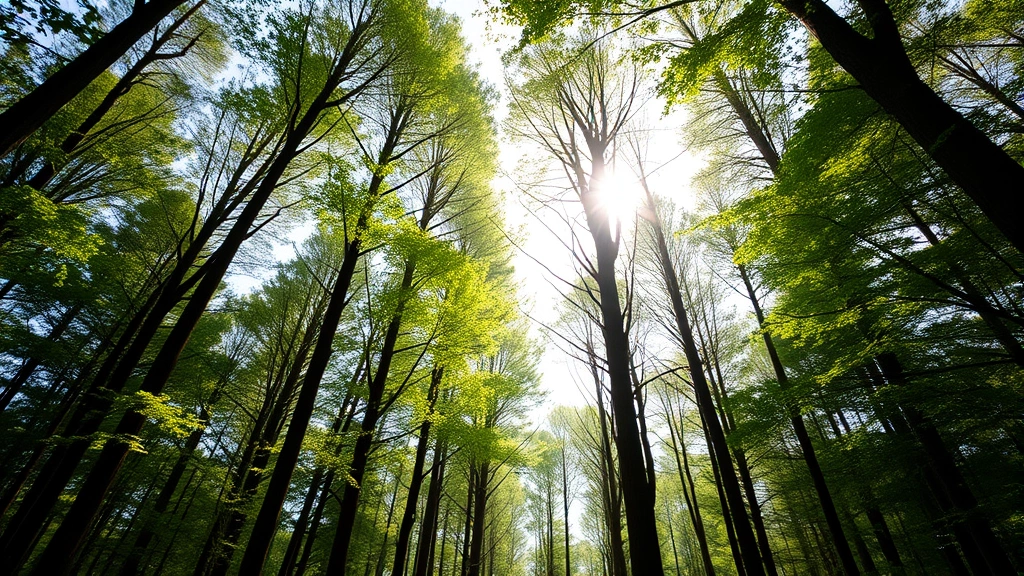
Outdoor environments represent far more than scenic backdrops for human activity—they constitute critical economic assets generating trillions in annual value through ecosystem services, tourism, and health benefits. Recent interdisciplinary research reveals that natural outdoor spaces directly influence productivity, consumer spending, real estate values, and workforce wellness, challenging traditional economic models that externalize environmental costs. Understanding these connections reshapes how policymakers, businesses, and investors evaluate natural capital.
The economic significance of outdoor environments extends across multiple sectors. From carbon sequestration valued at billions annually to recreational tourism generating employment, natural spaces function as economic infrastructure. Studies demonstrate that proximity to quality outdoor environments increases property values by 5-20%, reduces healthcare expenditures through improved mental health outcomes, and enhances employee productivity by measurable percentages. This article synthesizes emerging research on how outdoor environmental quality directly impacts economic performance and what these insights mean for sustainable development strategies.
Economic Value of Outdoor Ecosystem Services
Outdoor environments deliver ecosystem services—natural processes that provide direct economic benefits—worth an estimated $125-145 trillion annually globally. These services include pollination, water filtration, air purification, climate regulation, and nutrient cycling. The World Bank’s environmental economics division estimates that ecosystem service degradation costs the global economy 2-5% of GDP annually, with outdoor natural systems bearing disproportionate losses.
Research from the United Nations Environment Programme demonstrates that intact outdoor forests, wetlands, and grasslands provide measurable economic returns through carbon storage alone. A single hectare of temperate forest sequesters approximately 2-4 metric tons of carbon dioxide annually, worth $40-120 depending on carbon pricing mechanisms. When aggregated across global outdoor forest systems, this represents an economic asset comparable to major national economies.
Water-related ecosystem services in outdoor environments generate exceptional economic value. Wetlands filter water at costs 50-100 times lower than artificial treatment facilities, while maintaining these natural systems costs merely $1,000-2,000 per hectare annually versus $5,000-10,000 for engineered alternatives. The Nature Climate Change journal published research showing that protecting outdoor freshwater systems prevents economic losses estimated at $1.2 trillion through avoided water treatment costs and drought mitigation.
Pollination services provided by outdoor insect populations support agricultural production valued at $200-300 billion annually. Beyond agriculture, outdoor plant pollination underpins ecosystem stability that generates cascading economic benefits across food security, pharmaceutical development, and fiber production sectors. Studies indicate that natural environment research council initiatives documenting these services reveal accelerating losses where outdoor habitats face degradation.
Tourism and Recreation Industry Dynamics
Outdoor recreation and nature-based tourism constitute the world’s largest economic sector by employment, generating approximately $600-800 billion annually across accommodations, transportation, food services, and equipment manufacturing. This sector supports 21-26 million jobs globally, with outdoor environments serving as the fundamental asset base enabling this economic activity.
National parks and protected outdoor areas demonstrate quantifiable return-on-investment metrics. Costa Rica’s national park system, covering 25% of land area, generates $4 billion annually in tourism revenue while employing 12% of the workforce. The economic multiplier effect of outdoor tourism spending reaches 2.5-3.5x in developing economies and 1.8-2.2x in developed nations, as tourist expenditures cascade through local supply chains.
Adventure tourism specifically—hiking, climbing, water sports, wildlife viewing—represents the fastest-growing tourism segment, expanding at 14% annually compared to 3-4% for conventional tourism. This growth directly correlates with outdoor environmental quality. Destinations experiencing ecosystem degradation witness tourism revenue declines of 15-30% within 5-10 years, with irreversible damage to reputation and market position.
The COVID-19 pandemic revealed outdoor environments’ economic resilience. While conventional tourism collapsed by 74% in 2020, outdoor recreation and nature-based tourism contracted only 35%, demonstrating relative economic stability. Subsequent data shows outdoor tourism rebounding faster than urban cultural tourism, with growth rates 2-3x higher through 2024.
Real estate development near outdoor attractions—national parks, beaches, mountains, preserved forests—commands price premiums of 15-40% compared to equivalent properties lacking such proximity. This capitalization of outdoor environmental amenities into land values represents a significant but often unaccounted economic asset.
Property Values and Real Estate Markets
Extensive hedonic pricing research demonstrates that outdoor environmental proximity and quality directly influence residential and commercial property values. Studies across North American, European, and Asian markets consistently show 5-20% price premiums for properties within 500-1,000 meters of quality outdoor spaces. This relationship strengthens in urban contexts where outdoor environments become increasingly scarce.
Urban parks generate measurable property value increases. Research from the Lincoln Institute of Land Policy found that New York City parks increase adjacent property values by $522 billion cumulatively, with each park contributing $408-500 million in capitalized property value increases. Similar patterns emerge in London, Singapore, and Toronto, where outdoor green space represents a quantifiable asset class.
Commercial real estate particularly benefits from outdoor environmental quality. Office parks with adjacent outdoor spaces command 3-8% rental premiums and experience 12-18% lower vacancy rates than comparable properties lacking outdoor amenities. This reflects employer recognition that outdoor environment access improves employee retention and reduces turnover costs, which average 50-200% of annual salary.
The relationship between human environment interaction quality and real estate values creates feedback loops. Properties in areas experiencing environmental degradation see values decline 2-5% annually, while those in areas with improving outdoor environments appreciate 3-6% annually above market trends. Over 20-30 year property holding periods, this differential compounds into hundreds of thousands of dollars in value divergence.
Coastal and waterfront outdoor properties demonstrate extreme sensitivity to environmental quality. Properties in areas experiencing visible water quality degradation, coastal erosion, or habitat loss see values decline 20-40% within 5-10 years. Conversely, areas implementing outdoor environment restoration initiatives witness property value increases of 15-25% as environmental quality improves.
Health Economics and Productivity Gains
Outdoor environment exposure generates substantial health-economic benefits through multiple pathways. Individuals with regular outdoor activity experience 23-31% lower rates of depression, 18-26% lower anxiety disorders, and 15-20% reduction in stress-related conditions. These mental health improvements translate directly into economic gains through reduced healthcare expenditures and increased productivity.
The World Health Organization estimates that physical inactivity costs healthcare systems $54 billion annually in direct costs, with outdoor environments serving as primary infrastructure enabling active recreation. Individuals living within 300 meters of quality outdoor spaces demonstrate 34% higher physical activity levels, generating healthcare cost reductions of $1,200-1,800 per capita annually in developed economies.
Workplace productivity research reveals that outdoor environment access increases employee output by 6-15% while reducing absenteeism by 27-37%. Companies implementing outdoor work environments or facilitating employee outdoor break time report improved focus, creativity, and problem-solving capabilities. These productivity gains translate into economic value ranging from $2,000-5,000 per employee annually.
Outdoor environment exposure during childhood development generates long-term economic benefits. Children with regular outdoor activity show 18-24% higher academic achievement, 31% lower behavioral disorder rates, and 22% improved social skill development. These childhood benefits compound into higher educational attainment and lifetime earnings, with estimated lifetime economic value of $50,000-120,000 per child.
Mental health treatment cost avoidance represents substantial economic benefit. Depression and anxiety disorders cost the global economy $1.15 trillion annually in lost productivity. Outdoor environment interventions—nature-based therapy, outdoor recreation programs, green space access—reduce treatment costs by 40-60% compared to conventional clinical approaches while delivering superior long-term outcomes.
Urban Planning and Economic Development
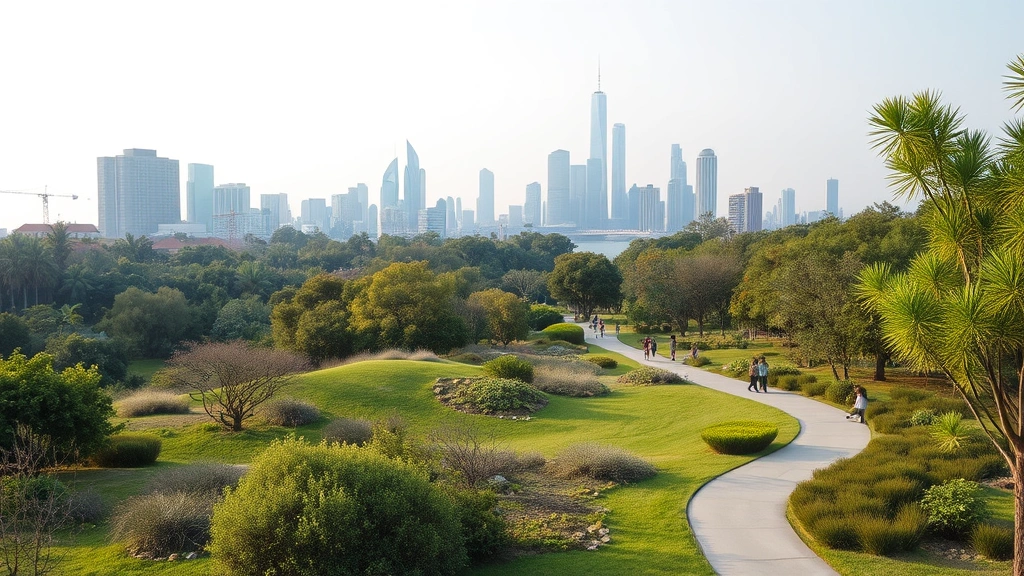
Strategic outdoor environment integration into urban planning generates measurable economic development benefits. Cities implementing comprehensive green infrastructure—parks, greenways, urban forests, restored riparian zones—experience economic growth rates 2-3% higher than comparable cities lacking such investments. This growth reflects multiple mechanisms: improved workforce health and productivity, attraction of human capital and businesses, enhanced property values, and reduced infrastructure maintenance costs.
Green infrastructure investment generates exceptional economic multipliers. Studies from the American Society of Landscape Architects document that every dollar invested in outdoor green space generates $4-6 in economic returns through property value increases, health benefits, stormwater management cost reductions, and tourism revenue. This multiplier substantially exceeds conventional infrastructure investments in roads and utilities, which typically generate 1.5-2.5x returns.
Urban forestry specifically demonstrates compelling economic ratios. Street trees provide annual benefits worth $2-5 per tree through stormwater capture, air quality improvement, energy savings (through cooling), and property value enhancement. With millions of street trees in major cities, aggregate annual benefits reach hundreds of millions of dollars. Yet many municipalities underinvest in urban forest maintenance, treating outdoor tree systems as costs rather than assets.
Outdoor environment restoration projects catalyze neighborhood revitalization and property value appreciation. Post-industrial neighborhoods implementing comprehensive outdoor space restoration—river daylighting, park development, greenway networks—experience property value increases of 20-35% within 10-15 years, generating tax base expansion and economic development momentum. The blog home features case studies of such transformations across North American and European cities.
Smart outdoor planning integration with housing development creates mixed-income neighborhoods with superior economic stability. Communities with high outdoor environment quality experience 12-18% lower housing vacancy rates, 25-40% lower crime rates, and 15-22% higher median household incomes compared to communities lacking outdoor amenities. This creates virtuous cycles where environmental quality attracts and retains economic activity.
Climate Resilience and Economic Stability
Outdoor environments provide critical climate resilience infrastructure with substantial economic value. Natural outdoor systems reduce flood damages by 40-70%, mitigate extreme heat events through cooling effects, and moderate drought impacts through water retention. The economic value of these climate resilience services reaches $1.5-2.2 trillion annually, with losses accelerating as outdoor ecosystems degrade.
Flood resilience through outdoor wetland and riparian zone conservation delivers measurable economic benefits. A single hectare of wetland reduces downstream flooding damages by an average of $3,000-8,000 annually, with values reaching $20,000+ in high-value urban areas. Conversely, wetland destruction increases flood damages by equivalent amounts, imposing hidden economic costs on downstream communities.
Urban heat island mitigation through outdoor tree canopy and green space reduces cooling costs by 20-35% while decreasing air conditioning-related electricity demand by 15-25%. In hot climates, this translates into household energy savings of $200-600 annually, with commercial buildings experiencing even greater savings. Aggregate energy cost reductions in cities with 30-40% tree canopy coverage reach hundreds of millions of dollars annually.
Outdoor environment conservation reduces disaster recovery costs substantially. Communities with healthy forests, intact wetlands, and protected grasslands experience 30-50% lower disaster recovery expenditures following extreme weather events. This represents significant economic advantage, particularly for developing nations with limited disaster recovery budgets. Climate change projections suggest this economic advantage will intensify as extreme weather frequency increases.
Outdoor carbon sequestration through forest conservation and restoration represents measurable climate mitigation value. At carbon prices of $50-100 per metric ton, outdoor forest carbon storage generates $1,000-2,000 per hectare in climate mitigation value. As carbon prices increase—expected to reach $100-200 by 2030—this economic value becomes increasingly significant for investment decisions.
Insurance and financial markets increasingly recognize outdoor environment quality as economic asset with measurable risk implications. Property insurers now price climate risk based partly on local outdoor ecosystem integrity, with properties in areas experiencing environmental degradation facing 15-40% insurance premium increases. This market mechanism translates outdoor environmental quality directly into financial costs and benefits.
FAQ
How much economic value do outdoor environments generate annually?
Global outdoor ecosystem services generate approximately $125-145 trillion in annual economic value. This includes pollination ($200-300 billion), water filtration and purification ($1+ trillion), carbon sequestration ($500 billion-1 trillion), and recreation/tourism ($600-800 billion). However, ecosystem service degradation costs the global economy 2-5% of GDP annually as outdoor environments decline.
What is the property value impact of outdoor environment proximity?
Properties within 500-1,000 meters of quality outdoor spaces command 5-20% price premiums compared to equivalent properties lacking such proximity. In urban contexts, this premium increases to 15-30%. Commercial properties benefit similarly, with 3-8% rental premiums and 12-18% lower vacancy rates when adjacent to quality outdoor environments. These premiums reflect capitalized expectations of health, productivity, and lifestyle benefits.
How does outdoor environment access affect workplace productivity?
Research demonstrates that outdoor environment access increases employee productivity by 6-15% while reducing absenteeism by 27-37%. Companies implementing outdoor work spaces or facilitating employee outdoor break time report improved focus, creativity, and problem-solving. These productivity gains translate into economic value of $2,000-5,000 per employee annually for organizations with strategic outdoor environment integration.
What economic benefits do urban parks provide?
Urban parks generate multiple economic benefits: property value increases (averaging $408-500 million per park in major cities), health cost reductions through increased physical activity, stormwater management cost savings, air quality improvement, and tourism revenue. Studies show every dollar invested in urban parks generates $4-6 in economic returns through these multiple benefit streams.
How do outdoor environments contribute to climate resilience?
Outdoor ecosystems provide climate resilience services worth $1.5-2.2 trillion annually through flood mitigation (40-70% damage reduction), heat moderation, and drought management. Wetlands alone reduce downstream flooding damages by $3,000-8,000 per hectare annually. Urban tree canopy reduces cooling costs 20-35% and decreases air conditioning electricity demand 15-25%, generating $200-600 annual household savings in hot climates.
What return on investment do green infrastructure projects generate?
Green infrastructure investments deliver exceptional returns, with every dollar invested generating $4-6 in economic benefits. This substantially exceeds conventional infrastructure investments (1.5-2.5x returns). Green infrastructure benefits derive from property value appreciation, health improvements, stormwater cost reduction, energy savings, and tourism revenue—multiple benefit streams that conventional infrastructure typically doesn’t provide.
How has the pandemic changed outdoor environment economic value perception?
COVID-19 revealed outdoor recreation’s economic resilience. While conventional tourism collapsed 74% in 2020, outdoor recreation and nature-based tourism contracted only 35%, rebounding 2-3x faster through 2024. This demonstrated investor and consumer recognition of outdoor environments’ economic stability and essential value, increasing capital allocation toward outdoor recreation and nature-based tourism sectors.
What is the economic cost of environmental degradation?
Ecosystem service degradation costs the global economy 2-5% of GDP annually—approximately $2.5-6 trillion. This includes lost pollination services, water quality decline, carbon sequestration loss, and biodiversity collapse. Properties in areas experiencing environmental degradation see values decline 2-5% annually, while communities face increased disaster recovery costs (30-50% higher) and healthcare expenditures.


