When Do Fish Spawn? Marine Biologist Insights on Environmental Timing and Ecosystem Dynamics
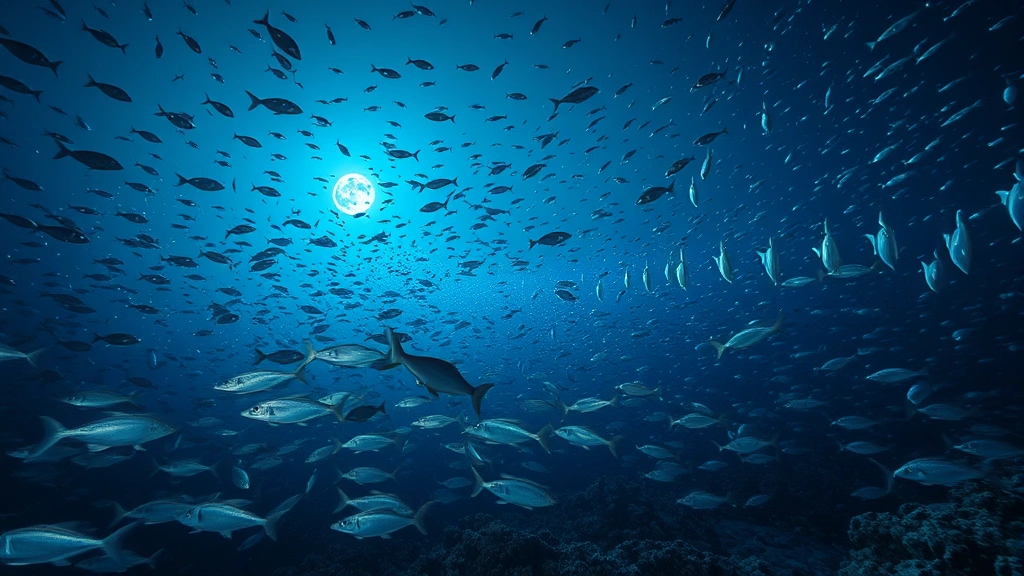
Fish spawning represents one of nature’s most precisely orchestrated biological events, governed by intricate environmental cues that have evolved over millions of years. The timing of fish reproduction directly influences marine ecosystem health, fisheries productivity, and the delicate balance between human economic interests and living environment preservation. Marine biologists have long recognized that spawning cycles are not random occurrences but rather synchronized responses to temperature fluctuations, photoperiod changes, lunar phases, and food availability—factors that create a reproducible seasonal pattern essential for species survival.
Understanding when fish spawn has become increasingly critical as climate change alters ocean conditions and human activities intensify pressure on marine populations. The economic implications are substantial: fisheries worldwide depend on accurate spawning predictions to implement sustainable harvest practices, and misalignment between spawning timing and environmental conditions can devastate both wild populations and aquaculture operations. This comprehensive analysis examines the mechanisms driving fish spawning, the environmental variables that trigger reproductive cycles, and the broader implications for human environment interaction in marine ecosystems.
Fundamental Biology of Fish Spawning
Fish spawning is the reproductive process through which fish release eggs and sperm into the water column, enabling external fertilization. This biological strategy differs fundamentally from mammalian reproduction and reflects millions of years of adaptation to aquatic environments. The reproductive cycle involves complex endocrine signaling, where hormones like gonadotropin-releasing hormone (GnRH), follicle-stimulating hormone (FSH), and luteinizing hormone (LH) orchestrate the maturation of gametes and the behavioral changes necessary for successful reproduction.
The timing of spawning events carries profound ecological significance. When fish spawn simultaneously—a phenomenon called synchronous spawning—it increases the probability of fertilization success in open water environments where eggs and sperm must encounter each other randomly. This synchronized timing also provides predatory fish and other organisms a temporal window of abundance, creating cascading effects throughout the food web. Conversely, when spawning becomes desynchronized due to environmental disruptions, fertilization rates plummet and recruitment failures can occur, devastating fish populations within a single generation.
Marine biologists recognize that fish spawning strategies exist along a spectrum. Some species are iteroparous, spawning multiple times throughout their lifetime across different seasons. Others are semelparous, investing all reproductive effort into a single spawning event before dying—a strategy famously exemplified by Pacific salmon. These reproductive strategies reflect different ecological niches and environmental pressures, with profound implications for population dynamics and fisheries management.

Temperature as Primary Environmental Trigger
Temperature stands as the dominant environmental variable controlling fish spawning across most marine systems. Fish are ectothermic organisms, meaning their body temperature reflects ambient water temperature, directly influencing metabolic rates, enzyme kinetics, and hormone production. Research from the World Bank environmental economics division has documented that even minor temperature deviations of 1-2°C can shift spawning timing by weeks or months, creating critical mismatches with food availability and larval survival conditions.
Different fish species possess distinct thermal thresholds that trigger reproductive behaviors. Cod populations in the North Atlantic initiate spawning when water temperatures drop to approximately 2-4°C, while tropical reef fish may require warming to 28-30°C. These temperature preferences evolved in response to historical oceanographic conditions and represent optimal windows for larval development and early feeding success. When ocean temperatures deviate from these historical norms, fish face a biological dilemma: spawn at the traditional time and risk larval starvation if food arrives late, or delay spawning and risk missing the optimal environmental window entirely.
The relationship between temperature and spawning intensity follows a predictable pattern documented across numerous species. As water temperature approaches the species-specific threshold, gonadal development accelerates and spawning behavior intensifies. This temperature-dependent spawning has enabled fisheries managers to predict spawning events with reasonable accuracy, allowing for implementation of spatial and temporal fishing restrictions during critical reproductive periods. However, this predictability assumes stable thermal regimes—an assumption increasingly violated by climate change.
Photoperiod and Seasonal Light Cycles
Photoperiod—the duration of daylight relative to darkness—serves as a secondary but critical environmental cue synchronizing fish spawning with seasonal cycles. Unlike temperature, which exhibits daily and inter-annual variability, photoperiod changes follow a mathematically predictable pattern determined by Earth’s axial tilt and orbital position. This reliability makes photoperiod an exceptionally stable environmental signal that fish have evolved to detect with remarkable precision.
Fish possess specialized photoreceptors in their pineal glands and retinas that measure photoperiod changes with sensitivity approaching single-minute differences. This photic information triggers melatonin production, which modulates the hypothalamic-pituitary-gonadal axis—the central endocrine system controlling reproduction. As day length increases (spring in temperate regions), melatonin signaling diminishes, and gonadotropin-releasing hormone increases, initiating reproductive development. Conversely, decreasing photoperiod (autumn) suppresses reproductive development in spring-spawning species.
The evolutionary logic underlying photoperiod sensitivity is compelling: spawning synchronized with increasing day length ensures larvae hatch when zooplankton abundance peaks in late spring and early summer. This temporal match between larval demand and food supply represents a critical fitness determinant. Species that evolved in regions with pronounced seasonal cycles—temperate and polar zones—show stronger photoperiod sensitivity than tropical species, where seasonal variation is minimal. Understanding photoperiod influences on spawning has practical applications for aquaculture operations, which manipulate artificial light cycles to induce spawning in captive fish populations.
Lunar Phases and Tidal Influences
Lunar cycles exert surprisingly powerful influences on fish spawning behavior, particularly in coastal and reef environments where tidal forces are pronounced. The lunar month (~29.5 days) creates predictable patterns of tidal amplitude, water movement, and light availability—all factors influencing larval dispersal success and predation risk. Marine biologists have documented that many fish species—including groupers, snappers, and mullet—exhibit spawning synchronized with specific lunar phases, typically new or full moons.
The mechanistic basis for lunar spawning synchronization involves multiple environmental cues. Full moons provide increased nocturnal illumination, potentially reducing predation risk during spawning when fish are vulnerable. New moons coincide with maximum tidal amplitude (spring tides), which enhance larval dispersal away from natal reefs—potentially reducing intraspecific competition and cannibalism. Additionally, lunar-synchronized tidal currents may facilitate sperm-egg encounters by creating organized water movement patterns. These mechanisms demonstrate that spawning timing represents adaptation to multiple environmental variables simultaneously, not merely response to single triggers.
The economic significance of lunar-synchronized spawning extends to fisheries management and aquaculture. Fisheries managers can predict spawning aggregations with remarkable accuracy by combining lunar calendars with species-specific behavioral knowledge, enabling implementation of seasonal closures during peak spawning periods. Conversely, aquaculture facilities that fail to account for lunar influences often experience unpredictable spawning patterns and reduced reproductive success, increasing operational costs and reducing productivity.
Food Availability and Nutritional Triggers
While temperature, photoperiod, and lunar cycles provide temporal frameworks for spawning, food availability represents a critical conditional variable determining whether fish actually initiate reproductive effort. Fish allocate finite metabolic resources between growth, maintenance, and reproduction—a biological trade-off formalized in life history theory. Spawning requires substantial energetic investment: gonadal development, gamete production, and behavioral changes all extract significant metabolic costs. Fish only initiate spawning when energy reserves exceed minimum thresholds necessary for survival and maintenance.
Phytoplankton blooms triggered by nutrient upwelling, seasonal mixing, or anthropogenic fertilization represent critical food availability signals. Zooplankton populations, which form the primary diet for fish larvae, respond rapidly to phytoplankton abundance. Fish have evolved mechanisms to detect these food productivity signals—potentially through chemical cues, visual assessment of water turbidity, or detection of specific algal metabolites. In years when primary productivity is depressed due to oceanographic anomalies, fish may delay or suppress spawning entirely, representing an adaptive response preventing larvae from hatching into food-scarce environments.
This nutritional dimension of spawning timing has profound implications for understanding climate change impacts. Ocean warming can alter the timing and magnitude of phytoplankton blooms, potentially creating phenological mismatches where fish spawn before food availability peaks. Additionally, changes in ocean circulation patterns and nutrient cycling can reduce overall productivity in previously productive fishing grounds, suppressing spawning intensity and recruitment success across multiple species simultaneously.
Species-Specific Spawning Patterns
While general principles govern fish spawning across taxa, individual species exhibit remarkable diversity in reproductive timing, reflecting adaptations to specific ecological niches and environmental conditions. Understanding this species-specific variation is essential for effective fisheries management and predicting ecosystem responses to environmental change.
Winter spawners including cod, haddock, and herring reproduce during winter months (November-February in Northern Hemisphere) when water temperatures are coldest. This timing appears counterintuitive but reflects adaptation to specific environmental conditions: winter spawning allows larvae to develop during spring when food abundance peaks. Atlantic cod spawning occurs in December-January when water temperatures reach 2-4°C, ensuring larvae hatch in March-April coinciding with copepod nauplii abundance.
Spring spawners
Summer spawners
Continuous spawners
Climate change represents an unprecedented threat to the environmental synchronization mechanisms governing fish spawning. Ocean warming, altered circulation patterns, changed nutrient cycling, and shifting phytoplankton phenology collectively create conditions where traditional spawning timing becomes maladaptive. The mismatch between spawning timing and environmental conditions—termed phenological mismatch—has emerged as a critical mechanism through which climate change threatens fish populations. Research documented in UNEP environmental assessment reports demonstrates that warming waters are shifting spawning timing earlier in spring-spawning species. A meta-analysis of 230 fish populations revealed average spawning advances of 2.4 days per decade over the past 30 years, correlating strongly with ocean warming. However, phytoplankton blooms—the food source for fish larvae—have advanced faster (average 5.2 days per decade), creating growing temporal mismatch. Larvae hatch into environments where food is already declining, reducing survival rates and recruitment success. Winter-spawning species face different challenges. Atlantic cod populations exhibit spawning advances of 3-5 weeks in response to winter warming, yet the timing of their primary prey (copepod nauplii) has remained relatively constant, creating mismatches in the opposite direction. Larvae now develop during periods when food abundance is suboptimal, reducing growth rates and increasing mortality risk. This pattern has contributed to recruitment failures in some Atlantic cod populations, with profound economic consequences for fisheries dependent on these stocks. The interaction between climate change and carbon footprint reduction policies creates additional complexity. While emissions reductions remain essential for long-term ecosystem stability, short-term warming trends will continue for decades regardless of mitigation efforts. Fish populations must adapt—through evolutionary change or phenotypic plasticity—to environmental conditions fundamentally different from those under which their spawning timing evolved. Populations with high genetic variation and short generation times may adapt, while others face extinction risk. The timing of fish spawning carries profound economic implications for global fisheries, which provide protein to approximately 3.3 billion people and generate direct economic value exceeding $150 billion annually. Spawning timing directly determines recruitment success—the number of juvenile fish surviving to recruitment age—which fundamentally drives fishery productivity and sustainability. Fisheries managers implement spawning closures during peak reproductive periods to protect breeding populations and ensure recruitment success. These closures reduce short-term catch but maintain long-term productivity. However, accurate spawning timing predictions are essential: closures implemented at incorrect times waste economic opportunity without providing reproductive protection. Climate change-induced spawning shifts create management uncertainty, with agencies struggling to adjust closure timing appropriately. In some cases, premature closures precede actual spawning, while in others, delayed closures fail to protect spawning aggregations. Aquaculture operations—which now produce approximately 50% of global fish consumption—depend critically on spawning timing control. Hatcheries induce spawning through temperature manipulation, photoperiod adjustment, and hormone injection. Climate change complicates these protocols: wild-caught broodstock may exhibit altered reproductive responsiveness, while tank conditions must be adjusted to match changing environmental conditions. Reproductive failures in aquaculture operations increase production costs and reduce output, potentially exacerbating pressure on wild populations as demand for farmed fish declines. The ecological consequences extend beyond individual species to ecosystem-wide effects. Spawning timing determines when larvae enter the plankton community, influencing their overlap with specific prey species and predators. Climate change-induced spawning shifts can alter these community interactions fundamentally. Early-spawning fish may encounter predators not yet abundant, while late-spawning fish may miss optimal feeding windows. These changes cascade through food webs, affecting species with no direct dependence on fish spawning. Economically, phenological mismatches represent a form of ecological economic loss—degradation of natural capital and ecosystem services. Food and Agriculture Organization analyses estimate that climate change-induced spawning timing mismatches could reduce global fisheries productivity by 6-12% by 2050 under moderate warming scenarios, translating to economic losses exceeding $10 billion annually. These losses concentrate in developing nations dependent on fisheries for food security and employment, exacerbating global inequality and creating climate justice concerns. The relationship between spawning timing and sustainability connects directly to broader ecosystem management questions concerning sustainable resource use and intergenerational equity. Current fisheries management frameworks assume relatively stable environmental conditions; climate change requires fundamentally reconceptualized approaches incorporating environmental variability and adaptive capacity into management strategies. Understanding fish spawning timing also illuminates broader interactions between human systems and natural environments. Fishing pressure, pollution, habitat degradation, and climate change operate synergistically to threaten fish populations. Populations weakened by overfishing have reduced adaptive capacity to respond to spawning timing changes. Pollutants can disrupt endocrine systems controlling spawning, while habitat degradation eliminates critical spawning and nursery areas. These stressors interact multiplicatively, creating extinction risk far exceeding what any single stressor would produce. Responding effectively to climate change impacts on fish spawning requires multi-faceted approaches integrating ecological understanding with economic and social considerations. Marine protected areas that encompass diverse habitats across depth and latitude gradients enable fish populations to track optimal spawning conditions as climate changes. Dynamic ocean management—adjusting fishing regulations in real-time based on environmental monitoring—can reduce pressure on populations during reproductive periods despite changing spawning timing. Selective breeding programs in aquaculture can develop strains with greater phenotypic plasticity in spawning responses, reducing dependence on wild populations and potentially generating new genetic variation that could enhance wild population adaptive capacity through genetic rescue. Additionally, restoration of critical spawning habitats—including seagrass beds, mangrove forests, and coral reefs—increases population productivity and resilience to environmental variation. Economically sustainable fisheries management requires accepting reduced catches in the near-term to maintain population productivity and resilience. This approach contradicts short-term profit maximization but aligns with long-term economic interest and intergenerational equity principles. Policies implementing marine spatial planning, harvest restrictions, and spawning area protections represent investments in natural capital preservation with substantial long-term returns. Research priorities should emphasize understanding mechanistic bases for spawning timing in understudied species, particularly those supporting fisheries in developing nations. Advanced genomic techniques can identify genes controlling spawning responses, enabling prediction of adaptive capacity and potentially facilitating selective breeding programs. Coupled physical-biological models integrating oceanographic forecasts with fish population dynamics can improve management predictions despite increasing environmental variability. Spring represents the most common spawning season for temperate fish species, triggered by increasing water temperature and photoperiod. However, tropical species exhibit year-round spawning with seasonal intensity variation, while winter spawning dominates in high-latitude regions. Spawning timing is highly species-specific, reflecting adaptation to local environmental conditions and food availability patterns. Fish detect multiple environmental cues—temperature, photoperiod, lunar phase, and food availability—through specialized sensory systems. Temperature receptors in the skin and internal organs detect thermal changes, while pineal gland photoreceptors measure photoperiod with remarkable precision. Together, these cues trigger endocrine cascades initiating reproductive behavior and gamete maturation. Yes, climate change significantly affects spawning timing. Ocean warming shifts spawning earlier in spring-spawning species and disrupts traditional timing in winter spawners. Additionally, altered nutrient cycling and phytoplankton phenology create mismatches between spawning timing and food availability for larvae, reducing recruitment success and threatening population sustainability. Nocturnal spawning reduces predation risk during the vulnerable reproductive period. Darkness conceals spawning aggregations from visual predators, increasing fertilization success probability. Additionally, nocturnal spawning often coincides with lunar phase cycles, potentially synchronizing with optimal tidal conditions for larval dispersal. Accurate spawning timing predictions enable implementation of seasonal closures protecting reproductive populations and ensuring recruitment success. Climate change-induced spawning shifts create management uncertainty, requiring adaptive approaches incorporating real-time environmental monitoring and flexible regulation adjustment. Failure to account for spawning timing in management strategies reduces fisheries sustainability and increases economic risk.Climate Change Impacts on Spawning Timing
Economic and Ecological Consequences
Adaptive Management and Future Directions
FAQ
What is the most common spawning season for fish?
How do fish know when to spawn?
Can climate change affect fish spawning timing?
Why do some fish spawn at night?
How does spawning timing affect fisheries management?


