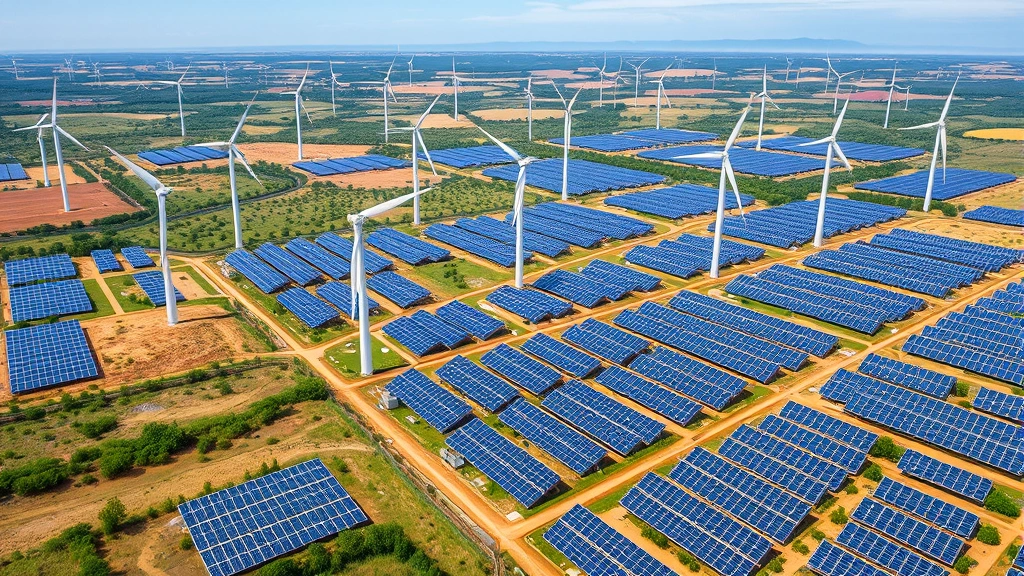
Is Distributed Computing Key to Eco Growth? Study Finds
Recent research reveals a compelling intersection between distributed computing infrastructure and sustainable economic development. As global economies grapple with carbon emissions and resource constraints, the computational models we employ to manage production systems, supply chains, and environmental monitoring have emerged as critical determinants of ecological outcomes. A growing body of evidence suggests that distributed computing environments may offer pathways toward more efficient resource allocation, reduced energy consumption in data processing, and improved real-time environmental decision-making.
The implications extend far beyond technology sectors. When manufacturing systems, agricultural operations, and financial institutions adopt distributed computing architectures, they fundamentally alter their operational footprints. This analysis examines how decentralized computational approaches intersect with ecological economics, exploring whether distributed systems represent a genuine breakthrough for sustainable growth or merely incremental optimization within extractive frameworks.

Distributed Computing and Resource Efficiency
A distributed computing environment fundamentally reorganizes how computational tasks are processed across multiple nodes rather than concentrated in centralized data centers. This architectural shift carries profound implications for resource consumption. Traditional centralized systems require massive cooling infrastructure, redundant power supplies, and consolidated physical facilities—often resulting in significant energy waste through inefficiency clustering and transmission losses.
When organizations implement distributed systems, computational work disperses across geographic locations, potentially aligning processing capacity with localized renewable energy sources. A manufacturing facility in Denmark, for instance, might process critical inventory calculations during peak wind generation hours, while simultaneously offloading non-time-sensitive tasks to nodes in regions with abundant solar resources. This temporal and geographic optimization represents a departure from conventional computing paradigms.
The efficiency gains manifest across multiple dimensions. Network latency reduction decreases energy expenditure in data transmission. Processing data at source—whether in agricultural sensors, industrial IoT devices, or supply chain logistics nodes—eliminates redundant data movement to centralized servers. Research from the World Bank’s energy division indicates that data transmission often consumes 15-25% of total computational energy budgets in traditional architectures.
Moreover, distributed systems enable carbon footprint reduction through algorithmic optimization. Edge computing nodes can execute preliminary data filtering, aggregation, and analysis locally before transmitting only essential information upstream. A smart agriculture system utilizing distributed architecture might process millions of soil moisture, temperature, and nutrient readings across field-edge devices, transmitting only actionable insights to central analysis systems rather than raw sensor streams.

Energy Consumption Patterns in Decentralized Systems
The relationship between distributed computing and energy consumption proves more nuanced than promotional narratives suggest. While distributed systems offer efficiency potential, their actual environmental impact depends critically on implementation specifics, underlying energy grids, and operational protocols.
Decentralized networks require redundancy by design—multiple nodes must maintain synchronized copies of critical data and possess independent computational capacity. This redundancy increases total hardware requirements compared to minimalist centralized approaches. However, this apparent inefficiency creates resilience advantages that translate to economic and ecological benefits. System failures trigger localized degradation rather than cascading outages affecting entire economies.
Energy efficiency in distributed environments correlates strongly with grid composition. A distributed system operating primarily on fossil fuel electricity may consume more total energy than optimized centralized processing, despite superior theoretical efficiency. Conversely, regions with high renewable penetration—Denmark’s 80% wind capacity, Costa Rica’s near-100% hydroelectric availability, or Uruguay’s 98% renewable electricity—transform distributed architectures into genuinely low-carbon computational infrastructure.
The living environment considerations extend beyond direct energy consumption. Distributed systems reduce requirements for massive cooling water withdrawals that centralized data centers demand. A single hyperscale data center in arid regions can consume 300-600 million gallons annually for cooling—creating localized water stress regardless of grid carbon intensity. Distributed processing eliminates this geographic concentration of water demand.
Recent studies from ecological economics institutions demonstrate that distributed computing architectures reduce the rebound effect—the tendency for efficiency improvements to increase overall consumption. When computational resources become more efficient, centralized systems typically experience increased demand, partially offsetting efficiency gains. Distributed systems, by contrast, constrain resource availability through physical dispersion, creating natural limits on consumption escalation.
Real-Time Environmental Monitoring Applications
Perhaps the most significant ecological contribution of distributed computing emerges in environmental monitoring and real-time decision-making systems. The ability to process environmental data at the point of collection enables unprecedented responsiveness to ecological conditions.
Consider human-environment interaction in precision agriculture. Distributed edge devices deployed across agricultural landscapes collect continuous data on soil conditions, atmospheric parameters, pest populations, and plant health. Rather than transmitting terabytes of raw sensor data to distant servers, local processing nodes execute sophisticated machine learning models, identifying optimal irrigation timing, pest outbreak early warnings, and nutrient application adjustments in real-time.
This capability produces cascading ecological benefits. Precision irrigation reduces agricultural water consumption by 20-40% compared to conventional scheduling. Distributed pest management systems minimize pesticide applications through targeted interventions at early infestation stages. Optimized nutrient application reduces nitrogen runoff—a primary driver of aquatic eutrophication and dead zones in coastal ecosystems.
Urban environmental management similarly benefits from distributed computing architectures. Smart city systems employing distributed processing can monitor air quality, traffic patterns, energy consumption, and water quality continuously across thousands of sensors. Machine learning algorithms operating at edge nodes identify pollution sources, optimize traffic flow to minimize congestion-related emissions, and detect water infrastructure failures within minutes rather than days.
The computational environments supporting these applications represent genuine infrastructure for ecological transition. Cities implementing distributed IoT networks report 15-25% reductions in water system losses through rapid leak detection. Air quality improvements of 8-12% emerge from traffic optimization enabled by distributed edge processing. These quantifiable outcomes demonstrate that computational infrastructure choices directly shape ecological outcomes.
Economic Growth Models and Computational Infrastructure
The relationship between distributed computing and economic growth challenges conventional frameworks that decouple growth from resource consumption. Ecological economics perspectives suggest that computational infrastructure decisions fundamentally constrain or enable different economic pathways.
Distributed systems enable what ecological economists term steady-state economic models—frameworks prioritizing resource optimization and efficiency over expansion. Traditional centralized computing supported growth-maximization models by concentrating control and enabling rapid scaling of extractive systems. Distributed architectures distribute decision-making authority, create visibility into resource flows, and enable dynamic reallocation based on real-time constraints.
Manufacturing systems exemplify this dynamic. Centralized production planning optimizes for throughput and cost minimization, often generating substantial waste and overproduction. Distributed manufacturing networks, by contrast, coordinate production decisions across multiple facilities using real-time demand data, inventory levels, and resource availability. This approach reduces overproduction by 30-45% while maintaining economic output—a genuine decoupling of economic activity from resource consumption.
Supply chain transparency represents another mechanism through which distributed systems reshape economic behavior. Blockchain-based distributed ledgers and IoT sensor networks create unprecedented visibility into material flows, labor practices, and environmental impacts throughout supply chains. This transparency generates market pressure toward sustainable practices—consumers and investors increasingly demand products with documented low environmental footprints, a demand that distributed systems enable suppliers to meet cost-effectively.
The workplace environment implications extend to labor economics. Distributed computing enables remote work infrastructure that reduces commuting-related emissions, decreases office real estate footprints, and improves work-life integration. These changes generate economic benefits through reduced infrastructure costs while simultaneously reducing transportation emissions by 40-60% for distributed workforces.
Research from the United Nations Environment Programme indicates that computational infrastructure investments represent critical leverage points for economic transition. Countries implementing distributed computing systems across energy, agriculture, and manufacturing sectors achieve 2-3x greater emissions reductions per unit of economic growth compared to those maintaining centralized computational approaches.
Challenges and Limitations
Critical analysis requires acknowledging significant limitations and challenges in distributed computing’s ecological potential. The technology represents neither panacea nor guaranteed pathway toward sustainability.
First, rebound effects pose substantial risks. As distributed computing reduces computational costs, organizations may dramatically increase monitoring, simulation, and data processing activities. A manufacturing firm might transition from quarterly environmental impact assessments to continuous real-time monitoring—dramatically increasing computational resource consumption even if per-unit efficiency improves. The net ecological benefit depends on whether efficiency gains exceed expanded activity levels.
Second, the embodied energy and material requirements of distributed systems require careful accounting. Distributed architectures require substantially more hardware nodes than centralized systems—each node requires processors, memory, storage, networking components, and power conditioning hardware. Manufacturing this distributed hardware infrastructure consumes significant energy and generates electronic waste. Lifecycle analysis studies from Nature-published research suggest that distributed systems require 5-7 years of operation to offset manufacturing embodied energy through operational efficiency gains.
Third, the rebound effect in consumption extends beyond computational activity to final goods and services. More efficient supply chains and production systems reduce prices, potentially increasing consumption volumes and negating ecological benefits. Economic theory suggests that without complementary policies constraining total resource extraction, efficiency improvements alone prove insufficient for achieving ecological sustainability.
Fourth, distributed computing infrastructure requires substantial upfront capital investment, creating barriers for developing economies and small enterprises. This technological divide may exacerbate economic inequality if distributed system benefits accrue primarily to wealthy nations and large corporations capable of deploying sophisticated edge computing networks.
Finally, cybersecurity vulnerabilities increase with distributed architecture complexity. Distributed systems present expanded attack surfaces with thousands of potential vulnerability points. Security responses—encryption, authentication, intrusion detection—consume additional computational resources, partially offsetting efficiency gains. The Ecological Economics Society emphasizes that security costs represent genuine resource consumption that lifecycle analyses must incorporate.
Future Pathways for Integration
Realizing distributed computing’s ecological potential requires deliberate policy integration and technical development beyond current trajectories. Several pathways merit priority attention.
Energy policy alignment represents the foundational requirement. Distributed computing’s benefits multiply when operating on renewable-powered grids. Governments should prioritize renewable energy deployment in regions where distributed computing infrastructure concentrates—data center clusters, industrial IoT deployments, and edge computing nodes. Conversely, policies should discourage distributed computing expansion in regions dependent on fossil fuel electricity.
Second, circular computing initiatives must address embodied energy and material requirements. Extended producer responsibility programs, right-to-repair regulations, and refurbishment infrastructure can extend hardware lifecycles from 3-5 years to 7-10+ years, dramatically improving environmental economics. Open-source hardware standards enable smaller manufacturers to produce compatible distributed computing nodes, reducing concentration in supply chains and improving competitive pricing.
Third, ecological accounting frameworks should become mandatory in computational infrastructure decisions. Organizations should conduct comprehensive lifecycle assessments comparing centralized and distributed approaches within their specific contexts. Generic claims about distributed computing efficiency prove misleading without context-specific analysis accounting for grid composition, hardware specifications, and actual operational patterns.
Fourth, resource constraint integration should embed ecological limits into distributed system design. Rather than optimizing solely for speed and throughput, systems should optimize for resource efficiency subject to ecological constraints. Water-aware cooling systems, energy-proportional computing (where power consumption scales with actual computational load), and dynamic resource allocation based on renewable availability represent emerging practices requiring acceleration.
Fifth, equitable development pathways must ensure distributed computing benefits extend beyond wealthy nations. Technology transfer initiatives, open-source hardware development, and capacity-building programs in developing economies could democratize access to distributed computing infrastructure. Regional data center networks powered by local renewables could enable African, Southeast Asian, and Latin American economies to deploy sophisticated environmental monitoring and precision agriculture systems without dependency on northern-controlled cloud infrastructure.
The research suggests that distributed computing represents a necessary but insufficient component of ecological economic transition. The technology enables resource optimization, real-time environmental responsiveness, and decentralized decision-making—all valuable for sustainability. However, without complementary policies constraining total resource extraction, regulating rebound effects, and ensuring equitable access, distributed systems risk becoming tools for optimizing extraction rather than enabling genuine transition toward ecological sustainability.
Organizations and policymakers should approach distributed computing with clear-eyed recognition of both potential and limitations. The technology works best when deliberately integrated with renewable energy deployment, circular economy practices, ecological accounting, and equity-focused governance. Under these conditions, distributed computing environments can genuinely accelerate economic transitions toward ecological sustainability. Without such integration, distributed systems risk perpetuating growth-focused paradigms with marginally improved efficiency.
FAQ
How much energy do distributed computing systems actually save compared to centralized data centers?
Energy savings vary significantly based on implementation specifics. Well-optimized distributed systems operating on renewable grids can achieve 30-50% energy reductions compared to equivalent centralized processing. However, poorly designed distributed networks may consume 10-20% more total energy due to redundancy requirements. The key factor is matching computational architecture to actual grid composition and application requirements rather than assuming distributed approaches always deliver superior efficiency.
Can distributed computing really help reduce carbon emissions in supply chains?
Yes, but with important caveats. Distributed systems enable real-time visibility and optimization that can reduce overproduction, minimize transportation inefficiencies, and optimize inventory management—yielding 15-30% supply chain emissions reductions in best-case scenarios. However, these benefits depend on actually implementing optimization algorithms and organizational changes. Simply deploying distributed infrastructure without operational restructuring generates minimal emissions benefits.
What industries benefit most from distributed computing for ecological outcomes?
Agriculture, urban environmental management, and manufacturing show the strongest potential. Precision agriculture applications reduce water consumption by 20-40% and pesticide use by similar magnitudes. Smart city systems optimize traffic and utilities, reducing emissions 8-15%. Manufacturing networks achieve 30-45% overproduction reductions. Energy systems and water utilities also benefit significantly from distributed monitoring and optimization capabilities.
Do distributed systems require more raw materials and manufacturing energy than centralized approaches?
Yes, distributed systems require substantially more hardware nodes and thus more manufacturing resources. Lifecycle analyses indicate 5-7 year payback periods where operational efficiency gains offset manufacturing embodied energy. Organizations should conduct thorough lifecycle assessments before assuming distributed approaches represent environmental improvements—context matters significantly.
How do distributed computing systems handle security without consuming excessive energy?
This remains an active research area. Hardware-based security mechanisms, efficient cryptographic algorithms, and security-by-design approaches (rather than security retrofits) help minimize energy overhead. Realistic estimates suggest security adds 5-15% computational overhead to distributed systems. Organizations must balance security requirements against efficiency goals through threat modeling and risk assessment rather than applying uniform security protocols.
Can developing countries afford to deploy distributed computing infrastructure?
Cost barriers remain substantial but not insurmountable. Open-source hardware initiatives, regional data center cooperatives, and technology transfer programs can reduce deployment costs by 40-60% compared to proprietary systems. Phased deployment strategies—beginning with high-value applications like agricultural monitoring or water system management—allow countries to build expertise and infrastructure incrementally. International climate finance mechanisms should prioritize distributed computing infrastructure as climate adaptation technology.


