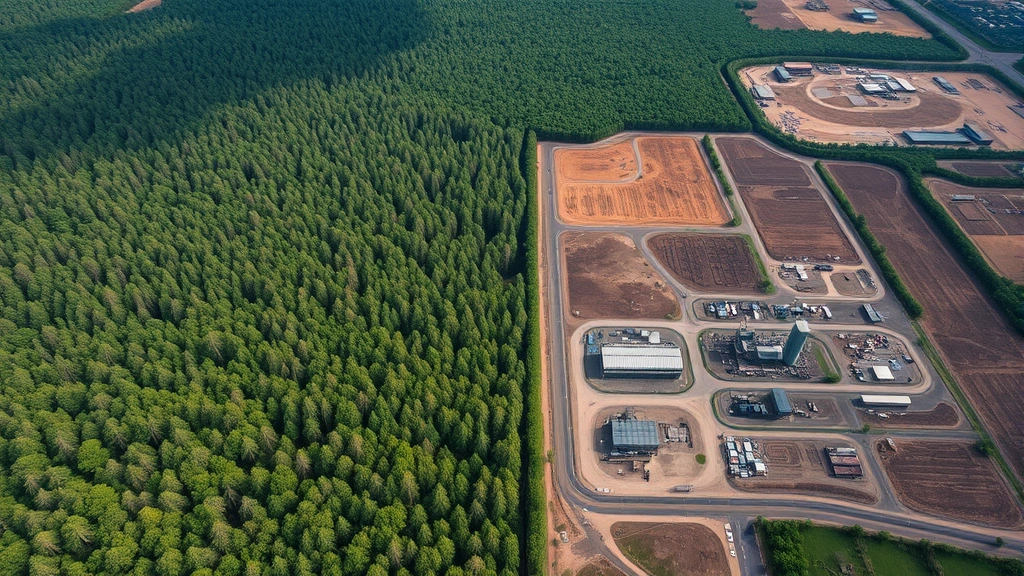
Economy vs Ecosystem: A Delicate Balance Explained
The relationship between economic systems and natural ecosystems represents one of the most critical tensions of our time. For centuries, economic growth has been pursued as the primary measure of societal progress, yet this expansion has come at an increasingly visible cost to the natural world. Understanding how these two systems interact—and often conflict—is essential for creating sustainable futures that do not sacrifice either economic stability or ecological integrity.
Modern economies are fundamentally dependent on ecosystem services, from pollination and water purification to climate regulation and nutrient cycling. These services, often taken for granted, are worth trillions of dollars annually. Yet traditional economic models rarely account for their degradation or depletion. When we extract resources faster than they can regenerate, or when pollution costs are externalized rather than internalized into prices, we create a dangerous illusion of prosperity built on ecological debt. This article explores the intricate dynamics between economic development and environmental sustainability, examining how we might transition toward systems that serve both human flourishing and planetary health.
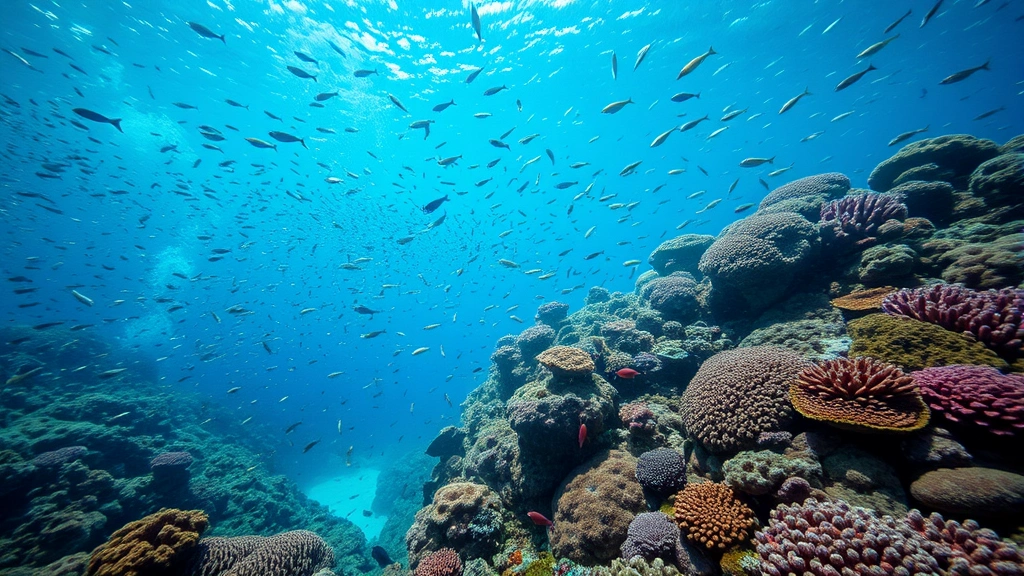
Understanding the Economic-Ecological Paradox
The fundamental paradox lies in how we conceptualize value. Traditional economics treats nature as an infinite resource or externality—something to be exploited without limit or cost. This perspective emerged during periods of resource abundance and lower human population densities, when environmental degradation seemed negligible compared to economic gains. Today, with nearly 8 billion people and industrial systems spanning the globe, this assumption has become dangerously obsolete.
The economic-ecological paradox manifests in several ways. First, economic systems prioritize short-term returns and quarterly profits, while ecosystems operate on decadal and centennial timescales. A company may maximize shareholder value by clear-cutting forests, but the ecosystem requires centuries to recover—if it can recover at all. Second, economic markets reward efficiency in resource extraction but penalize conservation of natural capital. A fishing company that depletes fish stocks can still report record profits in the year of maximum extraction. Third, the benefits of environmental destruction are often privatized (captured by corporations) while costs are socialized (borne by communities and future generations).
Understanding human environment interaction requires recognizing that economies are subsystems of the larger ecosystem, not the reverse. We cannot have a functioning economy on a dead planet. This reframing—from seeing nature as a resource for the economy to seeing the economy as embedded within ecological systems—is foundational to addressing the balance we seek.
Natural Capital and Ecosystem Services
Ecological economists have developed frameworks to quantify what they call “natural capital”—the stock of natural assets including forests, wetlands, minerals, and fisheries that generate flows of ecosystem services. These services include provisioning services (food, water, raw materials), regulating services (climate regulation, flood control, disease regulation), supporting services (nutrient cycling, soil formation), and cultural services (recreation, spiritual fulfillment, aesthetic value).
A World Bank study estimated that ecosystem services provide approximately $125 trillion in annual value to the global economy. Consider the pollination services provided by bees: worth an estimated $15-20 billion annually in agricultural productivity alone. Or mangrove forests, which provide storm protection, fish nurseries, and carbon sequestration—their loss translates to billions in damages that societies must now pay for with seawalls and insurance premiums.
The challenge in valuing natural capital is that many ecosystem services have no market price. A pristine watershed has enormous value in water purification, but this value doesn’t appear on balance sheets. Wetlands prevent floods and filter pollutants, yet they’re often drained for development because the economic return from agriculture or construction appears higher in conventional accounting. When we fail to price these services, we systematically undervalue conservation and overvalue extraction.
Creating new frameworks for environmental accounting represents a crucial step forward. Some nations now implement Natural Capital Accounts alongside traditional GDP measures, attempting to track the depreciation of natural assets just as they would depreciation of manufactured capital. This approach acknowledges that a nation consuming its forests and fisheries is not actually growing wealthier—it’s liquidating assets.
The True Cost of Economic Growth
Conventional GDP measures treat all economic activity as beneficial, regardless of its ecological consequences. A hurricane that destroys homes and ecosystems increases GDP through reconstruction spending. Pollution-related health crises boost healthcare spending. Deforestation generates revenue that counts toward growth statistics, while the loss of carbon sequestration capacity and biodiversity do not count against it. This accounting system creates perverse incentives where environmental destruction appears economically rational.
The true cost of economic growth becomes apparent when we calculate the ecological footprint of our consumption patterns. The average American requires approximately 4.8 global hectares to support their lifestyle, yet Earth has only 1.6 global hectares per person available. This means wealthy nations are living off ecological debt, drawing down natural capital at rates far exceeding regeneration. When we reduce carbon footprint and other environmental impacts, we’re essentially moving toward living within our ecological means.
Hidden costs permeate economic systems. Industrial agriculture’s dependence on chemical inputs degrades soil health, pollutes waterways, and reduces biodiversity—costs not reflected in food prices. Fossil fuel combustion generates air pollution costing hundreds of billions in healthcare expenses and lost productivity. Plastic production and disposal creates environmental damage that will persist for centuries, yet these costs are externalized from corporate accounting. UNEP research suggests that environmental damage costs equivalent to 2-5% of global GDP annually, yet these damages remain largely invisible in traditional economic reporting.
When economists conduct full-cost accounting that includes environmental and social externalities, economic growth rates appear dramatically different. Some wealthy nations may actually be experiencing economic decline when natural capital depreciation is factored in. This revelation challenges the fundamental narrative of progress that drives policy decisions worldwide.
Circular Economy Solutions
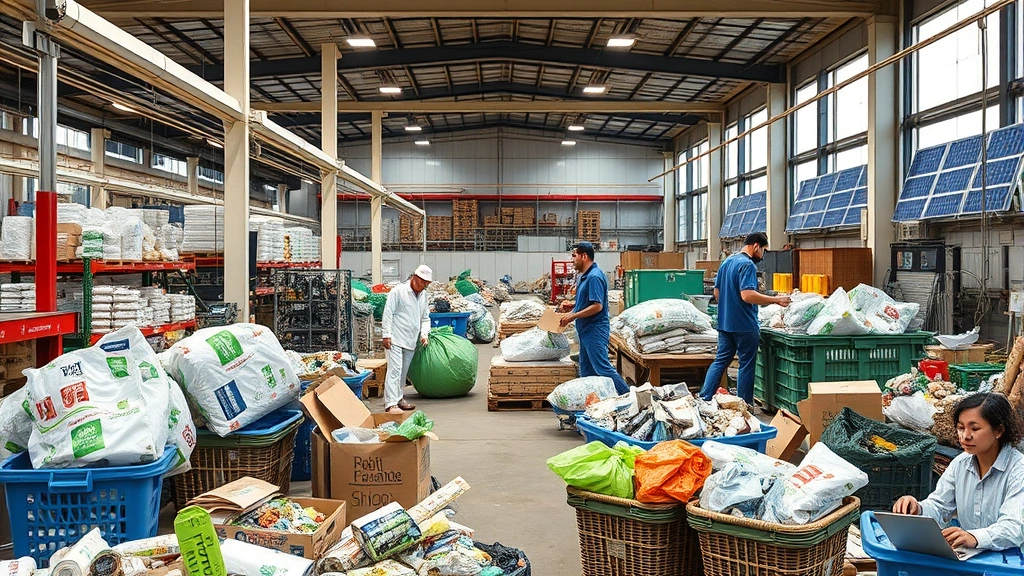
The circular economy represents a fundamental reimagining of production and consumption systems. Rather than the linear “take-make-dispose” model that characterizes industrial economies, circular systems aim to eliminate waste by designing products for longevity, repairability, and recycling. Materials cycle continuously through biological and technical loops, minimizing extraction of virgin resources and reducing environmental impact.
Implementing circular economy principles requires rethinking how we create new conda environment thinking—establishing entirely new systems and frameworks rather than patching existing ones. This includes designing products without toxic chemicals so biological materials can safely return to soil. It means developing business models based on product-as-service rather than ownership, where companies maintain responsibility for products throughout their lifecycles. Companies like Patagonia and Interface have demonstrated that circular approaches can be profitable while dramatically reducing environmental impact.
Circular economy models also reshape supply chains and manufacturing processes. Instead of single-use packaging, companies develop reusable systems. Instead of planned obsolescence, products are designed for durability and upgradability. Industrial symbiosis—where waste from one process becomes input for another—transforms entire industrial ecosystems. A steel mill’s excess heat powers a nearby greenhouse; a brewery’s spent grain feeds livestock; manufacturing byproducts become building materials.
The economic benefits are substantial. The Ellen MacArthur Foundation estimates that circular economy transitions could generate $4.5 trillion in economic benefits by 2030 through reduced material costs, increased efficiency, and new business opportunities. Workers transition from extraction and disposal jobs to repair, refurbishment, and remanufacturing roles that often provide better wages and greater stability.
Policy Frameworks for Balance
Achieving genuine balance between economic and ecological systems requires policy frameworks that align financial incentives with environmental outcomes. Carbon pricing—whether through taxes or cap-and-trade systems—represents one approach, making pollution economically costly rather than free. When carbon emissions carry a price, renewable energy and efficiency improvements become economically competitive with fossil fuels.
Extended Producer Responsibility (EPR) policies shift waste management costs from municipalities to manufacturers, incentivizing product design that reduces waste. Subsidy reform—redirecting the $700+ billion in annual fossil fuel subsidies toward renewable energy and conservation—would dramatically alter economic competitiveness. Payment for Ecosystem Services programs compensate landowners for conservation, making preservation financially viable compared to extraction.
Nature-based solutions policies recognize that protecting forests, wetlands, and grasslands often provides better returns than engineered alternatives. Mangrove restoration costs far less than seawalls while providing additional benefits. Wetland protection prevents flooding more cost-effectively than dams while supporting biodiversity. These approaches integrate ecological and economic logic rather than treating them as opposites.
International policy coordination through agreements like the Paris Climate Accord attempts to align national economic policies with global ecological limits. The Convention on Biological Diversity sets targets for protecting biodiversity, recognizing that economic systems depend on genetic diversity and ecosystem complexity. These frameworks remain imperfect and often lack enforcement mechanisms, yet they establish principles that economics and ecology must be integrated rather than separated.
Corporate Responsibility and Green Investment
Corporate sectors increasingly recognize that environmental degradation poses financial risk. Supply chain disruptions from climate impacts, resource scarcity, and ecosystem collapse threaten profitability. Simultaneously, investor pressure and consumer preferences drive capital toward sustainable business models. Green bonds, ESG (Environmental, Social, Governance) investing, and impact investing represent growing capital flows toward companies with strong environmental performance.
However, greenwashing remains prevalent—companies making superficial environmental claims while core business models remain destructive. True corporate responsibility requires fundamental changes: eliminating single-use plastics, transitioning to renewable energy, protecting forests in supply chains, and investing in circular product design. Companies like Unilever and Nestlé have made substantial commitments, though implementation remains challenging.
The finance sector itself must transform. Banks and investment firms allocating trillions in capital have outsized influence over which industries grow and which decline. Divesting from fossil fuels, ending financing for deforestation, and requiring environmental impact assessments for major projects would redirect capital flows toward sustainable enterprises. Some financial institutions now recognize that stranded assets—fossil fuel infrastructure that becomes economically obsolete as energy transitions—represent significant financial risk.
Measuring Progress Beyond GDP
Perhaps the most fundamental shift required is moving beyond GDP as our primary measure of progress. Bhutan pioneered this transition with Gross National Happiness, explicitly valuing environmental conservation, cultural preservation, and well-being alongside economic growth. New Zealand adopted a well-being budget framework where government spending is evaluated on impact to citizen well-being and environmental health rather than just economic output.
Alternative metrics like the Genuine Progress Indicator (GPI) account for environmental degradation, resource depletion, social inequality, and well-being alongside economic production. When calculated comprehensively, GPI for many wealthy nations has stagnated or declined despite rising GDP, suggesting that growth in recent decades has not improved genuine progress. The Human Development Index incorporates health and education alongside income, providing a more holistic picture of societal advancement.
Measuring natural capital accounting alongside financial capital creates more honest assessments of national wealth. If a country cuts down all its forests and sells the timber, GDP increases while natural capital decreases—yet the net effect on true wealth is negative. Implementing comprehensive environmental accounting systems would fundamentally alter policy priorities, shifting focus from short-term extraction toward long-term sustainability.
The IPBES Global Assessment and similar comprehensive studies provide evidence-based frameworks for understanding how economic activities affect ecosystems and human well-being. These assessments guide policy toward approaches that maximize long-term human flourishing rather than short-term economic extraction.
FAQ
How can economies grow while protecting ecosystems?
Growth can shift from material and resource consumption toward services, knowledge, and well-being improvements. Renewable energy sectors, sustainable agriculture, ecosystem restoration, and circular manufacturing all generate economic activity while improving environmental conditions. The key is decoupling economic growth from resource depletion—growing value creation per unit of material consumed.
Don’t environmental protections harm economic competitiveness?
Short-term costs may appear higher, but long-term competitiveness depends on environmental stability. Countries investing in renewable energy and sustainable practices are building resilience and avoiding costs from resource depletion, climate impacts, and ecosystem collapse. Early movers in green technology gain competitive advantages as these industries mature.
How can developing nations balance growth with conservation?
Developing nations face legitimate needs for economic growth and poverty reduction. Sustainable pathways prioritize renewable energy adoption, ecosystem-based agriculture, and green infrastructure from the start rather than following polluting development patterns. International climate finance and technology transfer can support these transitions without requiring nations to sacrifice development.
What role should governments play versus markets?
Both are essential. Markets excel at efficient resource allocation when prices reflect true costs, but markets fail when environmental damages are externalized. Governments must establish frameworks—carbon pricing, environmental regulations, subsidy reform—that align market incentives with ecological limits. Public investment in renewable energy, conservation, and ecosystem restoration addresses market failures and builds infrastructure markets alone won’t provide.
Can technology solve the economy-ecosystem problem?
Technology is necessary but insufficient. Renewable energy, efficiency improvements, and circular manufacturing technologies are crucial, yet without systemic changes in consumption patterns and economic incentives, technology alone cannot solve the problem. The rebound effect—where efficiency gains lead to increased consumption—demonstrates that technological solutions require complementary policy and cultural shifts.


