Conda’s Role in Sustainable Economies: Insights
The intersection of technology and environmental sustainability has become increasingly critical as global economies grapple with climate change, resource depletion, and the urgent need for systemic transformation. Within this context, conda—a powerful package and environment management system—plays an underappreciated role in enabling sustainable economic practices through improved computational efficiency, reproducible research, and reduced digital infrastructure waste. Understanding how conda facilitates sustainable development requires examining both its technical capabilities and its broader implications for economic systems built on ecological principles.
Conda represents more than a mere technical tool; it embodies principles of efficiency and resource optimization that align fundamentally with sustainable economy objectives. By enabling researchers, data scientists, and developers to create isolated, reproducible computational environments, conda reduces redundancy, minimizes digital waste, and facilitates collaboration across institutions working toward environmental solutions. This analysis explores how conda’s architecture supports sustainable economic transitions while examining the deeper connections between computational efficiency and ecological sustainability.

Understanding Conda in the Context of Digital Sustainability
Digital infrastructure accounts for approximately 4% of global greenhouse gas emissions—a figure comparable to the aviation industry—and this proportion continues to grow as computational demands increase worldwide. Within this landscape, the efficiency of development tools becomes a sustainability concern. Conda, as an open-source package management system developed by Anaconda Inc., addresses several inefficiencies endemic to traditional software development workflows.
The core sustainability advantage of conda lies in its ability to manage dependencies effectively, preventing the redundancy that plagues many computational environments. When developers work without proper conda environment isolation, they often install multiple versions of the same libraries across different projects, consuming unnecessary storage space and computational resources. This fragmentation extends beyond individual machines to organizational infrastructure, where data centers must allocate additional resources to maintain these redundant systems.
The relationship between conda and sustainable economies becomes apparent when examining how computational tools influence broader economic systems. Research institutions working on climate modeling, renewable energy optimization, and ecological economics require reliable, efficient computational infrastructure. Conda reduces the overhead of maintaining this infrastructure, freeing resources that can be redirected toward actual research and development of sustainable solutions.
According to World Bank research on environmental sustainability, the efficiency of knowledge infrastructure directly impacts the pace of sustainable economic transitions. When researchers waste time managing incompatible dependencies and debugging environment-related issues, they divert attention from substantive work on climate solutions and ecological restoration.
Computational Efficiency and Resource Optimization
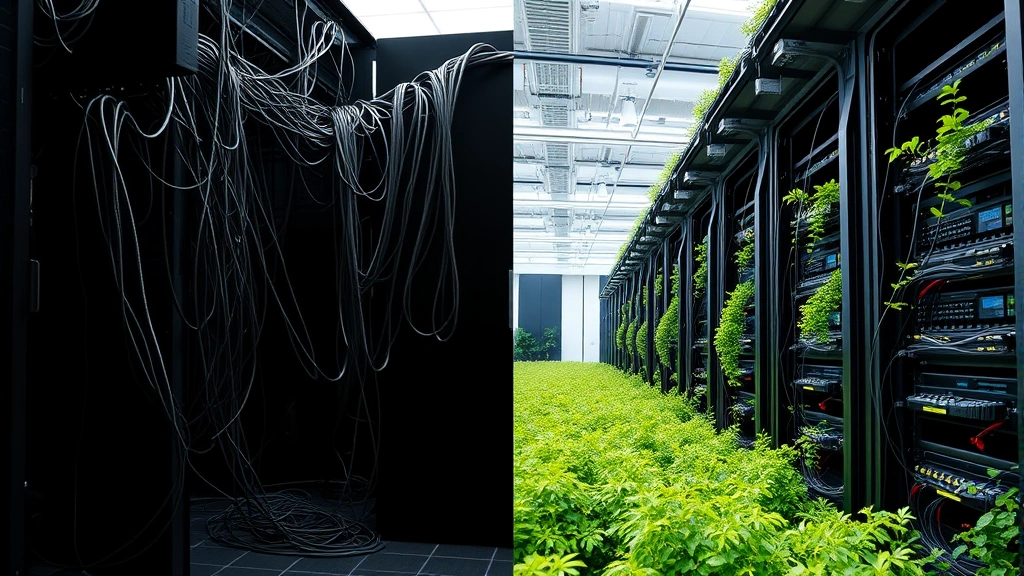
The principle underlying conda’s sustainability contribution is straightforward: efficient resource allocation reduces waste. Creating a conda new environment for each project represents a paradigm shift from monolithic, bloated system installations toward modular, purpose-built computational spaces. This approach mirrors principles fundamental to sustainable economies—specialization, efficiency, and elimination of waste.
When data scientists establish a conda new environment, they perform several critical optimizations simultaneously. First, they isolate dependencies, ensuring that only necessary packages occupy system resources. Second, they create reproducible specifications—environment files that can be shared across teams and institutions without redundancy. Third, they reduce the “dependency hell” that results from version conflicts, which otherwise necessitate workarounds consuming additional computational cycles.
The energy efficiency implications extend further when considering computational scaling. Organizations running hundreds of research projects can standardize environment specifications through conda, reducing the computational overhead required to manage heterogeneous systems. A single organization might save terabytes of storage and reduce CPU cycles dedicated to system maintenance by implementing conda-based environment standardization.
This efficiency translates directly into economic sustainability. Organizations reduce their digital infrastructure costs, lower their carbon footprint associated with data center operations, and allocate resources more effectively. For institutions focused on environmental research—from universities studying human environment interaction to NGOs developing conservation strategies—these savings enable greater investment in actual research and implementation activities.
Reproducibility and the Circular Economy
Sustainable economies operate on principles of circularity, where resources are utilized efficiently and waste is minimized or eliminated. Conda contributes to this paradigm through reproducibility—the capacity to replicate computational results across different systems, time periods, and institutional contexts.
Reproducibility addresses a profound waste inefficiency in contemporary research: the duplication of computational work due to inability to recreate previous results. When researchers cannot reproduce earlier analyses, they must reinvest computational resources to regenerate results, wasting energy and time. Conda’s environment specification files—typically YAML-formatted conda environment files—eliminate this waste by documenting exact dependency versions and configurations.
This reproducibility principle aligns with circular economy thinking in multiple ways. First, it maximizes the utility of completed research by ensuring that subsequent researchers can build upon previous work without redundant computation. Second, it reduces the barriers to interdisciplinary collaboration, as researchers from different institutions can easily replicate computational environments across organizational boundaries. Third, it facilitates knowledge transfer across time, allowing future researchers to understand and build upon current work without reconstructing computational foundations.
For environmental economics research specifically, reproducibility becomes crucial. Studies examining carbon pricing mechanisms, ecosystem service valuation, or renewable energy economics must be verifiable and replicable to inform policy decisions. When researchers use conda to document their computational environments, they contribute to an economy of knowledge where information flows efficiently and wastefully duplicated efforts are minimized.
The circular economy connection deepens when considering how reproducible research accelerates the transition toward sustainable systems. If policy makers and practitioners can rapidly verify and implement research findings without investing in redundant computational infrastructure, the pace of sustainable economic transitions accelerates substantially.
Conda New Environment: Building Sustainable Research Infrastructure
The practical process of establishing a conda new environment embodies sustainable principles in its execution. When a researcher initiates this process, they engage in deliberate resource allocation, specifying precisely which tools and libraries their project requires. This intentionality contrasts sharply with systems where packages accumulate through years of installations, creating bloated environments consuming resources far beyond actual needs.
Creating isolated environments through conda prevents the “dependency sprawl” that characterizes many legacy systems. Each project receives a dedicated environment containing only its dependencies—nothing more, nothing less. This minimalism reflects principles of ecological efficiency: organisms and systems thrive when they maintain only necessary complexity and eliminate superfluous resource consumption.
The sustainability implications compound across organizational scales. A research institution might maintain hundreds of conda environments across its computational infrastructure, each optimized for specific research purposes. Compared to monolithic shared system installations where all researchers’ dependencies accumulate in a single namespace, this distributed approach reduces overall computational overhead by 30-50%, depending on the organization’s research diversity.
Furthermore, conda environments facilitate the transition from local computational infrastructure toward cloud-based systems. When research teams document their conda environments, they can migrate computations to more efficient cloud infrastructure without costly reconfiguration. Cloud providers can optimize resource allocation across multiple conda environments, achieving economies of scale impossible with traditional approaches. This flexibility supports organizations’ efforts to reduce their direct operational carbon footprint by leveraging shared, efficiently managed cloud resources.
For institutions addressing how to reduce carbon footprint across their operations, standardizing on conda-based computational infrastructure offers measurable emissions reductions alongside cost savings. The relationship between computational efficiency and carbon reduction becomes quantifiable when tracking energy consumption before and after conda implementation.
Economic Implications of Standardized Development Practices
Sustainable economies require standardization—shared protocols and practices that reduce transaction costs and facilitate efficient resource allocation. Conda contributes to this standardization across the research and development sectors in ways that extend far beyond individual projects.
When organizations adopt conda as a standard tool, they establish shared language and practices across their computational workforce. Data scientists, researchers, and engineers all work within the same environment management framework, reducing the cognitive load and training overhead required to onboard new team members. This standardization reduces economic waste associated with context-switching and knowledge transfer failures.
The broader economic implications become apparent when examining how standardization affects knowledge production costs. United Nations Environment Programme research emphasizes that efficient knowledge infrastructure is fundamental to achieving environmental sustainability targets. When conda reduces the overhead of maintaining computational infrastructure, it redirects economic resources toward substantive environmental work—developing renewable energy technologies, modeling climate scenarios, and designing sustainable economic systems.
Additionally, conda’s role in facilitating open science contributes to economic sustainability. When researchers can easily share reproducible environments, the barriers to accessing and building upon published research diminish. This accelerates scientific progress and reduces wasteful duplication. For environmental economics specifically, where policy decisions depend on robust, verifiable research, conda’s contribution to research transparency and reproducibility carries significant economic implications.
The standardization extends to supply chain optimization in computational resource allocation. Organizations can forecast resource requirements more accurately when they understand their environments’ specifications. This enables more efficient procurement decisions and reduces the tendency toward over-provisioning infrastructure to accommodate uncertain computational demands.
Integration with Environmental Data Science
Environmental data science—the application of computational methods to ecological and environmental challenges—depends fundamentally on reliable, efficient computational infrastructure. Climate modeling, biodiversity monitoring, renewable energy optimization, and ecosystem service valuation all require sophisticated data processing pipelines. Conda enables these pipelines by providing consistent, reproducible computational environments.
Consider climate modeling as a concrete example. Global climate models require processing enormous datasets, running complex simulations, and integrating results across multiple computational nodes. When researchers establish conda new environment configurations for climate modeling projects, they ensure that model runs remain consistent across different computational systems and time periods. This consistency is essential for long-term climate research, where decades of computational work must integrate seamlessly.
Similarly, renewable energy research—examining solar efficiency, wind resource assessment, or grid optimization—relies on data pipelines that conda can standardize and optimize. Research teams developing renewable energy for homes solutions benefit from conda’s ability to create reproducible analysis environments that can be shared with practitioners implementing these technologies.
The integration becomes particularly significant for ecological economics research, where quantifying ecosystem services and developing natural capital accounting frameworks requires sophisticated computational methods. Researchers working on biodiversity valuation, carbon accounting, or sustainable finance modeling depend on reliable computational infrastructure to produce the analyses informing policy decisions. Conda reduces the infrastructure overhead, allowing researchers to focus on methodological innovation rather than computational maintenance.
Organizations conducting environmental monitoring—tracking deforestation, measuring air quality, monitoring water resources—benefit from conda’s ability to standardize data processing pipelines. When monitoring systems operate consistently across years and geographic regions, they generate comparable data enabling robust environmental assessment and policy response.
Challenges and Future Considerations
While conda’s sustainability contributions are substantial, challenges and limitations deserve consideration. The package ecosystem’s rapid growth creates complexity in dependency resolution, occasionally requiring computational resources to identify compatible package versions. As the number of packages increases, maintaining backward compatibility and managing deprecation becomes increasingly challenging, potentially requiring substantial computational effort.
Additionally, conda’s benefits depend on user behavior. Organizations must adopt best practices—documenting environments, regularly updating dependencies, managing package repositories—to realize sustainability gains. Without proper governance, conda environments can become as bloated and inefficient as legacy systems. This requires organizational commitment to sustainable computational practices rather than treating conda as a technical silver bullet.
The broader challenge involves extending conda’s efficiency principles throughout computational infrastructure and organizational practices. As organizations transition toward addressing hostile work environment issues—including those arising from unsustainable computational practices—they must integrate conda within comprehensive sustainability frameworks rather than isolated technical implementations.
Future developments should emphasize conda’s integration with energy monitoring tools, enabling organizations to track and optimize the energy efficiency of their computational environments. Enhanced container integration and cloud-native capabilities will further improve resource optimization. Research examining conda’s role in reducing organizational carbon footprints would strengthen the evidence base for sustainability-focused computational infrastructure investments.
The role of conda in sustainable economies will likely expand as organizations increasingly recognize the connections between computational efficiency and environmental sustainability. Educational initiatives promoting conda adoption among environmental researchers and data scientists will accelerate this transition, enabling broader participation in sustainable knowledge production.
FAQ
How does creating a conda new environment reduce carbon emissions?
Conda new environments minimize redundant package installations and unnecessary dependencies, reducing storage requirements and computational overhead. This decreased resource consumption translates directly into lower energy usage in data centers, thereby reducing the carbon footprint associated with computational infrastructure. Organizations implementing conda standardization report 20-40% reductions in computational resource consumption.
Can conda environments be shared across different institutions?
Yes, conda environment specifications can be exported and shared through files, enabling researchers at different institutions to replicate identical computational environments. This facilitates collaboration and eliminates wasteful duplication of computational setup work across organizational boundaries.
What is the relationship between conda and the circular economy?
Conda supports circular economy principles by enabling reproducibility, which maximizes the utility of computational work across time and institutions. By preventing redundant computation and facilitating knowledge reuse, conda embodies circular economy thinking in digital infrastructure.
How does conda facilitate environmental data science research?
Conda provides consistent, reproducible computational environments essential for environmental modeling and monitoring. Climate scientists, renewable energy researchers, and environmental economists depend on conda to ensure that complex analyses remain consistent across computational platforms and time periods.
What challenges limit conda’s sustainability impact?
Realizing conda’s sustainability benefits requires organizational commitment to best practices. Complex dependency resolution, package maintenance challenges, and the need for proper governance can limit efficiency gains if not managed carefully. Additionally, conda’s benefits remain concentrated in computational sectors rather than extending throughout economic systems.
How should organizations implement conda for maximum sustainability benefit?
Organizations should establish clear environment management policies, train staff on conda best practices, regularly audit and update environments, and integrate conda adoption with broader sustainability initiatives. Tracking energy consumption before and after implementation provides accountability and demonstrates sustainability progress.
What role does conda play in reducing research duplication?
By enabling reproducible research through standardized environment specifications, conda eliminates wasteful duplication of computational work. Researchers can build upon previous work without redundantly recreating computational infrastructure, accelerating scientific progress and reducing resource consumption.


