
How Ecosystems Influence Economy: A Deep Dive
The relationship between ecosystems and economic systems represents one of the most critical yet underexplored intersections in modern policy discourse. While conventional economic models have historically treated natural systems as external inputs—resources to be extracted and exploited—contemporary ecological economics reveals a fundamentally different reality. Ecosystems do not merely supply raw materials; they generate cascading economic effects through nutrient cycling, climate regulation, pollination, water filtration, and countless other services that underpin all productive human activity. Understanding this intricate relationship is essential for policymakers, business leaders, and informed citizens seeking sustainable prosperity.
The disconnect between economic growth metrics and ecological health has produced what economists call the “natural capital paradox.” Societies celebrate GDP expansion while simultaneously depleting the biological foundations upon which that growth depends. A forest might be worth millions when logged but worth billions when its carbon sequestration, water purification, and biodiversity functions are properly valued. This article explores how ecosystem services translate into economic value, examines the mechanisms of ecological-economic feedback loops, and investigates pathways toward genuine economic sustainability grounded in ecological reality.

Ecosystem Services and Economic Value
Ecosystem services represent the myriad benefits that natural systems provide to human societies, categorized broadly into provisioning, regulating, supporting, and cultural services. Provisioning services—such as timber, fish, freshwater, and agricultural crops—generate direct market revenues easily captured in traditional economic accounting. However, regulating services prove far more economically significant yet remain largely invisible in conventional GDP calculations.
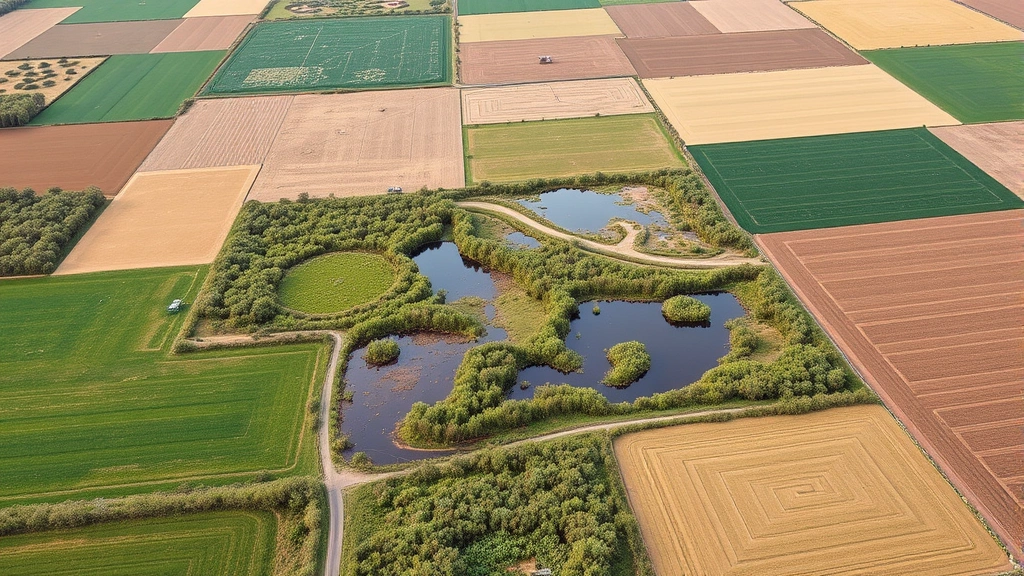
Consider pollination: this regulating service, performed primarily by bees and other insects, contributes an estimated $15-20 billion annually to global agriculture. Yet when honeybee populations collapse due to pesticide exposure and habitat loss, the economic loss is attributed to farming sector inefficiency rather than recognized as ecosystem service degradation. Similarly, wetland systems filter agricultural runoff and treat wastewater—functions that would cost municipalities billions if performed by engineered systems. A single hectare of wetland provides water purification services valued at $40,000-50,000 annually, yet wetlands are routinely drained for development without accounting for this lost economic value.
The World Bank’s extensive research into ecosystem economics demonstrates that nature-based solutions consistently outperform engineered alternatives on cost-benefit analyses. Mangrove forests protect coastal communities from storm surge while sequestering carbon, supporting fisheries, and providing habitat—all simultaneously. The economic value of mangrove ecosystem services in Southeast Asia alone exceeds $40 billion annually. When mangroves are converted to aquaculture or development, the full economic cost of lost services—calculated in replacement infrastructure, increased disaster losses, and foregone fisheries revenue—typically exceeds short-term conversion benefits by substantial margins.
Understanding how to properly value ecosystem services requires integrating ecological science with economic methodology. The human environment interaction fundamentally depends on recognizing that economic activity occurs within ecological boundaries. Provisioning services have physical limits determined by regeneration rates; regulating services degrade predictably as ecosystem integrity declines; and cultural services generate immense but underquantified human welfare benefits.
Natural Capital Accounting Frameworks
Traditional GDP measurement treats ecosystem depletion as income rather than capital loss. When a nation harvests its entire forest stock, this appears as economic gain; the corresponding loss of natural capital remains invisible. This accounting error has driven centuries of resource overexploitation masked as economic success. Natural capital accounting frameworks address this fundamental flaw by measuring ecosystem assets alongside financial and human capital.
The System of Environmental-Economic Accounting (SEEA), developed through collaboration between the United Nations, World Bank, and national statistical agencies, provides standardized methodology for integrating ecosystem accounting into national accounts. Countries implementing SEEA frameworks—including Costa Rica, the Philippines, and several European nations—have discovered that their true economic growth rates, when adjusted for natural capital depletion, run substantially below headline GDP figures. Costa Rica’s comprehensive natural capital accounting revealed that ecosystem service losses from deforestation between 1987 and 2000 reduced net national income by 2-3 percentage points annually, despite reported GDP growth.
Carbon accounting exemplifies the economic significance of proper ecosystem valuation. A mature forest’s carbon sequestration value depends on carbon pricing mechanisms, but even conservative valuations ($50-100 per ton of CO2 equivalent) generate ecosystem service values of $100,000+ per hectare over rotation periods. Yet this value remains uncompensated in most global markets, creating persistent incentives for conversion to agriculture or development. Payment for ecosystem services (PES) schemes attempt to bridge this valuation gap by compensating landowners for maintaining carbon stocks and other ecosystem services.
Beyond carbon, integrated natural capital accounts track freshwater resources, soil quality, pollinator populations, fishery stocks, and biodiversity indices alongside traditional economic indicators. This comprehensive approach reveals interdependencies invisible in sectoral analysis. Soil degradation, for instance, reduces agricultural productivity (provisioning service loss) while simultaneously diminishing water infiltration capacity (regulating service loss) and decreasing carbon storage (climate service loss). The total economic impact of soil degradation in developing nations exceeds $400 billion annually, yet conventional accounting attributes these losses to agricultural underperformance rather than ecosystem degradation.
Ecological-Economic Feedback Mechanisms
Ecosystems and economies engage in complex feedback loops that amplify or dampen economic shocks depending on ecological conditions. Understanding these mechanisms is essential for anticipating economic disruptions and designing resilient systems.
Positive feedback loops between ecosystem degradation and economic decline create what economists term “poverty traps.” In Sub-Saharan Africa, soil degradation reduces agricultural yields, pushing smallholder farmers toward unsustainable intensification practices—increased fertilizer use, reduced fallow periods, and forest clearing for marginal cultivation. These practices further degrade soil and ecosystems, perpetuating low productivity and poverty. The economic loss from Sub-Saharan soil degradation alone reaches $68 billion annually, representing approximately 3% of regional GDP. This feedback loop proves self-reinforcing: poverty limits investment in soil conservation; degraded soils perpetuate poverty.
Climate regulation services exemplify large-scale feedback mechanisms with profound economic consequences. Tropical forests regulate regional precipitation patterns, maintain humidity gradients, and stabilize temperature ranges across vast areas. As deforestation proceeds, these regulating services degrade nonlinearly—initial forest loss produces modest precipitation changes, but beyond critical thresholds, precipitation collapses suddenly. The Amazon basin may approach such a tipping point; research suggests that 20-25% deforestation could trigger transition toward savanna-like conditions. This would devastate agricultural productivity across South America, generating economic losses exceeding $1 trillion cumulatively while simultaneously eliminating carbon sequestration services valued at $150+ billion annually.
Supply chain disruptions from ecosystem service failures demonstrate how ecological degradation translates into direct economic shocks. The 2011 Thailand floods, exacerbated by wetland loss and watershed degradation, disrupted global electronics manufacturing and caused $40 billion in damages. The 2022 Pakistan floods, intensified by glacier retreat and deforestation, displaced 33 million people and caused $30 billion in economic losses. These are not isolated incidents but increasingly common manifestations of ecosystem-economy feedback loops. As ecosystem resilience declines, economic volatility increases, raising capital costs and reducing long-term investment.
Sectoral Economic Impacts of Ecosystem Change
Different economic sectors depend on ecosystem services with varying intensity and substitutability. Analyzing sectoral impacts reveals which economic activities face greatest vulnerability to ecosystem degradation and where ecosystem restoration generates highest returns.
Agriculture and Food Production: Agriculture depends entirely on ecosystem services—pollination, water provision, soil formation, and pest regulation—yet conventional accounting treats these as free inputs. Global pollination services support crops valued at $557 billion annually; pollinator decline would reduce this value by 5-15% depending on regional adaptation capacity. Soil formation requires millennia but degrades in decades; current erosion rates in agricultural regions exceed formation rates by 24-40 times in vulnerable areas. Water scarcity, intensified by ecosystem degradation and climate change, threatens production in regions supporting 2 billion people. The UN estimates that ecosystem service degradation costs agriculture $400-500 billion annually in lost productivity.
Fisheries and Aquatic Resources: Coastal and freshwater fisheries, supporting 3.3 billion people nutritionally and providing livelihoods for 820 million, depend critically on ecosystem services. Mangrove, seagrass, and coral reef ecosystems support 80% of global fish stocks through nursery habitat provision. Ecosystem degradation in these areas has reduced fishery productivity 20-30% over recent decades. The economic value of fishery ecosystem services exceeds $150 billion annually, yet fishing practices frequently destroy the ecological foundations generating this value. Overfishing, destructive practices, and habitat loss create negative feedback loops where declining productivity encourages more intensive exploitation, accelerating ecosystem collapse.
Water Supply and Treatment: Watershed ecosystems provide freshwater to 4 billion people and support industries worth $2.5 trillion annually (agriculture, industry, thermoelectric power, domestic use). Ecosystem degradation increases water treatment costs, reduces supply reliability, and generates conflict over scarce resources. Investing in watershed restoration consistently proves cost-effective: every dollar spent on forest protection in source watersheds saves $2-5 in water treatment costs downstream. Yet most water utilities treat ecosystem protection as external to their business model, focusing on engineered solutions that prove more expensive and less resilient.
Energy Sector: Hydroelectric power depends on watershed health; degraded watersheds experience altered precipitation patterns, increased sedimentation, and reduced water availability. Thermoelectric power plants require reliable freshwater supplies; ecosystem degradation threatens their operational continuity. Renewable energy deployment—wind and solar—depends on ecosystem services including land provision and water for cooling. The renewable energy transition requires integrating ecosystem considerations into planning to avoid new conflicts between energy and ecological sustainability.
Tourism and Recreation: Nature-based tourism generates $600+ billion annually globally, supporting 21.6 million jobs. This sector depends entirely on ecosystem integrity; ecosystem degradation directly reduces tourism value. Coral reef degradation has cost the global tourism sector $29 billion since 1997. Conversely, ecosystem restoration drives tourism growth; protected areas generate economic returns 5-15 times their management costs through tourism revenue and ecosystem service provision.
Policy Integration and Market Solutions
Translating ecosystem-economy understanding into effective policy requires integrating ecological constraints into economic decision-making frameworks. Several approaches show promise, though implementation remains inconsistent globally.
Payment for Ecosystem Services (PES): PES schemes compensate landowners for maintaining or restoring ecosystem services. Costa Rica’s pioneering program, established in 1997, has protected 1 million hectares while providing income to rural communities. Payments of $50-100 per hectare annually for forest conservation prove cost-effective compared to foregone timber revenue when ecosystem service values are properly calculated. However, PES schemes remain limited by funding constraints and difficulty establishing permanent payment mechanisms. Successful long-term PES requires integrating payments into government budgets or developing market mechanisms where ecosystem service beneficiaries directly fund conservation.
Natural Capital Accounting Integration: Incorporating ecosystem accounting into national accounts changes policy incentives fundamentally. Nations adopting SEEA frameworks make environmental protection decisions with full accounting of natural capital implications. Botswana’s natural capital accounting revealed that wildlife and ecosystem services contribute 70% of the country’s true wealth, justifying substantial conservation investment. Such accounting also reveals which economic activities generate the poorest returns when ecosystem service losses are included, guiding sectoral priorities.
Biodiversity Offsetting and Banking: Offset schemes allow developers to compensate for ecosystem loss by funding restoration elsewhere. While conceptually sound, implementation frequently fails to achieve genuine ecological equivalence. A 2019 study found that 90% of biodiversity offsets failed to meet their stated conservation targets. Effective offsets require stringent ecological assessment, long-term monitoring, and genuine additionality—the ecosystem service restoration must not occur anyway without offset funding. The carbon offset market provides cautionary lessons: many projects claim carbon credits while providing minimal actual climate benefits.
Ecosystem-Based Adaptation: Rather than relying solely on engineered infrastructure, ecosystem-based approaches to climate adaptation use natural systems for protection and resilience. Mangrove restoration provides storm surge protection, carbon sequestration, and fishery support simultaneously—delivering multiple economic benefits at lower cost than seawalls. Nature-based solutions for flood management, drought mitigation, and coastal protection cost 20-30% less than engineered alternatives while providing co-benefits including habitat restoration and recreational value.
The World Bank’s environmental economics research demonstrates that ecosystem-based approaches to development consistently outperform conventional approaches on cost-benefit analyses when ecosystem services are properly valued. Yet policy implementation lags far behind technical understanding, primarily due to institutional fragmentation and short-term political incentives that discount future ecosystem service losses.
Future Directions for Ecosystem-Based Economics
Advancing ecosystem-based economics requires technical innovation, institutional reform, and fundamental shifts in how societies measure and value economic progress.
Circular Economy Integration: Moving from linear extraction-production-disposal models toward circular economies reduces ecosystem service demands substantially. Circular approaches minimize material throughput, extend product lifespans, and recover materials for reuse. Implementing circular principles in construction, manufacturing, and consumer goods sectors could reduce ecosystem service demands 30-50% while maintaining economic activity. However, genuine circularity requires designing out waste at the production stage—retrofitting linear systems cannot achieve circular benefits.
Tipping Point Anticipation: Many ecosystems approach critical thresholds beyond which degradation accelerates nonlinearly. The Amazon, Sahel, boreal forests, and coral reefs all face potential tipping points with catastrophic economic consequences. Developing early warning systems for ecosystem tipping points and integrating these into economic planning could prevent trillions in losses. Real-time monitoring of ecosystem integrity indicators—species diversity, nutrient cycling, hydrological function—enables early intervention before irreversible transitions occur.
Regenerative Economic Models: Beyond sustainability (maintaining ecosystem services), regenerative approaches actively improve ecosystem health while generating economic value. Regenerative agriculture builds soil carbon while improving productivity; regenerative forestry enhances biodiversity while producing timber; regenerative fisheries restore stocks while supporting communities. These approaches prove economically superior to extractive alternatives when measured over multi-decade horizons, yet require long-term investment horizons and patient capital—financing mechanisms aligned with ecological timescales rather than quarterly earnings cycles.
Indigenous Knowledge Integration: Indigenous peoples, managing 22% of global land area, steward ecosystems with superior biodiversity outcomes compared to protected areas excluding indigenous management. Traditional ecological knowledge, refined over millennia, encodes sophisticated understanding of ecosystem-economy relationships. Integrating indigenous governance, land rights, and management practices into mainstream conservation and economic development offers both ecological and economic advantages. Research demonstrates that indigenous-managed lands maintain ecosystem services 2-3 times more effectively than externally-managed protected areas, while generating sustainable livelihoods for indigenous communities.
The transition toward genuine ecosystem-based economics represents not merely environmental necessity but economic imperative. Societies continuing to deplete natural capital while celebrating GDP growth face inevitable economic contraction as ecosystem services degrade. Conversely, nations investing in ecosystem restoration and integrating natural capital into economic planning position themselves for long-term prosperity grounded in genuine wealth creation rather than capital liquidation disguised as income.
FAQ
How do ecosystem services translate into specific economic value?
Ecosystem services generate economic value through multiple mechanisms: direct market sales (timber, fish, agricultural products); cost savings from avoided expenses (water treatment, flood protection, pollination); productivity support (soil formation, nutrient cycling, water provision); and amenity provision (recreation, aesthetic value, cultural benefits). Valuation methodologies include market pricing for directly-traded services, replacement cost analysis for services that would otherwise require engineered infrastructure, and stated preference methods capturing non-market values. Comprehensive valuations accounting for all service categories typically reveal that ecosystem services exceed the economic value of extractive activities by 5-15 times over appropriate time horizons.
Why don’t markets automatically value ecosystem services properly?
Ecosystem services fail to be properly valued in markets due to several structural failures: public goods characteristics (benefits cannot be restricted to paying customers), externalities (costs borne by society rather than service extractors), temporal disconnects (immediate extraction benefits versus long-term service losses), and information asymmetries (beneficiaries unaware of ecosystem service dependence). These market failures create persistent undervaluation of ecosystem services, generating incentives for overexploitation. Addressing these failures requires government intervention through regulation, pricing mechanisms (carbon taxes, water pricing), property rights reform (ecosystem service ownership), and investment in ecosystem service provision through public budgets.
Can technology substitute for degraded ecosystem services?
Technology can partially substitute for some ecosystem services—water treatment plants replace wetland filtration, managed pollination supplements natural pollination, engineered flood protection replaces wetland buffering—but substitution has substantial limitations. Engineered alternatives typically cost 2-10 times more than ecosystem services; require ongoing energy and material inputs; lack resilience to novel conditions; and cannot substitute for services like nutrient cycling and genetic diversity maintenance. Additionally, technological substitution requires knowing which services will be needed; ecosystem services provide bundled benefits whose full value becomes apparent only after loss. A precautionary approach maintains ecosystem service provision while using technology to reduce human impact, rather than relying on technology to replace degraded ecosystems.
How do ecosystem services interact with climate change?
Ecosystem services and climate change interact through multiple feedback loops. Climate change degrades many ecosystem services—shifting precipitation patterns reduce water provision, temperature changes disrupt pollination timing, ocean acidification damages marine ecosystems—while ecosystem degradation reduces climate resilience and removes carbon sinks. Forests, wetlands, and grasslands store massive carbon quantities; degrading these ecosystems releases carbon while eliminating future sequestration capacity. Conversely, ecosystem restoration provides climate mitigation benefits while rebuilding degraded services. The economic case for ecosystem restoration strengthens under climate change scenarios, as restoration simultaneously addresses climate and ecosystem service objectives.
What role should conda creating new environment play in ecological economics research?
While conda creating new environment represents a technical computing practice, it parallels ecosystem restoration conceptually. Just as python environment variables enable complex computational systems to function properly, ecosystem variables—biodiversity, nutrient cycling, hydrological function—enable ecological systems to provide services. Researchers studying ecosystem-economy relationships increasingly use computational environments and data science approaches. Creating isolated computational environments (conda virtual environments) enables reproducible research on ecosystem modeling, economic valuation, and policy analysis. The methodological rigor applied to computational environments should parallel the rigor applied to ecological-economic research, ensuring that findings withstand scrutiny and support robust policy decisions.
What are the primary barriers to implementing ecosystem-based economic policies?
Implementation barriers include: institutional fragmentation (environmental and economic agencies operating independently); political time horizons mismatched to ecological timescales (election cycles versus ecosystem recovery periods); incumbent interests benefiting from current arrangements (extractive industries, agricultural subsidies); financing constraints (ecosystem investment requires upfront capital with long-term returns); and measurement challenges (difficulty quantifying some ecosystem services). Additionally, ecosystem-based policies often redistribute costs and benefits—beneficiaries of ecosystem protection may differ from those bearing conservation costs. Overcoming these barriers requires political commitment to long-term sustainability, institutional integration enabling coordinated policy, financing mechanisms aligning capital with ecological timescales, and mechanisms ensuring equitable distribution of ecosystem service benefits. Countries like Costa Rica and Bhutan demonstrate that such barriers can be overcome through sustained commitment to ecosystem-based development.


