
Can Ecosystems Boost Economies? Study Insights
The relationship between ecosystems and economic growth has long been viewed through a compartmentalized lens—nature on one side, commerce on the other. However, emerging research fundamentally challenges this separation, demonstrating that thriving ecosystems are not merely environmental amenities but essential economic infrastructure. Recent studies reveal compelling evidence that ecosystem services generate trillions in economic value annually, supporting everything from agricultural productivity to climate stability. This paradigm shift reshapes how we understand sustainable development and challenges policymakers to recognize ecological health as a prerequisite for long-term economic prosperity.
The question is no longer whether ecosystems can boost economies, but rather how quickly we can integrate ecological economics into mainstream policy. Global research institutions, from the World Bank to leading universities, have quantified the economic returns of ecosystem protection. When forests prevent flooding, wetlands filter water, and coral reefs protect coastlines, these are not just conservation victories—they are economic transactions worth billions. Understanding these dynamics is crucial for anyone seeking to align economic growth with environmental stewardship.
The Economic Value of Ecosystem Services
Ecosystem services—the benefits humans derive from nature—represent a foundational economic asset largely absent from traditional GDP calculations. Research published through World Bank initiatives estimates that ecosystem services globally provide approximately $125 trillion in annual value. This staggering figure encompasses pollination, water purification, soil formation, climate regulation, and nutrient cycling—services that would cost exponentially more to replace through technological means.
The concept of natural capital accounting transforms how economists measure true wealth. When a forest is clearcut, conventional economics records only the timber revenue. Natural capital accounting reveals the complete picture: lost carbon storage capacity, reduced water filtration, diminished habitat, and decreased resilience to extreme weather. Ecorise Daily’s comprehensive blog coverage explores how these calculations reshape investment decisions.
Consider pollination services alone. Approximately 75 percent of global food crops depend partially or wholly on animal pollinators. The economic value of pollination is estimated at $15-20 billion annually in the United States. When honeybee populations decline, agricultural productivity drops measurably. This direct economic impact demonstrates that ecosystem degradation is not an externality—it is a fundamental business risk affecting supply chains, food security, and market stability.
Water purification services provide another measurable economic benefit. Intact wetlands and forests filter water naturally, reducing treatment costs for municipalities. A study of the New York City watershed found that protecting forests cost approximately $1.5 billion but would require $6-8 billion in water treatment infrastructure to replicate the same services. This cost-benefit analysis reveals ecosystem protection as sound economic investment rather than environmental burden.
Biodiversity and Productivity: The Evidence
Biodiversity functions as an economic multiplier, enhancing ecosystem productivity and stability. Research from ecological economics journals consistently demonstrates that more biodiverse ecosystems produce greater yields with lower inputs. This relationship has profound implications for agricultural systems, forestry, and fisheries—industries worth trillions globally.
The relationship between species diversity and productivity operates through multiple mechanisms. Greater genetic diversity within crop species increases resilience to pests, diseases, and climate variations. Diverse natural enemies of agricultural pests reduce the need for chemical pesticides, lowering input costs while improving soil health. Polyculture systems incorporating multiple species outperform monocultures in total productivity and long-term sustainability. Understanding how to reduce carbon footprint connects directly to these biodiversity-based productivity gains.
A meta-analysis of 300 experiments found that ecosystems with higher biodiversity produced 20-30 percent more biomass than species-poor systems. In agricultural contexts, this translates to measurable yield increases. Coffee farms integrating shade trees and diverse understory vegetation show 15-25 percent higher long-term productivity than stripped, monoculture plantations. The economic advantage compounds over decades as soil health improves and input costs decrease.
Fisheries present stark evidence of biodiversity’s economic importance. Fish stocks in diverse marine ecosystems show greater stability and resilience compared to heavily fished, species-depleted waters. Regions that maintain biodiversity-based fisheries management experience more stable catches and prices, reducing economic volatility for fishing communities. The collapse of the Atlantic cod fishery in the 1990s—driven partly by ecosystem simplification—cost tens of thousands of jobs and billions in economic losses.
Carbon Sequestration and Climate Economics
Climate change represents the largest market failure in economic history, according to the Stern Review on the Economics of Climate Change. Ecosystems provide climate regulation services valued at trillions annually through carbon sequestration. Forests, wetlands, mangroves, and seagrass meadows absorb and store atmospheric carbon at rates that would cost hundreds of dollars per ton to replicate through technological carbon capture.
The economic value of forest carbon storage is now quantifiable through carbon markets. A mature forest sequesters approximately 2-3 tons of carbon dioxide per hectare annually. At carbon prices ranging from $50-150 per ton (current market rates), a single hectare of forest provides $100-450 in annual climate regulation services. Over a 100-year rotation, a hectare of forest generates $10,000-45,000 in climate benefits alone, before accounting for timber, biodiversity, or watershed services.
Tropical rainforests represent exceptional carbon storage assets. The Amazon rainforest stores approximately 150-200 tons of carbon per hectare, making it one of Earth’s most valuable economic assets when measured by climate regulation. Deforestation releases this stored carbon while eliminating future sequestration capacity. The economic cost of Amazon deforestation—through lost carbon storage and climate impacts—exceeds the value of timber and agricultural conversion by orders of magnitude when properly calculated.
Wetlands provide disproportionate climate benefits despite occupying only 6 percent of Earth’s surface. They sequester carbon at rates 10 times higher than forests, storing vast quantities in waterlogged soils. Mangrove forests combine high productivity with exceptional carbon storage, making them among the most valuable ecosystems economically. Their destruction for aquaculture and coastal development represents enormous economic losses when climate costs are properly accounted.
Water Resources and Agricultural Systems
Agriculture accounts for approximately 70 percent of global freshwater withdrawals, making water security central to food production economics. Ecosystem-based water management—protecting watersheds, wetlands, and riparian vegetation—reduces treatment costs while increasing water availability and reliability. This approach generates measurable economic returns compared to purely technological water infrastructure.
Healthy watersheds with intact forest cover reduce water treatment costs significantly. Sediment loads, pathogen levels, and chemical contaminants all decrease in water filtering through vegetated landscapes. A study of 100 major cities found that watershed protection investments returned an average of $7 in water cost savings for every $1 invested in ecosystem protection. This cost-benefit ratio rivals any infrastructure investment category.
Groundwater recharge depends critically on ecosystem health. Forests and wetlands allow water infiltration, replenishing aquifers that supply drinking water for billions. Ecosystem degradation reduces recharge rates, threatening water security. In India, protecting forests and wetlands in the Western Ghats maintains groundwater tables supporting agricultural productivity for millions. The economic value of sustained groundwater access vastly exceeds short-term timber or development revenues.
Human environment interaction in agricultural contexts depends fundamentally on ecosystem services. Soil formation, a critical but often invisible ecosystem service, takes centuries but is destroyed in decades through degradation. Erosion costs the global economy an estimated $400 billion annually in lost productivity. Preventing erosion through ecosystem protection costs a fraction of replacement soil productivity losses.
Tourism and Recreation Revenue
Ecosystem-based tourism generates substantial economic returns while creating incentives for conservation. Global nature tourism revenue exceeds $600 billion annually, supporting millions of jobs primarily in developing regions where ecosystem protection is most critical. This revenue stream aligns economic interest with conservation, creating powerful motivations for ecosystem preservation.
Protected areas demonstrate impressive economic productivity. Costa Rica’s national parks, covering 25 percent of the nation, generate over $3 billion annually in tourism revenue while supporting biodiversity conservation. This income exceeds what alternative land uses would generate, proving that ecosystem protection can be economically superior to extraction-based development.
Coral reef tourism provides another compelling example. Coral reefs generate approximately $36 billion annually in global tourism revenue. When properly managed, a single coral reef can generate $375,000 annually in sustainable tourism revenue while providing coastal protection valued at billions. Reef destruction eliminates both revenue streams simultaneously, representing catastrophic economic loss.
Recreational services from healthy ecosystems benefit both local economies and individual wellbeing. Hiking, fishing, birdwatching, and nature-based recreation generate economic activity while improving public health. Studies document that access to natural areas reduces healthcare costs, increases productivity, and enhances quality of life—benefits not captured in standard economic accounting but increasingly recognized by health economists.
Policy Integration and Economic Models
Integrating ecosystem economics into policy requires fundamental shifts in how governments measure and value natural capital. UNEP and other international organizations are developing natural capital accounting frameworks that embed ecosystem values into national accounts. This approach transforms environmental protection from a cost to be minimized into an investment to be managed strategically.
Payment for Ecosystem Services (PES) schemes create direct economic incentives for conservation. Programs compensating landowners for maintaining forests, wetlands, or grasslands have expanded globally. Costa Rica’s PES program has protected millions of hectares while paying rural communities for ecosystem services. This approach proves that ecosystem protection can generate income for the poorest populations while delivering global benefits.
Living environment quality improvements through ecosystem restoration create measurable economic benefits. Urban greening projects increase property values, reduce cooling costs, improve air quality, and enhance public health. A study of 500 US cities found that urban tree canopy expansion generated an average economic benefit of $2.30 per dollar invested through combined property value, energy, and health benefits.
Green infrastructure integration into urban planning represents emerging economic opportunity. Nature-based solutions for stormwater management cost 20-50 percent less than conventional gray infrastructure while providing additional benefits including habitat creation, recreational space, and aesthetic value. Cities investing in green infrastructure report reduced flooding damage, lower maintenance costs, and improved property values.
Sustainable business practices increasingly recognize ecosystem economics as core to long-term viability. Supply chain risks from ecosystem degradation—water scarcity, pollinator decline, climate instability—drive corporate investment in ecosystem restoration. This market-driven shift toward ecosystem-based business models accelerates as investors demand climate and ecosystem risk disclosure.
Investment Opportunities in Ecosystem Restoration
Ecosystem restoration represents one of the fastest-growing investment categories, with potential to generate both environmental and financial returns. The global restoration economy is estimated to reach $2 trillion by 2050 as markets recognize restoration’s economic productivity. This opportunity encompasses forestry, wetland restoration, agricultural regeneration, and marine ecosystem recovery.
Regenerative agriculture demonstrates that ecosystem restoration can increase farm profitability. Farms transitioning to soil-building practices report increased yields within 5-10 years as soil health improves. Carbon sequestration in regenerated agricultural soils creates additional revenue through carbon markets. Investors increasingly fund regenerative agriculture operations, recognizing both climate benefits and improved profitability.
Forest restoration economics have improved dramatically. Restoration costs have declined while carbon market prices have increased, improving project economics. Degraded forests restored through natural regeneration or active planting generate carbon revenue, timber value, and non-timber forest product revenue. Long-term returns from restored forests rival conventional investments while delivering ecosystem benefits.
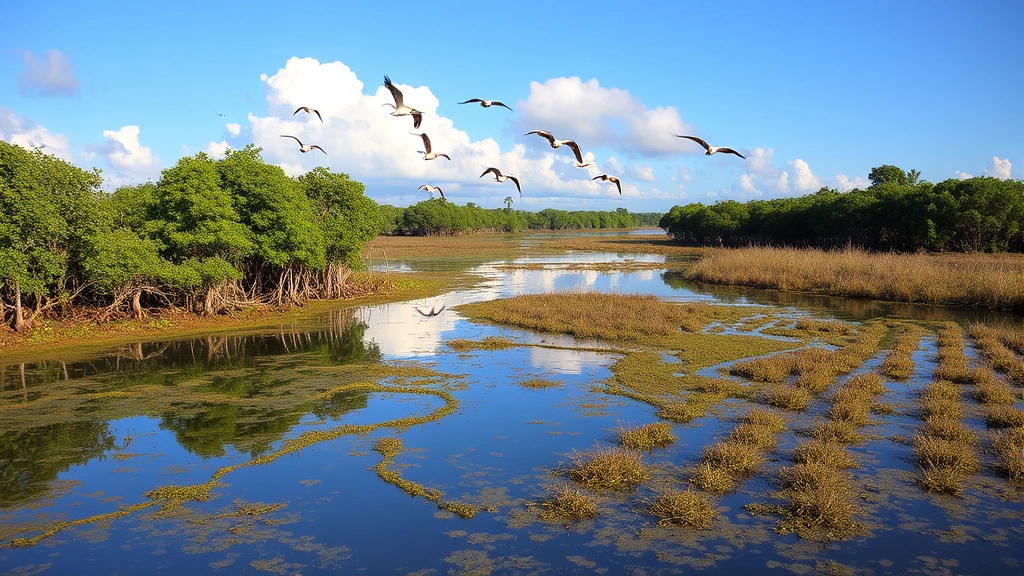
Blue carbon markets—valuing carbon sequestration in coastal ecosystems—are expanding rapidly. Mangrove restoration, seagrass meadow recovery, and salt marsh protection all generate carbon credits while restoring fisheries habitat and coastal protection. Companies and governments are investing billions in blue carbon projects, recognizing exceptional carbon sequestration rates and multiple co-benefits.
Biodiversity offsetting creates economic mechanisms for ecosystem protection. Companies required to offset biodiversity impacts invest in ecosystem restoration, creating markets for restoration services. While imperfect, these mechanisms direct capital toward conservation in ways traditional funding cannot. Private investment in biodiversity conservation has increased substantially through these offset mechanisms.
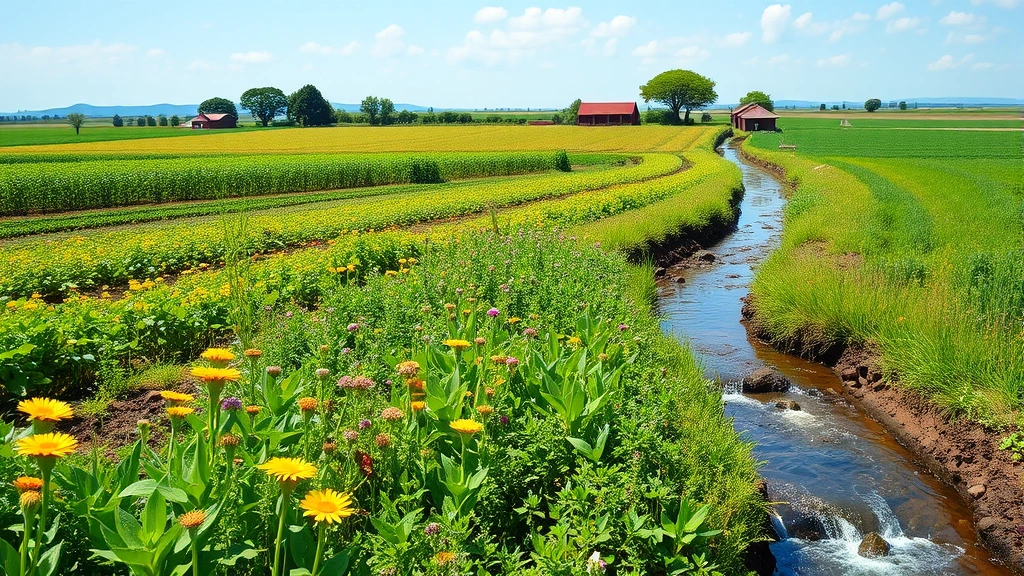
Climate adaptation investments increasingly prioritize ecosystem-based solutions. Nature-based approaches to flood management, drought resilience, and coastal protection cost less than purely engineered solutions while providing additional benefits. Governments and development banks are shifting adaptation funding toward ecosystem-based approaches, recognizing superior cost-effectiveness and co-benefits.
Technology companies are developing platforms connecting ecosystem restoration investment opportunities with capital seeking both financial and environmental returns. These platforms democratize ecosystem investment, allowing smaller investors to participate in restoration projects. As markets mature, ecosystem restoration is becoming accessible to mainstream investors alongside traditional asset classes.
FAQ
How much economic value do ecosystems provide globally?
Global ecosystem services are valued at approximately $125 trillion annually, encompassing pollination, water purification, climate regulation, soil formation, and numerous other services. This value far exceeds global GDP and represents critical economic infrastructure.
Can ecosystem protection compete economically with resource extraction?
Yes, in most cases. When properly valued, ecosystem protection generates superior long-term economic returns compared to extraction. Tourism, sustainable agriculture, and ecosystem service payments often exceed extraction revenues while maintaining future productivity.
What is natural capital accounting?
Natural capital accounting measures and values ecosystem assets and services within national accounts. This approach reveals true economic wealth by including environmental assets alongside traditional capital, fundamentally changing how nations measure prosperity.
How do carbon markets value forest ecosystems?
Carbon markets assign monetary value to carbon sequestration based on market prices (currently $50-150 per ton). A mature forest storing 200 tons of carbon per hectare generates $10,000-30,000 in climate value alone over its rotation.
What are Payment for Ecosystem Services programs?
PES programs compensate landowners for maintaining or restoring ecosystems that provide valuable services. Costa Rica’s program compensates forest owners for carbon sequestration, water purification, and biodiversity conservation, protecting millions of hectares while supporting rural incomes.
How does biodiversity increase agricultural productivity?
Greater biodiversity increases pest control, pollination efficiency, soil health, and climate resilience. Diverse farming systems show 20-30 percent higher productivity than monocultures while requiring fewer inputs and delivering greater stability.
What is blue carbon and why does it matter economically?
Blue carbon refers to carbon sequestration in coastal ecosystems like mangroves and seagrass meadows. These ecosystems sequester carbon at rates 10 times higher than terrestrial forests, creating high-value restoration opportunities.
Can ecosystem restoration generate investment returns?
Yes, ecosystem restoration increasingly generates competitive financial returns through carbon markets, timber value, agricultural productivity improvements, and tourism revenue. The restoration economy is projected to reach $2 trillion by 2050.


