Built Environment’s Role in Economy: Expert Insight
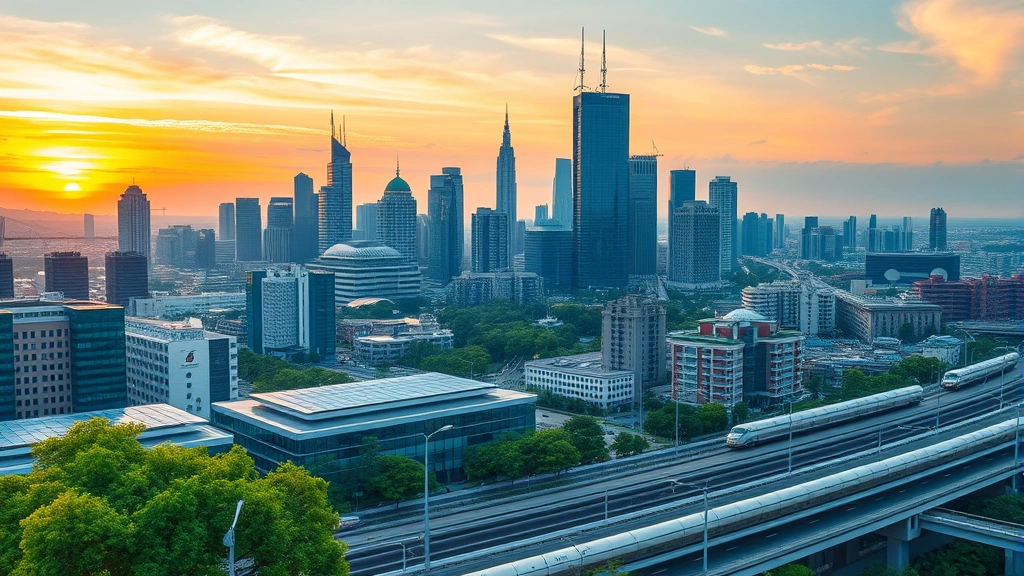
The built environment—comprising buildings, infrastructure, transportation networks, and urban spaces—represents one of the most significant economic assets and drivers globally. This interconnected system of human-made structures fundamentally shapes economic productivity, employment patterns, and resource allocation across regions. Understanding the built environment definition and its economic implications reveals how strategic investment in physical infrastructure directly influences GDP growth, business competitiveness, and long-term economic resilience.
Economic experts increasingly recognize that the built environment operates as both an economic engine and a constraint on sustainable development. The sector accounts for approximately 13% of global GDP and employs over 110 million workers worldwide. Yet this expansive system also consumes roughly 40% of global energy and generates 33% of carbon dioxide emissions, creating complex tradeoffs between economic growth and environmental sustainability that policymakers must navigate carefully.
Built Environment Definition and Scope
The built environment definition encompasses all human-constructed physical structures and systems that form the backdrop for human activity. This includes residential buildings, commercial properties, industrial facilities, transportation infrastructure, water and sanitation systems, energy networks, and public spaces. The definition extends beyond mere physical structures to encompass the planning, design, construction, maintenance, and eventual demolition or renovation cycles that characterize these assets throughout their lifecycles.
Economists distinguish the built environment from the natural environment, though increasingly these boundaries blur in discussions of sustainable development. The built environment represents accumulated capital—both physical and human—that enables economic transactions, facilitates labor mobility, and creates the spatial conditions necessary for specialized economic activities. A comprehensive understanding requires examining how the built environment interacts with human and environment interaction across multiple scales, from individual buildings to megacity metropolitan regions.
The scope of built environment economics includes:
- Real estate markets and property valuation systems
- Construction industries and building trades
- Urban planning and land use regulation
- Infrastructure networks connecting economic centers
- Building operations and maintenance economies
- Supply chains for construction materials and equipment
Understanding this scope reveals why the built environment fundamentally shapes economic geography. Firms locate in specific places because of infrastructure quality, labor availability, and agglomeration benefits—all features of the built environment. This spatial dimension of economics makes the built environment a primary determinant of regional competitiveness and economic inequality.
Primary Economic Drivers
The built environment drives economic activity through multiple interconnected mechanisms. Capital formation in the built environment represents one of the largest investment categories globally, with commercial real estate, residential construction, and infrastructure projects consuming trillions annually. This capital formation generates immediate employment in construction sectors while creating durable assets that support productivity for decades.
Real estate represents approximately 60% of global asset values, making the built environment central to wealth accumulation and financial system stability. Property values reflect expectations about future economic activity in specific locations, making real estate markets sensitive indicators of economic confidence. When built environment investment declines, it signals broader economic contraction; conversely, construction booms often precede periods of rapid growth.
The productivity effects of built environment quality prove substantial. Firms operating in well-designed, efficiently serviced facilities demonstrate higher output per worker. Transportation infrastructure that reduces commute times increases effective labor supply and worker productivity. Telecommunications infrastructure embedded in urban environments enables knowledge work and innovation clustering. These productivity mechanisms explain why economists find strong correlations between infrastructure quality and economic growth rates across countries.
Labor market dynamics depend critically on built environment characteristics. The construction sector itself employs millions globally, while real estate services support additional millions in property management, brokerage, and finance. More broadly, the built environment determines where jobs can be located and how accessible they are to workers. Poor transportation connections between residential areas and employment centers create geographic mismatches that reduce labor market efficiency.
The built environment also facilitates innovation and entrepreneurship through clustering effects. Technology hubs, financial centers, and creative districts depend on physical proximity that the built environment enables. Dense urban environments with quality office space, supporting services, and diverse talent pools create conditions where innovation flourishes. This explains why major metropolitan areas generate disproportionate shares of patents, startups, and economic growth despite occupying small land areas.
Infrastructure Investment and Returns
Infrastructure investment represents one of the most consequential economic policy decisions governments make. The economic returns to infrastructure investment prove substantial but vary significantly based on quality, maintenance, and complementary investments. World Bank research demonstrates that well-maintained infrastructure generates returns of 7-12% annually, making it one of the highest-return investment categories available to developing economies.
However, infrastructure investment quality matters enormously. Poorly designed projects, inadequate maintenance, and misalignment with economic needs can generate negative returns. Economists increasingly emphasize that infrastructure must match specific economic development stages and regional characteristics. A major highway project that doesn’t connect to actual economic centers represents wasteful spending; conversely, targeted investments in transportation, energy, and digital infrastructure unlock productivity across entire regions.
The relationship between infrastructure and economic growth operates through several channels. First, infrastructure reduces transaction costs—businesses can access wider markets when transportation networks improve. Second, infrastructure enables specialization by allowing workers to access jobs beyond their immediate geographic area. Third, quality infrastructure attracts private investment by reducing business operating costs and uncertainty. Fourth, infrastructure supports human capital development by enabling access to education and healthcare services.
Maintenance represents a critical but often underfunded aspect of infrastructure economics. A dollar spent maintaining existing infrastructure typically generates higher returns than new construction, yet political incentives often favor visible new projects. The deterioration of infrastructure in developed economies—aging roads, bridges, water systems—represents a hidden drag on productivity and economic growth. Conversely, developing economies that maintain infrastructure quality achieve superior growth outcomes.
Public-private partnerships (PPPs) and alternative financing mechanisms have expanded infrastructure investment capacity, though with mixed results. These arrangements can mobilize private capital and expertise, but also create risks of cost overruns and inadequate public benefit. The optimal infrastructure investment approach varies by context, but economic evidence clearly demonstrates that infrastructure underinvestment imposes substantial costs through reduced productivity, higher business expenses, and constrained economic growth.
Employment Creation and Labor Markets
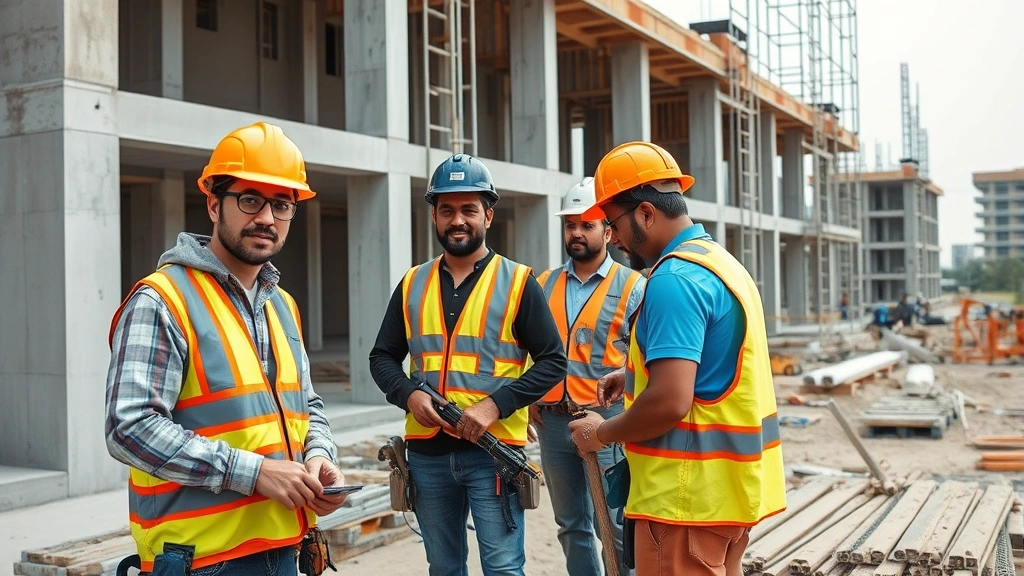
The built environment sector represents one of the largest employment categories globally, with construction, real estate, and property services employing hundreds of millions directly and indirectly. Construction employment fluctuates significantly with economic cycles, making the sector a leading economic indicator. When construction employment rises, it signals business confidence and growth expectations; declines signal economic contraction.
Employment in built environment sectors proves relatively distributed geographically compared to high-tech industries, creating economic opportunities in diverse regions. A construction project in a small town generates local employment and demand for materials, supporting rural economies. This geographic distribution makes built environment investment an important tool for regional development policy, though quality and strategic focus matter considerably.
The built environment also influences labor market dynamics beyond direct employment. Transportation infrastructure determines job accessibility, affecting labor force participation and wage outcomes. Areas with poor transportation connections to employment centers experience lower labor force participation and higher unemployment, particularly among lower-income workers. Conversely, areas with excellent transit connections see higher labor force participation and compressed commute times that increase worker wellbeing.
Skills development in built environment sectors creates pathways for workers without advanced education. Construction trades offer apprenticeship programs that develop valuable skills while earning competitive wages. Real estate services provide entry-level positions with advancement opportunities. This democratization of opportunity contrasts with sectors requiring extensive formal education, making built environment employment crucial for economic inclusion.
However, built environment employment faces significant challenges. Automation increasingly affects construction and property management. Climate change threatens infrastructure in vulnerable regions. Skills mismatches between worker capabilities and employer needs create unemployment despite labor shortages in specific trades. Addressing these challenges requires coordinated investment in workforce development and strategic infrastructure planning aligned with emerging economic opportunities.
Environmental Economics Integration
The intersection of built environment economics and environmental sustainability represents one of the most pressing policy challenges. Traditional economic accounting treats the built environment as a productive asset generating returns, while largely ignoring environmental costs. Environmental economics corrects this by incorporating natural capital depletion, ecosystem service losses, and climate impacts into economic analysis of built environment decisions.
Buildings and infrastructure consume enormous quantities of materials, energy, and water throughout their lifecycles. Cement production alone generates 8% of global carbon emissions. Construction generates 35% of global waste streams. These environmental costs impose externalities—damages borne by society rather than market actors—that market prices fail to capture. When developers choose cheaper materials without considering environmental costs, they impose uncompensated damages on future generations.
Climate change creates substantial risks for built environment investments. Coastal infrastructure faces flooding risks from sea-level rise and increased storms. Water-dependent infrastructure faces stress from changing precipitation patterns. Extreme heat threatens building performance and worker safety. These climate risks mean that built environment investments made without climate considerations will generate losses as climate impacts intensify. UNEP research emphasizes that climate-resilient infrastructure requires integrating adaptation measures into all built environment planning.
The transition to sustainable built environments requires substantial economic restructuring. Low-carbon construction materials, renewable energy systems, and circular economy approaches cost more initially but generate lifetime savings through reduced operating expenses. Green buildings demonstrate 20-30% lower operating costs compared to conventional buildings, justifying higher capital costs through operational savings. This economic case for sustainability strengthens as energy prices rise and climate regulations tighten.
Understanding the impacts humans have had on the environment through built environment development reveals the need for fundamental economic restructuring. Natural capital depletion—soil degradation from construction, water resource depletion, biodiversity loss—represents genuine economic losses that conventional GDP accounting ignores. Incorporating environmental costs into economic decision-making would shift investment toward sustainable built environment approaches that preserve natural capital while meeting development needs.
Green infrastructure represents an emerging economic opportunity within environmental constraints. Nature-based solutions—wetlands for water management, urban forests for cooling, restored ecosystems for carbon sequestration—provide ecosystem services while creating economic value. These approaches often cost less than conventional infrastructure while providing multiple co-benefits. Ecological economics research increasingly demonstrates that sustainable infrastructure approaches generate superior economic returns when environmental benefits are properly valued.
Future Trends and Opportunities
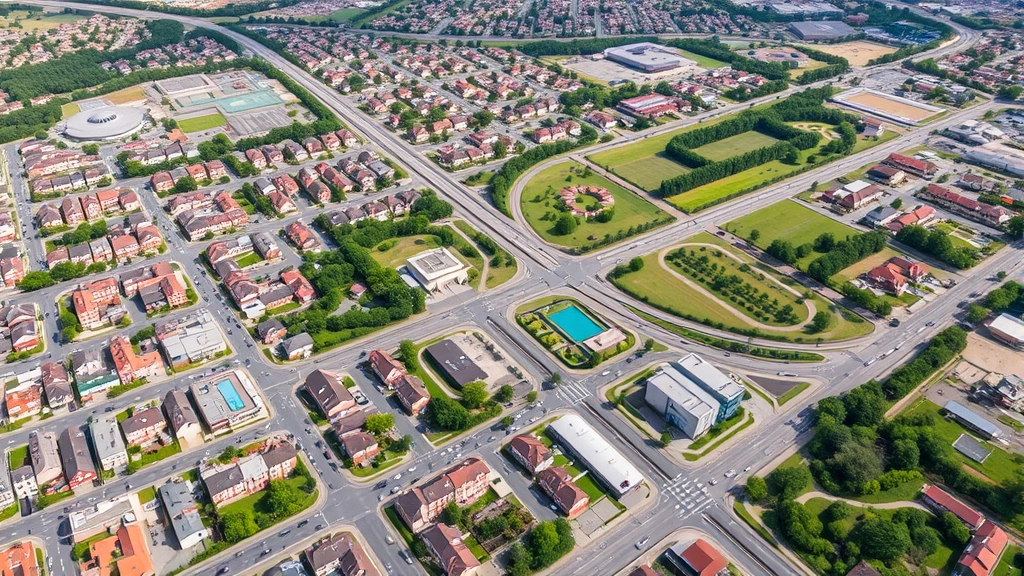
The future of built environment economics will be shaped by several converging trends. Urbanization continues globally, with projections suggesting 68% of humanity will live in urban areas by 2050. This massive urbanization creates both opportunities and challenges for economic development. Cities that manage growth effectively, investing in quality infrastructure and sustainable systems, will become engines of prosperity. Those that fail to plan face congestion, environmental degradation, and reduced competitiveness.
Digital technologies are transforming built environment economics. Smart buildings that optimize energy use, building information modeling that improves construction efficiency, and digital platforms that facilitate real estate transactions all increase productivity. However, these technologies also create winners and losers, potentially exacerbating inequality if not managed carefully. The economic benefits of digitalization must be distributed broadly to avoid concentrating wealth in technology-owning firms.
Circular economy principles are reshaping construction and real estate. Instead of extracting virgin materials, demolishing buildings, and disposing of waste, circular approaches reuse materials, retrofit buildings, and recover resources from demolition. This transition creates economic opportunities in deconstruction, material recovery, and adaptive reuse while reducing environmental costs. Companies pioneering circular approaches often discover cost savings alongside environmental benefits.
Climate adaptation and mitigation investments will dominate built environment spending in coming decades. Retrofitting existing buildings for energy efficiency, upgrading infrastructure for climate resilience, and building new climate-adapted structures represent massive investment opportunities. These investments generate employment, reduce operating costs, and protect economic assets from climate risks. Forward-thinking regions that lead this transition will gain competitive advantages.
The relationship between built environment and labor markets will evolve as work patterns change. Remote work enabled by digital infrastructure reduces commuting needs, potentially reshaping real estate demand. However, office spaces remain valuable for collaboration and innovation. Future built environments will likely feature diverse work settings—home offices, local co-working spaces, and innovation hubs—requiring more sophisticated planning than traditional office-centric models.
Governance and policy frameworks for built environment economics must evolve to address sustainability challenges. Carbon pricing that incorporates climate costs into construction decisions, circular economy regulations that mandate material recovery, and infrastructure planning that prioritizes climate resilience represent policy directions gaining traction. These policies will reshape investment patterns, creating winners in sustainable sectors while challenging conventional approaches. ICLEI Local Governments for Sustainability demonstrates that forward-thinking municipalities are already implementing these approaches successfully.
Equity considerations will increasingly shape built environment policy. Current patterns of development often concentrate wealth while displacing lower-income residents. Future approaches must ensure that built environment development benefits broader populations, provides affordable housing, creates quality employment, and doesn’t perpetuate environmental injustice. Inclusive development approaches that engage affected communities in planning prove more economically resilient and socially beneficial than top-down approaches.
Technology integration with renewable energy for homes and buildings represents another crucial trend. Distributed renewable energy systems, battery storage, and smart grids are transforming building energy economics. Buildings increasingly function as energy producers rather than consumers, creating new business models and economic opportunities. This energy transition makes built environment investments in renewable-ready infrastructure increasingly valuable.
The connection between built environment quality and strategies to reduce carbon footprint becomes ever more central to economic competitiveness. Organizations and regions that minimize built environment carbon impacts through efficient design, sustainable materials, and renewable energy gain cost advantages and risk reductions. This economic case for sustainability strengthens continuously as climate impacts intensify and regulations tighten.
FAQ
What exactly is meant by built environment definition?
The built environment definition encompasses all human-constructed physical structures and systems including buildings, transportation networks, utilities, and public spaces. It represents accumulated capital that enables economic activity, shapes where people live and work, and fundamentally influences economic geography and productivity.
How does built environment investment affect economic growth?
Built environment investment drives growth through multiple mechanisms: capital formation, employment generation, productivity improvements, and innovation clustering. Quality infrastructure reduces business costs, enables specialization, and attracts private investment. Research demonstrates returns of 7-12% annually for well-designed infrastructure projects.
What is the relationship between built environment and environmental sustainability?
Traditional economics often ignores environmental costs of built environment development. Environmental economics corrects this by incorporating resource depletion, ecosystem losses, and climate impacts. Sustainable approaches often generate superior economic returns through operational savings and risk reduction while preserving natural capital.
How will climate change impact built environment economics?
Climate change threatens infrastructure through flooding, extreme heat, and changing water availability. Investments in climate-resilient and low-carbon infrastructure represent both risk management and economic opportunity. Regions leading this transition gain competitive advantages through reduced operating costs and protected assets.
What employment opportunities exist in built environment sectors?
Construction, real estate, property management, and infrastructure maintenance employ hundreds of millions globally. These sectors offer apprenticeships and career pathways for workers without advanced education. However, automation and skills mismatches present challenges requiring workforce development investment.
How can built environment development be made more equitable?
Equitable development requires inclusive planning that engages affected communities, ensures affordable housing, creates quality employment, and avoids environmental injustice. This approach often generates more resilient economic outcomes than top-down development that concentrates benefits and displaces residents.


