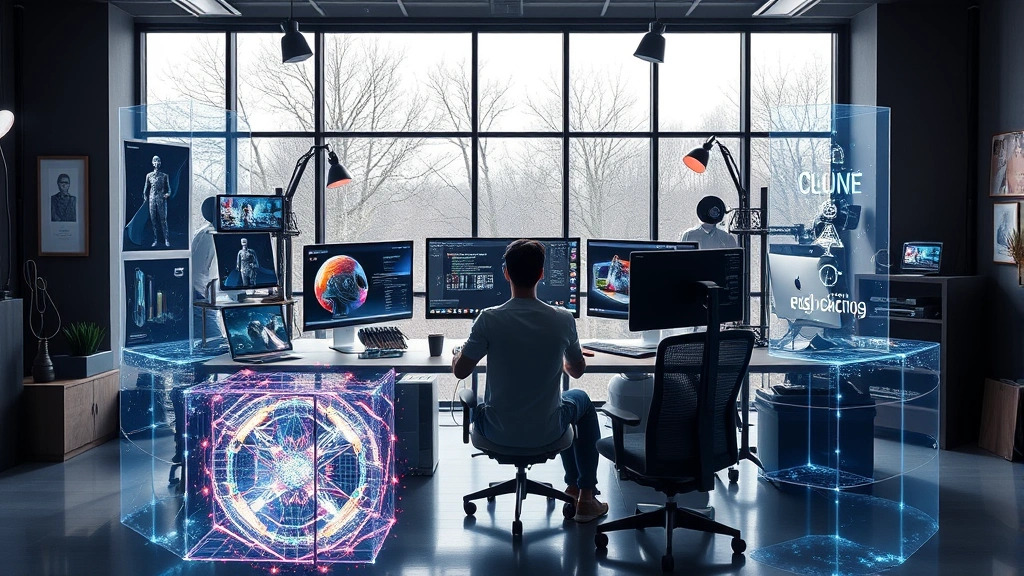
Tech’s Role in Arts: Economic Impact Explored
The intersection of technology and creative industries represents one of the most dynamic economic frontiers of the 21st century. Digital transformation has fundamentally reshaped how artists create, distribute, and monetize their work, while simultaneously creating new environmental and social considerations. The global creative economy now contributes approximately $2.3 trillion annually to worldwide GDP, with technology serving as both enabler and disruptor in this landscape.
Understanding the economic implications of technological integration in arts requires examining multiple dimensions: employment patterns, market accessibility, resource consumption, and the sustainability of creative ecosystems. As we explore human environment interaction through the lens of creative industries, we must consider how digital tools reshape not only economic outcomes but also environmental footprints and social equity.
Digital Transformation and Economic Growth in Creative Industries
Technology has catalyzed unprecedented economic expansion within arts sectors globally. According to World Bank research, digital platforms have increased market accessibility for emerging artists while creating entirely new revenue streams. Streaming services, digital marketplaces, and blockchain-based platforms have democratized distribution channels that previously required significant capital investment and institutional gatekeeping.
The economic impact manifests across multiple vectors. Streaming platforms generate $10 billion annually in music revenue alone, while digital art marketplaces facilitate transactions exceeding $25 billion yearly. Virtual reality art installations command premium pricing, and digital performance spaces have created employment for thousands of technicians, programmers, and digital curators. These developments represent genuine economic expansion rather than mere redistribution of existing wealth.
However, this growth presents paradoxes worth examining. While overall market size increases, individual artist compensation often stagnates or declines. A musician earning $0.003-0.005 per stream faces economic pressure despite participating in a $10 billion industry. This disconnect between sector growth and individual creator prosperity reveals structural economic challenges that technology alone cannot resolve.
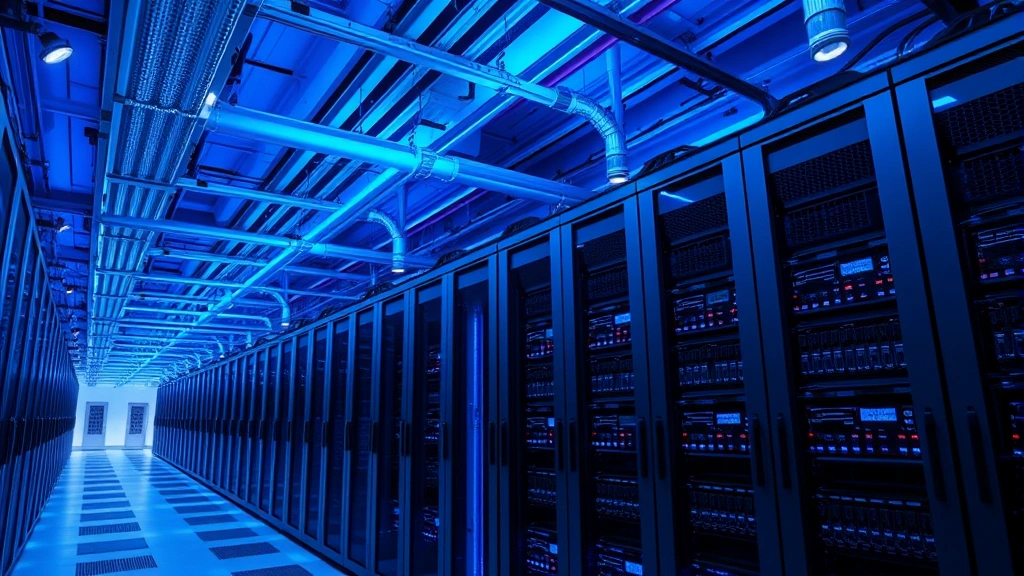
The relationship between environmental impacts and technological infrastructure becomes apparent when examining data center requirements for creative platforms. Streaming a single song generates approximately 0.0005 kg of CO2 emissions. While individually negligible, aggregate impacts across billions of annual streams create measurable environmental costs that economic analyses typically exclude.

Employment Patterns and Skills Evolution
Technology has fundamentally restructured employment within creative industries, creating complex economic outcomes. Traditional roles—studio musicians, session engineers, gallery assistants—have declined as digital alternatives emerged. Simultaneously, entirely new professions have materialized: virtual experience designers, NFT curators, algorithm optimization specialists, and digital accessibility consultants.
The creative economy now encompasses 29.5 million jobs globally, with technology-mediated positions representing the fastest-growing segment. Yet these positions demonstrate unequal geographic distribution. Developed nations concentrate high-skill, high-wage roles in digital arts direction and platform development, while lower-wage content moderation and data annotation positions concentrate in developing economies. This pattern reflects broader economic inequalities rather than technology-neutral skill development.
Skills evolution presents both opportunity and precarity. Artists must now master technical platforms alongside traditional competencies. A visual artist requires proficiency in digital asset management, social media algorithms, and potentially NFT smart contracts. This expanded skill requirement creates barriers for artists from under-resourced backgrounds while advantaging those with access to technical education. The economic opportunity thus concentrates among already-privileged populations despite technology’s theoretical democratization potential.
Wage data reveals persistent disparities. Full-time creative professionals using primarily digital tools earn median salaries of $48,000-$62,000 annually in North America, compared to $35,000-$42,000 for those without technical specialization. Yet freelance digital creatives—the fastest-growing segment—average $28,000 annually with minimal benefits, reflecting precarious labor conditions enabled by platform economics. This bifurcation suggests technology-driven economic growth benefits capital owners and specialized technicians disproportionately.
Market Accessibility and Global Distribution Networks
Perhaps technology’s most transformative economic contribution involves democratizing market access. Independent artists can now reach global audiences without institutional intermediaries. A musician in rural Indonesia can distribute to 195 countries via digital platforms; a visual artist can exhibit in virtual galleries worldwide; a filmmaker can premiere independently to international audiences.
This accessibility revolution carries genuine economic implications. Spotify’s independent artist program has paid $4.5 billion to non-label artists since inception. YouTube’s Creator Fund distributes $2+ billion annually. Patreon enables direct audience patronage, generating $500+ million in annual creator income. These figures represent real economic opportunity, particularly for artists in markets previously inaccessible to international audiences.
Yet market accessibility paradoxically intensifies competition. Global reach means artists compete against millions of peers rather than local or national cohorts. Algorithmic visibility becomes paramount, favoring established creators with existing audiences. The economic benefit concentrates among top performers: the top 1% of creators earn 90% of platform income on most major platforms. This winner-take-most dynamic reflects network effects inherent to digital markets rather than reflecting artistic quality or innovation.
Distribution network efficiency creates environmental considerations often overlooked in economic analyses. Cloud storage and streaming require substantial data center infrastructure. A single data center consumes 10-50 megawatts of electricity continuously. Google’s data centers alone consume approximately 15 terawatt-hours annually—equivalent to a small nation’s electricity usage. While these costs don’t appear in traditional economic accounting, they represent real resource consumption with environmental consequences.
Environmental Considerations in Tech-Enabled Arts
The environmental footprint of technology-mediated arts extends beyond data infrastructure. Digital art creation requires computing devices with significant embodied carbon costs. Manufacturing a single laptop generates 300+ kg CO2 equivalent; a graphics workstation generates 500+ kg. When multiplied across millions of digital creators globally, device manufacturing represents substantial environmental impact.
Supply chain considerations compound these impacts. Rare earth minerals extraction for computing devices causes localized environmental degradation. Cobalt mining in the Democratic Republic of Congo, essential for lithium-ion batteries powering creative devices, has documented environmental and human rights consequences. The economic benefit flowing to creative professionals in wealthy nations depends partially on environmental costs externalized to mining communities.
Our analysis of carbon footprint reduction strategies reveals technology’s paradoxical role. Digital distribution reduces physical infrastructure—no concert halls, gallery buildings, or transportation for physical artworks. Yet this efficiency gain often gets offset by increased consumption. Easier distribution encourages more frequent content creation and consumption, potentially increasing aggregate environmental impacts despite per-unit efficiency improvements.
Research from ecological economics institutions indicates that technological efficiency improvements frequently fail to achieve expected environmental benefits due to rebound effects. Lower distribution costs for digital music encourage more frequent consumption, potentially increasing aggregate energy use despite per-stream efficiency. This dynamic suggests that purely technological solutions insufficient for environmental sustainability without complementary behavioral and economic policy interventions.
Sustainability and Long-term Economic Models
Sustainable creative economies require economic models transcending purely technology-driven solutions. Current platform-based models concentrate value extraction among technology companies rather than creators. Spotify retains approximately 30% of revenue for platform operations; Apple’s App Store takes 30%; YouTube takes 45%. These arrangements generate platform profitability while creator compensation stagnates.
Alternative models emerging include cooperative platforms, direct patronage systems, and decentralized networks. Resonate and Ampled represent musician-owned streaming alternatives prioritizing equitable revenue distribution. Patreon enables direct creator-audience relationships bypassing platform intermediaries. These models demonstrate that technology itself remains neutral regarding economic distribution—policy choices and organizational structures determine outcomes.
The relationship between creative economy sustainability and broader sustainable economic practices requires integration. Environmental accounting must incorporate data infrastructure costs, device manufacturing impacts, and supply chain externalities into economic valuation. Current GDP calculations ignore these dimensions entirely, creating systematic underestimation of true costs associated with technology-mediated creative production.
Research from the United Nations Environment Programme emphasizes that sustainable creative economies require policy frameworks addressing both economic equity and environmental impact. Technology enables these objectives but cannot achieve them independently. Regulatory frameworks establishing living wages for digital creators, environmental impact requirements for platforms, and transparent algorithmic accountability represent necessary complements to technological innovation.
Long-term economic sustainability also requires addressing skill development inequities. Educational programs teaching technical arts competencies must reach underrepresented populations systematically. Public investment in arts infrastructure—particularly in developing regions—can facilitate technology adoption while maintaining cultural diversity and preventing economic concentration in wealthy nations.
The emergence of ecological economics frameworks analyzing creative industries suggests that conventional economic metrics inadequately capture sustainability dimensions. Measures accounting for environmental depletion, social equity, and long-term resource availability provide more accurate pictures of creative economy health than GDP growth alone. These frameworks increasingly inform policy discussions at national and international levels.
FAQ
How has technology impacted artist earnings?
Technology has created both opportunities and challenges. Global distribution access enables income for previously excluded artists, yet platform economics concentrate most revenue among top performers. Average creator earnings have declined despite sector growth, reflecting algorithmic competition intensification and platform revenue extraction.
What environmental costs does technology-mediated arts create?
Data infrastructure, device manufacturing, rare earth mineral extraction, and increased consumption patterns generate substantial environmental impacts. Per-unit efficiency improvements often get offset by consumption increases, requiring policy interventions beyond technological solutions.
Are technology platforms beneficial for emerging artists?
Technology democratizes distribution access, enabling global reach previously impossible. However, algorithmic visibility concentration means success remains rare. Emerging artists benefit from access while facing intensified competition and uncertain revenue prospects.
How can creative economies become more sustainable?
Sustainable models require cooperative platforms prioritizing equitable revenue distribution, policy frameworks establishing creator protections, environmental accounting incorporating true infrastructure costs, and investment in skills development across underrepresented populations.
What role do data centers play in creative industries?
Data centers enable streaming, cloud storage, and digital distribution but consume enormous electricity quantities. Their environmental impact represents a hidden cost of technology-mediated creative production rarely reflected in economic analyses.


