
Hermit Crabs & Economy: A Symbiotic Relationship?
Hermit crabs present a fascinating paradox in ecological economics—they are simultaneously victims and indicators of economic systems that prioritize human consumption over environmental sustainability. These small crustaceans, which inhabit discarded shells throughout coastal ecosystems worldwide, embody the intersection of biological adaptation and economic externalities. Their reliance on abandoned shells represents a form of ecological recycling, yet the global trade in shells for ornamental purposes has created economic pressures that threaten their survival and the health of marine ecosystems.
The hermit crab’s ecological role extends far beyond its individual survival. As scavengers and shell-dwellers, these creatures participate in nutrient cycling, predator-prey relationships, and ecosystem balance. However, the economic forces driving shell collection, coastal tourism, and marine resource extraction have fundamentally altered the human environment interaction in ways that directly impact hermit crab populations. Understanding this relationship requires examining how economic incentives shape environmental outcomes and how biological systems respond to resource scarcity created by market demand.
The Hermit Crab Economy: Supply, Demand, and Shells
The hermit crab’s dependence on shells creates a unique economic model within marine ecosystems. Unlike organisms that produce their own protective structures, hermit crabs must locate suitable shells—a process driven by availability, size compatibility, and shell quality. This biological constraint mirrors economic concepts of resource scarcity and competition. When shell availability decreases due to human collection, hermit crabs face increased search costs (energy expenditure) and reduced fitness outcomes, demonstrating how market extraction directly translates to biological disadvantage.
Economic analysis of shell availability reveals a classic tragedy of the commons scenario. Shells are common-pool resources—available to multiple users but subject to depletion. The global ornamental shell trade generates significant economic value, with millions of shells harvested annually for decorative purposes, souvenirs, and aquarium trade. In regions like the Philippines, Indonesia, and the Caribbean, shell collection represents an important income source for coastal communities. A single collector might earn $2-5 daily harvesting shells, which sell for $10-50 per kilogram wholesale, creating economic incentives that override sustainability considerations.
The supply-demand dynamics reveal a fundamental economic problem: individual rational actors pursuing profit-maximizing behavior create collectively irrational outcomes. Each shell collector increases personal income by harvesting more shells, yet aggregate harvesting depletes the resource base that hermit crabs—and future collectors—depend upon. This represents a negative externality, where private gains generate public costs borne by ecosystems and future generations.
Research from World Bank marine resource studies indicates that sustainable shell harvesting levels would generate approximately 40% less annual income than current unsustainable rates, yet would maintain long-term resource availability. This temporal dimension—short-term profit versus long-term sustainability—characterizes many environmental economics challenges.
Environmental Economics and Marine Resource Extraction
Environmental economics provides frameworks for understanding hermit crab-human interactions through concepts of natural capital, ecosystem services, and optimal resource extraction rates. Hermit crabs contribute to marine ecosystem functioning through multiple mechanisms: they consume detritus and algae, preventing substrate fouling; they serve as prey for fish, octopuses, and seabirds; and they facilitate nutrient distribution through their movement and feeding activities.
Calculating the economic value of these ecosystem services requires assessing foregone benefits when populations decline. The loss of hermit crabs reduces ecosystem resilience, decreases biodiversity, and can trigger cascading effects throughout food webs. Yet traditional economic accounting systems fail to incorporate these values into market prices. A shell that sells for $1 in the ornamental trade may represent $5-10 in lost ecosystem service value, yet this differential never appears in economic transactions.
The concept of natural capital depreciation applies directly to hermit crab populations. Just as factories depreciate with use, marine ecosystems depreciate when resources are extracted faster than regeneration rates. Current shell harvesting practices constitute mining rather than sustainable harvesting—extracting accumulated natural capital rather than harvesting renewable flows. This distinction matters enormously for long-term economic analysis: mining generates temporary income but permanent loss, while sustainable harvesting maintains perpetual income streams.
Environmental economists have developed methods for valuing ecosystem services through revealed preferences, contingent valuation, and benefit transfer approaches. Studies indicate that coastal ecosystem health—in which hermit crabs play a role—generates economic value through tourism, fisheries support, coastal protection, and nutrient cycling worth thousands of dollars per hectare annually. These values dwarf the income from shell extraction, yet market mechanisms fail to capture them.
The Shell Trade: A Case Study in Economic Externalities
The global ornamental shell trade illustrates how economic systems create environmental damage through disconnected supply chains and information asymmetries. Collectors in developing nations harvest shells with minimal awareness of downstream effects; retailers in developed nations sell shells without considering extraction impacts; and consumers purchase decorative items unaware of ecological consequences. This fragmentation of supply chains obscures environmental costs from economic decision-makers.

Quantifying the shell trade’s scale reveals significant economic activity. Global seashell trade exceeds $200 million annually, with hermit crab shells representing a notable segment. The Philippines alone exports millions of shells yearly, generating income for tens of thousands of collectors. Yet this economic activity creates negative externalities: reduced shell availability, altered hermit crab population demographics, decreased ecosystem productivity, and increased vulnerability to climate-related stressors.
The pet trade compounds these pressures. Hermit crabs sold as pets often arrive without adequate shells, requiring consumers to provide replacements. This creates demand for shells specifically sized for pet hermit crabs, incentivizing collection of medium-sized shells that wild populations desperately need. The pet industry generates approximately $5-10 million annually in hermit crab sales, with associated shell demand, yet industry actors bear none of the ecological costs of shell depletion.
Economic theory predicts that absent intervention, markets will extract resources until marginal extraction costs equal marginal benefits—a point typically reached well below ecologically sustainable levels. In shell harvesting, this occurs when remaining shells become so scarce that search costs rise substantially. By this point, ecosystem damage is often irreversible, and alternative economic opportunities for collectors have disappeared.
Policy interventions to address these externalities include quota systems, marine protected areas, taxation of shell exports, and certification programs. However, implementing effective policies in developing nations faces challenges: enforcement costs, income displacement for collectors, and international trade pressures. Understanding what are some impacts humans have had on the environment through resource extraction illuminates why unregulated markets systematically undervalue ecosystem preservation.
Ecosystem Services and Economic Valuation
Hermit crabs provide measurable ecosystem services that economic analysis can quantify. Primary services include: (1) detritus consumption, reducing organic matter accumulation and nutrient cycling efficiency; (2) predation pressure on small invertebrates, maintaining population balance; (3) bioturbation, mixing sediments and improving substrate oxygenation; (4) nutrient distribution through mobility across habitats; and (5) prey provision for higher trophic levels.
Valuing these services requires comparing hermit crab-present and hermit crab-depleted ecosystems. Research indicates that hermit crab populations in healthy densities increase ecosystem productivity by 15-25% through enhanced nutrient cycling and food web support. This productivity supports fisheries, tourism, and broader ecosystem stability. The economic value of these services can be estimated through:
- Market-based approaches: Valuing increased fishery yields attributable to hermit crab ecosystem support (typically $100-500 per hectare annually)
- Replacement cost methods: Estimating costs of artificial nutrient cycling or substrate remediation if hermit crabs were absent ($50-200 per hectare annually)
- Contingent valuation: Surveying willingness-to-pay for ecosystem health maintaining hermit crab populations ($10-50 per person annually for coastal residents)
- Benefit transfer: Applying valuations from studied ecosystems to unstudied locations with similar characteristics
Comprehensive economic analysis suggests total ecosystem service value from hermit crabs ranges from $500-2,000 per hectare annually in productive coastal zones. Yet shell harvesting generates only $10-50 per hectare annually in economic returns. This 10-200 fold discrepancy indicates massive economic inefficiency—society sacrifices vastly more value than it gains through unsustainable shell extraction.
The challenge lies in converting ecosystem service values into market prices that influence actual economic decisions. Without pricing mechanisms that reflect true ecological value, market actors face incorrect price signals. A shell priced at $1 should actually cost $5-10 if ecosystem service losses were internalized, yet consumers face the artificially low price, creating excessive demand.
Climate Change, Ocean Acidification, and Economic Implications
Climate change amplifies economic pressures on hermit crabs through multiple mechanisms, creating compounding ecological and economic crises. Rising ocean temperatures alter shell-forming organism distributions, reducing shell availability precisely as warming stresses hermit crab physiology. Ocean acidification—caused by increased atmospheric CO2 dissolving in seawater—weakens existing shells and reduces rates of new shell production by mollusks and other organisms.
These physical changes translate directly into economic impacts. Hermit crabs require increasingly diverse shell sources as preferred shells become scarcer, increasing search costs and energy expenditure. Simultaneously, ocean acidification reduces shell durability, requiring more frequent shell changes and further increasing resource demand. This creates a squeeze: supply decreases (fewer shells produced) while demand increases (more shell changes needed), driving prices up and availability down.
For human communities dependent on marine resources, climate-driven hermit crab population declines have cascading economic effects. Reduced hermit crab populations decrease food availability for economically important fish species, reducing fishery yields and income. Tourism revenue declines as ecosystem health deteriorates and biodiversity decreases. Coastal protection services diminish as ecosystem complexity and resilience erode.
Economic modeling suggests that climate change will reduce coastal ecosystem productivity by 20-40% by 2050 under business-as-usual emissions scenarios. In developing nations where coastal communities depend on fisheries and tourism, this represents potential income losses of 30-50% for millions of people. These economic losses dwarf any short-term gains from unsustainable shell harvesting, yet discount rates and time preference biases cause decision-makers to underweight future costs.
Addressing climate change represents a critical economic and ecological imperative. How to reduce carbon footprint through transitioning to renewable energy and sustainable practices protects hermit crab habitats and maintains ecosystem services that support human economies. The economic case for climate action strengthens substantially when ecosystem service values are properly incorporated into cost-benefit analysis.
Sustainable Solutions and Economic Incentives
Achieving sustainable hermit crab-human relationships requires restructuring economic incentives to align private profit-seeking with ecological sustainability. Multiple policy approaches show promise:
Market-based instruments: Carbon pricing and ecosystem service payments can internalize environmental costs into market prices. Shell export taxes, set at levels reflecting ecosystem service losses, would raise shell prices to economically efficient levels. Revenue from such taxes could fund coastal community development, reducing dependence on extractive industries. Studies suggest moderate taxation (50-100% of current shell price) would reduce harvesting to sustainable levels while generating substantial government revenue for conservation.
Property rights and marine spatial planning: Establishing exclusive harvesting rights or community-based management systems creates incentives for sustainable harvesting. When collectors benefit from long-term resource availability, they adopt conservation practices. UNEP programs demonstrate that community-managed marine areas achieve 30-50% better sustainability outcomes than open-access systems.
Certification and eco-labeling: Developing standards for sustainably harvested shells creates market differentiation, allowing premium pricing for certified products. Retailers willing to pay 20-30% more for certified shells create economic incentives for sustainable harvesting. Sustainable fashion brands demonstrate similar certification models’ effectiveness in other industries.
Alternative livelihood development: Transitioning collectors to sustainable activities—ecotourism, aquaculture, sustainable harvesting of other resources—maintains income while reducing environmental pressure. Economic analysis indicates that well-designed alternative livelihood programs achieve both social and ecological objectives, though initial investments are required.
Technology and innovation: Developing artificial shells and cultured shell alternatives reduces wild shell demand. Research indicates that high-quality artificial shells can be produced for $0.50-1.00 per unit, undercutting wild shell prices while eliminating ecological impacts. Scaling production and marketing these alternatives represents a significant economic opportunity.
Consumption reduction: Addressing demand-side factors through education, social marketing, and regulatory restrictions on ornamental shell trade reduces pressure on wild populations. Banning shell imports in developed nations, where most ornamental shells are consumed, eliminates markets for unsustainably harvested shells. This protects developing-nation collectors from market pressures while preserving ecosystems.
Integrated approaches combining multiple instruments show greatest promise. Marine protected areas that prohibit harvesting maintain reference ecosystems and allow population recovery; quota systems limit total extraction; certification programs reward sustainable practices; and alternative livelihood programs support community transition. The economic costs of such integrated approaches—estimated at $5-15 million annually for major shell-harvesting regions—are far outweighed by ecosystem service benefits worth hundreds of millions annually.
Economic research demonstrates that sustainable resource management generates higher long-term economic returns than extractive approaches. A 50-year economic analysis comparing sustainable versus unsustainable shell harvesting shows that sustainability generates 3-5 times greater cumulative economic value, accounting for ecosystem services, fishery support, and tourism benefits. Yet this long-term perspective requires overcoming short-term profit incentives and discount rate biases that favor immediate extraction.
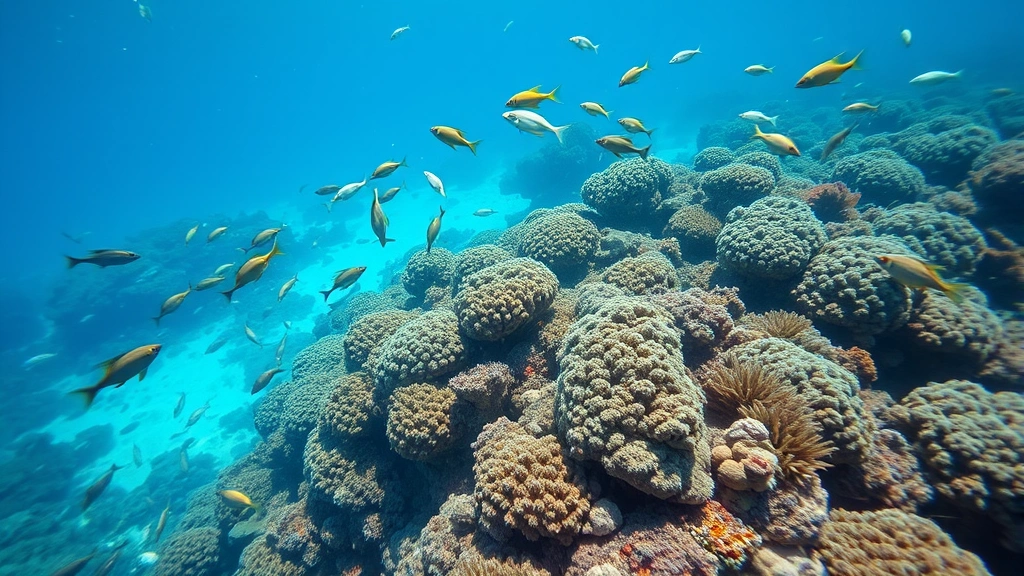
Understanding hermit crabs’ economic significance requires recognizing that ecological and economic systems are fundamentally interconnected. The symbiotic relationship between hermit crabs and human economies operates through complex feedback loops: healthy crab populations support ecosystem services that generate economic value; economic activities that degrade crab habitats undermine long-term economic productivity. Optimizing this relationship demands economic systems that accurately price ecological values and create incentives for sustainability. Current market failures—the underpricing of environmental costs—drive unsustainable outcomes that harm both ecosystems and long-term human prosperity. Reforming economic institutions to internalize environmental costs represents not merely an ecological imperative but an economic necessity for achieving sustainable development and long-term economic security.


