
Human-Environment Interaction: Expert Insights
Human-environment interaction represents one of the most critical dynamics shaping our planet’s future. At its core, this relationship encompasses how human societies adapt to, modify, and depend upon natural systems—and conversely, how environmental changes cascade through human economies, health, and social structures. Understanding this bidirectional exchange is essential for policymakers, economists, and environmental scientists working to create sustainable futures.
The complexity of human-environment interactions has intensified exponentially over the past century. Industrial development, urbanization, and globalized supply chains have created unprecedented leverage points where human decisions ripple across ecosystems spanning continents. Yet simultaneously, we’ve developed sophisticated frameworks for measuring, modeling, and managing these interactions. This article synthesizes expert perspectives on the mechanisms, consequences, and solutions within human-environment dynamics.

Defining Human-Environment Interaction
Human-environment interaction refers to the complex system of relationships between human populations and their biophysical surroundings. This includes resource extraction, waste generation, habitat modification, and the feedback loops through which environmental degradation or restoration affects human societies. The definition of environment science provides foundational understanding, but human-environment interaction extends beyond descriptive categorization into causal mechanisms and systemic analysis.
Scholars distinguish between several dimensions of this interaction. Material flows involve the extraction of resources (minerals, timber, water, fossil fuels) and the return of waste products to environmental systems. Energy transformations describe how humans capture and convert natural energy sources—from photosynthesis captured in agriculture to fossil fuel combustion. Information exchanges encompass how humans perceive, monitor, and respond to environmental signals, from observable weather patterns to abstract climate models.
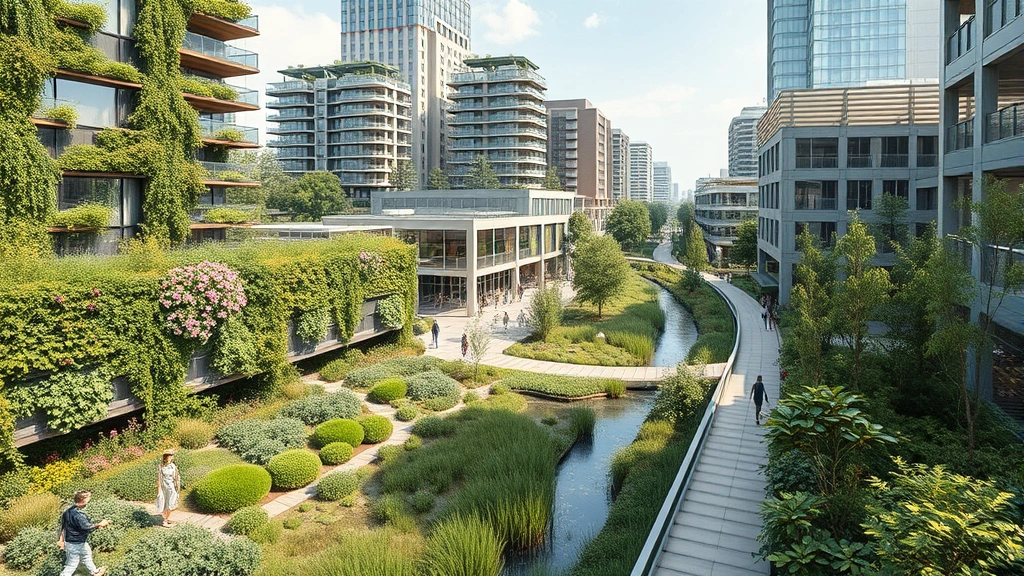
The types of environment humans interact with—natural, built, and social—create nested systems of complexity. A forest represents natural environment, but when humans establish logging operations, settlements, and governance structures around it, we see how all three environmental types become interdependent. This interconnection explains why addressing environmental challenges requires simultaneous attention to ecological, economic, and social dimensions.
Mechanisms of Environmental Change
The mechanisms through which humans alter environments operate across multiple scales and timescales. Understanding these mechanisms requires integrating insights from ecology, geology, atmospheric science, and human geography.
Land-use transformation represents perhaps the most spatially extensive human-environment interaction. Since the agricultural revolution, humans have converted approximately 50% of Earth’s ice-free land surface to human-dominated systems. How do humans affect the environment through land use? Primarily through habitat fragmentation, which reduces ecosystem connectivity and species migration corridors; through monoculture agriculture, which simplifies food webs and increases pest vulnerability; and through urban sprawl, which creates impervious surfaces that alter hydrological cycles.
Biogeochemical cycling disruption occurs when human activities accelerate or redirect natural cycles of carbon, nitrogen, phosphorus, and other essential elements. The Haber-Bosch process, which synthesizes ammonia for fertilizers, now fixes more nitrogen annually than all natural terrestrial processes combined. This has enabled agricultural intensification but has also created dead zones in coastal waters where excess nutrient runoff triggers algal blooms. Similarly, fossil fuel combustion has increased atmospheric CO₂ concentrations by 50% since pre-industrial times, fundamentally altering the planet’s energy balance.
Biodiversity loss functions as both a consequence and a driver of other environmental changes. Current extinction rates exceed background rates by 100-1000 fold, according to research synthesized by the United Nations Environment Programme. This biodiversity loss reduces ecosystem resilience, as functional redundancy—the presence of multiple species performing similar ecological roles—declines. The loss of pollinators, for instance, directly threatens food security for human populations dependent on crops requiring insect pollination.
Pollution dynamics create novel human-environment interactions by introducing substances with no natural analogs. Persistent organic pollutants, microplastics, and pharmaceutical residues now permeate even remote ecosystems. These substances bioaccumulate through food chains, with apex predators and humans experiencing the highest concentrations. The mechanisms of toxicity often remain incompletely understood, creating uncertainty in risk assessment.
Economic Dimensions and Trade-offs
The economic dimensions of human-environment interaction reveal fundamental tensions between different human objectives and between short-term and long-term welfare. Ecological economics—a field examining the relationship between economic systems and biophysical systems—provides crucial frameworks for understanding these tensions.
Traditional economic analysis often treats environmental resources as externalities—costs or benefits not reflected in market prices. A timber company harvesting a forest captures the revenue from wood sales but externalizes the costs of habitat loss, watershed degradation, and carbon storage loss onto society. This creates a systematic bias toward overexploitation of environmental resources. The World Bank’s environmental economics research demonstrates that accounting for natural capital depletion can reduce measured economic growth by 2-4% annually in resource-dependent nations.
Substitutability constraints limit the degree to which human-made capital can replace natural capital. While technology can reduce resource intensity per unit of output, it cannot eliminate the biophysical basis of human economies. Photosynthesis cannot be replaced by machines; water purification by wetlands cannot be fully substituted by treatment plants at equivalent cost. These non-substitutable ecosystem services create absolute constraints on economic expansion.
Distributional consequences of environmental degradation are profoundly unequal. Wealthy populations can purchase pollution avoidance through residential location choices, air filtration, and organic food purchases. Conversely, low-income communities often cluster near industrial facilities, waste disposal sites, and transportation corridors with elevated pollution exposure. This environmental injustice compounds economic inequality, as health costs from pollution exposure reduce lifetime earnings and wealth accumulation in already-disadvantaged populations.
The environment awareness movement has catalyzed economic instruments designed to internalize environmental costs. Carbon pricing mechanisms, payments for ecosystem services, and tradeable pollution permits attempt to align market incentives with ecological sustainability. However, implementation challenges—including determining appropriate price levels, preventing regulatory capture, and ensuring equitable distribution of benefits—remain substantial.
Ecosystem Services and Human Wellbeing
Ecosystem services frameworks quantify the flows of benefits that humans derive from natural systems. The Millennium Ecosystem Assessment identified four categories: provisioning services (food, water, materials), regulating services (climate, disease, flood regulation), supporting services (nutrient cycling, soil formation), and cultural services (recreation, spiritual, aesthetic values).
Quantifying these services in monetary terms enables comparison with economic activities that degrade them. A study valuing mangrove ecosystem services found that the economic value of storm protection, fishery support, and carbon sequestration provided by mangroves exceeded $1 million per hectare, yet coastal development that destroys mangroves often generates less than $100,000 per hectare in immediate economic returns. This valuation approach, while imperfect, reveals how conventional economic analysis systematically undervalues environmental protection.
However, ecosystem service valuation faces significant methodological challenges. How does one price spiritual or cultural values? What discount rate should apply to services benefiting future generations? How should one account for irreversible losses of unique ecosystems? These questions require integrating economic analysis with ethical frameworks and scientific uncertainty.
Tipping points in ecosystem services create non-linear human-environment interactions. Below certain thresholds of environmental degradation, ecosystem function remains relatively resilient. Beyond these thresholds, rapid collapse can occur. The Amazon rainforest may approach a tipping point where continued deforestation and climate change trigger a transition toward savanna, fundamentally altering regional climate patterns and global carbon cycling. Such transitions would create cascading economic consequences through agricultural disruption, water availability changes, and climate feedback amplification.
Adaptive Capacity and Resilience
Human-environment interactions are not purely deterministic; human adaptive capacity—the ability to adjust behaviors, technologies, and institutions in response to environmental change—shapes outcomes substantially. Yet adaptive capacity varies enormously across populations based on wealth, technology access, institutional quality, and social capital.
Technological adaptation has historically allowed humans to overcome resource constraints. The development of synthetic fertilizers enabled agricultural productivity growth that supported population expansion. Renewable energy technologies now enable decarbonization of electricity systems. Yet technological optimism must be tempered by recognition of rebound effects—where efficiency improvements lead to increased consumption, partially offsetting environmental gains—and by the reality that some environmental degradation cannot be reversed through technology alone.
Institutional adaptation involves creating governance structures that align incentives with sustainability. International agreements like the Paris Climate Agreement, regional environmental regulations, and local watershed management organizations represent attempts to internalize environmental costs and coordinate collective action. Success varies substantially based on enforcement capacity, political will, and alignment with economic interests.
Social-ecological resilience describes the capacity of coupled human-natural systems to absorb disturbance while maintaining essential functions. Resilient systems typically feature diversity (multiple pathways for meeting human needs), modularity (localized failures don’t cascade system-wide), and adaptive management (continuous learning and adjustment). Conversely, systems optimized for maximum short-term productivity often sacrifice resilience, becoming brittle and vulnerable to unexpected disturbances.
The COVID-19 pandemic revealed both the fragility and adaptive capacity of global human-environment systems. Disruption of supply chains exposed dependence on just-in-time global logistics; simultaneously, rapid technological innovation and institutional coordination demonstrated human capacity for swift adaptation under crisis conditions.
Governance Frameworks and Solutions
Addressing human-environment interaction challenges requires governance frameworks that operate across multiple scales—from individual behavior change to international treaties—and integrate knowledge from multiple disciplines.
Market-based mechanisms attempt to internalize environmental costs through pricing. Carbon markets, tradeable water rights, and payments for ecosystem services create financial incentives for conservation. The International Union for Conservation of Nature documents thousands of such programs globally. However, market mechanisms work best when property rights are clearly defined, transaction costs are low, and monitoring is feasible—conditions not always present in environmental contexts.
Regulatory approaches establish environmental standards and enforce compliance through permits, inspections, and penalties. Clean air and water regulations in developed nations have achieved substantial improvements in environmental quality, demonstrating that regulation can work. However, regulations create compliance costs that industries often seek to minimize through lobbying and regulatory capture, where regulated industries influence regulators to weaken standards.
Community-based management devolves environmental governance to local populations with direct stakes in resource outcomes. Research from Ecological Economics journal demonstrates that community management often outperforms both centralized government and privatized approaches in sustaining common-pool resources, particularly when communities have secure tenure rights and meaningful voice in decision-making.
Integrated assessment and adaptive management combines scientific monitoring with iterative policy adjustment. Rather than implementing fixed policies, adaptive management treats policies as experiments, systematically evaluates outcomes, and adjusts approaches based on learning. This approach acknowledges deep uncertainty in complex systems while maintaining forward momentum toward sustainability objectives.
The Ecorise Daily Blog provides ongoing analysis of emerging governance innovations and their effectiveness. The United Nations Environment Programme’s resource library offers comprehensive documentation of international environmental governance developments.
Transformative change increasingly appears necessary for achieving sustainability at global scales. This involves fundamental restructuring of energy systems (from fossil fuels to renewables), food systems (toward regenerative and plant-forward agriculture), and consumption patterns (toward circular economy principles). Such transformation requires alignment of technological innovation, economic incentives, policy frameworks, and social values—a coordination challenge of unprecedented scale.
FAQ
What exactly is meant by human-environment interaction?
Human-environment interaction encompasses all the ways humans modify, depend upon, and adapt to their biophysical surroundings. This includes resource extraction, pollution generation, habitat modification, and the feedback loops through which environmental changes affect human societies. It’s inherently bidirectional—humans shape environments, and environmental conditions shape human possibilities.
How do human-environment interactions differ across economic development levels?
Lower-income nations often experience more direct resource dependence and greater vulnerability to environmental degradation, as smaller economic buffers limit adaptive capacity. However, higher-income nations generate greater absolute environmental impacts through consumption levels. The relationship between development and environmental impact follows an inverted-U pattern for some pollutants (improving with regulation after initial degradation) but continues increasing for others (like carbon emissions and material consumption).
Can technology solve human-environment interaction problems?
Technology is necessary but insufficient for sustainability. Renewable energy technologies enable decarbonization, precision agriculture reduces input waste, and pollution control technologies prevent environmental contamination. However, rebound effects—where efficiency gains increase consumption—and the impossibility of substituting technology for some ecosystem services create limits. Technology must combine with behavioral change, institutional reform, and reduced consumption in wealthy nations.
What is the relationship between human-environment interaction and climate change?
Climate change represents a primary consequence of human-environment interactions at a planetary scale, driven principally by fossil fuel combustion and land-use change. Simultaneously, climate change alters the conditions within which all other human-environment interactions occur, affecting water availability, agricultural productivity, ecosystem composition, and human migration patterns. This creates complex feedback loops requiring integrated approaches.
How do indigenous communities approach human-environment interaction differently?
Many indigenous communities have maintained sustainable relationships with their environments over centuries through practices that maintain biodiversity, preserve soil fertility, and sustain water resources. These approaches typically emphasize long-term thinking (considering impacts across multiple generations), reciprocal relationships with nature (rather than purely extractive approaches), and adaptive management based on accumulated ecological knowledge. Growing recognition of indigenous land management effectiveness has led to increased support for indigenous land rights and knowledge integration in conservation planning.
What are the most promising solutions to human-environment interaction challenges?
No single solution addresses the full range of challenges. Promising approaches include: renewable energy transition, regenerative agriculture, ecosystem restoration, circular economy principles, nature-based solutions (using natural processes for human benefit), climate adaptation infrastructure, and governance reforms that internalize environmental costs. Success requires combining multiple approaches, adapted to local contexts, with sustained political will and financial commitment.


