
Green Economies: Sustainable Growth Explained
The concept of a green economy represents a fundamental shift in how societies approach economic development, environmental stewardship, and long-term prosperity. Rather than viewing economic growth and environmental protection as competing priorities, green economics integrates ecological sustainability into the core of economic policy and business practice. This approach recognizes that natural capital—forests, fisheries, clean water, and stable climate systems—forms the foundation upon which all economic activity depends. When we understand what type of work environment do you prefer, we begin to see how workplace sustainability connects to broader economic transformation.
As global economies grapple with climate change, biodiversity loss, and resource depletion, the transition to green growth models has moved from theoretical discussion to practical necessity. Organizations across sectors are discovering that sustainable practices often enhance profitability, improve employee satisfaction, and build resilience against environmental shocks. The green economy isn’t merely about environmental compliance; it represents a comprehensive reimagining of production, consumption, and value creation that accounts for ecological limits while delivering genuine improvements in human wellbeing.
Understanding Green Economy Fundamentals
A green economy, according to the United Nations Environment Programme, is one that results in improved human well-being and social equity while significantly reducing environmental risks and ecological scarcities. This definition encompasses multiple dimensions: resource efficiency, carbon neutrality, biodiversity protection, and equitable distribution of economic benefits. The foundation rests on recognizing that our economic systems operate within planetary boundaries—finite stocks of natural resources and limited capacity for absorbing waste.
Green economics draws from ecological economics, which applies principles of thermodynamics and systems thinking to economic analysis. Unlike conventional economics that treats nature as an infinite resource, ecological economics acknowledges that human environment interaction must operate within ecosystem carrying capacity. This perspective fundamentally changes how we measure progress, evaluate investments, and allocate resources. Instead of relying solely on GDP growth, green economies employ metrics like Genuine Progress Indicator (GPI), which accounts for environmental degradation and social costs alongside traditional economic output.
The transition involves decoupling economic growth from resource consumption and pollution—achieving more value creation while using fewer materials and generating less waste. This decoupling can occur through technological innovation, behavioral change, and systemic restructuring. Renewable energy replacing fossil fuels, circular production replacing linear manufacturing, and regenerative agriculture replacing extractive farming all exemplify this shift. Understanding types of environment helps clarify how green economics applies across natural, built, and social systems.

Economic Benefits of Sustainable Transition
The business case for green economies extends far beyond environmental ethics. Economic research increasingly demonstrates that sustainable practices generate competitive advantages, cost savings, and revenue opportunities. Energy efficiency retrofits in buildings reduce operational expenses while improving comfort and productivity. Renewable energy systems lower long-term electricity costs compared to fossil fuel dependence, particularly as technology costs decline and carbon pricing mechanisms expand. Companies investing in circular economy principles often discover waste reduction yields significant material cost savings.
Employment generation represents another crucial economic benefit. The World Bank reports that clean energy sectors create more jobs per dollar invested than fossil fuel industries. Renewable energy installation, energy audits, sustainable agriculture, ecosystem restoration, and green building construction all generate diverse employment opportunities. These jobs often require intermediate skills and provide stable, local employment that cannot be outsourced. As workers transition from declining extractive industries, green economy sectors provide pathways for economic mobility and community resilience.
Investment flows increasingly favor sustainable enterprises. Environmental, Social, and Governance (ESG) criteria now influence trillions in global capital allocation. Asset managers recognize that companies with poor environmental practices face regulatory risk, supply chain disruption, and reputational damage. Conversely, organizations demonstrating environmental leadership attract capital, talent, and customer loyalty. This financial momentum accelerates the transition as capital markets reward sustainable innovation and penalize environmental risk.
Innovation acceleration drives productivity improvements and new market creation. Constraints on resource use spur technological breakthroughs in efficiency, renewable energy, materials science, and biotechnology. Companies pioneering sustainable solutions often capture first-mover advantages in emerging markets. The transition to green economies therefore generates innovation cascades that benefit society broadly while creating profitable opportunities for early adopters.
Workplace Environment and Green Growth
The question of what type of work environment do you prefer connects directly to green economy principles. Sustainable workplace design enhances employee health, productivity, and satisfaction while reducing environmental impact. Organizations creating green work environments typically experience lower turnover, reduced absenteeism, and higher engagement. This aligns with research showing that built environment characteristics significantly influence worker wellbeing and performance.
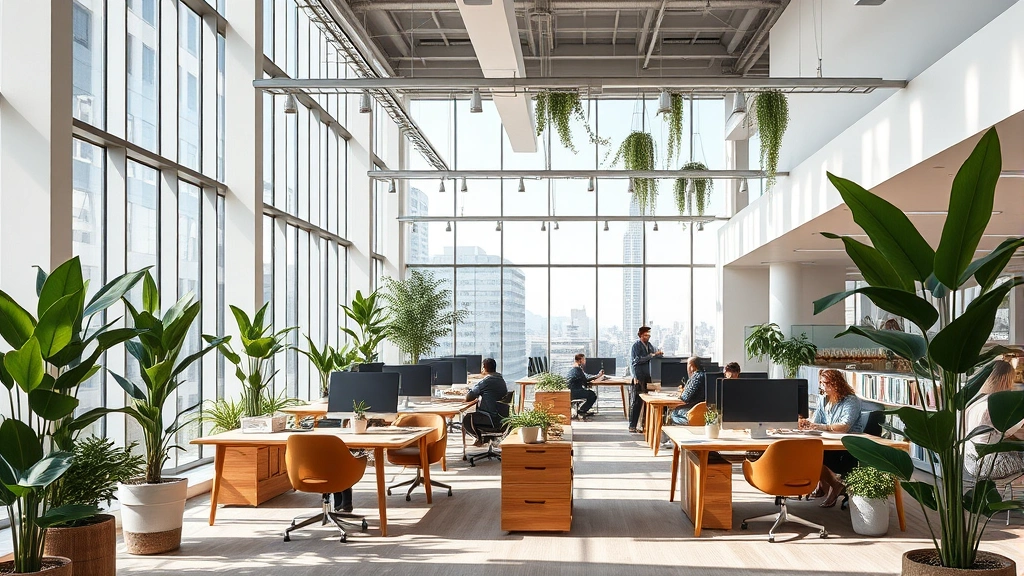
Green office design incorporates natural lighting, improved air quality, thermal comfort, and biophilic elements—features that reduce stress and enhance cognitive function. Organizations that prioritize sustainable workplace practices often report improved employee retention and recruitment. Workers increasingly prefer employers demonstrating environmental commitment, particularly younger professionals entering the workforce. This preference creates competitive advantage for companies building green workplace cultures.
Remote work and distributed workforce models, accelerated by pandemic-driven digital transformation, reduce commuting-related emissions while offering flexibility many workers prefer. Hybrid arrangements balance collaboration benefits with sustainability advantages. Companies optimizing their physical footprints through hot-desking, activity-based working, and flexible space management reduce real estate costs while cutting environmental impact. These arrangements also enable companies to locate talent globally rather than concentrating in expensive urban centers.
Workplace sustainability extends to supply chain and procurement practices. Organizations sourcing sustainable materials, supporting fair labor standards, and partnering with environmentally responsible suppliers embed sustainability throughout operations. This creates accountability throughout value chains while improving working conditions for producers. Understanding how humans affect the environment helps organizations identify leverage points for positive impact across their operations.
Sectoral Applications and Innovation
The green transition manifests across economic sectors through sector-specific pathways adapted to unique characteristics and constraints. Energy systems transformation represents perhaps the most critical sector, with renewable electricity increasingly cost-competitive with fossil fuels. Solar and wind capacity additions now exceed fossil fuel additions globally, driven by declining technology costs and climate policy. Battery storage breakthroughs address intermittency challenges, enabling higher renewable penetration in grids. This transition creates employment in installation, maintenance, grid modernization, and energy management.
Agriculture and food systems face pressure to reduce greenhouse gas emissions, chemical inputs, and land degradation while feeding growing populations. Regenerative agriculture practices—cover cropping, reduced tillage, rotational grazing, and integrated pest management—rebuild soil health while sequestering carbon. Precision agriculture uses data and technology to optimize input use, reducing waste and environmental impact. Plant-based and cultivated protein alternatives reduce resource intensity of protein production. These innovations simultaneously address environmental and food security challenges while creating new agricultural opportunities.
Manufacturing increasingly adopts circular economy principles, designing products for durability, repairability, and end-of-life recovery. This contrasts with linear take-make-waste models. Companies redesigning supply chains to minimize waste, recover materials, and extend product life often achieve cost reductions while reducing environmental footprint. Industrial symbiosis—where one industry’s waste becomes another’s input—exemplifies circular approaches. Advanced recycling technologies recover materials previously considered waste, creating secondary raw material supplies that reduce virgin resource extraction.
Transportation electrification accelerates as battery costs decline and charging infrastructure expands. Electric vehicles offer lower operating costs over their lifetime despite higher upfront prices. Public transit expansion, active transportation infrastructure, and urban planning promoting walkability reduce transportation emissions while improving quality of life. Logistics optimization using artificial intelligence reduces delivery-related emissions. Aviation and shipping, historically difficult to decarbonize, explore sustainable aviation fuels, electric propulsion, and operational efficiency improvements.
The built environment sector represents approximately 40% of global carbon emissions. Green building design incorporating efficient HVAC systems, insulation, renewable energy generation, and water conservation significantly reduces operational emissions. Circular construction practices recover and reuse building materials. Regenerative development goes beyond minimizing harm to create buildings that enhance ecological function. This transformation creates opportunities in retrofitting existing building stock—a critical challenge given that most buildings that will exist in 2050 already exist today.
Policy Frameworks and Implementation
Government policies create essential conditions enabling green economy transitions. Carbon pricing—through taxation or cap-and-trade systems—internalizes environmental costs into market prices, making sustainable options economically competitive. Renewable energy subsidies and feed-in tariffs accelerated technology deployment and cost reductions. Regulations limiting emissions from vehicles, buildings, and industrial processes establish minimum standards while spurring innovation. Green public procurement directs government purchasing toward sustainable products and services, creating market demand and demonstrating commitment.
Investment in green infrastructure—renewable energy systems, public transit, ecosystem restoration, and climate adaptation—provides employment while building long-term productive capacity. National green banks and development finance institutions channel capital toward sustainable projects. Just transition policies support workers and communities dependent on fossil fuel industries, ensuring equitable distribution of transition benefits. Education and workforce development programs build skills for emerging green sectors.
International frameworks facilitate coordination and ambition-raising. The Paris Agreement establishes climate commitments guiding national policies. Sustainable Development Goals integrate environmental, social, and economic objectives. Trade agreements increasingly incorporate environmental standards, reducing incentives for pollution havens. However, policy implementation remains inconsistent globally, with many governments failing to adequately price environmental externalities or phase out fossil fuel subsidies.
Measuring progress requires appropriate metrics and transparent reporting. National accounting systems increasingly incorporate natural capital and ecosystem service values. Corporate sustainability reporting standards enable comparison across organizations. Life cycle assessment methodologies quantify environmental impacts across product lifecycles. These measurement frameworks support accountability and enable evidence-based policy refinement.
Challenges and Opportunities
Despite progress, significant barriers impede green economy transitions. Incumbent fossil fuel industries possess substantial political influence and financial resources, creating path dependency and resistance to change. Short-term financial incentives often favor extractive over regenerative approaches. Infrastructure lock-in—existing systems optimized for fossil fuels—requires massive investment to restructure. Developing economies face capital constraints funding green transitions while meeting immediate development needs. Unequal distribution of transition costs and benefits risks exacerbating inequality if not carefully managed.
Technical challenges persist in decarbonizing difficult sectors. Aviation, shipping, and heavy industry require technological breakthroughs currently unavailable at scale. Mineral supply chains for battery production face sustainability and equity concerns. Land use competition between food production, carbon sequestration, and biodiversity conservation requires careful optimization. These challenges demand continued research, development, and deployment of emerging technologies.
Yet these challenges present equally significant opportunities. Investment in green economy transitions could generate trillions in economic value while creating millions of jobs. Technology costs continue declining as deployment scales. Positive human impact on the environment demonstrates that intentional effort yields measurable improvements. Younger generations entering workforce and political systems bring stronger environmental commitment, accelerating transition momentum.
Opportunities exist across investment, entrepreneurship, and career development. Venture capital increasingly funds climate technology and sustainable business models. Established companies seeking competitive advantage invest heavily in green innovation. Educational institutions expanding sustainability curricula prepare workers for emerging opportunities. Communities embracing green transitions often experience improved health, cleaner environments, and stronger local economies. The green economy transition represents not sacrifice but investment in long-term prosperity.
FAQ
What exactly is a green economy?
A green economy integrates environmental sustainability into economic activity, decoupling growth from resource consumption and pollution. It maintains ecological balance while delivering human wellbeing and economic opportunity, measured through comprehensive metrics beyond traditional GDP.
How does the green economy create jobs?
Green sectors—renewable energy, energy efficiency, sustainable agriculture, ecosystem restoration, and green construction—generate employment across skill levels. These sectors create more jobs per dollar invested than fossil fuel industries, providing stable, local opportunities.
Is green economy transition affordable?
While transition requires upfront investment, long-term savings from operational efficiency, avoided climate damages, and health benefits exceed costs. Investment in green infrastructure generates economic returns while building resilience. Financing mechanisms increasingly support transitions.
How do businesses benefit from green practices?
Companies adopting sustainable practices typically reduce operating costs, attract talent and capital, improve brand reputation, and gain competitive advantages. Innovation in sustainability often creates new market opportunities and revenue streams.
What role do governments play?
Governments establish policy frameworks through carbon pricing, regulations, and green investment that create conditions enabling transitions. They support just transition for affected workers, invest in infrastructure, and coordinate international action.
Can developing countries afford green transitions?
Green transitions often cost less than continuing fossil fuel dependence when accounting for health and climate damages. International climate finance, technology transfer, and capacity building support developing country transitions. Leapfrogging to clean energy avoids locked-in fossil fuel infrastructure.
What work environments support green economy principles?
Green workplaces incorporate sustainable design, renewable energy, efficient operations, and flexible arrangements reducing commuting. Organizations supporting environmental commitment in operations and culture attract talent while reducing environmental footprint.
The transition to green economies represents the defining economic challenge and opportunity of our era. By integrating ecological limits into economic frameworks and measuring progress through comprehensive wellbeing metrics, societies can achieve genuine prosperity—economic vitality coupled with environmental restoration and social equity. This transformation requires sustained commitment from governments, businesses, workers, and communities, but the alternative—continuing extraction within finite planetary systems—proves economically unsustainable. Green economies aren’t about returning to lower living standards but rather creating more resilient, equitable, and genuinely prosperous societies that flourish within ecological boundaries.


