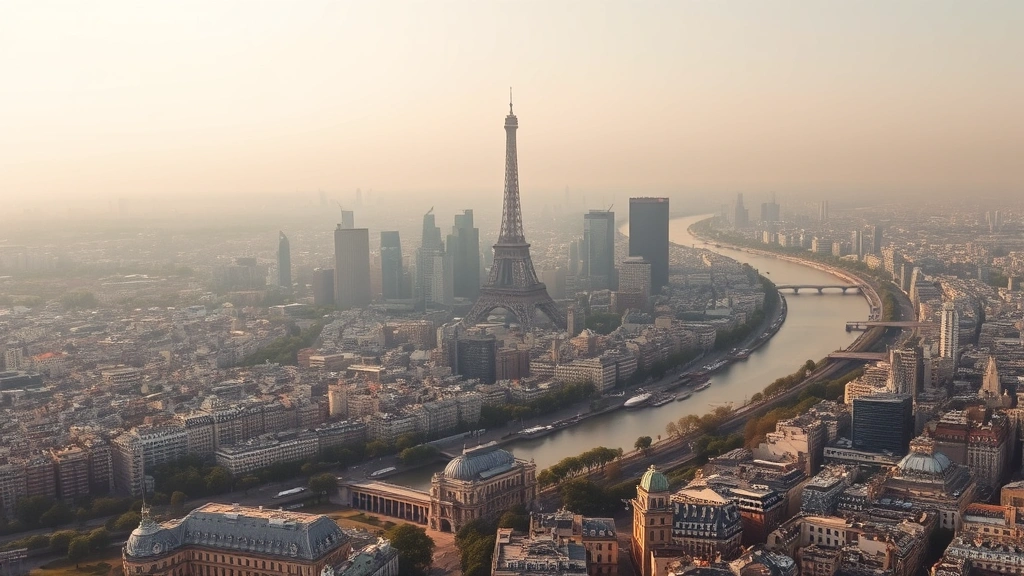
Paris’s Environment: Long-term Economic Impacts
Paris, often celebrated as the City of Light and a global economic powerhouse, faces mounting environmental challenges that fundamentally reshape its economic trajectory. The relationship between environmental degradation and economic performance in this iconic European capital reveals complex interconnections between air quality, water systems, urban infrastructure, and financial outcomes that extend far beyond immediate visible impacts. Understanding these long-term effects requires examining how environmental conditions influence productivity, healthcare costs, real estate values, tourism revenue, and investment decisions across multiple economic sectors.
The French capital’s environmental challenges—from persistent air pollution to aging water infrastructure and urban heat islands—generate cascading economic consequences that accumulate over decades. These impacts manifest through reduced worker productivity, elevated healthcare expenditures, diminished property values in polluted districts, and shifting consumer preferences that favor cleaner urban alternatives. As Paris implements ambitious environmental reforms aligned with European Union directives and the Paris Climate Agreement commitments, the city simultaneously confronts the economic trade-offs and opportunities embedded within ecological transformation.
Air Quality and Economic Productivity
Paris consistently ranks among European cities with elevated particulate matter (PM2.5) and nitrogen dioxide (NO₂) concentrations, particularly during winter months when atmospheric inversion traps pollutants over the metropolitan area. According to UNEP research on urban air quality, poor air quality directly correlates with reduced cognitive function, diminished worker productivity, and increased absenteeism. Studies examining the long-term effects of environment on economic output demonstrate that employees exposed to elevated pollution levels experience 5-10% productivity declines in knowledge-intensive sectors, with cumulative annual losses reaching billions of euros across Paris’s financial and technology industries.
The economic mechanism operates through multiple pathways: respiratory inflammation impairs concentration and decision-making capabilities; chronic exposure to NO₂ reduces lung function capacity, limiting physical work capacity; and air pollution triggers inflammatory responses affecting cognitive performance in complex problem-solving tasks essential to high-value services. The Île-de-France region, encompassing Paris and surrounding areas, generates approximately 30% of France’s GDP, making even marginal productivity reductions economically significant. When multiplied across 2.2 million workers in the metropolitan area and extended across decades, cumulative productivity losses represent substantial economic drag.
Companies increasingly factor air quality metrics into relocation decisions and workforce recruitment strategies. Technology firms and financial institutions seeking to attract top talent recognize that urban design and environment quality directly influences recruitment success and employee retention. Paris’s competitive disadvantage relative to cleaner Nordic and Alpine cities creates subtle but persistent capital outflows as firms establish research centers and innovation hubs in regions with superior environmental conditions. This geographic redistribution of economic activity represents a long-term competitive erosion mechanism, with environmental quality functioning as an invisible but consequential factor in capital allocation decisions.
Healthcare Costs and Labor Market Impacts
Environmental degradation imposes substantial healthcare burdens that compound across generations. Air pollution in the Paris metropolitan area causes an estimated 2,500-3,000 premature deaths annually, with respiratory and cardiovascular diseases dominating mortality and morbidity statistics. The economic valuation of these health impacts, calculated through disability-adjusted life years (DALYs) and quality-adjusted life years (QALYs), reveals annual healthcare costs exceeding €4 billion when including hospital admissions, pharmaceutical interventions, and long-term care requirements for pollution-related chronic diseases.
Beyond direct treatment costs, environmental health impacts reduce labor force participation through several mechanisms: chronic respiratory disease limits work capacity; cardiovascular complications force early retirement; and psychological stress from environmental hazards contributes to mental health disorders reducing employment duration. The World Bank’s research on environmental economics demonstrates that pollution-related health costs reduce effective labor supply by 3-7% in heavily polluted urban regions, representing a permanent reduction in economic capacity that persists across decades. Paris experiences particularly acute impacts among lower-income residents concentrated in peripheral districts with highest pollution exposure, creating regressive distributional effects where environmental hazards disproportionately affect those with lowest earnings and weakest healthcare access.
Intergenerational health effects compound these impacts: children exposed to elevated pollution during critical developmental periods experience reduced cognitive development, lower educational attainment, and diminished lifetime earnings capacity. Longitudinal studies tracking cohorts in polluted versus clean districts reveal 8-12% earnings differentials by age 30, suggesting that current environmental conditions in Paris generate permanent human capital losses that constrain economic growth across multiple decades. These effects operate through reducing carbon footprint and environmental hazard exposure, demonstrating how environmental improvement investments generate long-term human capital returns.
Real Estate Valuation and Urban Segregation
Environmental quality functions as a critical determinant of residential real estate values, with properties in high-pollution districts commanding substantial price discounts relative to comparable units in cleaner areas. Hedonic pricing models analyzing Parisian housing markets reveal that each 10 μg/m³ increase in annual average PM2.5 concentration corresponds to 4-6% reductions in property values, with effects concentrated in districts with persistent pollution exposure. The cumulative property value loss across Paris’s residential stock exceeds €15 billion, representing wealth destruction concentrated among middle and lower-income households whose housing constitutes primary asset holdings.
This environmental stratification reinforces economic segregation patterns: affluent households migrate toward western arrondissements with superior air quality and green space access, while lower-income residents concentrate in eastern and southern districts experiencing higher pollution burdens. The resulting spatial inequality creates self-reinforcing dynamics where environmental disadvantage correlates with educational access, employment opportunities, and social capital concentration. Municipal tax bases decline in environmentally degraded districts, reducing public service quality and further accelerating demographic sorting toward cleaner areas. This spatial economic divergence, driven fundamentally by environmental quality differences, represents a long-term mechanism through which environmental degradation generates persistent regional inequality.
Commercial real estate markets exhibit parallel dynamics: office space in districts with superior physical environment quality commands premium rents reflecting worker preference for clean air and green amenities. Companies seeking to minimize recruitment costs and maximize employee satisfaction concentrate in environmentally advantaged districts, further concentrating economic activity away from polluted areas. This geographic concentration of high-value services reinforces spatial inequality patterns and reduces investment incentives in environmentally degraded districts, creating structural barriers to environmental remediation and economic revitalization.
Tourism Revenue and Environmental Quality
Tourism constitutes a cornerstone of Paris’s economy, generating approximately €15-18 billion annually and supporting 600,000 direct and indirect jobs. Environmental quality fundamentally influences tourist satisfaction and spending patterns, with air pollution, water quality, and urban aesthetic degradation directly reducing visitation rates and average expenditure per visitor. International visitor surveys consistently reveal that air quality ranks among top environmental concerns influencing destination choices, with poor air quality reducing repeat visitation intentions by 15-25% and dampening positive recommendations to prospective travelers.
The economic mechanism operates through multiple channels: reduced visibility from air pollution diminishes aesthetic experiences at iconic monuments; respiratory irritation from pollution exposure creates negative emotional associations with destinations; and health concerns regarding air quality deter families with children and elderly travelers. Air quality forecasts increasingly influence tourist behavior patterns, with visitors rescheduling trips during high-pollution episodes and seeking alternative destinations perceived as environmentally superior. This temporal redistribution of tourism demand creates economic volatility and reduces annual revenue predictability for tourism-dependent businesses.
Long-term environmental deterioration triggers permanent demand reductions as Paris loses competitive advantage relative to alternative European destinations. Cities like Copenhagen, Zurich, and Barcelona actively promote environmental quality as competitive advantages, attracting tourism segments willing to pay premium prices for superior environmental experiences. As climate change intensifies urban heat stress and precipitation variability, Paris faces escalating pressure to invest in environmental remediation to maintain tourism competitiveness. These investments, while economically justified through tourism preservation, represent substantial capital requirements that constrain resources available for other economic priorities.
Infrastructure Investment and Long-term Competitiveness
Environmental challenges necessitate substantial infrastructure investments that reshape Paris’s long-term economic trajectory. Water infrastructure modernization, addressing combined sewer overflow during heavy precipitation events and improving wastewater treatment capacity, requires estimated investments exceeding €8 billion across the next two decades. These capital requirements reflect environmental imperatives to protect the Seine and groundwater aquifers from pollution, but also generate opportunity costs through reduced availability of public capital for other infrastructure priorities or productive investments.
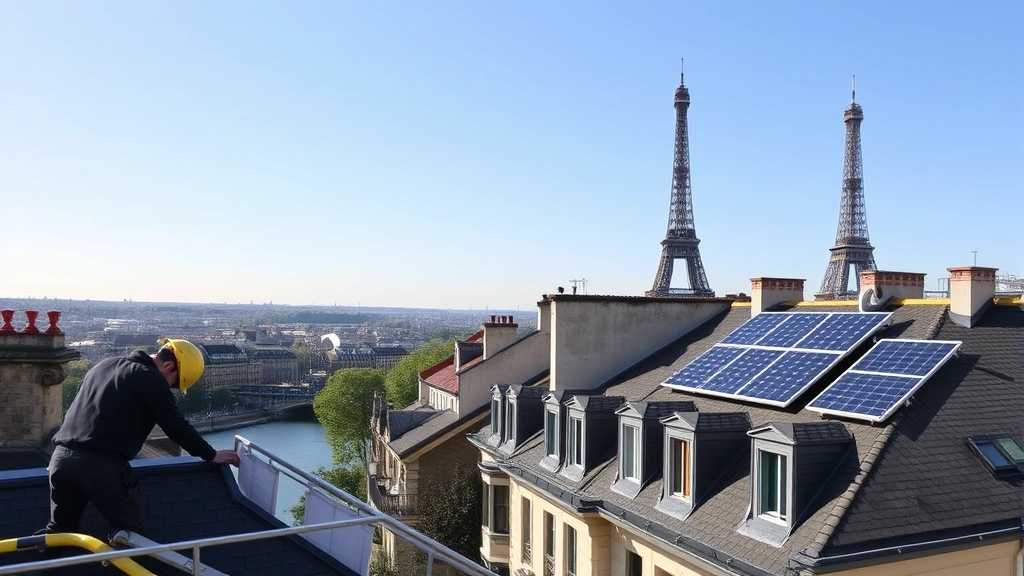
Green infrastructure development—including expanded public transportation networks, district heating systems utilizing waste heat recovery, and renewable energy installations—requires substantial capital investment that competes for limited public resources. According to World Bank analysis of green infrastructure economics, these investments generate long-term economic returns through reduced healthcare costs, improved productivity, and enhanced property values, yet impose substantial near-term fiscal burdens. Paris’s municipal budget constraints, exacerbated by declining tax revenues in environmentally degraded districts, create financing challenges that slow environmental remediation and infrastructure modernization.
The timing of infrastructure investments significantly influences economic competitiveness: delayed environmental remediation perpetuates productivity losses and property value erosion, while accelerated investment programs impose fiscal stress and potentially crowd out other growth-enabling investments. This temporal trade-off between current fiscal burdens and future environmental benefits represents a critical long-term economic decision, with path-dependent consequences that persist across decades. Strategic infrastructure investment aligned with renewable energy for homes and district-level sustainability initiatives can generate synergistic returns, but requires sophisticated planning and coordination across multiple governance levels.
Green Economy Transition and Job Creation
Environmental remediation and sustainability transitions generate substantial employment opportunities across multiple sectors, potentially offsetting productivity losses and economic displacement from pollution-intensive industries. Green construction, renewable energy installation, energy efficiency retrofitting, and environmental monitoring collectively employ growing numbers of skilled workers with above-average earnings. Paris’s transition toward a low-carbon economy, aligned with EU climate directives and national carbon neutrality targets, creates long-term employment growth in environmental sectors potentially offsetting losses in traditional manufacturing and energy-intensive industries.
Research from ecological economics institutes demonstrates that green sector employment typically generates higher value-added per worker than traditional sectors, with above-average wage premiums reflecting skill requirements and productivity levels. The retrofit of Paris’s 1.3 million residential units to meet energy efficiency standards represents multi-decade employment opportunity generating estimated 50,000-80,000 jobs annually during peak implementation periods. These employment opportunities concentrate in construction trades, engineering, and renewable energy sectors, creating career pathways for workers displaced from declining industries and enhancing long-term labor market dynamism.
However, green transition benefits distribute unevenly across skill levels and geographic regions: high-value green jobs concentrate in central districts and technical fields, while lower-skilled employment in retrofitting and maintenance disperses more broadly across metropolitan area. Without targeted retraining and placement programs, environmental transition risks exacerbating labor market inequality despite generating aggregate employment growth. Strategic workforce development policies linking environmental remediation investments with skills training can maximize equitable employment distribution and social cohesion benefits from green economy transition.
Climate Resilience and Financial Risk
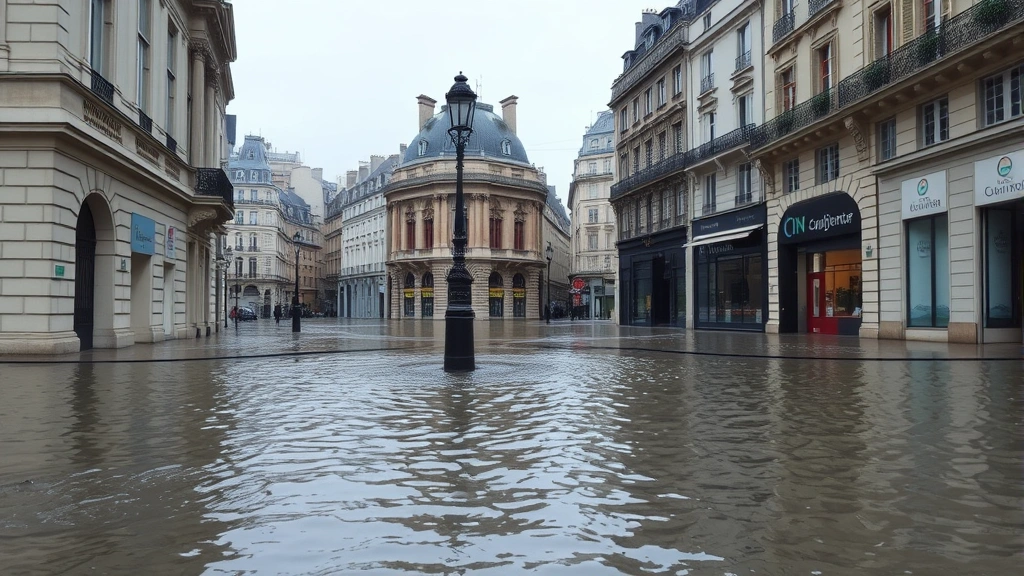
Beyond current environmental impacts, Paris faces escalating climate change risks that fundamentally reshape long-term economic prospects. Climate projections indicate increasing frequency of extreme precipitation events, urban heat waves, and hydrological stress, with cascading consequences for infrastructure, property values, and economic productivity. Flood risk represents particularly acute concern given Seine basin geography and historical inundation patterns, with potential damages exceeding €10 billion for extreme events affecting central Paris districts with concentrated economic activity and cultural assets.
Financial markets increasingly price climate risk into capital allocation decisions, with investors demanding risk premiums for assets in climate-vulnerable locations and sectors. Property insurance costs escalate in flood-risk districts, reducing investment returns and constraining development. Corporate financial ratings decline for firms with substantial Paris-based operations vulnerable to climate disruption, increasing borrowing costs and reducing access to capital markets. These financial mechanisms translate physical climate risks into economic costs through multiple channels, with long-term effects on capital availability and investment returns.
Adaptation investments—including flood protection infrastructure, urban cooling systems, and water supply resilience—require substantial capital expenditures that constrain economic resources available for growth-enabling investments. According to UNEP climate adaptation economics research, Paris requires estimated €5-8 billion in climate adaptation investments across the next 20 years to maintain current infrastructure functionality under projected climate scenarios. These adaptation costs represent permanent fiscal burdens that reduce resources available for education, research, and productive investments, potentially dampening long-term economic growth rates. Strategic adaptation planning that integrates green infrastructure, natural ecosystem restoration, and nature-based solutions can reduce adaptation costs while generating co-benefits through improved environmental quality and enhanced property values.
The long-term economic trajectory of Paris fundamentally depends on success in environmental remediation and climate adaptation. Environmental quality functions as both constraint on current economic productivity and determinant of future competitiveness, with effects operating across multiple temporal horizons and economic sectors. Strategic investments in environmental quality, while imposing near-term fiscal burdens, generate long-term returns through improved human capital, enhanced property values, sustained tourism revenues, and reduced adaptation costs. Understanding these interconnections between sustainable practices and economic outcomes enables more sophisticated policy design that balances environmental and economic objectives across multiple decades.
FAQ
How does air pollution specifically impact Paris’s economy?
Air pollution reduces worker productivity by 5-10% in knowledge-intensive sectors, generates €4 billion+ annual healthcare costs, causes 2,500-3,000 premature deaths yearly, and creates property value discounts of 4-6% per 10 μg/m³ PM2.5 increase. These cumulative effects represent substantial drags on economic growth and competitiveness.
What are the property value implications of environmental degradation?
Environmental quality directly determines residential real estate values, with polluted districts experiencing 4-6% property value reductions per pollution unit increase. Cumulative property value loss across Paris exceeds €15 billion, concentrating wealth destruction among middle and lower-income households and reinforcing spatial economic inequality patterns.
How does environmental quality influence tourism economics?
Tourism represents €15-18 billion annually for Paris, with environmental quality fundamentally affecting visitation rates and spending. Poor air quality reduces repeat visitation by 15-25% and creates competitive disadvantage relative to cleaner alternative destinations, threatening long-term tourism revenue sustainability.
What infrastructure investments does Paris require for environmental remediation?
Paris requires estimated €8 billion+ for water infrastructure modernization, €5-8 billion for climate adaptation, and substantial capital for green infrastructure development. These investments compete for limited public resources but generate long-term returns through improved productivity, reduced healthcare costs, and enhanced property values.
How does environmental transition create employment opportunities?
Green economy transition generates 50,000-80,000 annual jobs in construction, renewable energy, and environmental sectors, typically with above-average wages and value-added. Strategic workforce development can maximize equitable employment distribution while managing transition impacts on displaced workers from declining sectors.
What climate risks does Paris face over long-term horizons?
Climate change increases flood risk (potential €10 billion+ damages), urban heat stress, and hydrological stress, with cascading effects on infrastructure, property values, and insurance costs. Financial markets increasingly price climate risk into capital allocation, raising borrowing costs and constraining investment availability.


