
Science’s Role in Economy: Total Environment Impact
The intersection of science, economics, and environmental sustainability represents one of the most critical frontiers of contemporary policy-making. As global economies grapple with resource depletion, climate instability, and ecological degradation, scientific evidence increasingly demonstrates that environmental protection is not merely an ethical imperative but an economic necessity. The total environment impact—encompassing atmospheric composition, water systems, soil health, biodiversity, and human wellbeing—directly influences economic productivity, market stability, and long-term prosperity.
Traditional economic models have historically externalized environmental costs, treating natural capital as an infinite resource pool. However, cutting-edge research in ecological economics, environmental science, and systems modeling reveals that this approach systematically undervalues the services ecosystems provide and overestimates the true profitability of extractive industries. Science now quantifies these relationships with unprecedented precision, enabling economists and policymakers to integrate environmental considerations into decision-making frameworks that were previously isolated from ecological realities.
This comprehensive exploration examines how scientific research informs economic policy, shapes market mechanisms, and ultimately determines whether humanity can achieve sustainable prosperity. By synthesizing evidence from multiple disciplines, we demonstrate that science and total environment considerations are not constraints on economic growth but rather prerequisites for it.
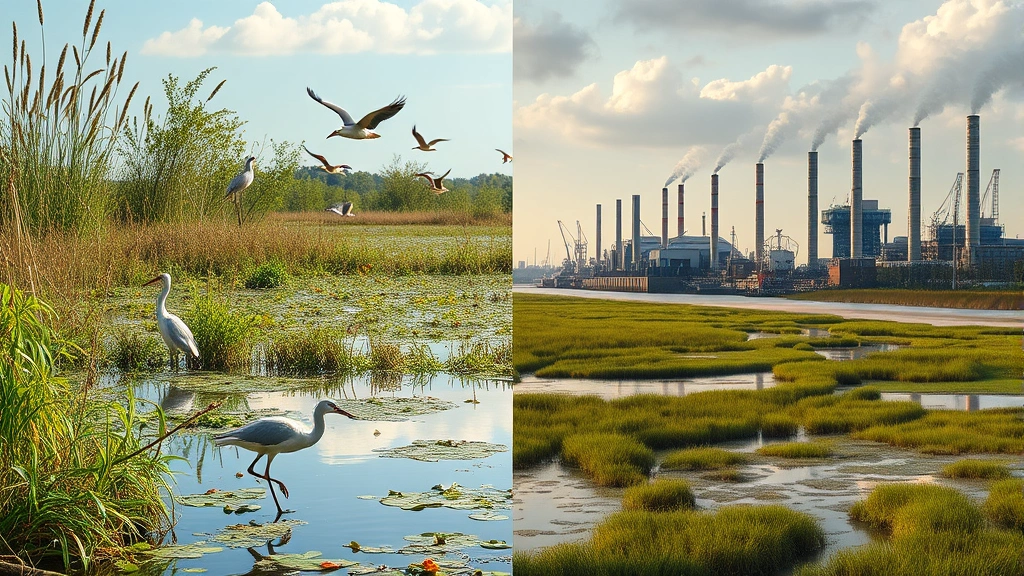
The Scientific Foundation of Environmental Economics
Environmental economics emerged as a formal discipline in the 1960s and 1970s, driven by scientists and economists recognizing that conventional economic models failed to account for environmental degradation. This intellectual revolution was catalyzed by landmark works documenting pollution crises, resource scarcity, and ecological collapse. Today, environmental economics integrates biophysical science with economic theory to create frameworks that acknowledge planetary boundaries as fundamental constraints on economic activity.
The scientific approach to environmental economics relies on several key principles. First, it recognizes that natural systems operate according to physical and biological laws that cannot be circumvented by market mechanisms alone. Second, it acknowledges irreversibility and threshold effects—certain environmental damages cannot be reversed, and ecosystems can collapse catastrophically once critical tipping points are exceeded. Third, it incorporates uncertainty and precaution, recognizing that incomplete knowledge should not justify inaction when potential harms are severe.
Scientific research demonstrates that environmental and economic systems are fundamentally coupled. When atmospheric CO2 concentrations increase due to economic activity, climate patterns shift, affecting agricultural productivity, infrastructure resilience, and human health. When aquifers are depleted faster than they recharge, water-dependent industries face supply constraints. When soil quality degrades through intensive agriculture, food production declines. These are not theoretical abstractions but measurable, quantifiable relationships that directly impact economic outputs and market prices.
The integration of science into economic thinking has produced sophisticated analytical tools. Economic analysis now incorporates lifecycle assessments, environmental impact evaluations, and systems modeling that trace the full consequences of economic decisions. Research institutions and policy organizations increasingly employ scientists and economists working collaboratively to understand how economic systems function within ecological constraints.

Quantifying Ecosystem Services and Natural Capital
One of science’s most significant contributions to economics has been the quantification of ecosystem services—the tangible benefits that natural systems provide to human economies. A watershed provides water purification services worth billions annually. Pollinating insects generate agricultural value exceeding $15 billion yearly in the United States alone. Coastal wetlands provide flood protection, nursery habitat for fisheries, and carbon sequestration worth trillions globally. By attaching economic values to these services, science enables policymakers to compare the true costs and benefits of conservation versus exploitation.
The Millennium Ecosystem Assessment, a comprehensive scientific synthesis involving over 1,300 researchers, quantified the economic value of global ecosystem services at approximately $125 trillion annually—nearly twice global GDP. This research demonstrated that ecosystem degradation represents a massive hidden cost in conventional economic accounting. When forests are clear-cut, the timber value is counted as economic gain, but the loss of carbon storage, water filtration, biodiversity habitat, and erosion control services is ignored. Science corrects this accounting error by making invisible values visible.
Natural capital accounting frameworks, developed through collaboration between environmental scientists and economists, now enable countries to measure genuine progress beyond conventional GDP metrics. Adjusted Net Savings, promoted by the World Bank, accounts for depreciation of natural capital alongside human-made capital. Countries applying this framework discover that apparent economic growth often masks underlying environmental deterioration and declining genuine wealth. This scientific approach reveals that many supposedly prosperous economies are actually depleting their resource base and mortgaging future prosperity.
Research on soil carbon sequestration, for instance, demonstrates that healthy soils store vast quantities of carbon while supporting agricultural productivity. Scientists quantify this value at hundreds of dollars per hectare annually. Similarly, mangrove forests provide nursery habitat for commercial fisheries while storing carbon at rates exceeding terrestrial forests. By attaching monetary values based on scientific measurement, policymakers can justify conservation investments that would otherwise appear economically irrational under conventional accounting.
When examining safe environment standards, scientific research establishes the economic thresholds beyond which environmental degradation imposes increasing costs. The science of toxicology and epidemiology quantifies health impacts from pollution, enabling economists to calculate the economic burden of environmental damage in terms of healthcare costs, lost productivity, and reduced lifespan. These calculations often reveal that pollution prevention is far cheaper than managing its consequences.
Climate Science and Economic Risk Assessment
Climate science provides perhaps the most compelling example of how scientific findings reshape economic analysis and policy. Decades of atmospheric physics research, paleoclimate reconstruction, and observational data have established with high confidence that human activities are warming the planet, with profound economic consequences. This scientific consensus now informs economic models that quantify the costs of climate change and evaluate the economics of mitigation versus adaptation.
The Stern Review on the Economics of Climate Change, conducted by economist Nicholas Stern with input from climate scientists, applied rigorous economic analysis to climate science findings. It concluded that the costs of unmitigated climate change—estimated at 5-20% of global GDP—far exceed the costs of aggressive mitigation, roughly 1% of global GDP annually. This analysis fundamentally shifted policy discussions by demonstrating that climate action is not economically irrational but rather the economically optimal response to scientific evidence.
Climate science reveals that economic damages accelerate non-linearly as warming increases. A 1.5°C warming scenario produces quantifiable economic impacts. A 2°C scenario produces substantially greater impacts. A 3°C or 4°C scenario risks triggering tipping points—Amazon dieback, ice sheet collapse, permafrost methane release—that could produce catastrophic economic disruption. By translating climate physics into economic risk scenarios, science enables investors and policymakers to make decisions with full knowledge of potential consequences.
Insurance industry analysis, informed by climate science, demonstrates that climate change is already imposing measurable economic costs through increased disaster frequency and severity. Actuaries calculate insurance premiums based on risk models informed by climate projections, effectively pricing climate risk into markets. This scientific integration into financial analysis reveals that climate-intensive assets face increasing stranded asset risk—investments that become economically obsolete as climate impacts intensify and policies shift.
The Cost of Environmental Degradation
Scientific research quantifies the economic costs of environmental degradation across multiple dimensions. Air pollution imposes annual costs exceeding $5 trillion globally through health impacts, reduced agricultural productivity, and material damage. Water pollution costs developing nations an estimated 2-3% of GDP annually through health effects, lost fisheries, and reduced agricultural output. Soil degradation reduces global agricultural productivity by approximately 0.3% annually, with costs accelerating as degradation deepens.
The scientific study of disease ecology reveals that environmental degradation increases pandemic risk. Habitat destruction brings humans into contact with wildlife reservoirs of novel pathogens. Climate change alters the geographic distribution of disease vectors. Water pollution compromises immune function and increases disease susceptibility. The COVID-19 pandemic, traced to wildlife-human contact in degraded ecosystems, imposed economic costs exceeding $28 trillion—a figure that dwarfs investments in environmental protection.
Noise pollution, quantified through acoustic ecology research, imposes measurable economic costs through sleep disruption, cognitive impairment, and cardiovascular disease. Light pollution, documented through environmental physics research, disrupts ecosystem function and impairs human circadian rhythms. These less visible environmental impacts accumulate into substantial economic burdens that conventional accounting ignores.
When investigating how to reduce carbon footprint, scientific research demonstrates that prevention costs are substantially lower than remediation costs. Every ton of CO2 prevented through efficiency and renewable energy is cheaper than attempting to remove atmospheric CO2 through technological means. Every hectare of forest protected from deforestation is cheaper than attempting to reforest degraded lands. Science reveals that environmental protection is fundamentally a cost-minimization strategy.
Research on ecosystem collapse thresholds demonstrates that environmental degradation exhibits non-linear cost curves. Initial degradation imposes modest costs. As degradation continues, costs increase gradually. Once critical thresholds are approached, costs escalate exponentially. This scientific finding implies that waiting for technology or future economic growth to solve environmental problems is economically irrational—prevention now is vastly cheaper than managing collapse later.
Science-Driven Policy Mechanisms and Market Solutions
Scientific understanding of environmental processes has enabled the design of sophisticated economic instruments that harness market mechanisms for environmental protection. Carbon pricing mechanisms—carbon taxes and cap-and-trade systems—are grounded in atmospheric physics demonstrating that CO2 accumulation drives climate change. By attaching a price to carbon emissions, these mechanisms make the previously external cost of climate change internal to economic decision-making.
Payment for ecosystem services programs, developed through collaboration between ecologists and economists, compensate landowners for maintaining environmental functions. Scientific measurement of carbon sequestration rates, water filtration capacity, and biodiversity value enables calculation of appropriate payment levels. These programs have protected millions of hectares of forest, wetland, and grassland by making conservation economically competitive with extraction.
Environmental impact assessment requirements mandate that scientific research inform economic decision-making for major projects. Before a dam, mine, or industrial facility can proceed, scientists must evaluate its environmental consequences. This integration of science into project evaluation has prevented numerous projects with unacceptable environmental costs and modified others to reduce impacts. The scientific evidence collected during impact assessments often reveals that projects lack economic justification once true environmental costs are included.
Regarding environment and natural resources trust fund renewal, scientific research demonstrates that protected areas generate substantial economic returns through ecosystem services, tourism, and option value (preserving options for future use). Conservation programs informed by species distribution modeling, habitat quality assessment, and connectivity analysis achieve environmental goals more efficiently than ad-hoc protection efforts.
Pollution control regulations are informed by toxicology, epidemiology, and environmental chemistry research that establishes safe exposure thresholds and documents health impacts. While industry often argues such regulations are economically burdensome, scientific cost-benefit analysis typically demonstrates that health benefits far exceed compliance costs. The Clean Air Act, for instance, has generated estimated benefits of $30-50 for every dollar spent on compliance.
Biodiversity Loss and Economic Consequences
Conservation biology research documents that Earth is experiencing the sixth mass extinction, with species loss rates 100-1,000 times background rates. This scientific finding has profound economic implications. Genetic diversity in wild populations provides the raw material for agricultural crop improvement and pharmaceutical development. Functional diversity in ecosystems—variety in growth forms, feeding strategies, and ecological roles—determines ecosystem resilience and productivity. Biodiversity loss reduces both these economic values.
The economic value of genetic resources in wild species is difficult to quantify but substantial. Approximately 25% of pharmaceutical compounds are derived from plants found in tropical rainforests, ecosystems being rapidly destroyed. The genetic diversity present in wild crop relatives provides disease resistance and climate adaptation traits essential for agriculture’s future. Once species are extinct, these options are permanently lost.
Ecosystem function research demonstrates that biodiversity loss reduces ecosystem productivity, stability, and resilience. Diverse forests produce more biomass, resist pests and diseases more effectively, and recover faster from disturbances than species-poor forests. Diverse agricultural systems are more resilient to pests and climate variability than monocultures. Diverse fisheries are more stable and productive than those dependent on few species. These scientific findings demonstrate that biodiversity conservation is not opposed to economic productivity but essential to it.
Pollination services, provided by diverse insect populations, are essential to global agriculture. Scientific research documents that pollinator populations are declining due to habitat loss, pesticide exposure, and climate change. The economic value of pollination services is estimated at $15-20 billion annually in the United States alone. Protecting pollinator biodiversity is therefore an economic investment in agricultural productivity.
When considering renewable energy for homes and other sustainability transitions, biodiversity protection becomes increasingly important. Renewable energy infrastructure requires vast land areas. Properly designed renewable energy projects can coexist with biodiversity conservation through habitat-friendly siting and design. Scientific research on optimal renewable energy placement helps minimize biodiversity impacts while achieving climate goals.
Technological Innovation and Environmental Solutions
Scientific research and development drive technological innovations that enable economic activity with reduced environmental impact. Materials science develops lighter, stronger materials requiring less energy to produce. Chemical engineering creates catalytic processes that eliminate toxic byproducts. Biotechnology produces crops with higher yields, requiring less land, water, and fertilizer. Information technology enables efficiency improvements across all economic sectors.
Renewable energy technologies exemplify how scientific advancement can fundamentally transform economic systems. Solar photovoltaic and wind power were once economically uncompetitive. However, decades of scientific research and engineering development have reduced costs by 90% and 70% respectively over the past decade. Today, renewable electricity is cheaper than fossil fuels in most markets, a transformation driven entirely by scientific and technological progress.
Energy storage technology, essential for renewable energy integration, continues advancing through scientific research in battery chemistry, thermal storage, and hydrogen production. As storage costs decline—driven by scientific breakthroughs—renewable energy becomes increasingly economically dominant. This demonstrates how science enables economic transitions that environmental regulation alone could not achieve.
Carbon capture and utilization technologies, emerging from advances in chemistry and materials science, offer potential pathways for managing atmospheric CO2. While currently expensive, scientific research aims to reduce costs and improve efficiency. However, scientific consensus emphasizes that carbon capture cannot substitute for emissions reduction—prevention is far cheaper than capture.
Precision agriculture, enabled by advances in remote sensing, data science, and agronomic research, optimizes fertilizer and pesticide application, reducing environmental impacts while maintaining or increasing yields. Regenerative agriculture practices, informed by soil science and ecology research, improve soil health while sequestering carbon. These innovations demonstrate that agricultural productivity and environmental protection are compatible objectives when guided by science.
Water treatment technologies, developed through environmental chemistry and engineering research, enable reuse of wastewater for industrial and agricultural purposes. Desalination technologies, improving through advances in materials science, provide access to freshwater in water-scarce regions. These innovations expand economic capacity while reducing environmental impact.
FAQ
How does science quantify the economic value of environmental protection?
Scientists use multiple approaches to quantify environmental value. Replacement cost methods estimate what it would cost to replace ecosystem services with technological alternatives. Market price methods use actual market transactions for environmental goods. Hedonic pricing methods extract environmental values from property prices. Contingent valuation uses surveys to determine what people would pay for environmental protection. These methods, while imperfect, provide economic values that can be compared against economic benefits of environmental exploitation, enabling rational decision-making.
What is the relationship between biodiversity and economic productivity?
Scientific research demonstrates that biodiversity supports ecosystem functions that generate economic value. Diverse ecosystems are more productive, stable, and resilient. Genetic diversity provides raw material for crop improvement and pharmaceutical development. Functional diversity ensures that ecosystems continue providing services even when individual species are affected by pests or climate stress. Protecting biodiversity is therefore an investment in economic resilience and future productive capacity.
Can economic growth occur without environmental degradation?
Scientific research indicates that decoupling—achieving economic growth while reducing environmental impact—is possible through technological innovation, efficiency improvements, and economic restructuring toward less material-intensive activities. Several countries have achieved absolute decoupling where economic growth continues while environmental impacts decline. However, this requires deliberate policy choices informed by science and technology investment, not automatic market processes.
How do scientists incorporate uncertainty into environmental economic analysis?
Environmental science often involves substantial uncertainty regarding future conditions and system responses. Economists address this through scenario analysis, examining how economic outcomes vary across different scientific scenarios. Sensitivity analysis tests how conclusions change if key parameters vary. Expected value analysis weights different outcomes by their probability. Precautionary approaches assume worst-case scenarios when potential harms are severe and irreversible. These methods enable rational decision-making despite scientific uncertainty.
What role does science play in international environmental agreements?
Scientific research provides the foundation for international environmental agreements. The Paris Climate Agreement is grounded in climate science demonstrating human-caused warming and its economic consequences. The Montreal Protocol addressed ozone depletion based on atmospheric chemistry research. The Convention on Biological Diversity responds to conservation biology documenting extinction rates. By establishing scientific consensus on environmental problems, science enables international cooperation on solutions.
How does environmental science inform investment decisions?
Investors increasingly incorporate environmental science into risk assessment and decision-making. Climate science informs evaluation of stranded asset risk for fossil fuel investments. Biodiversity science informs assessment of agricultural and forestry investment risks. Water science informs evaluation of water-dependent industries. Environmental science enables investors to identify which sectors and companies will thrive as environmental constraints tighten and which will face declining profitability.
External Resources:


