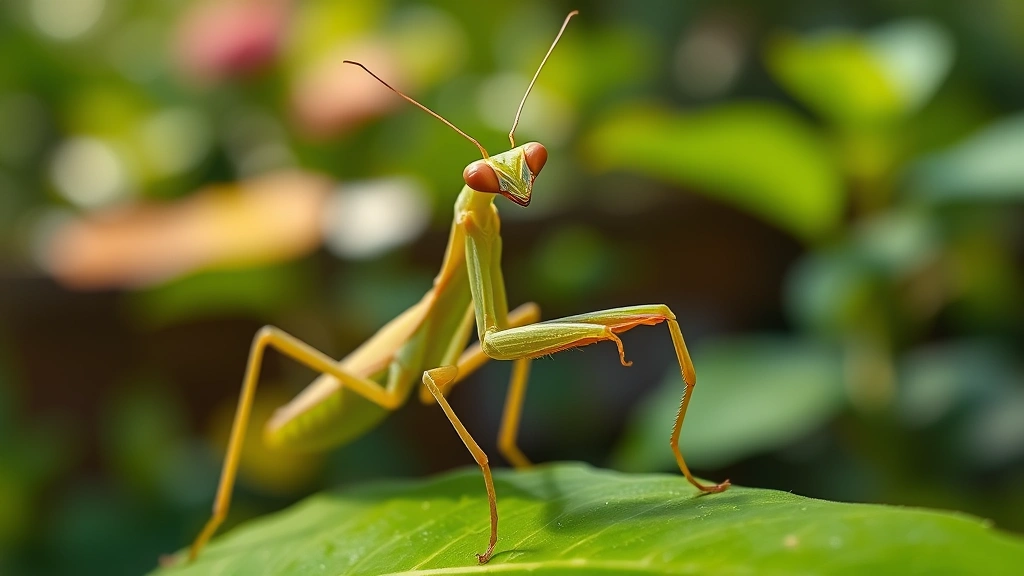
How Praying Mantises Impact Ecosystems: Study Insights
Praying mantises represent one of nature’s most efficient predatory mechanisms, yet their ecological significance extends far beyond their mesmerizing hunting prowess. Recent scientific research reveals that these ambush predators play a crucial role in regulating insect populations, maintaining ecosystem balance, and influencing nutrient cycling across diverse habitats. Understanding the praying mantis environment relationship provides valuable insights into food web dynamics, biodiversity conservation, and the intricate connections between apex invertebrate predators and ecosystem health.
As apex invertebrate hunters, praying mantises consume substantial quantities of insects daily, from agricultural pests to beneficial pollinators. Their presence in an ecosystem signals biodiversity richness and functional ecological balance. This comprehensive analysis explores recent scientific findings on how praying mantises impact ecosystems, their role in pest management, their relationships with other species, and the broader implications for environmental conservation and ecosystem resilience.
Ecological Role and Food Web Dynamics
Praying mantises occupy a specialized niche within invertebrate food webs as ambush predators that consume diverse arthropod prey. Their predatory efficiency stems from remarkable adaptations including compound eyes providing 340-degree vision, lightning-fast strike speeds reaching 50 miles per hour, and raptorial front legs equipped with spines for capturing prey. Within ecosystems, mantises function as secondary consumers, controlling herbivorous insect populations while simultaneously serving as protein sources for larger predators including birds, reptiles, and mammals.
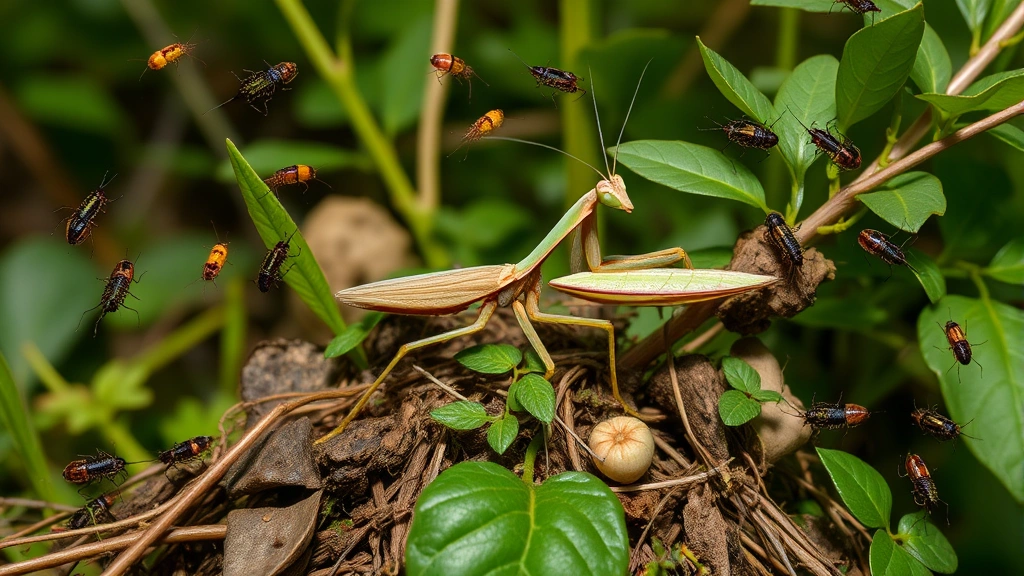
Recent ecological studies quantify the energy transfer efficiency through mantis-mediated food chains. A single praying mantis can consume 10-15% of its body weight daily, translating to approximately 200-300 insects per season depending on species and environmental conditions. This consumption rate significantly impacts local insect community composition and abundance. Research published in ecological modeling journals demonstrates that mantis populations maintain heterogeneous prey community structures, preventing any single insect species from achieving ecological dominance.
The environment examples of mantis-dominated ecosystems reveal complex regulatory mechanisms. When mantis populations increase, herbivorous insect abundance decreases, subsequently reducing herbivory pressure on plants. This cascading effect demonstrates the importance of understanding predator-prey relationships within broader ecosystem contexts. Mantises simultaneously influence nutrient cycling by converting consumed insects into biomass available for decomposition, enriching soil and supporting microbial communities essential for ecosystem functioning.
Praying Mantis Predation Patterns and Prey Selection
Praying mantis predation exhibits sophisticated selectivity driven by prey availability, mantis size, and energetic requirements. Larger mantis species preferentially target flying insects including moths, butterflies, and dragonflies, while smaller species focus on gnats, flies, and small beetles. This size-based prey selectivity creates differential predation pressure across insect communities, potentially reshaping community assembly patterns and evolutionary trajectories.
Scientific research demonstrates that mantis predation pressure influences prey evolution through natural selection. Insects experiencing high mantis predation develop enhanced escape behaviors, cryptic coloration, and defensive mechanisms. Some butterfly species evolved wing patterns resembling mantis heads, creating visual confusion that reduces predation success. These evolutionary arms races exemplify how predators like mantises drive adaptive radiation and maintain genetic diversity within prey populations.
Temporal predation patterns reveal that mantises exhibit greatest hunting activity during peak insect activity periods, typically dawn and dusk hours. This temporal niche specialization reduces competition with diurnal predators while maximizing encounter rates with crepuscular and nocturnal insects. The temporal dimension of mantis predation influences diel vertical migration patterns, temporal resource partitioning, and circadian rhythm evolution across arthropod communities.
Impact on Agricultural Ecosystems
Agricultural systems represent modified ecosystems where praying mantises provide economically significant pest control services. Conventional agriculture relies heavily on synthetic pesticides for pest management, generating environmental externalities including water contamination, soil degradation, and non-target organism mortality. Mantises offer biological control alternatives, consuming agricultural pests including grasshoppers, locusts, beetles, and crop-damaging moths while avoiding pesticide application costs and environmental consequences.
Economic analyses quantify biological pest control services provided by mantises and other natural enemies. Studies estimate that natural enemy services, including mantis predation, provide annual ecosystem service values exceeding $57 billion globally through reduced crop losses and eliminated pesticide expenses. Integrating mantis populations into agricultural management through habitat conservation and reduced pesticide application enhances both ecological and economic sustainability.
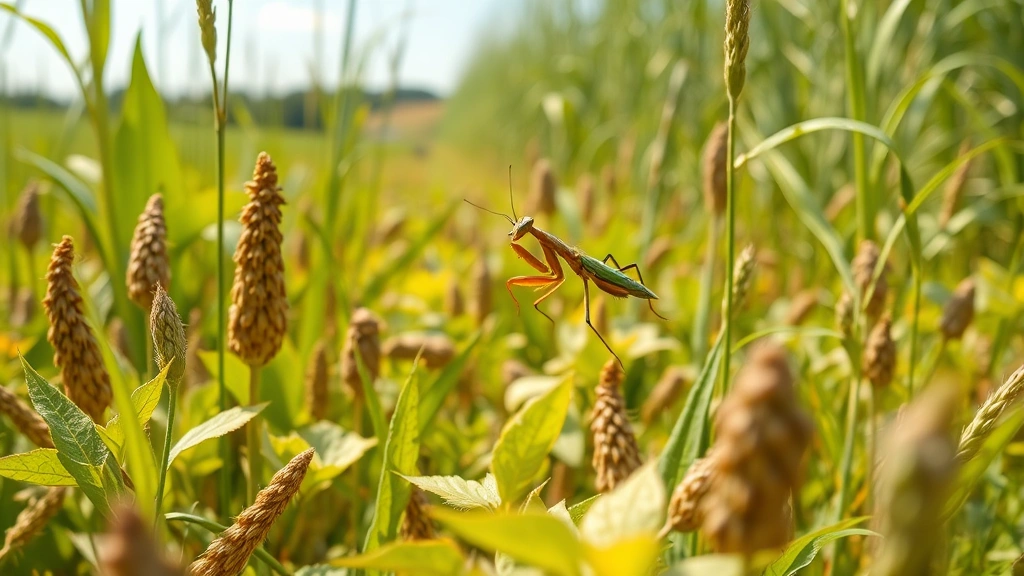
Organic and regenerative agriculture systems actively promote mantis populations through diverse habitat provisioning. Maintaining hedgerows, perennial vegetation strips, and reduced-tillage practices creates overwintering habitat and hunting grounds for mantises. Research demonstrates that mantis-supporting agricultural landscapes exhibit 15-40% greater insect diversity and 20-30% reduced crop damage compared to intensive monoculture systems. This functional relationship between habitat structure and mantis presence illustrates how human-environment interaction principles apply to sustainable food production.
The integration of mantis conservation into pest management exemplifies applied ecosystem services research. Farmers implementing habitat conservation strategies report reduced pesticide expenditures while maintaining or improving crop yields. These outcomes demonstrate that ecological understanding translates directly into economic benefits, supporting arguments for ecosystem-based agricultural management approaches.
Biodiversity Indicators and Ecosystem Health
Praying mantis presence and abundance serve as biodiversity indicators reflecting ecosystem health and functional integrity. Because mantises require diverse arthropod prey communities, stable shelter habitat, and minimal pesticide exposure, their presence indicates ecosystems with sufficient habitat complexity, prey diversity, and reduced chemical contamination. Conservation biologists utilize mantis surveys as rapid assessment tools for evaluating ecosystem quality and restoration success.
Research from United Nations Environment Programme initiatives demonstrates that mantis diversity correlates strongly with overall arthropod diversity and ecosystem multifunctionality. Ecosystems supporting multiple mantis species exhibit greater functional redundancy, enhanced resistance to disturbance, and improved resilience to environmental change. This functional diversity relationship supports biodiversity conservation arguments based on ecosystem service provision rather than purely aesthetic or ethical considerations.
Mantis population monitoring provides early warning indicators of ecosystem degradation. Declining mantis populations often precede broader biodiversity loss, providing conservation managers with advance notice of ecosystem dysfunction. This indicator value has prompted several countries to incorporate mantis monitoring into national biodiversity assessment programs, recognizing their utility for environmental management and policy development.
Natural Pest Control and Human Systems
Beyond agricultural applications, mantis-mediated pest control influences human health and quality of life through disease vector management. Mosquitoes and other disease-transmitting insects constitute significant human health threats, causing millions of deaths annually through malaria, dengue, yellow fever, and other vector-borne diseases. Praying mantises consume substantial mosquito populations, contributing to integrated vector management strategies that reduce disease transmission without relying exclusively on chemical insecticides.
The Ecorise Daily Blog explores interconnections between ecosystem health and human wellbeing, illustrating how predator populations influence disease epidemiology and public health outcomes. Communities with robust mantis populations experience lower vector abundance and reduced disease transmission compared to ecosystems where mantises have been eliminated through habitat destruction or pesticide application. This health dimension of ecosystem conservation demonstrates that biodiversity protection directly benefits human populations.
Urban and suburban ecosystems increasingly recognize mantis conservation value for integrated pest management. Gardeners and landscape managers promote mantis presence through native plant cultivation, water feature provisioning, and pesticide reduction. These urban conservation efforts generate multiple co-benefits including reduced pest populations, enhanced aesthetic values, and increased human engagement with natural processes. Urban mantis populations contribute to resilience of human-dominated landscapes, demonstrating that ecosystem services extend throughout human-modified environments.
Climate Change and Habitat Adaptation
Climate change poses significant challenges to praying mantis populations through altered temperature regimes, modified precipitation patterns, and disrupted phenological synchronization between mantises and prey species. Many mantis species exhibit narrow thermal tolerance ranges, with optimal development occurring within specific temperature windows. Warming climates extend growing seasons in temperate regions, potentially benefiting northern mantis populations while threatening tropical species adapted to stable thermal conditions.
Phenological mismatch represents a critical climate change impact for mantis-prey relationships. If mantis emergence timing diverges from peak prey availability through differential temperature sensitivity, predation efficiency declines and mantis reproduction suffers. Research from World Bank environmental initiatives documents increasing phenological mismatches across taxa, with potential consequences for ecosystem stability and food web integrity. Mantises may experience particular vulnerability because their late emergence timing relative to many prey species already creates narrow temporal windows for successful reproduction.
Habitat loss compounds climate change impacts on mantis populations. As human land use intensifies and natural habitats fragment, mantises lose refugia for surviving unfavorable climatic conditions. Conservation strategies must integrate climate adaptation planning with habitat protection, ensuring that protected areas encompass sufficient environmental heterogeneity to support mantis populations across predicted climate scenarios. This adaptive management approach recognizes that static conservation strategies prove insufficient under rapid environmental change.
Conservation Implications
Praying mantis conservation requires multifaceted approaches addressing habitat protection, pesticide reduction, and climate adaptation. Primary conservation strategies include preserving native vegetation communities that support diverse arthropod prey, maintaining connectivity between habitat patches enabling mantis dispersal, and implementing pesticide reduction programs that eliminate chemical exposure. These habitat-centered approaches address fundamental mantis requirements while generating broader ecosystem benefits.
Policy interventions supporting mantis conservation include restricting broad-spectrum pesticide applications, establishing protected area networks encompassing diverse habitats, and incentivizing agricultural practices supporting natural enemy populations. Several countries have implemented sustainable consumption and production policies that reduce pesticide use while promoting biological control, directly benefiting mantis populations. These policy frameworks demonstrate how environmental governance structures influence species conservation outcomes.
Integrating mantis conservation into broader ecosystem management strategies amplifies conservation effectiveness. Because mantis conservation requirements overlap substantially with requirements for diverse arthropod communities, plant diversity, and reduced chemical inputs, promoting mantis populations simultaneously advances multiple conservation objectives. This ecosystem-level approach to conservation proves more efficient and effective than single-species management, particularly for generalist predators like mantises that provide ecosystem services across multiple contexts.
Research priorities for mantis conservation include quantifying ecosystem service values across diverse habitats, determining optimal habitat management practices for different mantis species, and developing climate-adaptive conservation strategies. Funding increased mantis research through government agencies and conservation organizations would generate knowledge necessary for effective conservation implementation. Additionally, public engagement initiatives promoting awareness of mantis ecological importance could mobilize social support for habitat protection and pesticide reduction.
FAQ
What is the primary ecological function of praying mantises?
Praying mantises function as ambush predators controlling herbivorous insect populations through efficient predation. A single mantis consumes 200-300 insects seasonally, significantly impacting local arthropod community composition and preventing insect population explosions that would otherwise damage vegetation.
How do praying mantises contribute to agricultural sustainability?
Mantises provide natural pest control services valued at billions of dollars annually by consuming crop-damaging insects including grasshoppers, beetles, and moths. Their presence reduces pesticide application requirements, lowering production costs while eliminating pesticide environmental externalities. Maintaining mantis populations through habitat conservation represents economically and ecologically optimal pest management.
Can praying mantises indicate ecosystem health?
Yes, mantis presence and abundance serve as biodiversity indicators reflecting ecosystem quality. Because mantises require diverse prey, suitable habitat, and minimal chemical contamination, their populations correlate strongly with overall ecosystem health and multifunctionality. Declining mantis populations often indicate ecosystem degradation requiring management intervention.
How does climate change affect praying mantis populations?
Climate change threatens mantis populations through altered temperature regimes affecting development rates, modified precipitation patterns reducing habitat suitability, and phenological mismatches between mantis emergence and prey availability. Some northern populations may benefit from warming, while tropical species face vulnerability to temperature increases exceeding their thermal tolerance ranges.
What conservation actions most effectively protect praying mantises?
Effective mantis conservation prioritizes habitat protection maintaining diverse native vegetation, pesticide reduction eliminating chemical exposure, and connectivity conservation enabling population dispersal. Integrating mantis conservation into broader ecosystem management strategies amplifies conservation effectiveness while generating multiple ecosystem service benefits.
Do all praying mantis species have similar ecological impacts?
Different mantis species exhibit variable prey preferences, habitat requirements, and activity patterns creating diverse ecological impacts. Larger species target flying insects while smaller species consume smaller arthropods. This species-level variation means that conserving mantis diversity maximizes ecosystem service provision and ecosystem resilience.
How can homeowners and gardeners support mantis populations?
Gardeners can promote mantis presence by cultivating native plants supporting diverse arthropod prey, eliminating pesticide applications, providing water sources, and leaving undisturbed vegetation for overwintering habitat. These actions create urban refugia supporting mantis populations while generating additional benefits including enhanced pollination and pest management.


