Can Green Economy Boost GDP? Economist’s Insights
The relationship between environmental sustainability and economic growth has long been debated among economists, policymakers, and business leaders. Traditional economic models often positioned environmental protection as a constraint on growth, yet emerging evidence suggests that transitioning to a green economy may actually accelerate GDP expansion while simultaneously addressing ecological crises. This paradox challenges conventional wisdom and opens new pathways for prosperity that align economic objectives with planetary health.
Recent analyses from leading economic institutions reveal that green investments generate comparable or superior returns to traditional infrastructure projects, while creating employment opportunities across multiple sectors. The question is no longer whether environmental stewardship and economic growth can coexist, but rather how rapidly economies can transition toward sustainable models without sacrificing competitiveness or living standards. Understanding this relationship requires examining empirical data, theoretical frameworks, and real-world case studies that demonstrate green economy mechanisms.
How Green Economy Drives GDP Growth
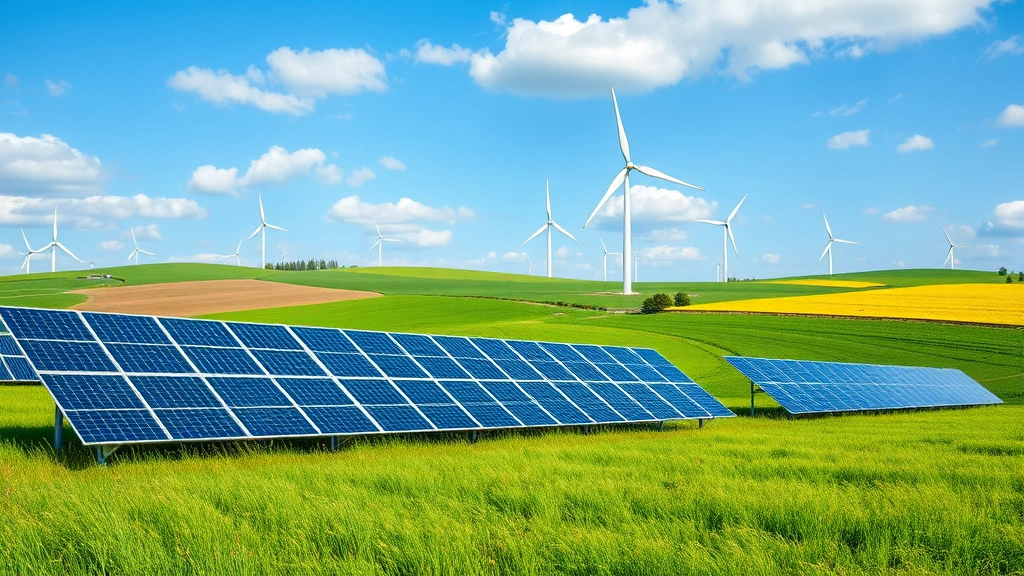
The green economy operates through multiple mechanisms that stimulate economic activity while reducing environmental degradation. Resource efficiency improvements lower production costs across industries, enabling businesses to reinvest savings into innovation and expansion. When companies transition to renewable energy sources, they insulate themselves from volatile fossil fuel markets while accessing increasingly cheaper sustainable alternatives. Solar and wind energy costs have declined by 90% and 70% respectively over the past decade, fundamentally altering economic calculations around energy infrastructure.
Green economy growth occurs through demand creation for new technologies, services, and products. renewable energy investments generate cascading economic benefits—manufacturing facilities, installation services, maintenance operations, and grid modernization all contribute to GDP expansion. These aren’t subsidized inefficiencies but market-driven responses to genuine consumer and corporate demand for sustainable solutions.
According to World Bank research, countries implementing comprehensive green growth strategies experience GDP growth rates comparable to business-as-usual scenarios, but with significantly reduced environmental costs. When ecosystem services are properly valued—including air quality improvements, water purification, climate regulation, and biodiversity preservation—the true economic benefits of green transitions become evident. Traditional GDP measurements exclude these services, systematically undervaluing environmental investments.
The macroeconomic stimulus effect of green spending differs from conventional stimulus because it builds productive capacity rather than generating debt without corresponding assets. Clean energy infrastructure, sustainable agriculture systems, and ecosystem restoration create lasting value that continues generating returns across decades, contrasting with temporary consumption-focused stimulus programs.
Employment and Job Creation in Green Sectors
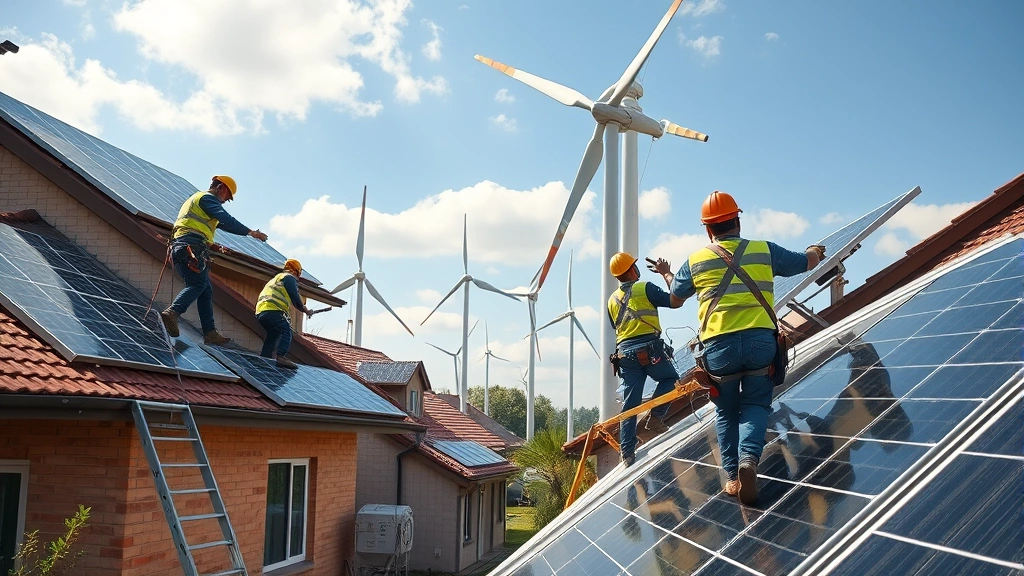
Employment expansion represents one of the most tangible GDP growth mechanisms in green economies. Renewable energy sectors already employ more workers than fossil fuel industries globally, and this gap continues widening. Solar photovoltaic installation, wind turbine manufacturing, energy efficiency retrofitting, sustainable agriculture, and environmental restoration all require skilled labor that cannot be offshored, anchoring employment in local communities.
Green jobs typically offer wages comparable to or exceeding traditional energy sector positions while providing greater long-term stability. Unlike extractive industries dependent on finite resources, renewable energy jobs scale with demand indefinitely. The United Nations Environment Programme estimates that comprehensive green transitions could create 24 million additional jobs by 2030 across clean energy, sustainable agriculture, forestry, and ecosystem restoration sectors.
These employment gains generate multiplier effects throughout economies. Workers in green industries spend wages on goods and services, supporting retail, hospitality, healthcare, and education sectors. Communities investing in environmental resource management experience reduced healthcare costs from improved air and water quality, freeing government budgets for education and infrastructure investments that further stimulate growth.
Skills development becomes increasingly important as green economy transitions accelerate. Workforce retraining programs, vocational education, and higher education reforms create additional economic activity while ensuring equitable transition pathways for workers displaced from declining fossil fuel industries. Investment in human capital compounds growth benefits across multiple generations.
Investment Returns and Market Opportunities
Financial markets increasingly recognize green investments as economically superior to fossil fuel alternatives. Clean energy infrastructure now attracts more global investment capital than conventional energy, reflecting both risk-adjusted returns and institutional recognition of stranded asset risks in carbon-intensive industries. Renewable energy projects deliver 4-6% returns with declining cost trajectories, while fossil fuel investments face regulatory uncertainty, carbon pricing mechanisms, and technological obsolescence.
Green technology markets represent the fastest-growing industrial sectors globally. Electric vehicle manufacturing, battery technology, smart grid systems, energy storage solutions, and sustainable building materials all exhibit double-digit growth rates. Early-adopting nations and companies capture first-mover advantages in manufacturing, intellectual property, and export markets that generate substantial GDP contributions for decades.
Private equity, venture capital, and institutional investors have redirected trillions toward green transitions, recognizing that environmental risk management constitutes essential fiduciary responsibility. This capital reallocation creates competitive advantages for economies positioning themselves as green technology leaders. Germany’s Energiewende transition, Denmark’s renewable energy dominance, and Costa Rica’s hydroelectric success demonstrate how green investments translate into economic competitiveness and export opportunities.
Insurance and financial services sectors increasingly price climate risk into traditional investments, creating economic incentives for green transitions independent of environmental motivation. This market-driven mechanism accelerates capital flows toward sustainable sectors without requiring government subsidies, though strategic policy environment design can amplify these natural market forces.
Environmental Policy Framework and Economic Policy
Effective green economy transitions require coherent policy frameworks that align economic incentives with environmental objectives. Carbon pricing mechanisms—whether through taxes or cap-and-trade systems—internalize environmental costs into market prices, enabling efficient resource allocation. When carbon pollution carries financial consequences, businesses naturally shift toward cleaner alternatives, generating innovation and economic restructuring without requiring government mandates.
Subsidy restructuring represents another powerful policy lever. Redirecting fossil fuel subsidies (estimated at $7 trillion annually when including environmental externalities) toward renewable energy and sustainable infrastructure dramatically accelerates green transitions. These policies don’t reduce government spending but reallocate resources from declining industries to growth sectors, improving net economic outcomes while reducing environmental damage.
Regulatory standards for energy efficiency, vehicle emissions, and building performance create guaranteed markets for green technologies while establishing level playing fields that reward innovation over regulatory capture. Standards-based approaches often prove more cost-effective than subsidies because they stimulate competitive markets where multiple firms compete on efficiency improvements, driving continuous cost reductions.
International trade agreements increasingly incorporate environmental standards, creating market access advantages for green economy leaders while establishing minimum environmental performance requirements across trading partners. These frameworks ensure that green transitions don’t disadvantage participating economies through carbon leakage or relocation of polluting industries to less-regulated jurisdictions.
Measuring Green GDP and Ecosystem Services
Traditional GDP measurements systematically underestimate green economy contributions by excluding ecosystem services and environmental cost reductions. When properly accounting for air quality improvements, water purification, carbon sequestration, pollination, climate regulation, and other natural services, green economy investments demonstrate substantially higher returns than conventional metrics indicate.
Several nations have adopted green accounting frameworks that adjust GDP calculations for environmental depreciation and natural capital changes. Bhutan’s Gross National Happiness metric, New Zealand’s well-being framework, and the European Union’s beyond-GDP initiatives all recognize that sustainable prosperity requires measuring environmental health alongside economic output. These frameworks reveal that green investments often generate superior outcomes across multiple dimensions simultaneously.
Ecosystem service valuation methodologies, while technically complex, consistently demonstrate that environmental preservation and restoration generate economic value exceeding conventional development alternatives. Mangrove forests provide coastal protection, fish habitat, and carbon sequestration worth thousands of dollars per hectare annually—far exceeding alternative land uses. Wetlands provide water purification, flood control, and wildlife habitat that would cost billions to replicate through engineered infrastructure.
Corporate environmental accounting increasingly incorporates natural capital assessments into investment decisions and performance evaluation. Companies recognizing that reducing environmental footprints enhances long-term value consistently outperform competitors ignoring environmental risks. This market recognition accelerates voluntary green transitions independent of regulatory requirements.
Sectoral Transformations and Economic Resilience
Green economy transitions reshape competitive advantages across sectors, creating winners and losers that generate net positive economic outcomes despite sectoral disruption. Manufacturing sectors transitioning to circular economy models—designing products for durability, repairability, and material recovery—reduce input costs while creating service-based business models generating higher margins than product sales alone.
Agriculture represents a particularly significant transformation opportunity. Regenerative agriculture practices that restore soil health, increase water retention, and enhance biodiversity simultaneously improve crop yields, reduce input costs, and generate premium market prices for sustainably-produced goods. Farmers adopting these methods experience improved long-term profitability while building resilience against climate volatility and price fluctuations.
Tourism economies increasingly benefit from environmental preservation as ecotourism and sustainable travel experiences command premium pricing from affluent consumers. Communities maintaining intact ecosystems—coral reefs, tropical forests, wildlife habitats—generate substantially greater long-term economic value through tourism than through extractive industries, while preserving options for future generations.
Urban development transitions toward compact, transit-oriented, mixed-use communities reduce transportation costs while improving quality of life, public health, and economic productivity. These urban models support higher population density with lower per-capita infrastructure costs, generating efficiency gains that compound across decades. Cities leading these transitions experience reduced congestion costs, improved public health outcomes, and enhanced attractiveness for talent and investment.

Supply chain resilience improvements constitute another often-overlooked GDP contribution from green transitions. Diversified renewable energy systems prove more resilient to geopolitical disruptions than centralized fossil fuel infrastructure dependent on global commodity markets. Local production of renewable energy, food, and manufactured goods reduces vulnerability to international supply chain disruptions while supporting local employment and community stability.
FAQ
Does transitioning to green economy require economic sacrifice?
Evidence suggests that properly-designed green transitions generate comparable or superior economic growth to business-as-usual scenarios while providing environmental and health benefits. Early transition leaders capture competitive advantages in growing global markets for green technologies and services. Costs concentrate in specific regions and industries dependent on fossil fuels, but aggregate economic impacts prove positive when accounting for environmental benefits and long-term sustainability.
How quickly can green economy transitions occur without economic disruption?
Transition speed depends on policy design, investment levels, and technological maturity. Renewable energy sectors have demonstrated rapid scaling capabilities—Denmark achieved 80% wind penetration in electricity generation within two decades. However, sectors like aviation, shipping, and heavy industry require longer transition timelines. Staged, predictable policy frameworks enable businesses to plan investments and manage transitions more efficiently than abrupt policy shifts.
Which economic sectors benefit most from green transitions?
Energy, agriculture, transportation, construction, and manufacturing sectors experience the most substantial transformation. However, green transitions create opportunities across all sectors through efficiency improvements, new market development, and supply chain restructuring. Financial services, education, and consulting sectors experience growth supporting broader transitions.
How do green investments compare to traditional infrastructure in economic returns?
Renewable energy infrastructure now delivers lower-cost electricity than fossil fuels in most markets, with costs continuing to decline. Energy efficiency improvements reduce operating costs immediately while improving asset values. Green infrastructure—wetlands restoration, urban forests, green roofs—provides multiple benefits (flood control, cooling, air quality, aesthetics) that exceed single-purpose conventional infrastructure returns.
What role does government play in enabling green economy growth?
Government establishes policy frameworks, internalizes environmental costs through pricing mechanisms, invests in foundational research and infrastructure, and coordinates transitions to minimize disruption. However, markets increasingly drive green transitions through competitive dynamics and investor recognition of environmental risks. Optimal outcomes emerge from government creating enabling conditions while allowing market forces to drive innovation and efficiency improvements.
How do developing economies benefit from green transitions?
Developing economies can leapfrog fossil fuel infrastructure by investing directly in renewable energy, avoiding stranded asset risks and energy import dependencies. Green agriculture improves food security and export competitiveness. Environmental preservation protects tourism assets and ecosystem services crucial for development. Access to green finance and technology transfer mechanisms enables developing nations to achieve sustainable growth trajectories.