
How Ecosystems Drive the Economy: A Study
The relationship between ecosystems and economic systems represents one of the most critical yet underexamined connections in modern sustainability discourse. For students preparing for the living environment regents examination, understanding this nexus is essential not only for academic success but for comprehending the fundamental interdependencies that structure our world. Ecosystems are not mere backdrops to economic activity; they are the foundational infrastructure upon which all economic production depends, providing services worth trillions of dollars annually that markets have historically failed to price or recognize.
Economic systems operate within planetary boundaries, yet conventional economic models treat natural capital as infinite and infinitely substitutable. This fundamental misalignment between economic theory and ecological reality has created cascading crises—from biodiversity collapse to climate destabilization to soil degradation. Recent research demonstrates that ecosystem services generate measurable economic value through nutrient cycling, water purification, pollination, climate regulation, and genetic resources. The World Bank estimates that natural capital represents approximately 26 percent of total wealth in low-income countries, yet this asset class receives minimal investment or protection compared to manufactured or human capital.
This comprehensive analysis examines how living systems drive economic outcomes, exploring the mechanisms of ecosystem service valuation, the economic consequences of ecological degradation, and the emerging field of ecological economics that seeks to integrate environmental science with economic policy. Understanding these relationships equips students and professionals with the analytical frameworks necessary to address contemporary environmental challenges while building sustainable economic models.
Ecosystem Services and Economic Value
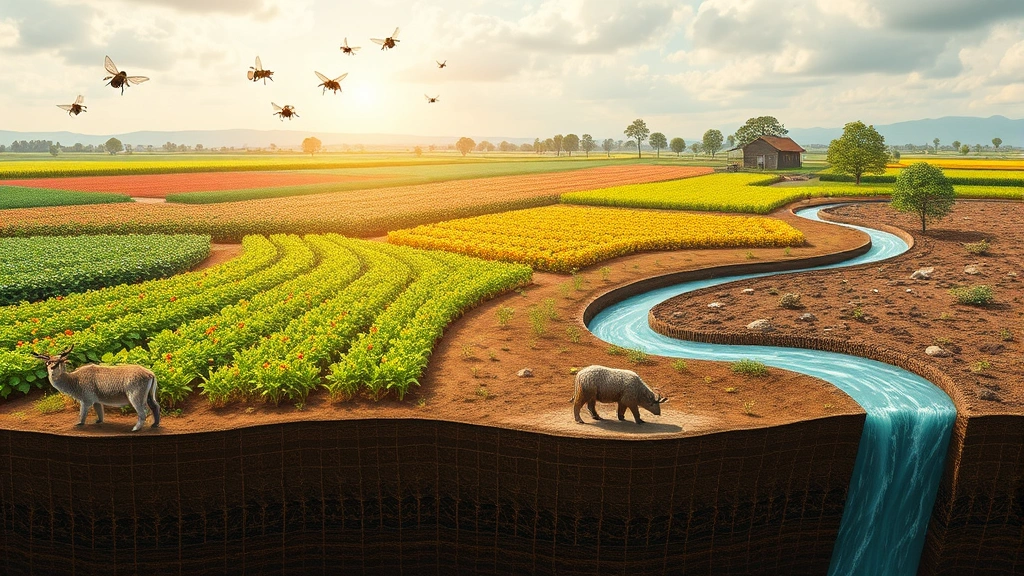
Ecosystem services represent the direct and indirect contributions that natural systems provide to human wellbeing and economic activity. These services operate across four primary categories: provisioning services (food, water, timber, genetic resources), regulating services (climate regulation, water purification, pollination, disease control), supporting services (nutrient cycling, soil formation, photosynthesis), and cultural services (recreation, spiritual value, aesthetic appreciation). The United Nations Environment Programme has conducted extensive research quantifying these services, revealing that global ecosystem services are valued between $125-145 trillion annually—a figure that dwarfs global GDP of approximately $100 trillion.
Understanding human and environment interaction requires recognizing that economic production fundamentally depends on ecosystem function. Agricultural productivity relies on pollination services provided by insects and birds; manufacturing depends on freshwater systems for processing and cooling; energy production requires hydrological cycles and wind patterns; and human health depends on air purification by forests and wetlands. These dependencies remain largely invisible in conventional economic accounting, creating what economists term “natural capital externalities.”
The valuation of ecosystem services employs multiple methodological approaches. Replacement cost methods calculate the expense of replacing ecosystem services through human-engineered alternatives—for example, the cost of artificial pollination versus relying on wild pollinators. Hedonic pricing examines how ecosystem proximity affects property values. Travel cost methods estimate willingness-to-pay for ecosystem access and recreation. Contingent valuation surveys directly ask individuals their willingness to pay for ecosystem preservation. Each method provides different insights; collectively, they demonstrate that ecosystem services possess enormous economic value that markets systematically undervalue or ignore entirely.

Natural Capital Accounting and GDP Limitations
Gross Domestic Product, the primary metric by which nations measure economic progress, contains a fundamental accounting flaw: it treats natural capital depletion as income rather than asset degradation. When a forest is harvested, the timber value is counted as income, but the loss of carbon sequestration, watershed protection, and biodiversity is ignored. This accounting error creates perverse incentives, rewarding environmental destruction as economic growth. World Bank economists have pioneered adjusted net savings measures that attempt to correct this distortion by accounting for natural capital depreciation, revealing that genuine economic progress in many nations is substantially lower than conventionally measured GDP growth.
Natural capital accounting frameworks recognize several categories of environmental assets: renewable resources (forests, fisheries, agricultural land), non-renewable resources (minerals, fossil fuels), and environmental media (atmosphere, water bodies, soil). Comprehensive national accounting systems track changes in these asset stocks, similar to how corporations track depreciation of physical plant and equipment. When implemented rigorously, such systems reveal that many nations experiencing reported GDP growth are simultaneously experiencing net wealth decline due to resource depletion and environmental degradation. Indonesia, for example, experienced 2-3 percent annual GDP growth during periods when forest loss reduced genuine economic wealth by equivalent or greater amounts.
The limitations of GDP reflect deeper conceptual problems in conventional economics. GDP measures economic throughput rather than welfare or wellbeing; it increases equally whether spending stems from cancer treatment or prevention, whether resources are efficiently allocated or wastefully consumed. The emerging field of ecological economics proposes alternative metrics including Genuine Progress Indicator (GPI), Gross National Happiness (GNH), and various wellbeing indices that incorporate environmental quality, social equity, and resource sustainability. New Zealand, Scotland, and Finland have adopted wellbeing-focused economic frameworks that explicitly value ecosystem health alongside conventional economic metrics.
Biodiversity and Economic Productivity
Biodiversity represents a critical form of natural capital that underpins economic productivity across multiple sectors. Genetic diversity in crops and livestock provides resilience against disease, pest outbreaks, and climate variability. Species diversity in natural ecosystems generates functional redundancy—multiple species performing similar ecological functions—that maintains ecosystem stability under disturbance. Agricultural economists have documented that crop productivity increases with pollinator diversity, that pest control effectiveness improves with predator diversity, and that soil productivity correlates with microbial and invertebrate diversity. The economic value of these relationships becomes apparent during biodiversity loss events, when agricultural productivity collapses and management costs surge.
The pharmaceutical and biotechnology industries derive enormous economic value from genetic diversity. Approximately 25 percent of pharmaceutical drugs contain compounds derived from plants, yet less than 1 percent of tropical plant species have been screened for pharmaceutical potential. The potential value of undiscovered pharmaceutical compounds in biodiverse regions exceeds billions of dollars annually. Similarly, agricultural breeding programs depend on maintaining genetic diversity in crop wild relatives and traditional varieties, which provide disease resistance, drought tolerance, and nutritional diversity. The economic cost of losing this genetic resource base would be incalculable, as agricultural productivity would become increasingly vulnerable to environmental shocks.
Ecosystem resilience—the capacity to absorb disturbance and maintain function—directly affects economic stability and risk management. Biodiverse ecosystems demonstrate greater resilience to drought, pest outbreaks, disease, and climate variability. In contrast, simplified ecosystems (monoculture plantations, heavily managed agricultural systems) exhibit high productivity under stable conditions but collapse rapidly under disturbance. This creates hidden economic costs in simplified systems: higher insurance requirements, greater need for pest management inputs, increased vulnerability to climate shocks. The economic case for biodiversity conservation extends beyond intrinsic value or aesthetic preference; it represents rational risk management and long-term economic security.
Water Systems and Economic Infrastructure
Freshwater systems represent critical economic infrastructure providing services worth hundreds of billions of dollars annually. Water supply for agricultural, industrial, and residential use depends on watershed function, groundwater recharge, and hydrological cycling. Water purification by wetlands, riparian forests, and soil systems eliminates the need for expensive treatment infrastructure. Flood regulation by floodplain wetlands and forests prevents economic losses that would otherwise require engineered solutions costing billions in construction and maintenance. Hydroelectric power generation depends on intact watershed function and precipitation patterns. Understanding impacts humans have had on the environment requires examining how water system degradation creates cascading economic consequences.
Water scarcity represents an increasingly severe economic constraint in many regions. The World Bank estimates that water scarcity affects approximately 4 billion people for at least one month annually, and 2 billion people for at least four months annually. This scarcity creates substantial economic costs through reduced agricultural productivity, constrained industrial expansion, and public health impacts. Groundwater depletion in major agricultural regions—the Ogallala Aquifer in North America, the Indus River basin, the North China Plain—threatens long-term food security and regional economic stability. The economic value of protecting water-producing ecosystems (forests, wetlands, grasslands) far exceeds the short-term extraction value of converting these systems to other uses.
Urban water infrastructure increasingly depends on protecting distant ecosystems. New York City’s water supply depends on watershed protection in the Catskill Mountains; Tokyo’s water comes from protected mountain forests; many major cities rely on ecosystem-based water purification rather than expensive treatment facilities. The economic calculation is straightforward: protecting watershed ecosystems costs less than building and maintaining treatment infrastructure. This has created emerging economic instruments like payment for ecosystem services (PES) programs, where downstream beneficiaries compensate upstream landowners for maintaining water-producing ecosystems. Such programs now operate in dozens of countries, generating billions in annual transfers that reflect the economic value of water system function.
Carbon Cycles and Climate Economics
Ecosystem carbon sequestration represents a critical economic service in the context of climate change mitigation. Forests, wetlands, grasslands, and marine ecosystems absorb and store atmospheric carbon dioxide, thereby regulating climate and reducing the concentration of greenhouse gases. The economic value of this carbon sequestration service depends on the social cost of carbon—the economic damage caused by each additional ton of atmospheric CO2. Current estimates of the social cost of carbon range from $50-200 per ton, with many economists arguing that true costs exceed these figures when accounting for catastrophic climate impacts and ecosystem tipping points.
The economic implications are substantial. A hectare of tropical forest may sequester 200-300 tons of carbon dioxide over its lifetime, representing potential economic value of $10,000-60,000 depending on carbon pricing assumptions. This valuation creates economic incentives for forest conservation that can compete with deforestation profits, particularly when carbon markets or climate finance mechanisms provide payment for ecosystem carbon storage. Conversely, deforestation eliminates not only current carbon sequestration but releases stored carbon, creating economic costs that vastly exceed timber harvest revenues. The economic case for forest conservation becomes compelling once carbon sequestration value is properly accounted.
Wetlands and peatlands represent particularly valuable carbon storage systems. Peatlands, which cover only 3 percent of global land area, store approximately 30 percent of terrestrial carbon. Their drainage for agriculture and development releases this carbon, contributing substantially to climate change while destroying ecosystem services worth billions annually. Mangrove forests and seagrass beds similarly store enormous quantities of carbon in marine sediments (“blue carbon”) while providing fishery habitat, storm surge protection, and coastal water purification. The economic value of protecting these ecosystems far exceeds conversion value, yet they remain under severe threat due to accounting failures that ignore carbon sequestration benefits.
Agricultural Systems and Food Security
Agricultural productivity fundamentally depends on ecosystem services including pollination, pest control, soil formation, water cycling, and nutrient cycling. Approximately 75 percent of global food crops depend at least partially on animal pollination, yet pollinator populations have declined 25-45 percent globally over recent decades due to habitat loss and pesticide use. The economic value of pollination services exceeds $15 billion annually in the United States alone; globally, the figure approaches $600 billion. Agricultural systems that maintain ecosystem function through biodiversity, soil organic matter, and natural pest control achieve greater long-term productivity and resilience compared to chemically intensive monocultures.
Soil represents a critical natural capital asset that conventional economics has historically ignored. Soil formation occurs at rates of 1 ton per hectare per year in productive agricultural systems, yet erosion rates in many regions exceed 10-40 tons per hectare annually—a net loss of soil capital. The economic value of soil extends beyond immediate productivity; soil organic matter stores carbon, retains water, supports microbial communities that enhance nutrient availability, and provides habitat for beneficial organisms. The economic cost of soil degradation includes reduced productivity, increased fertilizer requirements, greater water consumption, and increased vulnerability to drought and flooding. Yet conventional agricultural accounting treats soil mining as profitable, creating incentives that deplete natural capital.
Regenerative agriculture represents an emerging economic model that recognizes ecosystem service value and builds farming systems that enhance rather than deplete natural capital. These systems employ crop rotation, cover cropping, reduced tillage, integrated pest management, and livestock integration to maintain soil health, support biodiversity, and reduce input costs. While requiring different management practices and potentially lower yields per hectare in the short term, regenerative systems achieve greater profitability over time through reduced input costs, improved resilience, and access to premium markets. The economic transition toward regenerative agriculture requires policy support, including agricultural subsidies that reward ecosystem service provision rather than commodity production volume.
Fisheries and Marine Economics
Marine ecosystems provide enormous economic value through fisheries, tourism, and ecosystem services including carbon sequestration and nutrient cycling. Global fisheries generate approximately $150-200 billion annually in direct economic value, while supporting livelihoods for over 1 billion people. Yet fisheries economics has been characterized by severe market failures: open-access resources, inadequate property rights, and failure to account for ecosystem service values have created perverse incentives leading to systematic overfishing and ecosystem collapse. The economic tragedy of the commons has generated profound economic losses—fishery collapses have eliminated hundreds of thousands of jobs while destroying regional economies dependent on fishing.
Coral reef ecosystems exemplify the economic consequences of ecosystem degradation. Coral reefs provide fishery habitat supporting hundreds of millions of people, tourism revenue exceeding $30 billion annually, pharmaceutical compounds, coastal protection, and nutrient cycling. Yet coral reefs have declined 50 percent globally due to warming, acidification, pollution, and overfishing. The economic loss from coral degradation vastly exceeds the short-term profits from fishing, tourism overexploitation, and coastal development that caused the damage. The economic case for marine protection is compelling: protected marine areas generate greater long-term economic value through sustainable fisheries and tourism compared to open-access exploitation.
The economics of marine protection has generated substantial research demonstrating that marine reserves produce economic benefits exceeding costs within 5-10 years through increased fishery productivity in adjacent areas (spillover effects), enhanced tourism value, and maintained ecosystem services. Yet marine protection remains underfunded, with less than 8 percent of ocean area protected compared to 17 percent of terrestrial area. This reflects market failures and governance limitations rather than economic inefficiency. Expanding marine protection would generate substantial net economic benefits while reducing climate vulnerability and maintaining food security for populations dependent on marine resources.
Ecosystem Degradation Costs
The economic costs of ecosystem degradation extend far beyond the direct loss of ecosystem services. Degradation triggers cascading impacts including increased disaster frequency and severity, disease emergence and spread, agricultural productivity collapse, water scarcity, and climate destabilization. Recent research quantifies these costs: deforestation generates economic losses estimated at $2-5 trillion annually when accounting for carbon release, watershed degradation, and biodiversity loss. Wetland conversion costs approximately $15,000-30,000 per hectare in lost ecosystem services. Soil degradation costs $400 billion annually in lost productivity and increased input requirements. Marine ecosystem degradation costs approximately $1 trillion annually in lost fishery productivity, tourism value, and ecosystem services.
The economic costs of inaction vastly exceed the costs of ecosystem protection and restoration. Investing in ecosystem protection costs $1-10 per hectare annually in many contexts, while ecosystem degradation costs $100-1000+ per hectare annually in lost productivity and services. The economic case for conservation is overwhelming, yet degradation continues due to market failures, inadequate property rights, and policy distortions that reward short-term extraction over long-term sustainability. Correcting these failures requires economic instruments including carbon pricing, natural capital accounting, ecosystem service payments, and reformed subsidy structures that align private incentives with ecological sustainability.
The economic consequences of ecosystem degradation fall disproportionately on poor populations dependent on ecosystem services for survival. Small-scale farmers, fishing communities, and indigenous peoples—often comprising the world’s poorest populations—depend directly on ecosystem services for food, water, income, and livelihoods. Ecosystem degradation in these regions creates humanitarian crises, forced migration, conflict over scarce resources, and economic collapse. The economic case for ecosystem protection includes distributional justice: protecting ecosystems provides the greatest economic benefits to populations most vulnerable to degradation and least responsible for causing environmental damage.
Policy Frameworks and Economic Instruments
Addressing ecosystem-economy relationships requires policy frameworks that internalize environmental costs into economic decision-making. Carbon pricing mechanisms (carbon taxes, cap-and-trade systems) create economic incentives for emissions reduction and carbon sequestration. Payment for ecosystem services programs compensate landowners for maintaining ecosystem function. Biodiversity offsets require developers to compensate for ecosystem destruction through protection or restoration elsewhere. Natural capital accounting reforms incorporate ecosystem asset values into national accounting systems, providing policymakers with accurate information about genuine economic progress.
The reduction of carbon footprint requires economic instruments that make climate impacts visible and costly. Carbon pricing has proven effective in reducing emissions and stimulating low-carbon innovation, with carbon taxes in Scandinavia generating both emissions reductions and substantial government revenue. Cap-and-trade systems in the European Union and California have similarly achieved emissions reductions while maintaining economic competitiveness. Expanding carbon pricing to cover all sectors and including mechanisms for ecosystem carbon sequestration would substantially accelerate the economic transition toward climate stability.
Subsidy reform represents a critical policy priority for aligning economic incentives with ecological sustainability. Global subsidies for fossil fuels, industrial agriculture, and fishing exceed $1 trillion annually, effectively paying to destroy ecosystems and accelerate climate change. Redirecting these subsidies toward ecosystem protection, regenerative agriculture, and renewable energy would fundamentally transform economic incentives. Combining subsidy reform with positive incentives for ecosystem protection—through payments for ecosystem services, green bonds, and climate finance—would create powerful economic drivers for ecosystem conservation and restoration.
International policy frameworks including the Convention on Biological Diversity, the Paris Climate Agreement, and emerging agreements on ecosystem restoration reflect growing recognition that ecosystem protection represents a global public good requiring coordinated policy action. Yet implementation remains inadequate, with insufficient funding and enforcement mechanisms. Strengthening international agreements and providing adequate financial resources for ecosystem protection in developing countries would accelerate the global transition toward sustainable economics. The economic case is clear: investing in ecosystem protection costs less than managing the consequences of ecosystem collapse while generating enormous co-benefits including climate stability, food security, water availability, and human wellbeing.
For students preparing for the sustainable fashion brands and broader sustainability transitions, understanding these policy frameworks provides essential context. Economic instruments and policy reforms create the conditions enabling sustainable business models and consumer choices. Recognizing the interconnections between ecosystem health, economic stability, and human wellbeing equips students with the analytical frameworks necessary to navigate and contribute to the economic transformation toward genuine sustainability.
FAQ
What are ecosystem services and why do they matter economically?
Ecosystem services are the benefits humans receive from natural systems, including provisioning services (food, water, timber), regulating services (climate regulation, pollination, water purification), supporting services (nutrient cycling, soil formation), and cultural services (recreation, spiritual value). They matter economically because they underpin all economic production—agriculture depends on pollination and soil formation, manufacturing depends on freshwater systems, human health depends on air purification. Yet markets have historically failed to value these services, creating incentives for ecosystem destruction. Quantifying and pricing ecosystem services reveals that their economic value ($125-145 trillion annually) vastly exceeds global GDP.
How does ecosystem degradation affect economic growth?
Ecosystem degradation reduces genuine economic wealth while potentially increasing measured GDP through extraction revenues. Deforestation releases carbon (creating climate costs), eliminates carbon sequestration (losing future benefits), destroys watershed function (increasing water treatment costs), and reduces biodiversity (increasing agricultural vulnerability). The net economic effect is substantially negative, though conventional GDP accounting fails to capture these costs. Natural capital accounting approaches that properly value ecosystem assets reveal that many nations experiencing reported GDP growth are simultaneously experiencing net wealth decline due to resource depletion and environmental degradation.
What role do ecosystems play in food security and agriculture?
Ecosystems provide critical services for agricultural productivity including pollination (75 percent of global food crops depend on animal pollination), pest control (natural predators eliminate agricultural pests), soil formation and maintenance (soil organic matter stores water, nutrients, and carbon), water cycling (providing irrigation and maintaining water tables), and nutrient cycling. Agricultural systems that maintain ecosystem function achieve greater long-term productivity and resilience compared to chemically intensive monocultures. The economic value of ecosystem services to agriculture exceeds $600 billion annually globally, yet these services remain undervalued and threatened by agricultural practices that degrade natural capital.
How can economic policy address ecosystem-economy relationships?
Policy instruments include natural capital accounting (incorporating ecosystem assets into national accounting systems), carbon pricing (creating economic incentives for emissions reduction and carbon sequestration), payment for ecosystem services (compensating landowners for ecosystem protection), subsidy reform (redirecting agricultural, fossil fuel, and fishing subsidies toward ecosystem protection), and environmental regulation (establishing minimum ecosystem protection standards). Combining these instruments creates economic incentives aligning private profit with ecological sustainability. Research demonstrates that ecosystem protection and restoration investments generate economic returns exceeding costs within 5-10 years through maintained or restored ecosystem services.
What is the relationship between biodiversity and economic productivity?
Biodiversity supports economic productivity through multiple mechanisms: genetic diversity provides resilience against disease and pest outbreaks in agriculture; species diversity in natural ecosystems generates functional redundancy maintaining ecosystem stability under disturbance; diverse ecosystems demonstrate greater resilience to drought, climate variability, and other environmental shocks. Agricultural productivity increases with pollinator diversity, pest control effectiveness improves with predator diversity, and soil productivity correlates with microbial diversity. Biodiverse ecosystems also provide greater long-term economic security through reduced vulnerability to environmental shocks, making biodiversity conservation a form of rational economic risk management.


