
Adapting to Environment: An Economist’s Perspective on Human-Ecological Resilience
Human adaptation to environmental change represents one of the most critical intersections between ecological science and economic theory. From the perspective of ecological economics, adaptation is not merely a biological process but a complex economic phenomenon involving resource allocation, technological innovation, institutional change, and behavioral shifts. As climate change accelerates and environmental degradation intensifies, understanding how people economically and socially adapt to their surroundings becomes essential for designing sustainable policies and markets.
Economists increasingly recognize that environmental adaptation operates through multiple channels: market mechanisms, government interventions, technological development, and behavioral adjustments. These pathways are deeply interconnected, creating feedback loops that determine whether societies achieve resilience or face economic collapse. This analysis explores adaptation through an economic lens, examining how costs, incentives, and institutional structures shape human responses to environmental pressures.
Economic Foundations of Environmental Adaptation
Environmental adaptation, from an economic perspective, involves the allocation of scarce resources to respond to environmental constraints and opportunities. Classical economics treats the environment as either a resource to be exploited or an externality to be managed, while ecological economics views it as a fundamental life-support system with critical thresholds and planetary boundaries. This distinction profoundly shapes how economists conceptualize adaptation.
The concept of adaptive capacity—the ability of systems, institutions, and individuals to adjust to potential damage and exploit beneficial opportunities—depends heavily on economic factors. Wealthier nations and individuals possess greater financial flexibility to invest in adaptive measures, from building seawalls to developing drought-resistant crops. Conversely, developing economies face severe constraints in funding adaptation, despite often bearing disproportionate environmental burdens. This creates what economists call the adaptation deficit, where the pace of environmental change outstrips societies’ capacity to respond.
Economic adaptation operates across temporal scales. Short-term adaptation involves immediate behavioral responses: farmers adjust planting dates, communities relocate water sources, businesses modify supply chains. Medium-term adaptation includes infrastructure investments and institutional reforms. Long-term adaptation requires fundamental economic restructuring, such as transitioning from fossil fuel-dependent energy systems to renewable alternatives. Each temporal scale carries distinct economic implications and requires different policy instruments.
Market-Based Adaptation Mechanisms
Markets serve as primary mechanisms through which people adapt to environmental change. Price signals communicate scarcity, incentivizing resource conservation and substitution. When water becomes scarce, its price rises, encouraging farmers to adopt efficient irrigation technologies and consumers to reduce consumption. This price mechanism operates automatically, requiring no central planning, though it distributes adaptation burdens unequally.
However, market-based adaptation faces significant limitations. Environmental goods like clean air and stable climate often lack market prices, creating no economic incentive for protection until damage becomes severe. World Bank analyses demonstrate that markets systematically undervalue future environmental damages, a problem economists attribute to temporal discounting—our tendency to value present benefits more heavily than future costs.
Carbon pricing mechanisms exemplify both the promise and limitations of market-based adaptation. Cap-and-trade systems and carbon taxes theoretically incentivize the most cost-effective emissions reductions across the economy. Yet carbon prices remain far below the social cost of carbon, limiting their effectiveness as adaptation drivers. Additionally, reducing carbon footprint through markets alone proves insufficient for achieving climate targets, necessitating complementary regulatory approaches.
Insurance markets represent another crucial adaptation mechanism. As environmental risks increase, insurance becomes both more expensive and more necessary. Rising flood insurance premiums incentivize property owners to relocate or invest in protective infrastructure. However, insurance markets can break down in high-risk environments, leaving vulnerable populations unprotected. This market failure underscores why purely market-based adaptation inadequately addresses environmental challenges.

Technological Innovation and Adaptive Capacity
Technological innovation constitutes perhaps the most economically significant adaptation pathway. Economists often emphasize that technological change can overcome resource constraints through efficiency improvements and substitution. More efficient irrigation systems reduce water consumption; precision agriculture minimizes fertilizer use; renewable energy technologies replace fossil fuels. From this perspective, adaptation becomes largely a problem of directing innovation toward environmental challenges.
Yet technological adaptation involves complex economic trade-offs. Research and development requires substantial upfront investment, with uncertain returns and long development timelines. Learning-by-doing effects reduce technology costs as deployment increases, creating a virtuous cycle for successful innovations like solar photovoltaics, whose costs have declined 90 percent over the past decade. However, technological lock-in can trap economies in inferior solutions, as fossil fuel infrastructure demonstrates.
The relationship between innovation and adaptation reveals important insights about adaptive capacity. Wealthy nations with large R&D sectors develop technologies suited to their environments and economic systems. Developing countries often adapt these technologies, but frequently find they require modifications for local conditions. This creates what economists term technological adaptation gaps, where available technologies don’t match local needs or economic constraints. Bridging these gaps requires technology transfer mechanisms and local innovation capacity.
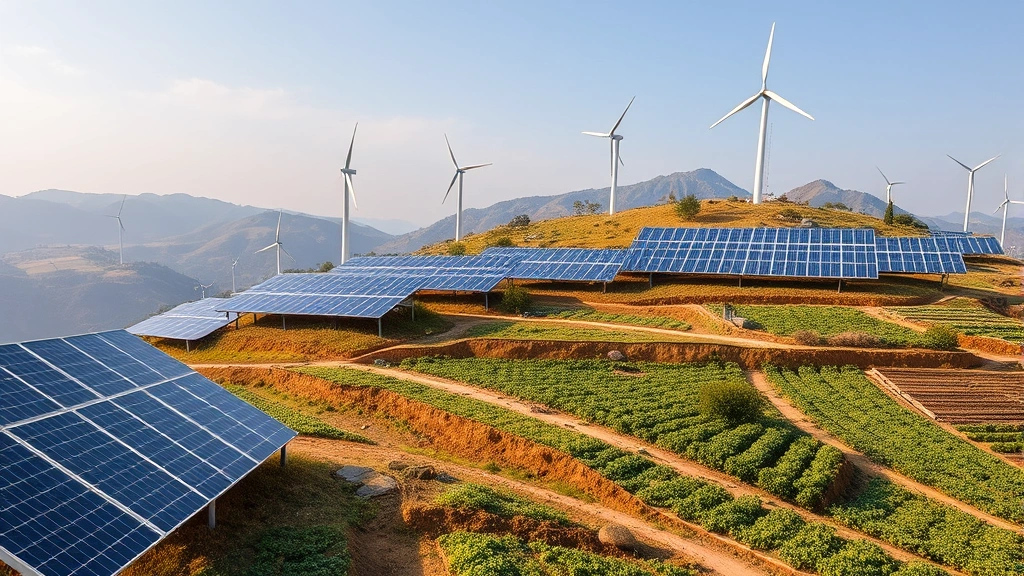
Regarding renewable energy for homes, technological adaptation has democratized energy production, enabling household-level adaptation to energy scarcity and price volatility. Distributed renewable systems increase resilience by reducing dependence on centralized infrastructure vulnerable to environmental disruptions.
Institutional Frameworks and Policy Design
Institutional structures profoundly shape adaptive capacity. Effective adaptation requires institutions capable of coordinating collective action, enforcing property rights, managing commons, and implementing long-term policies despite political cycles. Weak institutions constrain adaptation, particularly in developing regions where governance capacity remains limited.
Property rights systems illustrate how institutions affect adaptation. Secure land tenure incentivizes long-term investments in soil conservation and sustainable land management. Conversely, insecure tenure encourages short-term resource extraction, degrading adaptive capacity. Water rights frameworks determine whether farmers can invest in irrigation infrastructure or must rely on uncertain rainfall. These institutional foundations shape economic incentives for environmental adaptation.
Policy instruments for adaptation include regulatory approaches (environmental standards, building codes), economic instruments (subsidies for adaptation technology, insurance programs), and informational approaches (early warning systems, climate information services). Effective adaptation policy typically combines these instruments. For instance, addressing environment awareness through education complements regulatory requirements for energy efficiency.
International institutions increasingly recognize adaptation financing as essential. The United Nations Environment Programme estimates developing countries require $280-500 billion annually for adaptation investments by 2050. Current adaptation finance flows remain far below this level, creating an adaptation financing gap that constrains developing country adaptive capacity. Closing this gap requires both increased developed country contributions and innovative financing mechanisms.
Behavioral Economics and Adaptation Barriers
Classical economic theory assumes rational actors making optimal decisions based on complete information. Real adaptation behavior deviates systematically from this model. Behavioral economics identifies cognitive biases and social preferences that constrain adaptation, even when economically rational responses are available.
Present bias leads individuals to undervalue future environmental costs, delaying adaptation investments. Someone might rationally understand that home weatherization reduces long-term energy costs, yet fails to make the investment due to high upfront costs and uncertain future benefits. Similarly, communities delay climate adaptation investments despite knowing future damages will exceed current costs.
Status quo bias causes resistance to institutional changes necessary for adaptation. Farmers may resist transitioning to drought-resistant crops despite declining rainfall, preferring familiar practices. Industries resist transitioning from established technologies to more sustainable alternatives. These behavioral patterns persist even when economic analysis clearly demonstrates adaptation benefits.
Information asymmetries and uncertainty further constrain adaptation. Many people lack information about available adaptation options or their effectiveness. Environmental changes create unprecedented conditions with limited historical precedent, making probabilistic forecasting difficult. This uncertainty discourages investment in specific adaptation measures with unknown effectiveness.
Social preferences and equity concerns shape adaptation choices. People care not only about absolute outcomes but also about fairness and relative status. Adaptation policies perceived as unfairly distributing costs face political resistance. Understanding these behavioral dimensions proves essential for designing adaptation policies that people actually adopt.
Sectoral Adaptations: Agriculture, Water, Energy
Different economic sectors face distinct environmental pressures requiring sector-specific adaptation strategies. Agriculture, which depends directly on climate and water availability, exemplifies sectoral adaptation complexity. Farmers adapt through multiple mechanisms: shifting planting dates, adopting new crop varieties, modifying irrigation practices, diversifying income sources, and sometimes relocating production.
Economic analysis reveals that agricultural adaptation success depends on access to credit for technology adoption, extension services providing climate information, secure land tenure enabling long-term investments, and market access for new crops. Developing countries with limited access to these economic resources face severe agricultural adaptation constraints, threatening food security.
Water adaptation spans urban and agricultural sectors. Cities adapt to water scarcity through demand management (pricing, conservation incentives), supply augmentation (desalination, water recycling), and infrastructure investment. These adaptations involve substantial economic costs, particularly for capital-intensive technologies like desalination. Developing countries often lack financial capacity for such investments, creating water security vulnerabilities.
Energy sector adaptation involves transitioning from fossil fuels to renewable and low-carbon sources. This represents perhaps the largest economic adaptation challenge, requiring transformation of global energy infrastructure worth trillions of dollars. Economic viability increasingly favors renewables as technology costs decline, yet transition speed remains constrained by capital availability, political economy factors, and infrastructure lock-in.
The relationship between these sectors creates adaptation interdependencies. Energy-intensive water treatment competes with other energy demands. Agricultural irrigation competes with urban water needs. Renewable energy development requires land potentially used for agriculture. Optimizing adaptation across sectors requires integrated economic analysis accounting for these trade-offs.
The Role of Inequality in Adaptive Capacity
Perhaps the most critical insight from economic analysis of adaptation concerns inequality’s pervasive influence. Adaptation capacity correlates strongly with economic resources. Wealthy individuals can relocate from flood-prone areas, install expensive protective infrastructure, or diversify income sources. Wealthy nations can fund research for new adaptation technologies and invest in large-scale infrastructure.
Conversely, low-income populations face severe adaptation constraints. They often inhabit high-risk environments (flood plains, arid regions, areas vulnerable to extreme weather) because housing costs less there. They lack capital for protective investments or technology adoption. Their livelihoods depend heavily on climate-sensitive sectors like agriculture or tourism. When adaptation requires choosing between current consumption and future security, poverty forces choosing immediate survival.
This adaptation inequality creates what economists term maladaptation—responses that increase vulnerability or shift costs to others. A farmer unable to afford irrigation might clear forests for additional cultivation, degrading ecosystem services. A community unable to afford seawalls might relocate to other vulnerable areas. These individual responses, rational given poverty constraints, collectively worsen environmental conditions and reduce societal adaptive capacity.
Gender dimensions amplify adaptation inequality. In many developing regions, women control fewer economic resources, limiting their individual adaptive capacity. Yet women often bear disproportionate adaptation burdens, as they typically manage household water and food security while having limited decision-making authority. Effective adaptation policy must address these structural inequalities affecting adaptive capacity.
International inequality shapes global adaptation dynamics. Developing countries contribute least to environmental problems yet suffer greatest impacts and possess least adaptive capacity. Green environment initiatives must address this equity dimension, ensuring adaptation investments reach vulnerable populations and regions.
Measuring and Valuing Adaptation
Quantifying adaptation presents significant economic and methodological challenges. Economists distinguish between adaptation costs (resources spent adapting) and adaptation benefits (damages avoided through adaptation). Measuring both requires comparing actual outcomes to counterfactual scenarios—what would have occurred without adaptation.
Cost measurement faces several complications. Some adaptation investments serve multiple purposes, making attribution difficult. A farmer adopting drought-resistant crops also improves soil health and reduces fertilizer costs. Attributing costs to climate adaptation versus other motivations proves problematic. Additionally, many adaptation benefits accrue indirectly through ecosystem services or reduced disease transmission, difficult to monetize.
Temporal accounting creates further measurement challenges. Adaptation investments made today generate benefits over decades, requiring long-term economic projections. Discounting future benefits to present values—standard economic practice—systematically undervalues long-term adaptation benefits. Different discount rates can completely reverse cost-benefit conclusions, yet choosing appropriate rates remains controversial among economists.
Non-monetary dimensions of adaptation resist economic valuation. Cultural continuity, community cohesion, and psychological well-being matter for adaptation outcomes but don’t appear in standard economic analyses. Some environmental changes might be economically adaptable but culturally devastating, creating adaptation dilemmas that economic analysis alone cannot resolve.
Recent economic research emphasizes co-benefits and no-regrets adaptation. Investments with benefits regardless of future environmental conditions—such as improving water use efficiency or developing renewable energy—avoid the problem of malinvestment in unnecessary adaptation. This approach acknowledges uncertainty about future environmental conditions while justifying adaptation investments through multiple benefit streams.
FAQ
How do economists define adaptation differently than ecologists?
Economists emphasize resource allocation, costs, and incentive structures, viewing adaptation as an economic optimization problem. Ecologists focus on biological and ecosystem processes. Ecological economists integrate both perspectives, recognizing that economic systems depend on ecological foundations and that economic adaptation must respect ecological limits and planetary boundaries.
Can markets alone drive necessary environmental adaptation?
Market mechanisms provide important adaptation incentives but prove insufficient alone. Markets systematically undervalue future environmental damages and public goods like climate stability. Market failures in insurance, technology development, and information create adaptation gaps. Effective adaptation requires combining market mechanisms with regulatory policies, public investment, and institutional reforms.
Why do wealthy and poor regions have such different adaptive capacities?
Adaptive capacity depends on economic resources for technology adoption, infrastructure investment, and income diversification. Wealthy regions possess these resources; poor regions lack them. Additionally, wealthy nations can externalize some adaptation costs to other regions through trade and investment patterns. This creates structural inequality in adaptive capacity that markets alone cannot overcome.
What role does technological innovation play in adaptation?
Technological innovation increases adaptive capacity by improving efficiency, enabling substitution, and reducing resource constraints. However, innovation requires substantial R&D investment, creates development lags, and often reflects wealthy country needs rather than developing country requirements. Technology transfer and local innovation capacity are essential for making innovation available to all populations needing adaptation.
How does adaptation relate to mitigation efforts?
Adaptation and mitigation are complementary strategies. Mitigation (reducing greenhouse gas emissions) reduces future adaptation needs by limiting climate change. Adaptation addresses unavoidable environmental changes already occurring. Effective climate policy requires both strategies, though current global investment heavily emphasizes mitigation while neglecting adaptation, particularly in developing countries.
Can we measure adaptation success economically?
Measuring adaptation success presents methodological challenges: comparing actual outcomes to uncertain counterfactuals, valuing non-monetary benefits, and discounting long-term outcomes. Economic analysis contributes important insights about costs and efficiency but must be complemented by ecological assessments of sustainability and social evaluations of equity and well-being. Comprehensive adaptation assessment requires interdisciplinary approaches beyond economics alone.


