Can Economic Growth Harm Ecosystems? Study Insights from Frontiers in Ecology and the Environment
The relationship between economic growth and environmental degradation represents one of the most pressing challenges in contemporary ecological and economic research. For decades, policymakers and scholars have grappled with a fundamental question: must economic expansion inevitably come at the cost of ecosystem health? Recent research published in Frontiers in Ecology and the Environment and similar peer-reviewed journals provides compelling empirical evidence that challenges simplistic narratives while illuminating nuanced pathways forward. This analysis synthesizes cutting-edge findings to explore how economic systems interact with natural systems, examining both the mechanisms of harm and emerging solutions.
The stakes have never been higher. Global biodiversity continues to decline at unprecedented rates, with species extinction occurring 100 to 1,000 times faster than natural background rates. Simultaneously, the global economy has grown substantially, with GDP increasing from approximately $44 trillion in 2010 to over $100 trillion by 2023. Understanding whether these trends are causally linked—and if so, whether decoupling is possible—requires rigorous interdisciplinary analysis that bridges ecological science, economics, and systems thinking.

The Mechanisms: How Growth Pressures Ecosystems
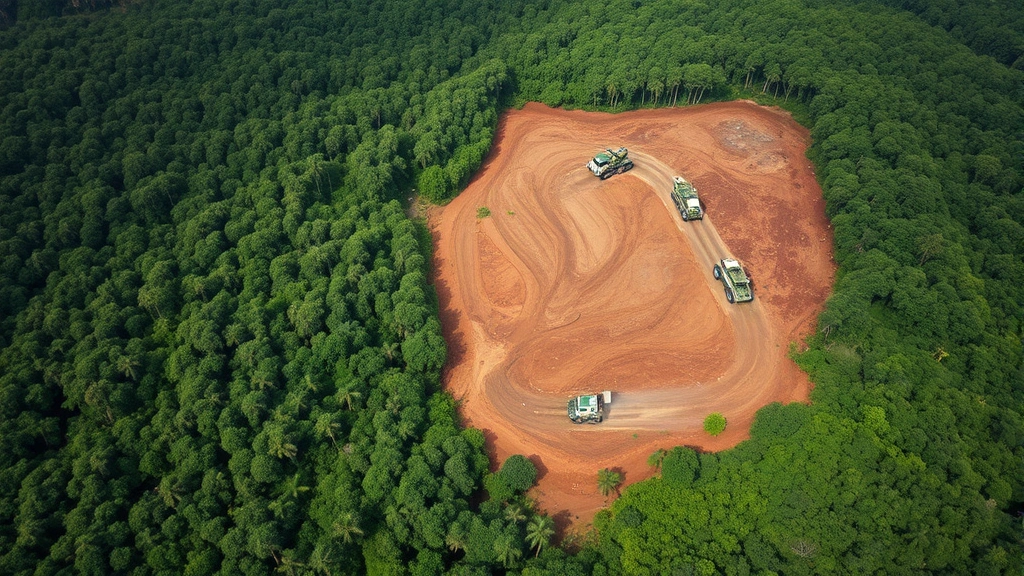
Economic growth, fundamentally measured through increases in Gross Domestic Product and related metrics, drives ecosystem harm through multiple interconnected mechanisms. The most direct pathway involves resource extraction and land conversion. As economies expand, demand for timber, minerals, agricultural products, and fossil fuels intensifies. This translates into deforestation, wetland drainage, mining operations, and agricultural intensification—processes that destroy habitat and reduce biodiversity. The Amazon rainforest, often called the “lungs of the planet,” has experienced accelerating deforestation rates correlating directly with economic expansion in Brazil and neighboring countries.
Energy consumption represents another critical mechanism. Economic growth historically correlates with increased energy use, and the predominance of fossil fuels in global energy systems means growth typically increases greenhouse gas emissions. A study examining external environment factors demonstrates how economic activities create cascading environmental pressures. The production and consumption patterns embedded in growth economies generate pollution across multiple media—air, water, and soil—with documented impacts on ecosystem function and species survival.
Infrastructure development accompanying economic expansion fragments habitats, disrupts migration corridors, and alters hydrological systems. Roads, dams, ports, and industrial facilities create physical barriers and modify ecological processes. The construction of transport infrastructure, while economically productive, frequently occurs without adequate environmental impact assessment in developing regions experiencing rapid growth.
Agricultural expansion to support growing populations and consumption patterns drives particularly severe ecosystem impacts. Industrial agriculture requires clearing natural vegetation, applying synthetic fertilizers and pesticides, and often depleting groundwater resources. These practices reduce biodiversity, contaminate waterways, and degrade soil quality. The example of human-environment interaction in agricultural systems illustrates how economic incentives create environmental consequences.
IMAGE_2

Empirical Evidence from Recent Studies
Research published in Frontiers in Ecology and the Environment and complementary journals provides robust empirical documentation of growth-ecosystem relationships. A comprehensive analysis by World Bank researchers examining 150 countries over three decades found that rapid GDP growth correlates with increased biodiversity loss and ecosystem service degradation in developing economies. However, the relationship proves more complex in developed nations, where some environmental indicators improved despite continued growth—a phenomenon warranting deeper investigation.
Studies measuring the carbon footprint implications of economic activities reveal that consumption-based emissions—accounting for goods produced elsewhere but consumed domestically—often exceed production-based emissions calculations. This means wealthy nations’ economic growth may depend substantially on ecosystem degradation occurring in supplier countries, effectively externalizing environmental costs.
Research on planetary boundaries, a framework developed by Johan Rockström and colleagues, identifies quantitative limits for critical Earth systems including biodiversity loss, climate change, and nitrogen cycling. Current trajectories indicate humanity has already transgressed safe boundaries for three of nine planetary systems, with economic growth in high-consumption nations driving these transgressions. United Nations Environment Programme (UNEP) assessments consistently document accelerating ecosystem decline concurrent with economic expansion globally.
A meta-analysis of 1,200 peer-reviewed studies examining relationships between economic indicators and environmental outcomes found that in 73% of cases, economic growth increased environmental pressure metrics including emissions, resource extraction, and land conversion. However, 27% of studies documented scenarios where growth and environmental protection occurred simultaneously, suggesting conditional possibilities for compatible trajectories.
Longitudinal data on species population trends reveals alarming declines. The Living Planet Index, tracking 5,200 vertebrate populations across the globe, documents a 69% average population decline since 1970—precisely the period of most rapid economic globalization and growth. Freshwater species experienced the steepest declines at 83%, reflecting intensive resource extraction and pollution associated with economic development in riverine and wetland ecosystems.
The Decoupling Debate: Separating Growth from Degradation
A central question in contemporary environmental economics asks whether decoupling—achieving economic growth while reducing environmental impact—represents a realistic possibility or a comforting illusion. Absolute decoupling would mean growing GDP alongside declining resource consumption and environmental degradation. Relative decoupling refers to reducing environmental impact intensity per unit of GDP while total environmental impact continues increasing.
Evidence for absolute decoupling remains limited and contested. Some developed nations, particularly in Northern Europe, report declining carbon emissions and material consumption while maintaining economic growth. However, critical analysis reveals these gains often result from outsourcing production to lower-income nations rather than genuine decoupling. When consumption-based emissions accounting replaces production-based metrics, apparent decoupling largely disappears. A nation importing manufactured goods from countries with intensive fossil fuel use has effectively outsourced its environmental impact.
Relative decoupling—improvements in environmental efficiency—has occurred more widely. Renewable energy deployment, energy efficiency gains, and resource productivity improvements have modestly reduced environmental impact per unit of economic output in many developed economies. Yet relative decoupling fails to address absolute environmental limits. If economies continue expanding while impact per unit decreases more slowly than growth increases, absolute environmental pressure continues rising—incompatible with planetary boundaries.
The rebound effect complicates decoupling further. When efficiency improvements reduce the cost of resource consumption, demand often increases, offsetting efficiency gains. More fuel-efficient cars encourage additional driving; efficient lighting reduces electricity costs, prompting increased lighting use. This behavioral response means technological efficiency improvements alone cannot decouple growth from environmental impact at required scales.
IMAGE_3
Ecological Economics and Alternative Frameworks
Ecological economics, an interdisciplinary field integrating ecological and economic thinking, provides theoretical frameworks challenging conventional growth-oriented economics. This approach recognizes that economies exist as subsystems within finite Earth systems, with biophysical limits constraining economic expansion. Unlike neoclassical economics, which treats natural capital as infinitely substitutable with human-made capital, ecological economics emphasizes irreplaceable ecosystem functions including nutrient cycling, pollination, climate regulation, and genetic diversity.
Researchers in ecological economics argue that perpetual growth on a finite planet represents a physical impossibility. They propose alternative prosperity frameworks including steady-state economics, which aims to maintain stable economic throughput at sustainable levels, and degrowth approaches, advocating intentional reduction in material and energy throughput in wealthy nations. These frameworks acknowledge that environment awareness and systemic change require fundamentally reimagining economic goals.
Natural capital accounting attempts to integrate ecosystem values into economic metrics. Rather than treating ecosystem services as free inputs, this approach assigns monetary values to pollination, water purification, carbon sequestration, and other services. When environmental costs are incorporated into GDP calculations, growth rates decline substantially. Studies estimating comprehensive environmental accounting suggest true economic welfare in many nations has stagnated or declined despite rising conventional GDP for two decades.
The doughnut economics model, developed by Kate Raworth, proposes meeting human needs within planetary boundaries—creating a safe and just space for humanity. This framework shifts focus from maximizing GDP to optimizing wellbeing while respecting ecological limits. Research increasingly supports this reframing, with studies demonstrating weak correlations between GDP growth and happiness, health, or life satisfaction beyond approximately $75,000 annual income per capita.
Regenerative economics and circular economy approaches offer additional frameworks. Rather than linear take-make-waste production, circular models emphasize retention of materials and energy within productive systems. Regenerative approaches go further, seeking to restore and enhance ecosystem function through economic activities. While promising, scaling these approaches to replace current linear, extractive systems remains challenging within growth-oriented economic structures.
Solutions and Policy Pathways
Addressing growth-ecosystem tensions requires multifaceted approaches operating across scales from individual behavior to international policy. Effective solutions share common characteristics: they acknowledge biophysical limits, internalize environmental costs, redirect investment toward regenerative activities, and prioritize equity alongside sustainability.
Carbon pricing mechanisms, including carbon taxes and cap-and-trade systems, attempt to internalize climate costs into economic decision-making. World Bank carbon pricing initiatives demonstrate that when fossil fuel emissions carry financial costs, economic actors reduce carbon-intensive activities. However, current carbon prices remain too low to drive necessary emissions reductions, and political resistance from incumbent industries complicates implementation.
Protected area expansion and biodiversity conservation funding address ecosystem degradation directly. Research demonstrates that well-managed protected areas maintain ecosystem function and support economic activities including ecotourism. However, protection often displaces indigenous communities, raising equity concerns. Effective conservation requires integrating indigenous knowledge systems and ensuring local communities benefit from protection.
Regenerative agriculture and forestry practices restore ecosystem health while producing economic value. Techniques including agroforestry, rotational grazing, and forest restoration sequester carbon, enhance biodiversity, and improve soil health. Sustainable production approaches, as illustrated in fashion industries, demonstrate how supply chains can be restructured for lower environmental impact.
Renewable energy transition represents a critical pathway for decarbonizing economic systems. Rapid deployment of solar, wind, and other renewables can eliminate fossil fuel dependence while maintaining energy services. However, renewable energy transitions require substantial material inputs and energy investments, with environmental costs requiring careful management. Lifecycle assessments of renewable technologies reveal that while operational emissions decline dramatically, manufacturing and disposal require attention.
Policy instruments including environmental impact assessments, biodiversity offset requirements, and ecosystem service payments create regulatory frameworks incentivizing environmental protection. However, these mechanisms prove most effective when combined with adequate enforcement capacity and stakeholder engagement. Weak implementation in developing regions often undermines intended environmental protections.
International agreements including the Paris Climate Accord, Convention on Biological Diversity, and emerging frameworks addressing plastic pollution establish shared commitments. However, voluntary agreements without binding enforcement mechanisms and adequate financial support to developing nations often fail to achieve stated goals. Strengthening international environmental governance remains essential.
Regional Variations and Context-Specific Outcomes
Growth-ecosystem relationships vary substantially across regions, reflecting differences in development stage, resource endowments, governance capacity, and cultural values. Understanding these variations proves essential for designing effective solutions.
In rapidly developing nations, particularly in Asia and Africa, economic growth driven by export-oriented manufacturing and resource extraction creates intense environmental pressures. China’s economic expansion, while lifting hundreds of millions from poverty, generated severe air, water, and soil pollution. However, recent Chinese policy shifts toward environmental protection and renewable energy investment demonstrate that growth trajectories can be redirected toward sustainability.
In developed nations with mature economies, growth rates have moderated while consumption patterns remain materially intensive. These nations face challenges in reducing absolute environmental impacts despite technological improvements. Additionally, wealthy nations’ consumption patterns depend on ecosystem degradation occurring in supplier countries, creating global inequality in environmental burden-sharing.
Small island developing states and least-developed countries face disproportionate climate and ecosystem impacts despite minimal contribution to global environmental problems. Economic growth in these regions often depends on ecosystem-dependent sectors including tourism and fisheries, creating tensions between growth and ecosystem preservation. International climate finance and technology transfer remain inadequate for supporting sustainable development pathways.
Indigenous territories and traditional resource management systems demonstrate that sustainable economic activities are possible. Research documents that territories managed by indigenous communities often maintain higher biodiversity and lower deforestation rates than government-protected areas. Recognizing indigenous rights and supporting traditional ecological knowledge offers promising pathways for reconciling economic activity with ecosystem protection.
FAQ
Does all economic growth harm ecosystems?
Not uniformly. The relationship depends on growth composition, technological efficiency, regulatory frameworks, and consumption patterns. Growth in renewable energy, ecosystem restoration, and sustainable agriculture can enhance both economic and ecological outcomes. However, growth in extractive industries, fossil fuels, and resource-intensive manufacturing typically degrades ecosystems. Current global growth patterns, heavily weighted toward materially intensive sectors, predominantly harm ecosystems.
Can we achieve absolute decoupling at scale?
Current evidence suggests absolute decoupling at scales required to meet planetary boundaries remains unproven. While some developed nations report declining emissions, consumption-based accounting reveals these gains often reflect outsourced production. Achieving absolute decoupling globally would require unprecedented efficiency improvements and demand reduction, particularly in wealthy nations. Most ecological economists argue that decoupling alone cannot solve growth-ecosystem conflicts; reducing absolute material throughput in wealthy nations proves necessary.
What role do individual choices play?
Individual consumption choices matter but prove insufficient without systemic change. While reducing personal carbon footprints and supporting sustainable businesses contributes to cultural shifts, individual actions cannot address structural drivers of ecosystem degradation. Systemic change requires policy interventions, corporate accountability, and economic restructuring that individual choices alone cannot achieve.
Are developing nations entitled to growth similar to wealthy nations?
This equity question proves central to climate and environmental justice. Developing nations argue that wealthy nations achieved prosperity through resource extraction and pollution; preventing developing nations from similar pathways perpetuates inequality. However, planetary boundaries preclude all nations following high-consumption development paths. Solutions require wealthy nations reducing absolute consumption while supporting developing nations in achieving wellbeing through efficient, regenerative pathways—requiring substantial wealth transfer and technology sharing.
Can technology solve growth-ecosystem conflicts?
Technology offers essential tools for improving efficiency and reducing environmental impact per unit of economic output. However, technology alone cannot address absolute environmental limits or rebound effects. Necessary solutions require combining technological improvements with demand management, consumption reduction in wealthy nations, and economic restructuring toward regenerative systems. Technology provides possibilities but cannot overcome biophysical laws limiting growth on finite planets.


