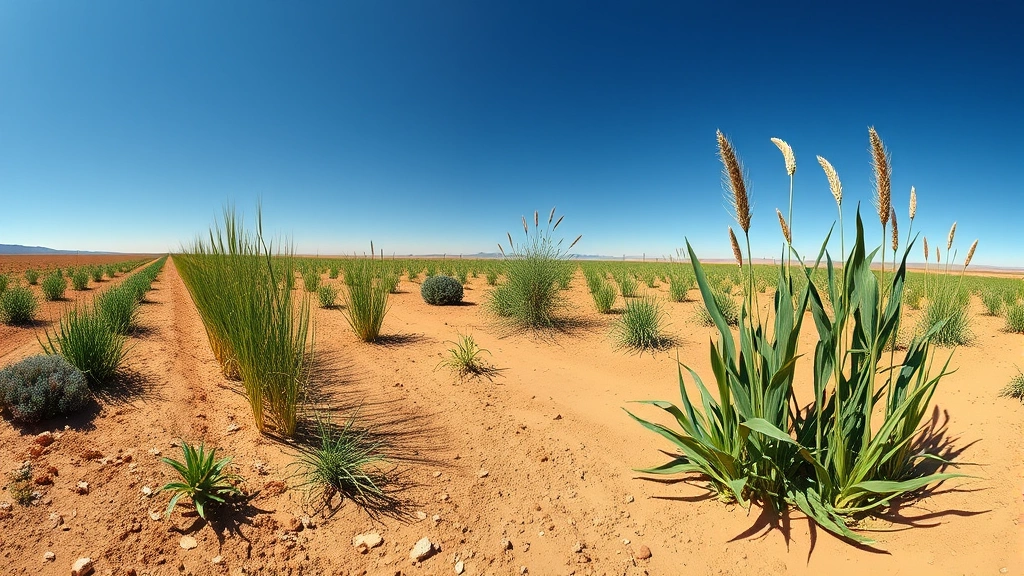
How Flora Adaptations Boost Economy: Study Insights
Plant adaptations represent far more than biological curiosities—they constitute fundamental economic drivers reshaping industries, agricultural systems, and global markets. Recent interdisciplinary research demonstrates that flora’s evolutionary responses to environmental pressures generate measurable economic value through enhanced productivity, reduced resource inputs, and ecosystem service provision worth billions annually.
The intersection of botanical adaptation and economic performance reveals a compelling narrative: as plants evolve mechanisms to thrive in challenging conditions, they unlock competitive advantages that translate into agricultural innovation, pharmaceutical breakthroughs, and climate resilience strategies. Understanding these mechanisms provides actionable insights for policymakers, investors, and entrepreneurs seeking sustainable pathways to economic growth.
Understanding Flora Adaptations and Economic Value
Flora adaptations to the environment encompass morphological, physiological, and behavioral modifications that enable plants to survive and reproduce across diverse ecological niches. These adaptations—ranging from drought-resistant root systems to photosynthetic efficiency improvements—generate quantifiable economic returns through enhanced resource utilization and productivity gains.
Recent economic analyses conducted by institutional partners including the World Bank reveal that crop varieties exhibiting superior environmental adaptations produce 15-40% higher yields under stress conditions compared to conventional cultivars. This translates into annual economic benefits exceeding $150 billion across global agricultural systems. The economic value derives not merely from increased output but from reduced input costs—adaptive plants require fewer irrigation inputs, synthetic fertilizers, and pest management interventions.
The mechanistic foundation underlying economic benefits involves enhanced photosynthetic efficiency, improved water-use efficiency, and strengthened disease resistance. Plants adapted to specific environmental conditions allocate resources more strategically, minimizing wasteful metabolic processes. This biological optimization directly reduces production costs while improving profit margins for agricultural producers.
Understanding the latest developments in ecological economics demonstrates how botanical adaptation research increasingly informs policy frameworks and investment decisions. Governments and private entities now recognize that biodiversity conservation and adaptive trait preservation constitute legitimate economic investments rather than environmental luxuries.
Agricultural Productivity and Crop Resilience
The agricultural sector represents the primary economic beneficiary of flora adaptation research. Global crop production faces mounting pressure from climate variability, soil degradation, and resource scarcity. Plant varieties exhibiting superior adaptive capacity address these challenges while maintaining or increasing productivity.
Drought-adapted crops exemplify this dynamic. Varieties of wheat, maize, and rice developed through selective breeding or genetic techniques now incorporate morphological adaptations including deeper root systems, reduced leaf surface areas, and modified stomatal regulation. These adaptations enable survival and reproduction under water-limited conditions that would devastate conventional varieties. Research published in agricultural economics journals documents that drought-resistant cultivars reduce irrigation requirements by 25-35% while maintaining yields within 5-10% of fully-watered conventional crops.
The economic implications prove substantial. In water-scarce regions including North Africa, the Middle East, and South Asia, implementing drought-adapted crops could conserve billions of cubic meters of freshwater annually while maintaining agricultural output. This translates into direct cost savings for farmers and indirect benefits through reduced pressure on freshwater aquifers and surface water resources.
Salt-tolerant crops represent another significant adaptation category with profound economic consequences. Soil salinization affects approximately 800 million hectares globally, rendering conventional crops economically unviable. Halophytic crop varieties and salt-tolerant cultivars enable agricultural production on previously marginal lands. This reduces pressure on carbon-intensive land-use conversion while expanding productive capacity in underutilized regions.
Disease resistance adaptations similarly generate measurable economic value. Plants exhibiting genetic resistance to major pathogens reduce fungicide and pesticide applications, lowering production costs by 15-25% while mitigating environmental externalities. The global crop loss attributable to pests and diseases approximates $220 billion annually; adaptive resistance mechanisms address this substantial economic burden.
Temperature-adaptive crops extend growing seasons and expand cultivation ranges, enabling agricultural expansion into previously unsuitable regions. This geographic redistribution of productive capacity creates economic opportunities in northern latitudes while reducing competitive pressure on traditional agricultural zones.

Pharmaceutical and Biotechnological Applications
Flora adaptations generate substantial economic value through pharmaceutical and biotechnological applications. Plants adapted to extreme environments—deserts, high-altitude regions, tropical rainforests—often synthesize specialized compounds providing medicinal properties. These bioactive metabolites represent intellectual property with significant commercial value.
The global botanical pharmaceutical market exceeds $150 billion annually, with growth rates of 8-12% projected through 2030. Plants adapted to resource-limited environments typically invest substantial metabolic resources in secondary metabolite synthesis—compounds providing competitive advantages against herbivores and pathogens. Many of these compounds demonstrate therapeutic efficacy in human medicine.
Ethnobotanical research systematically documents traditional knowledge linking specific plant species to health applications, subsequently subjecting promising candidates to rigorous pharmacological testing. This process has yielded numerous commercially successful pharmaceuticals, including compounds derived from rainforest plants adapted to compete in dense, pathogen-rich tropical environments.
Biotechnological applications extend beyond direct pharmaceutical extraction. Understanding adaptive mechanisms at molecular and genetic levels enables biotechnologists to engineer crops and microorganisms with enhanced stress tolerance, nutritional profiles, and productivity. This application of adaptive knowledge generates products commanding premium market prices while addressing nutritional deficiencies and food security challenges.
The cosmetics and nutraceutical industries similarly benefit from adaptive flora research. Plant compounds providing ultraviolet protection, oxidative stress resistance, and antimicrobial properties—mechanisms evolved to survive harsh environmental conditions—command significant market value in skincare and dietary supplement applications.
Investment in botanical bioprospecting continues expanding, particularly in megadiverse regions including tropical rainforests and Mediterranean ecosystems. UNEP initiatives increasingly facilitate equitable benefit-sharing arrangements, ensuring that biodiversity-rich nations receive fair compensation for genetic resource access while maintaining conservation incentives.
Ecosystem Services and Market Economics
Flora adaptations generate substantial economic value through ecosystem service provision—benefits derived from natural systems that support human wellbeing and economic activity. These services include carbon sequestration, water purification, pollination facilitation, and soil stabilization, collectively valued at trillions of dollars annually.
Adapted plant communities demonstrate enhanced capacity to deliver these services. Vegetation adapted to local climate and soil conditions establishes more rapidly, achieves greater biomass accumulation, and maintains stability across longer timeframes compared to non-native or maladapted plantings. This translates into superior ecosystem service delivery and improved return on investment for restoration projects.
Carbon sequestration represents the most economically quantifiable ecosystem service. Plants adapted to specific regions maximize photosynthetic carbon capture relative to maintenance respiration, generating net carbon storage. As carbon markets expand and carbon pricing mechanisms proliferate, this adaptive advantage translates into direct financial value. Restoration projects utilizing locally-adapted native species generate carbon credits commanding $10-50 per metric ton, creating revenue streams that enhance project economics.
Water purification services provided by adapted riparian vegetation, wetland plants, and forest communities reduce treatment costs for municipal water supplies. Ecosystem-based water management strategies utilizing native vegetation adapted to local hydrology prove substantially more cost-effective than engineered alternatives while providing co-benefits including habitat provision and recreational value.
Pollination services merit particular attention given agriculture’s dependence on pollinator populations. Native plants adapted to local ecological conditions support diverse pollinator communities more effectively than introduced or ornamental species. This adaptation-based pollinator support generates substantial economic value—estimated at $15-20 billion annually in the United States alone—through improved crop productivity and reduced pollinator management costs.
Soil stabilization and erosion prevention services provided by adapted vegetation reduce infrastructure damage and maintain productive capacity on marginal lands. This economic value proves particularly significant in regions vulnerable to degradation, where adapted vegetation establishment prevents costly soil loss and maintains long-term productivity.
Climate Change Mitigation and Economic Opportunity
Climate change adaptation represents an increasingly critical economic driver, with global adaptation investment needs estimated at $280-500 billion annually by 2050. Flora adaptations directly address these adaptation requirements while simultaneously creating economic opportunities for entrepreneurs, agricultural enterprises, and conservation organizations.
Assisted migration—intentional translocation of plant populations or cultivars to regions where they will become climatically suitable as temperatures shift—represents an emerging economic opportunity. Private enterprises increasingly develop climate-adapted seed portfolios, marketing varieties suited to projected 2050 climate conditions. This forward-looking adaptation strategy enables farmers to maintain productivity across climate transitions.
Nature-based solutions incorporating adapted vegetation generate multiple economic benefits simultaneously. Green infrastructure projects utilizing climate-resilient plants provide stormwater management, urban cooling, aesthetic amenities, and habitat provision while reducing long-term maintenance costs compared to gray infrastructure alternatives. Municipal governments increasingly recognize these economic benefits, investing in green infrastructure incorporating adapted native plants.
The concept of integrating renewable resources with ecological adaptation demonstrates how multiple sustainability objectives align economically. Agroforestry systems incorporating adapted tree species simultaneously produce biomass for renewable energy, provide agricultural productivity through shade and soil improvement, and generate carbon credits through sequestration—creating diversified revenue streams.
Climate-smart agriculture practices explicitly leverage flora adaptations to maintain productivity while reducing greenhouse gas emissions. Crop varieties selected for drought and heat tolerance require fewer irrigation inputs, reducing energy consumption and associated emissions. Simultaneously, reduced synthetic fertilizer requirements decrease nitrous oxide emissions while lowering production costs. These dual benefits—economic and environmental—accelerate adoption of adaptation-based agricultural practices.
Investment Trends in Adaptive Agriculture
Venture capital and institutional investment increasingly target agricultural technologies leveraging flora adaptation knowledge. Seed companies, agricultural biotechnology firms, and climate adaptation specialists collectively attract billions of dollars in annual investment, recognizing the economic potential of adaptation-focused innovation.
Precision breeding technologies enabling rapid identification and propagation of adaptive traits demonstrate particularly strong investment appeal. Companies utilizing genomic selection, phenotypic screening, and artificial intelligence to accelerate development of climate-adapted crop varieties attract institutional investment from agricultural funds, climate-focused venture capital, and impact investors seeking alignment with climate and food security objectives.
The global seed market, valued at approximately $80 billion annually, increasingly segments toward climate-adapted and specialty varieties commanding premium pricing. Agricultural enterprises and institutional investors recognize that climate-adapted seed portfolios provide competitive advantages enabling superior returns across diverse climate scenarios. This market segmentation creates substantial economic opportunities for seed companies emphasizing adaptation traits.
Insurance products incorporating climate and adaptation data represent an emerging investment category. Agricultural insurance increasingly utilizes crop variety information, soil characteristics, and climate projections to price policies and assess risk. Farmers adopting climate-adapted varieties increasingly qualify for preferential insurance rates, creating direct financial incentives for adaptation adoption.
Public sector investment in adaptation research continues expanding, with government funding for agricultural adaptation research reaching $8-12 billion annually across OECD nations. This public investment generates knowledge assets subsequently commercialized through private enterprise partnerships, creating economic multiplier effects throughout agricultural value chains.

Regional Case Studies and Economic Impact
Sub-Saharan Africa: Implementation of drought-adapted sorghum and millet varieties across semi-arid regions has generated documented productivity increases of 20-35% relative to conventional cultivars. Economic modeling indicates that continent-wide adoption could increase agricultural income by $8-15 billion annually while reducing vulnerability to climate-driven crop failures. Organizations implementing these varieties report improved farmer profitability and enhanced food security despite increasing climate variability.
South Asia: Salt-tolerant rice varieties developed through selective breeding enable productive agriculture on saline soils previously unsuitable for conventional rice cultivation. Bangladesh, India, and Pakistan have collectively implemented these varieties across approximately 2 million hectares, generating annual economic benefits exceeding $3 billion while reducing pressure on freshwater resources. The adaptation-based approach addresses multiple development objectives—food security, rural income, and water conservation—simultaneously.
Mediterranean Region: Native plant restoration projects incorporating locally-adapted species demonstrate superior ecosystem service delivery compared to non-native alternatives. Carbon sequestration rates in adapted restoration sites exceed non-adapted sites by 30-40%, translating into enhanced carbon credit generation. Simultaneously, adapted vegetation establishes more rapidly and requires reduced maintenance inputs, improving project economics by 25-35% relative to conventional restoration approaches.
East Africa: Agroforestry systems incorporating climate-adapted tree species have generated substantial economic returns across Kenya, Ethiopia, and Uganda. Farmers implementing adapted agroforestry simultaneously produce agricultural crops, tree products, and carbon credits, diversifying income streams. Economic analyses document that adapted agroforestry systems generate 40-60% higher net present values compared to conventional monoculture systems across 20-year investment horizons.
Future Prospects and Policy Implications
The economic significance of flora adaptations will intensify as climate change accelerates, resource scarcity deepens, and global population continues expanding. Future economic opportunities concentrate in several domains.
Genetic Resource Documentation: Comprehensive cataloging of adaptive traits across global flora represents a critical economic asset. Organizations implementing systematic genetic resource documentation create information assets supporting breeding programs, biotechnological applications, and pharmaceutical development. This documentation work generates employment while preserving biological heritage.
Breeding Program Acceleration: Traditional crop breeding programs require 10-15 years to develop and commercialize new varieties. Emerging technologies including genomic selection, phenotypic screening, and artificial intelligence substantially compress development timelines. Companies and public institutions investing in these acceleration technologies capture first-mover advantages in climate-adapted variety markets.
Policy Integration: Governments increasingly recognize that agricultural and environmental policies must explicitly incorporate adaptation considerations. Tax incentives for adoption of climate-adapted crop varieties, subsidized insurance for adaptation-focused farming systems, and research funding for adaptive trait development represent policy mechanisms creating economic incentives aligned with adaptation objectives. Integration of sustainability principles across economic sectors demonstrates the expanding policy emphasis on adaptation-based approaches.
Capacity Building: Extending adaptation benefits to smallholder farmers and resource-limited agricultural producers requires substantial capacity building investment. Training programs, demonstration sites, and participatory research initiatives enable farmers to access and implement adaptive technologies. This capacity building represents both an economic opportunity for service providers and a necessity for achieving inclusive adaptation outcomes.
Private Sector Engagement: Agricultural enterprises, insurance companies, and financial institutions increasingly recognize adaptation as a business imperative rather than environmental obligation. Private sector investment in adaptation-focused technologies and practices will likely expand substantially, creating economic opportunities while advancing adaptation objectives.
Policy frameworks supporting intellectual property protection for adaptive traits while ensuring equitable benefit-sharing with biodiversity-rich nations remain critical for sustainable adaptation economics. FAO frameworks increasingly emphasize this balance, recognizing that long-term adaptation success requires both innovation incentives and equity considerations.
The intersection of organic agriculture and adaptive flora demonstrates growing market recognition of adaptation’s role in sustainable food systems. Premium pricing for organically-produced foods increasingly reflects recognition of adaptation-based agricultural practices’ environmental and health benefits.
Emerging research on community-based conservation and adaptive agriculture reveals how local knowledge systems complement scientific understanding of plant adaptation. This integrative approach generates both cultural and economic benefits while supporting local food security and community resilience.
FAQ
What specific plant adaptations generate the greatest economic value?
Drought tolerance, disease resistance, and stress-adaptive traits demonstrating measurable productivity improvements under challenging conditions generate the most immediate economic value. Secondary metabolite production for pharmaceutical applications represents another high-value adaptation category. The relative economic importance varies by region, climate, and market conditions.
How long does adaptation-focused crop development typically require?
Traditional selective breeding requires 10-15 years for variety development and commercialization. Genomic selection and advanced breeding techniques compress timelines to 5-8 years. Genetic engineering approaches can generate adapted varieties within 3-5 years, though regulatory approval timelines vary substantially across jurisdictions.
Which regions benefit most from flora adaptation research?
Water-scarce regions including North Africa, the Middle East, South Asia, and Sub-Saharan Africa benefit most immediately from drought-adapted varieties. Tropical regions benefit from disease-resistant adaptations, while temperate zones increasingly benefit from temperature-adaptive traits enabling climate transition navigation.
How do carbon markets value adaptation-based ecosystem services?
Carbon credits generated through restoration projects utilizing adapted native species typically command $10-50 per metric ton, depending on methodology, verification standards, and market conditions. Adapted vegetation’s superior establishment and carbon sequestration rates enhance project economics relative to non-adapted alternatives.
What policy mechanisms most effectively incentivize adaptation adoption?
Tax incentives for climate-adapted seed purchases, subsidized crop insurance for adaptation-focused systems, public research investment in adaptive trait development, and direct payments for adoption of specified adaptation practices demonstrate proven effectiveness in accelerating adaptation uptake.
How do small-scale farmers access adaptation benefits?
Farmer cooperatives, government extension services, non-profit organizations, and seed companies increasingly develop targeted programs enabling smallholder access to adaptive varieties and associated knowledge. Community-based seed systems and participatory breeding programs prove particularly effective in resource-limited contexts.


