
Are Ecosystem Services Worth the Investment? Study Insights
Ecosystem services—the benefits humans derive from natural systems—represent one of the most critical yet undervalued assets in modern economics. From pollination and water purification to climate regulation and carbon sequestration, these services sustain human civilization while remaining largely invisible in traditional economic accounting. Recent research demonstrates that investing in ecosystem protection and restoration generates substantial financial returns, often exceeding costs by multiples of ten or more. Yet despite compelling evidence, global investment in ecosystem conservation remains fragmented and insufficient.
The question “Are ecosystem services worth the investment?” is no longer theoretical. Empirical data from ecological economics research shows that degraded ecosystems impose enormous hidden costs on societies through increased disease, reduced agricultural productivity, and climate instability. This analysis explores what contemporary studies reveal about the economic value of ecosystem services, the measurable returns on conservation investments, and the systemic barriers preventing adequate funding allocation.
Understanding Ecosystem Services and Economic Value
Ecosystem services encompass four primary categories: provisioning services (food, water, timber), regulating services (climate regulation, flood control, pollination), supporting services (nutrient cycling, soil formation), and cultural services (recreation, aesthetic value, spiritual significance). Understanding what is human environment interaction provides essential context for recognizing how human economic systems depend entirely upon healthy ecosystems.
The Millennium Ecosystem Assessment, a comprehensive global study, estimated that ecosystem services were worth approximately $125 trillion annually in 2005 dollars. More recent analyses suggest this figure significantly underestimates true value because many services lack established market prices. A United Nations Environment Programme report indicated that natural capital degradation costs the global economy between 2-5% of GDP annually—a figure that rivals or exceeds losses from financial crises or pandemics.
Economic valuation of ecosystem services employs multiple methodologies: contingent valuation (surveying willingness-to-pay), hedonic pricing (analyzing price premiums for ecosystem proximity), replacement cost analysis (estimating costs to replace natural functions artificially), and benefit transfer (applying valuations from similar ecosystems). Each method captures different aspects of economic worth, and sophisticated analyses typically employ multiple approaches simultaneously.
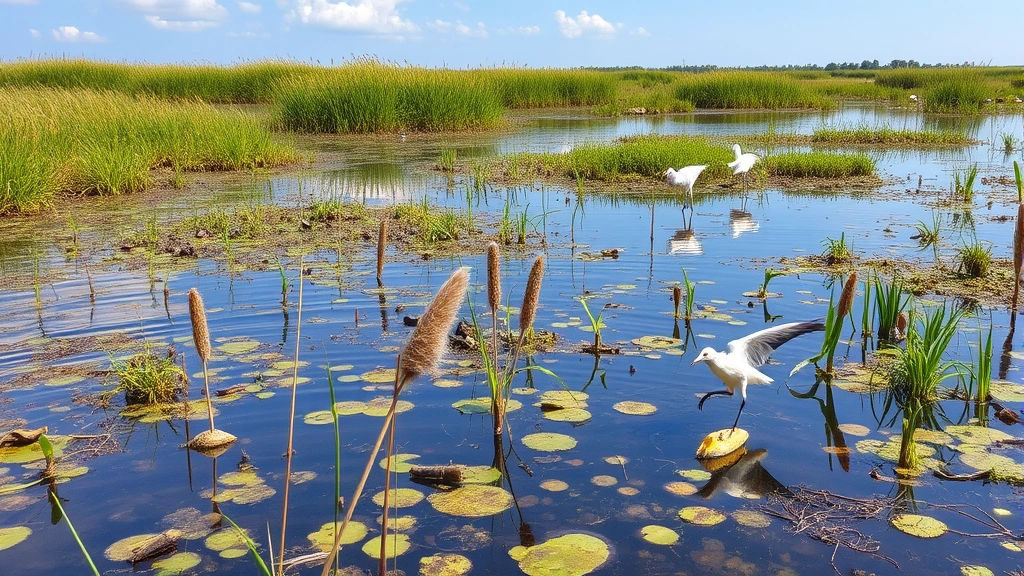
The critical insight from ecological economics is that ecosystem services represent genuine economic assets whose loss imposes real costs. When a wetland is drained for development, society loses water filtration, flood buffering, and wildlife habitat—services that must be replaced through expensive infrastructure if at all possible. This fundamental economic principle drives the investment case for ecosystem protection.

Quantifying Returns: What Research Reveals
Recent peer-reviewed research in ecological economics journals provides compelling quantitative evidence about returns on ecosystem investments. A landmark World Bank analysis of forest conservation found that protecting forests generates benefits ranging from $2,000 to $5,000 per hectare annually through carbon sequestration alone, plus additional benefits from watershed protection and biodiversity preservation.
Studies on wetland restoration demonstrate particularly strong financial returns. Research published in ecological economics journals shows that restoring one hectare of wetland generates approximately $15,000-$35,000 in ecosystem service benefits over thirty years, while restoration costs typically range from $3,000-$10,000. This represents a return-on-investment of 150-500% over the project timeline. Wetlands provide flood protection, water purification, and habitat—services that would cost substantially more to provide through infrastructure if the ecosystem is destroyed.
Pollinator protection investments show similarly impressive returns. A comprehensive analysis of agricultural pollination services indicated that maintaining wild pollinator populations through habitat conservation costs approximately $200-$300 per hectare annually, while these pollinators provide crop pollination services worth $5,000-$15,000 per hectare yearly. The benefit-cost ratio consistently exceeds 15:1, making pollinator conservation one of the highest-return environmental investments available.
Mangrove forest protection exemplifies ecosystem investment returns at scale. Mangroves provide nursery habitat for commercial fish species, coastal protection from storms and erosion, and carbon sequestration. Economic analyses demonstrate that protecting existing mangrove forests generates $10,000-$30,000 per hectare in net present value benefits, while conversion to aquaculture or development destroys this value. Yet mangrove loss continues globally because benefits accrue to society broadly while costs concentrate on immediate developers.
Research examining human environment interaction examples reveals that sustainable practices consistently outperform extractive approaches economically over medium and long time horizons. Regenerative agriculture, for instance, reduces input costs while maintaining or increasing yields, improving soil health, and sequestering carbon—generating multiple benefit streams simultaneously.
A critical finding across these studies: ecosystem service benefits typically exceed costs within 5-15 years for most conservation interventions. Many projects break even within 3-5 years when all benefit categories are properly quantified. Yet because benefits often accrue to society broadly while costs concentrate on implementing parties, market failures prevent adequate investment without policy intervention.
Case Studies in Successful Ecosystem Investment
Costa Rica’s Payment for Ecosystem Services program demonstrates feasibility of large-scale ecosystem investment. Since 1997, Costa Rica has paid landowners to maintain forests, protect watersheds, and preserve biodiversity. The program has maintained forest cover at 52% of national territory while generating documented benefits: watershed protection serving 3 million citizens, biodiversity conservation supporting ecotourism worth $4 billion annually, and carbon sequestration contributing to climate goals. Program costs of approximately $60 million annually generate estimated benefits exceeding $2 billion when tourism, water security, and climate services are included.
China’s Grain-for-Green program converted 32 million hectares of marginal agricultural land to forest and grassland since 1999. Initial costs exceeded $100 billion, but documented benefits include reduced soil erosion (saving $5 billion annually in reservoir sedimentation prevention), improved water quality, carbon sequestration, and enhanced agricultural productivity on remaining suitable lands. Long-term economic analysis suggests benefit-cost ratios of 2-3:1, with benefits accelerating as ecosystems mature.
The Catskill Watershed Protection Program in New York represents urban ecosystem investment success. Rather than constructing a $6-8 billion water filtration facility, New York City invested $1.5 billion in watershed protection—forest conservation, wetland restoration, and pollution reduction. This approach provided superior water quality at 20% of infrastructure costs while generating co-benefits: flood control, recreation, and biodiversity. The program remains a textbook example of ecosystem services providing superior economic and environmental outcomes compared to technological alternatives.
Rwanda’s investment in gorilla habitat protection through national parks generates $1,300 per hectare annually through ecotourism, supporting conservation of endangered species while providing sustainable income for local communities. This demonstrates that ecosystem investment can align economic and conservation objectives when properly structured.
The Hidden Costs of Ecosystem Degradation
Understanding investment returns requires examining the alternative: costs of ecosystem loss. Global ecosystem degradation imposes enormous economic penalties that rarely appear in conventional accounting systems. Deforestation costs the global economy an estimated $2-5 trillion annually through carbon release, watershed damage, biodiversity loss, and reduced agricultural productivity. Soil degradation reduces global agricultural output by approximately 0.3% annually—seemingly modest but cumulative and accelerating.
Coral reef degradation exemplifies hidden costs. Coral reefs support 25% of marine fish species while covering less than 1% of ocean floor, provide coastal protection worth $375 billion annually, and support tourism generating $36 billion yearly. Yet 50% of global reefs are already degraded or destroyed. The economic cost of this loss—foregone fisheries, tourism, and coastal protection—likely exceeds $1 trillion in net present value, yet appears nowhere in conventional GDP accounting.
Pollinator decline imposes measurable agricultural costs. Global pollinator loss threatens crops worth $15-20 billion annually. Replacing pollination services through hand-pollination or technological means would cost 10-100 times more than maintaining wild pollinator populations. This represents a catastrophic economic failure: society is destroying assets worth tens of billions annually to avoid investment costs of millions.
Freshwater ecosystem degradation creates cascading economic damage. Wetland loss reduces water purification, increasing treatment costs for municipal systems. River ecosystem degradation reduces fisheries and recreation value. Groundwater depletion threatens agricultural regions globally. These costs accumulate silently until acute crises emerge—water shortages, fisheries collapse, agricultural failures—at which point remediation costs explode.
Strategies to reduce carbon footprint through ecosystem protection represent investments that simultaneously prevent degradation costs while generating positive returns. This dual benefit—avoiding losses while creating gains—makes ecosystem investment uniquely valuable.
Investment Barriers and Policy Solutions
Despite compelling economic evidence, ecosystem investment remains inadequate. Global annual investment in ecosystem protection approximates $50-100 billion, while ecosystem degradation costs $4-6 trillion annually. This massive funding gap persists despite positive return-on-investment because structural economic barriers prevent proper valuation and investment allocation.
The primary barrier is that ecosystem services provide benefits to society broadly while costs concentrate on specific parties. A landowner bears costs of forest protection while society receives watershed, carbon, and biodiversity benefits. Market mechanisms alone cannot overcome this divergence—policy intervention is essential. Payment for ecosystem services programs address this through direct payments, but require government funding or innovative financing mechanisms.
Policy solutions include: ecosystem service valuation in environmental impact assessments, natural capital accounting in national economic statistics, carbon pricing mechanisms that internalize climate benefits of ecosystem protection, biodiversity credits and habitat markets, and direct government investment in ecosystem restoration. The UN Environment Programme estimates that shifting $100-300 billion annually from ecosystem-degrading subsidies (agricultural subsidies, fossil fuel supports) to ecosystem protection would generate net positive economic returns while achieving environmental objectives.
Innovative financing mechanisms are emerging: green bonds ($500+ billion issued annually), payments for ecosystem services programs, biodiversity credits, and results-based conservation funding. These mechanisms help align incentives and mobilize capital, though they remain insufficient relative to the scale of need. Scaling these mechanisms requires policy commitment and international coordination.
Integration of ecosystem considerations into business decision-making represents another critical lever. Corporations increasingly recognize that supply chain resilience depends on healthy ecosystems. This recognition is driving corporate investment in watershed protection, sustainable agriculture, and forest conservation—motivated by enlightened self-interest rather than pure altruism. As awareness spreads that ecosystem degradation threatens business continuity, corporate investment in ecosystem services will likely accelerate.
Measuring Success: Metrics and Monitoring
Effective ecosystem investment requires robust monitoring and evaluation frameworks. Measuring ecosystem service outcomes presents technical challenges: attribution (determining which changes result from specific interventions), baseline establishment (determining what ecosystem conditions would be without intervention), and long-term monitoring (ecosystem changes unfold over decades). Despite these challenges, standardized metrics are essential for demonstrating returns and guiding investment allocation.
Key performance indicators for ecosystem investment include: ecosystem health metrics (biodiversity indices, vegetation cover, water quality), service provision metrics (carbon sequestration rates, water purification capacity, pollination effectiveness), economic metrics (benefit-cost ratios, net present value, cost-effectiveness), and social metrics (community benefit distribution, livelihood impacts, equity outcomes). Comprehensive evaluation typically employs 10-20 specific metrics depending on ecosystem type and investment objectives.
Remote sensing technology increasingly enables large-scale ecosystem monitoring. Satellite data can track forest cover, wetland extent, vegetation productivity, and water availability across vast regions at reasonable cost. Combined with ground-truthing and field measurements, remote sensing enables cost-effective monitoring of ecosystem service provision at landscape scales. This technological capability is removing traditional barriers to monitoring and evaluation.
Long-term monitoring networks—maintained over decades—provide essential data for understanding ecosystem dynamics and investment returns. The Global Biodiversity Observation Network, National Ecological Observatory Network, and similar initiatives generate data demonstrating how ecosystems respond to protection and restoration. These datasets, combined with economic analysis, provide the evidence base justifying continued ecosystem investment.
Adaptive management approaches—adjusting conservation strategies based on monitoring results—improve outcomes and demonstrate learning. Rather than implementing fixed plans, adaptive management continuously refines approaches based on ecosystem response. This iterative process generates institutional knowledge that improves returns on subsequent investments while demonstrating commitment to evidence-based conservation.
Considering renewable energy for homes and other sustainable solutions alongside ecosystem investment creates integrated approaches addressing multiple environmental challenges simultaneously. This systems thinking generates co-benefits and improved overall returns.
FAQ
What are the most valuable ecosystem services economically?
Climate regulation (carbon sequestration) and water provision represent the highest-value services globally, each worth trillions annually. Pollination, soil formation, and nutrient cycling are also extraordinarily valuable despite lacking clear market prices. Valuation varies by region and ecosystem type, but these services consistently rank highest across comprehensive analyses.
How long does ecosystem investment take to break even financially?
Most ecosystem conservation and restoration projects achieve positive financial returns within 5-15 years when benefits are properly quantified. Wetland restoration often breaks even within 3-5 years. Forest protection generates returns over 20-50 year timeframes. The timeline depends on ecosystem type, specific services valued, and discount rate assumptions.
Why doesn’t market competition drive adequate ecosystem investment?
Ecosystem services suffer from classic market failures: benefits are public goods (non-excludable and non-rival), costs are privatized, and ecosystem degradation is often irreversible. Without policy intervention that internalizes environmental costs and benefits, markets systematically underinvest in ecosystem protection relative to socially optimal levels. This is why government action and innovative policy mechanisms are essential.
Can ecosystem services be replaced by technology?
Some services can be partially replaced technologically (water filtration, pollination), but at costs 10-100 times higher than maintaining natural systems. Complete technological replacement is impossible for many services (soil formation, nutrient cycling, biodiversity support). Furthermore, technological substitutes require energy and materials, imposing their own environmental costs. Ecosystem protection remains the most cost-effective approach to maintaining service provision.
How do ecosystem investments align with climate goals?
Ecosystem protection and restoration represent essential climate strategies. Forests, wetlands, and grasslands sequester carbon while providing co-benefits (water, biodiversity, resilience). Nature-based climate solutions cost $100-300 per ton CO2 equivalent, comparing favorably with technological alternatives. Integrating ecosystem investment into climate strategies improves both economic efficiency and environmental outcomes.
What role should businesses play in ecosystem investment?
Businesses increasingly recognize that supply chain resilience depends on healthy ecosystems. Corporate investment in watershed protection, sustainable agriculture, and forest conservation is expanding. Corporate participation complements government investment, extends reach, and aligns business interests with conservation objectives. However, corporate investment alone cannot substitute for adequate public funding and policy frameworks.
How can sustainable practices like sustainable fashion brands contribute to ecosystem investment?
Sustainable practices reduce ecosystem degradation while often reducing production costs through efficiency gains. When scaled across industries, sustainable practices redirect billions in expenditure toward ecosystem-protective approaches. Consumer preference for sustainable products creates market demand that incentivizes corporate investment in ecosystem-friendly practices, demonstrating how individual choices aggregate into systemic change.


