
Eco Innovation: Environmental Planners’ Role Explained
Environmental planners stand at the intersection of ecological science, economic theory, and policy implementation, orchestrating the transition toward sustainable development. Their expertise has become indispensable as societies grapple with climate change, biodiversity loss, and resource depletion. These professionals translate complex environmental challenges into actionable strategies that balance ecological preservation with economic growth, making them architects of our sustainable future.
The role of environmental planners extends far beyond traditional land-use zoning. Modern practitioners engage in systems thinking, integrating ecological economics frameworks with stakeholder engagement and innovative technologies. They assess environmental impacts, design green infrastructure, and champion circular economy principles that reshape how industries operate. Understanding their multifaceted contributions reveals how eco innovation becomes embedded in regional development and corporate strategy.

Who Are Environmental Planners and What Do They Do
Environmental planners are specialized professionals who design and implement strategies addressing environmental challenges while promoting sustainable development. They possess expertise spanning ecology, geography, urban design, policy analysis, and environmental science. Their daily work involves conducting environmental impact assessments, designing green spaces, developing climate adaptation strategies, and collaborating with government agencies, private enterprises, and communities.
The scope of environmental planning encompasses multiple domains. Urban planners focus on creating livable cities that minimize ecological footprints through transit-oriented development and green building standards. Regional planners address watershed management, agricultural sustainability, and biodiversity conservation across larger geographies. Sustainability consultants advise corporations on reducing environmental impacts while maintaining profitability. Climate adaptation specialists prepare communities for climate impacts through resilience-building infrastructure and nature-based solutions.
Environmental planners bridge the gap between scientific findings and practical implementation. They translate research on climate tipping points, species extinction rates, and ecosystem degradation into concrete development frameworks. This requires fluency in both environmental science and economic analysis, enabling them to demonstrate how environmental protection generates economic value through avoided damages, resource efficiency, and new market opportunities.
The Science Behind Environmental Planning
Effective environmental planning relies on rigorous scientific methodologies grounded in ecology, hydrology, atmospheric science, and biogeochemistry. Environmental planners employ environmental impact assessment (EIA) processes that quantify how proposed projects affect air quality, water resources, soil health, and wildlife populations. These assessments integrate baseline data collection, predictive modeling, and cumulative impact analysis to inform decision-making.
Ecosystem services valuation represents a critical scientific framework within environmental planning. This approach quantifies the economic value of natural capital, including provisioning services (food, water, timber), regulating services (carbon sequestration, flood control), supporting services (nutrient cycling, soil formation), and cultural services (recreation, spiritual values). By monetizing these services, planners demonstrate the economic rationale for conservation, making environmental protection financially compelling to policymakers and investors.
Environmental planners increasingly employ spatial analysis and geographic information systems (GIS) technology to model environmental conditions and project future scenarios. These tools enable analysis of habitat connectivity, pollution dispersion patterns, flood risk zones, and urban heat island effects. Machine learning algorithms now assist in identifying optimal locations for renewable energy installations, green infrastructure, and conservation reserves based on multiple environmental and economic criteria.
The scientific foundation also includes understanding renewable energy systems and their ecological implications, from land-use requirements to wildlife impacts. Environmental planners assess whether wind farms, solar installations, or hydroelectric projects align with broader sustainability goals, considering both climate mitigation benefits and localized environmental costs.
Eco Innovation and Technological Integration
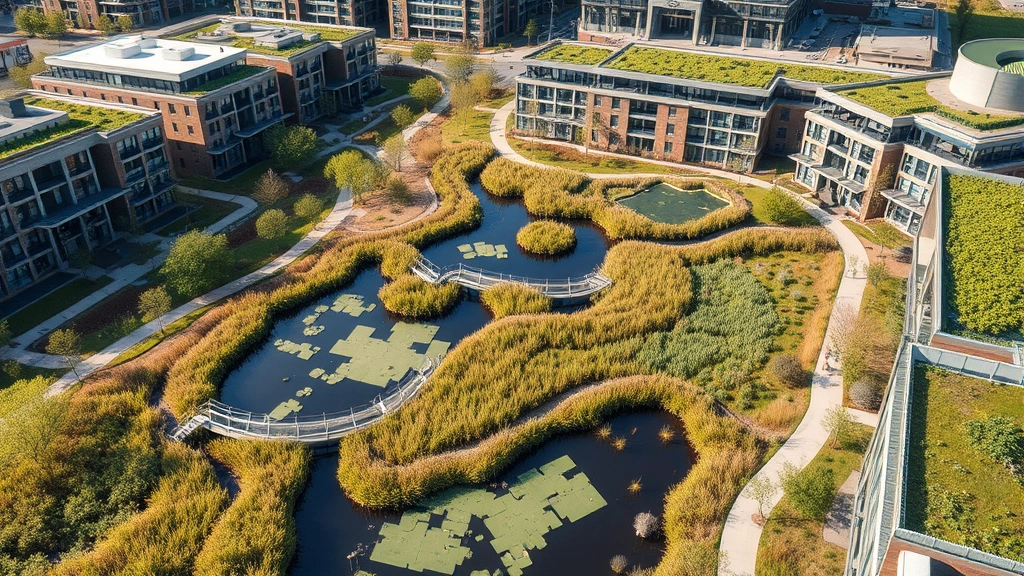
Environmental planners serve as champions of eco innovation, integrating emerging technologies into development strategies. Nature-based solutions—such as constructed wetlands for water treatment, green roofs for urban cooling, and riparian buffers for water quality improvement—represent innovative approaches that simultaneously address environmental and social needs. These solutions often prove more cost-effective and resilient than traditional gray infrastructure while providing co-benefits like habitat restoration and recreational opportunities.
Circular economy principles increasingly guide environmental planning practice. Rather than linear take-make-waste models, planners design systems where materials cycle continuously, minimizing extraction and disposal. This involves redesigning industrial processes, establishing product take-back systems, and creating markets for secondary materials. Environmental planners work with manufacturers to implement extended producer responsibility, ensuring companies manage end-of-life product impacts.
Smart city technologies enable environmental planners to optimize resource consumption in urban areas. Real-time monitoring systems track air quality, water usage, and energy consumption, providing data for adaptive management. Internet of Things (IoT) sensors in buildings, transportation networks, and utilities generate insights for reducing environmental impacts. However, planners must balance technological optimization with equity concerns, ensuring smart city benefits reach marginalized communities rather than exacerbating inequality.
Climate adaptation technology represents another frontier for environmental planners. Floating architecture for flood-prone regions, drought-resistant agricultural systems, and early warning systems for extreme weather events reflect how innovation addresses climate impacts. Planners evaluate these technologies through life-cycle assessment frameworks, ensuring they genuinely reduce environmental burdens rather than shifting impacts to other regions or future generations.
Understanding how to reduce carbon footprint methodologies guides technological selection. Environmental planners calculate embodied carbon in infrastructure, operational emissions from systems over their lifespan, and scope 3 emissions from supply chains. This comprehensive accounting ensures technology choices align with climate mitigation objectives.
IMAGE_2
Economic Valuation of Ecosystem Services
Environmental planners increasingly employ ecological economics frameworks that challenge traditional GDP-focused metrics. These frameworks recognize that natural capital—forests, wetlands, coral reefs, and soil systems—provides economic value that market prices typically ignore. By quantifying ecosystem services, planners create economic justifications for environmental protection that resonate with finance ministries and corporate boards.
Payment for ecosystem services (PES) schemes represent practical applications of this economic valuation. Planners design programs where beneficiaries of ecosystem services—such as downstream water users or carbon credit purchasers—compensate landowners for maintaining environmental conditions. Costa Rica’s pioneering PES program has protected forests while providing income to rural communities, demonstrating how environmental economics can align conservation with livelihood improvement.
Total economic value assessment encompasses use values (direct and indirect) and non-use values (existence, bequest, and option values). Environmental planners calculate that a hectare of mangrove forest provides more economic value through fishery support, storm protection, and carbon sequestration than through conversion to aquaculture or development. These analyses, referenced by institutions like the World Bank, inform policy decisions favoring conservation.
The concept of natural capital accounting integrates environmental assets into national accounting systems. Environmental planners advocate for green GDP measures that subtract environmental degradation from economic growth, revealing whether development is genuinely sustainable. Countries adopting natural capital accounting—including Botswana, Costa Rica, and several Nordic nations—demonstrate how this framework guides environmental planning toward authentic sustainability.
Corporate natural capital accounting extends these principles to business strategy. Environmental planners advise companies on valuing ecosystem dependencies in supply chains, from water availability for beverage production to soil health for agricultural inputs. This integration reveals financial risks from environmental degradation, justifying investment in regenerative practices that enhance long-term profitability.
Policy Development and Implementation
Environmental planners shape policy frameworks that institutionalize sustainability principles. They contribute to developing environmental impact assessment legislation, building codes emphasizing energy efficiency, and agricultural policies promoting soil conservation. Their technical expertise translates scientific evidence into regulatory requirements that guide development decisions across sectors.
Climate action planning represents a primary policy domain for contemporary environmental planners. They develop greenhouse gas inventories, identify emission reduction opportunities across municipal operations and communities, and establish pathways toward carbon neutrality. These plans integrate mitigation strategies—such as transitioning transportation fleets to electric vehicles and improving building efficiency—with adaptation measures addressing anticipated climate impacts.
Biodiversity conservation planning involves designating protected areas, establishing wildlife corridors, and managing invasive species through environmental planning processes. Planners utilize conservation prioritization tools that identify areas of highest ecological importance and vulnerability, ensuring limited conservation budgets achieve maximum biodiversity protection. These frameworks incorporate indigenous knowledge alongside scientific data, recognizing that traditional land management often enhances ecosystem health.
Environmental planners engage extensively in stakeholder processes, recognizing that sustainable development requires social legitimacy. Community participation in planning decisions increases public support, incorporates local knowledge, and ensures equitable distribution of environmental benefits and burdens. Planners facilitate dialogue among competing interests—developers, conservationists, indigenous communities, workers—seeking solutions that advance environmental sustainability while respecting diverse values and needs.
The latest environmental planning insights increasingly emphasize just transition principles, ensuring climate action and ecological protection don’t disproportionately harm workers and disadvantaged communities. Planners design retraining programs for workers in fossil fuel industries, ensure renewable energy projects benefit local communities, and prevent green gentrification that displaces low-income residents from neighborhoods improved through environmental investments.
Case Studies in Environmental Planning Success
Copenhagen’s transformation into a climate-resilient city demonstrates environmental planning excellence. Through integrated planning, the city has reduced carbon emissions by 42 percent since 2005 while improving quality of life. Environmental planners designed extensive cycling infrastructure, retrofitted buildings for energy efficiency, and implemented cloud-burst management systems addressing increased flooding from climate change. These investments attracted businesses and residents, proving that environmental planning enhances economic competitiveness.
Rwanda’s post-conflict environmental planning initiatives illustrate how ecological restoration supports economic development. Planners implemented hillside terracing and agroforestry systems that restored degraded landscapes while increasing agricultural productivity. Protected area expansion recovered gorilla populations, creating ecotourism revenue that diversifies the economy beyond mining and manufacturing. This example shows how environmental planning addresses both ecological and development challenges simultaneously.
The restoration of the Everglades demonstrates long-term environmental planning commitment. After decades of degradation from agricultural drainage and development, environmental planners designed comprehensive restoration involving water flow reestablishment, invasive species management, and habitat reconstruction. Though ongoing and expensive, the project protects water supplies for millions, restores fisheries, and maintains biodiversity while supporting agricultural livelihoods.
Corporate sustainability planning at Patagonia illustrates private-sector environmental planning integration. The company’s environmental planners assess supply chain impacts, design circular business models, and advocate for policy changes supporting sustainability. By making environmental protection central to business strategy rather than peripheral responsibility, Patagonia demonstrates how environmental planning creates competitive advantage through brand loyalty and operational efficiency.
Understanding sustainable fashion brands reveals how environmental planners influence industry transformation. Planners work with fashion companies to reduce water consumption, eliminate toxic chemicals, extend product lifespans through durability design, and establish take-back systems for circular production. The effects of fast fashion on the environment have spurred comprehensive planning interventions across the sector.
IMAGE_3
Challenges and Future Directions
Environmental planners face significant challenges translating sustainability principles into practice. Political opposition from interests benefiting from status quo arrangements often undermines planning recommendations. Short-term electoral cycles discourage long-term environmental investments with multi-decade payoff periods. Budget constraints limit implementation capacity, particularly in developing nations where environmental planning expertise remains scarce.
The challenge of integrating environmental planning across sectors persists. Transportation, energy, agriculture, and industrial policies often proceed independently, missing opportunities for synergistic sustainability improvements. Environmental planners increasingly advocate for integrated planning frameworks ensuring sectoral policies align with climate and biodiversity objectives.
Data gaps limit environmental planning precision, particularly regarding ecosystem services valuation and climate impact projections. While scientific understanding advances rapidly, translating this knowledge into planning frameworks remains challenging. Environmental planners increasingly employ adaptive management approaches, treating planning decisions as experiments that generate learning and enable course correction.
Equity concerns increasingly shape environmental planning discourse. Historical environmental planning often imposed conservation burdens on indigenous communities and poor populations while benefits accrued to wealthy groups. Contemporary environmental planners emphasize environmental justice, ensuring that sustainability transitions enhance wellbeing for marginalized communities rather than perpetuating historical inequalities. This requires centering indigenous knowledge, community participation, and equitable benefit distribution in planning processes.
The future of environmental planning increasingly incorporates regenerative design principles transcending sustainability’s minimizing-harm approach. Rather than merely reducing negative impacts, regenerative planning aims to enhance ecosystem health and human wellbeing simultaneously. This involves restoring degraded landscapes, rebuilding soil carbon, expanding wildlife habitat, and strengthening community resilience through environmental planning interventions.
Digital tools and artificial intelligence offer expanding possibilities for environmental planning optimization. Advanced modeling enables scenario analysis revealing long-term consequences of planning decisions. Blockchain technology enables transparent tracking of environmental compliance and ecosystem service transactions. Satellite imagery and remote sensing provide real-time monitoring of environmental conditions, enabling responsive management adaptations.
International cooperation increasingly influences environmental planning as climate change and biodiversity loss transcend political boundaries. Environmental planners work through international frameworks—such as those coordinated by UNEP—to align national planning with global sustainability objectives. These collaborative approaches recognize that achieving planetary boundaries requires coordinated environmental planning across nations.
The professionalization and credentialing of environmental planning continues evolving. Professional associations establish standards ensuring planners possess requisite knowledge and skills. Universities expand environmental planning programs incorporating climate science, ecological economics, and social justice perspectives. This professionalization strengthens the discipline while ensuring environmental planners can effectively address complex sustainability challenges.
FAQ
What qualifications do environmental planners need?
Environmental planners typically hold bachelor’s degrees in environmental science, urban planning, geography, or related fields, with many pursuing master’s degrees in environmental planning, sustainability, or ecological design. Certifications from professional planning organizations enhance credentials. Essential skills include GIS proficiency, environmental impact assessment methodology, policy analysis, and stakeholder engagement capabilities.
How do environmental planners address climate change?
Environmental planners develop climate action plans identifying greenhouse gas reduction opportunities, design climate adaptation infrastructure addressing anticipated impacts, and integrate climate considerations into all planning decisions. They assess climate risks to communities and infrastructure, identify nature-based solutions like reforestation, and ensure just transitions protecting vulnerable populations from climate impacts.
What is the relationship between environmental planning and economic development?
Environmental planning integrates ecological sustainability with economic prosperity, recognizing these objectives as complementary rather than contradictory. By quantifying ecosystem services value, identifying green economy opportunities, and designing sustainable infrastructure, environmental planners demonstrate how environmental protection enhances long-term economic wellbeing while avoiding future costs from ecological degradation.
How do environmental planners engage communities?
Environmental planners facilitate participatory planning processes ensuring affected communities influence decisions shaping their environments. This involves public meetings, stakeholder workshops, community-based monitoring programs, and partnerships with local organizations. Meaningful engagement requires respecting diverse perspectives, incorporating local knowledge, and ensuring planning benefits reach community members rather than exacerbating inequalities.
What emerging technologies are environmental planners adopting?
Environmental planners increasingly employ nature-based solutions, smart city technologies enabling resource optimization, renewable energy systems, and circular economy approaches. Advanced modeling software, satellite monitoring, artificial intelligence, and blockchain technology enhance planning precision and implementation tracking. However, planners critically evaluate technologies ensuring they genuinely advance sustainability rather than creating unintended consequences.
How do environmental planners measure success?
Success metrics encompass ecological indicators (biodiversity changes, ecosystem health), economic measures (green jobs created, avoided damages from environmental degradation), and social outcomes (community wellbeing, equity improvements). Environmental planners increasingly employ comprehensive sustainability frameworks assessing progress toward multiple objectives simultaneously, recognizing that meaningful success requires environmental, economic, and social improvements.