Chernobyl’s Environmental Impact: Scientific Review
The Chernobyl nuclear disaster of April 26, 1986, remains one of history’s most catastrophic environmental events, releasing approximately 5,200 petabecquerels of radioactive material into the atmosphere. This unprecedented nuclear accident transformed a thriving industrial region into a vast exclusion zone, fundamentally altering our understanding of environmental contamination, ecological recovery, and long-term radiation effects on living systems. The scientific community has spent nearly four decades documenting the cascading impacts across soil, water, air, and biota, revealing complex patterns of contamination and adaptation that continue to inform nuclear safety protocols and environmental remediation strategies worldwide.
Understanding Chernobyl’s environmental legacy requires examining multiple dimensions of impact: immediate radioactive dispersal patterns, soil and groundwater contamination, effects on flora and fauna, human health consequences, and the remarkable ecological dynamics that have emerged within the exclusion zone. This scientific review synthesizes current research findings while exploring the intricate relationship between human industrial activity and environmental degradation, demonstrating why how humans affect the environment through technological failure carries profound and persistent consequences.

Radioactive Release and Atmospheric Dispersal
The initial explosion at Reactor 4 released an estimated 400 times more radioactive material than the atomic bomb dropped on Hiroshima, with the radioactive cloud traveling across Europe within days. The primary isotopes released included iodine-131 (half-life: 8 days), cesium-137 (half-life: 30 years), and strontium-90 (half-life: 29 years), creating a complex contamination landscape with varying temporal persistence. According to research published by the United Nations Environment Programme, approximately 70 percent of the radioactive fallout deposited within 200 kilometers of the reactor, while atmospheric currents distributed remaining isotopes across the Northern Hemisphere.
The atmospheric dispersal pattern demonstrated that radioactive particles followed prevailing wind systems, with higher concentrations detected in Belarus (approximately 60 percent of total fallout), Ukraine (20 percent), and Russia (5 percent), while measurable contamination reached Scandinavia, Western Europe, and North America within two weeks. The vertical distribution of radioactive material reached the troposphere and lower stratosphere, creating distinct altitude-dependent deposition patterns. This dispersal event fundamentally transformed scientific understanding of transboundary environmental contamination and established the necessity for international monitoring protocols and environmental governance frameworks.

Soil Contamination and Radionuclide Bioaccumulation
Soil represents the primary environmental compartment for long-term radionuclide accumulation, with cesium-137 and strontium-90 demonstrating particular affinity for soil particles and organic matter. The contaminated soil profile extends from surface layers (0-10 cm) where initial deposition occurred, to deeper horizons where radionuclides migrate through soil-water interactions and root uptake mechanisms. Research indicates that approximately 30-40 percent of deposited cesium-137 remains in surface soils after 30 years, with bioavailability influenced by soil pH, organic content, clay mineralogy, and microbial community composition.
The vertical migration of radionuclides through soil horizons occurs through several mechanisms: physical leaching by precipitation, plant root uptake and translocation, fungal symbiosis with tree roots, and soil organism bioturbation. In podzolic soils characteristic of the region, cesium-137 concentrations reached 40,000-600,000 Becquerels per kilogram in surface layers, declining to background levels at depths exceeding 30 centimeters. The persistence of radioactive contamination in soil creates long-term bioavailability challenges, as radionuclides enter food chains through plant uptake, particularly affecting agricultural productivity and food security in surrounding regions. This persistent soil contamination exemplifies how effects of Chernobyl disaster on environment extend across decades through soil-plant-animal-human pathways.
Bioaccumulation mechanisms demonstrate that radionuclides concentrate through trophic levels, with herbivorous animals accumulating higher concentrations than plants, and carnivores accumulating concentrations exceeding their prey by 10-100 fold. Mushrooms and lichens particularly accumulate cesium-137, reaching concentrations 1,000-10,000 times higher than surrounding soil, creating dietary exposure pathways for human populations consuming wild foods. This bioaccumulation phenomenon reveals fundamental ecological principles about contaminant cycling and the vulnerability of food web structures to environmental toxins.
Aquatic Ecosystem Effects and Water Contamination
Aquatic ecosystems surrounding Chernobyl experienced acute and chronic contamination through multiple pathways: direct atmospheric deposition on water surfaces, soil runoff transporting radionuclides to surface waters, and groundwater infiltration of contaminated precipitation. The Pripyat River and subsequent water bodies accumulated significant radionuclide concentrations, with cesium-137 reaching 100,000-1,000,000 Becquerels per liter in the immediate post-accident period, declining to 1,000-10,000 Becquerels per liter by 2000. Aquatic organisms demonstrated rapid uptake of radionuclides, with fish accumulating cesium-137 in muscle tissue at concentrations 1,000-10,000 times higher than surrounding water.
The contamination of the Pripyat River system created cascading ecological disruptions: altered phytoplankton composition, reduced zooplankton populations, modified fish community structure, and compromised benthic invertebrate assemblages. Sediments in water bodies accumulated radionuclides at concentrations exceeding 1,000,000 Becquerels per kilogram, creating long-term contamination reservoirs. The World Bank’s research on environmental remediation indicates that aquatic sediment remediation remains technologically challenging and economically prohibitive at landscape scales, necessitating alternative management strategies emphasizing containment and monitoring rather than active remediation.
Groundwater contamination represents an ongoing concern, with strontium-90 and cesium-137 detected in wells within the exclusion zone, indicating vertical migration through soil profiles and potential long-term contamination of aquifers serving regional populations. The limited hydraulic conductivity of clay-rich soils in the region has retarded groundwater contamination compared to predictions, yet radionuclide plumes continue advancing downgradient, creating persistent management challenges. This aquatic contamination demonstrates the interconnectedness of environmental compartments and the necessity for integrated environment and society approaches to environmental protection.
Biological and Genetic Impacts on Wildlife
Wildlife populations within the exclusion zone experienced acute mortality during the initial post-accident period, with subsequent generations exhibiting elevated mutation rates, altered sex ratios, and reduced population sizes. Research published in ecological journals documents that mammalian populations demonstrated 40-60 percent population decline in the decade following the accident, with differential recovery patterns among species. Small mammal populations (rodents, shrews, hedgehogs) showed more rapid recovery than large mammals (ungulates, carnivores), reflecting differences in reproductive rates, habitat requirements, and radionuclide accumulation patterns.
Genetic studies reveal elevated mutation frequencies in wildlife populations, with some species demonstrating 2-5 fold increases in mutation rates compared to control populations. Bird populations showed particular sensitivity to radiation exposure, with reduced breeding success, increased developmental abnormalities, and altered plumage coloration in some species. Amphibian populations experienced severe declines, with some species exhibiting localized extinction within the exclusion zone. However, recent research indicates that certain wildlife populations have demonstrated remarkable adaptive capacity, with some species re-colonizing previously contaminated areas through mechanisms of radiation tolerance and behavioral modification.
Paradoxical ecosystem dynamics emerged within the exclusion zone: despite persistent radioactive contamination, wildlife populations rebounded substantially after 15-20 years, with current species diversity and abundance approaching or exceeding pre-accident levels in some habitats. This ecological recovery occurred despite continued environmental radioactivity, suggesting that wildlife populations demonstrated tolerance mechanisms or that radiation exposure levels declined below critical thresholds for population viability. This phenomenon challenges conventional assumptions about radiation toxicity and reveals complex adaptive processes operating at population and ecosystem levels.
Long-Term Ecological Recovery and Adaptation
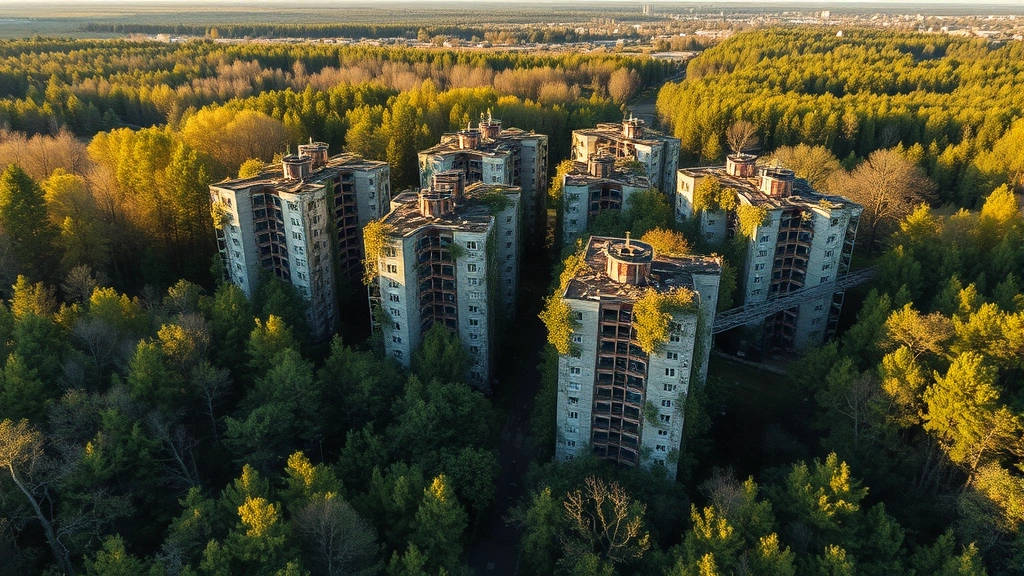
The exclusion zone has paradoxically become a de facto nature reserve, with human exclusion preventing habitat destruction and allowing ecological processes to operate with minimal anthropogenic interference for nearly four decades. Vegetation patterns have recovered substantially, with forest succession proceeding through typical stages: pioneer herbaceous species, shrub establishment, and gradual tree regeneration. Current forest compositions within the exclusion zone approach pre-accident conditions, with species diversity and structural complexity recovering substantially despite persistent soil radioactivity.
Microbial communities in contaminated soils have demonstrated remarkable adaptive capacity, with bacteria and fungi evolving radiation-resistant mechanisms and metabolic pathways enabling radionuclide sequestration. These microorganisms participate in radionuclide cycling, transforming radioactive elements into less bioavailable forms and reducing trophic transfer to higher organisms. Fungal associations with tree roots have enhanced plant radionuclide tolerance, enabling forest regeneration in heavily contaminated areas. This microbial adaptation exemplifies evolutionary responses to environmental contamination and reveals potential bioremediation mechanisms operating at ecosystem scales.
The long-term trajectory suggests that ecosystems possess substantial resilience to chronic radiation exposure, provided acute exposures do not exceed lethal thresholds. This resilience emerges from multiple mechanisms: population selection favoring radiation-tolerant genotypes, behavioral modifications reducing exposure, physiological adaptations enhancing DNA repair capacity, and ecosystem reorganization reducing radionuclide cycling to sensitive organisms. Current research indicates that ecological recovery will continue over the next several decades, though radionuclide inventories will remain elevated for centuries due to cesium-137 and strontium-90 persistence.
Human Health and Epidemiological Consequences
Human health consequences represent the most immediate and measurable impact of the Chernobyl disaster, with documented increases in thyroid cancer, leukemia, and other radiation-sensitive malignancies. Children exposed to radioactive iodine-131 during the initial accident demonstrated thyroid cancer incidence rates 100-1,000 times higher than background levels, with approximately 6,000-7,000 thyroid cancer cases attributed to Chernobyl exposure. The thyroid cancer epidemic peaked 10-15 years post-accident, then declined as cohort effects diminished and iodine-131 decayed to background levels.
Whole-body radiation exposure resulted in acute radiation syndrome affecting emergency responders and workers, with documented deaths from acute exposure exceeding 30 individuals during the initial response phase. Long-term health effects in exposed populations include elevated cancer incidence (particularly leukemia and lung cancer), cardiovascular disease, and reproductive effects including elevated miscarriage rates and reduced fertility in some populations. Psychological effects including radiation anxiety and health-related quality-of-life reductions affected millions of individuals in contaminated regions and beyond.
Epidemiological research conducted by international organizations including the World Health Organization indicates that total excess mortality attributable to Chernobyl exposure remains scientifically contested, with estimates ranging from hundreds to thousands of deaths depending on methodological assumptions regarding dose-response relationships and latency periods. This uncertainty reflects the inherent difficulties in attributing individual health outcomes to low-dose radiation exposure and demonstrates the necessity for long-term cohort studies extending across multiple generations.
Economic Implications and Environmental Economics
The economic costs of the Chernobyl disaster exceeded $235 billion in inflation-adjusted currency, representing approximately 15-18 percent of the Soviet Union’s 1986 GDP. Direct costs included emergency response operations, exclusion zone management, decontamination efforts, and long-term health care provision. Indirect costs encompassed lost agricultural productivity, reduced property values, displaced population relocation, and foregone economic development in contaminated regions. This catastrophic economic impact demonstrates the substantial financial consequences of environmental contamination and the necessity for careers that help the environment in environmental remediation and restoration.
Environmental economics frameworks applied to Chernobyl reveal that traditional cost-benefit analyses fail to capture the full economic consequences of environmental disasters, as many impacts (ecosystem service losses, health effects, social disruption) resist monetization. Research published by the World Bank emphasizes that environmental contamination creates persistent economic inefficiencies, reducing productive capacity and constraining regional development for decades. The exclusion zone represents approximately 2,600 square kilometers of economically inaccessible land, generating opportunity costs through foregone agricultural and industrial production.
The disaster catalyzed significant developments in environmental economics and ecological valuation methodologies, forcing economists to confront the economic consequences of environmental destruction at unprecedented scales. Current research emphasizes that environmental protection and positive human impact on the environment require substantial upfront investments in prevention and precautionary measures, as remediation costs following environmental disasters vastly exceed prevention expenditures. The Chernobyl experience informs contemporary discussions regarding nuclear energy economics, environmental risk assessment, and the true costs of energy production when comprehensive environmental and health externalities are incorporated into analyses.
Research from ecological economics journals demonstrates that the Chernobyl exclusion zone, despite radioactive contamination, has generated economic value through scientific research, environmental monitoring, and ecotourism activities. This paradoxical economic development illustrates that contaminated regions can maintain economic functionality through alternative economic activities emphasizing knowledge generation and experiential consumption rather than traditional extractive or agricultural production.
FAQ
How much radioactive material was released during Chernobyl?
Approximately 5,200 petabecquerels of radioactive material was released, with cesium-137, strontium-90, and iodine-131 representing the primary isotopes. This quantity exceeded the Hiroshima atomic bomb release by approximately 400 times, distributed across vast geographic areas through atmospheric and hydrological transport mechanisms.
Is the Chernobyl exclusion zone still radioactive?
Yes, the exclusion zone remains radioactive, with cesium-137 and strontium-90 persisting due to their 30-year half-lives. Radiation levels have declined substantially from initial post-accident levels, though areas within 1-3 kilometers of the reactor remain highly contaminated. The zone will require active management and population exclusion for centuries due to radionuclide persistence.
Can humans safely visit the Chernobyl exclusion zone?
Carefully controlled visits to portions of the exclusion zone are permitted through authorized tour operators, with radiation exposure limited to safe levels through time restrictions and area selection. However, permanent habitation remains prohibited, and visitors receive radiation dosimetry monitoring. The exclusion zone boundary has expanded and contracted based on contamination assessments and remediation efforts.
What wildlife species have recovered in the exclusion zone?
Numerous species have re-colonized the exclusion zone, including wolves, lynx, bears, elk, wild boar, and diverse bird species. Some populations now exceed pre-accident densities, though genetic studies reveal elevated mutation frequencies and altered population dynamics. This ecological recovery demonstrates wildlife resilience despite persistent environmental contamination.
How does Chernobyl compare to other nuclear accidents?
Chernobyl represents the most severe nuclear accident in history regarding radioactive release quantity and environmental contamination extent. The Fukushima Daiichi accident (2011) released approximately 10-20 percent of Chernobyl’s radioactive inventory, while the Three Mile Island incident (1979) released minimal environmental contamination. Chernobyl remains the benchmark for worst-case nuclear accident scenarios.
What long-term health effects persist among Chernobyl-exposed populations?
Thyroid cancer represents the most established health consequence, with elevated incidence persisting decades post-accident. Leukemia and other malignancies show modest elevations in exposed populations, though attribution remains scientifically contested. Psychological effects and health-related quality-of-life reductions affect millions in contaminated regions, representing substantial but often-overlooked health consequences.


