

Is Green Economy Sustainable? Economist Insights
The green economy represents one of the most significant economic paradigm shifts of our time, promising to reconcile economic growth with environmental protection. Yet beneath the optimistic rhetoric lies a complex question: can a green economy truly achieve sustainability, or does it merely shift environmental costs rather than eliminate them? Economists, environmental scientists, and policy experts remain divided on this fundamental question, offering insights that challenge both zealous advocates and skeptical critics.
Understanding whether the green economy is genuinely sustainable requires examining the underlying economic mechanisms, empirical evidence from implementation, and the structural constraints that may limit its effectiveness. This analysis draws from ecological economics, environmental policy research, and real-world case studies to provide a comprehensive assessment of green economy viability.
Defining the Green Economy and Its Promises
The green economy, as defined by the United Nations Environment Programme (UNEP), represents economic activity that results in improved human well-being and social equity while significantly reducing environmental risks and ecological scarcities. At its core, the green economy framework promises to decouple economic growth from environmental degradation—allowing societies to expand GDP while simultaneously reducing carbon emissions, resource consumption, and pollution.
This vision fundamentally challenges the conventional economic model where growth and environmental impact are inextricably linked. Proponents argue that technological innovation, market mechanisms, and policy interventions can enable what economists call “absolute decoupling”—where economic output increases while environmental impact decreases in absolute terms, not merely relative to GDP.
The promises of the green economy include job creation in renewable energy and sustainable agriculture, improved public health through reduced air and water pollution, enhanced energy security through diversified renewable sources, and the preservation of natural capital that underpins long-term economic stability. These benefits appear compelling, particularly to policymakers seeking to address climate change without sacrificing economic prosperity.

The Economic Mechanisms Behind Green Growth
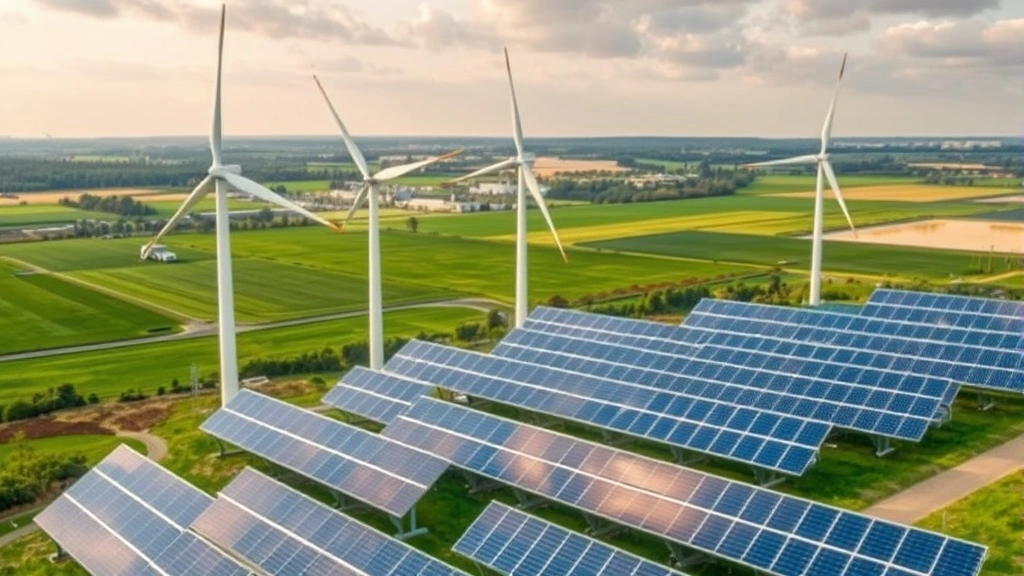
Green economy advocates rely on several economic mechanisms to achieve sustainability. The first is technological substitution—replacing carbon-intensive technologies with renewable alternatives. Solar panels, wind turbines, and electric vehicles represent tangible examples of this transition. Economists argue that as these technologies achieve economies of scale, their costs decline, making them economically competitive with fossil fuels without requiring permanent subsidies.
The second mechanism involves market-based environmental instruments, particularly carbon pricing through taxes or cap-and-trade systems. These instruments theoretically internalize environmental costs into market prices, allowing market forces to drive efficient resource allocation toward less environmentally damaging activities. The human-environment interaction becomes mediated through price signals rather than regulatory mandates.
A third mechanism emphasizes circular economy principles, where waste becomes input for new production cycles, reducing virgin resource extraction. By designing products for durability, repairability, and recyclability, circular economy models theoretically minimize resource depletion while maintaining economic activity.
Fourth, green economy frameworks highlight natural capital accounting, which incorporates environmental assets and ecosystem services into national accounting systems. By measuring the value of forests, wetlands, fisheries, and other natural systems, policymakers can make economically rational decisions that account for environmental preservation as a form of investment rather than a cost.
These mechanisms appear logically sound in economic theory, yet their real-world effectiveness depends on implementation quality, political will, and whether they address fundamental economic growth imperatives.
Critical Economist Perspectives on Sustainability
A substantial body of economist research raises serious questions about whether green economy approaches can achieve genuine sustainability. Ecological economists—who emphasize the dependence of human economies on finite natural systems—argue that the green economy fundamentally misunderstands the relationship between economic activity and environmental limits.
Ecological economist Herman Daly contends that growth-focused frameworks, even green ones, cannot be sustained indefinitely on a finite planet. He distinguishes between growth (quantitative increase in physical throughput) and development (qualitative improvement), arguing that green economy strategies often pursue growth in new sectors while claiming sustainability. This represents what Daly terms “quantitative greening” rather than genuine transformation.
Other critical economists point to the Jevons Paradox, an economic principle suggesting that efficiency improvements often increase overall consumption rather than decrease it. When renewable energy becomes cheaper through technological advancement, total energy consumption may rise, offsetting emission reductions. This dynamic challenges the assumption that efficiency alone will achieve absolute decoupling.
Research from UNEP’s economic analysis and ecological economics journals documents that relative decoupling—where environmental impact grows slower than GDP—has been achieved in some sectors and countries. However, absolute decoupling at the global scale remains elusive, with most evidence suggesting that environmental impacts continue growing in absolute terms despite green economy investments.
Heterodox economists also question whether market mechanisms can price environmental goods accurately. Ecosystem services like pollination, carbon sequestration, and water purification involve complex interdependencies that resist simple monetary valuation. Assigning prices to nature may actually legitimize its commodification and accelerate its exploitation.
Evidence from Green Economy Implementation
Examining real-world green economy implementations provides crucial empirical evidence. Renewable energy expansion offers mixed results. Denmark and Germany have achieved high renewable electricity penetration (80% and 46% respectively), yet their total primary energy consumption remains substantial, and emissions reductions fall short of climate targets. The integration challenges of variable renewable sources have required maintaining fossil fuel backup capacity, reducing efficiency gains.
Costa Rica demonstrates another pattern: the country generates approximately 99% of electricity from renewable sources, yet total greenhouse gas emissions remain elevated due to agriculture, transportation, and imported goods. This illustrates how sectoral decoupling in one area may mask continued environmental impacts elsewhere in the economy.
The electric vehicle transition reveals similar complexities. While EVs eliminate tailpipe emissions, their production—particularly battery manufacturing—is energy-intensive and relies on mineral extraction with significant environmental costs. Lifecycle analyses show emissions reductions of 50-70% compared to internal combustion vehicles, yet this improvement depends heavily on electricity grid composition. In coal-dependent regions, EV advantages diminish substantially.
Circular economy implementation in practice often falls short of theoretical promises. Studies of plastic recycling reveal that most plastic waste is either landfilled, incinerated, or exported to developing countries rather than genuinely recycled into new products. The economics of recycling frequently depends on subsidies, and contamination rates limit material quality for reuse.
These implementations suggest that green economy strategies can achieve meaningful improvements within specific sectors, but comprehensive absolute decoupling remains undemonstrated at national or global scales. The question becomes whether technological and market-based solutions can accelerate sufficiently to meet climate and biodiversity targets, or whether systemic economic restructuring is necessary.
The Rebound Effect and Consumption Paradox
One of the most significant challenges to green economy sustainability is the rebound effect—the tendency for efficiency improvements to stimulate increased consumption. When renewable energy costs decline, electricity consumption often rises. When vehicles become more fuel-efficient, people drive more. When homes improve insulation efficiency, indoor temperatures may increase.
Economic theory explains this through substitution and income effects. As environmental goods become cheaper, consumers substitute toward them, increasing overall consumption. Additionally, cost savings from efficiency improvements free up income for other consumption, potentially generating emissions elsewhere in the economy.
Research suggests rebound effects typically offset 10-30% of engineering-based efficiency improvements, though estimates vary widely by sector and region. For some services—particularly digital technologies—rebound effects may exceed 100%, completely negating or reversing intended environmental benefits.
This dynamic creates what economists call the consumption paradox: green economy strategies that successfully reduce per-unit environmental costs may paradoxically increase total environmental impact by stimulating consumption growth. A society with cheap renewable energy may consume more energy overall. A society with efficient electric vehicles may drive more miles. The economic success of green technologies becomes environmentally counterproductive.
Addressing this paradox requires moving beyond purely technological and market-based solutions toward policies that directly constrain total resource and energy throughput. This might include absolute caps on resource extraction, progressive taxation on resource-intensive consumption, or regulatory limits on material flows—measures that fundamentally challenge growth-oriented economic paradigms.
Structural Limitations and Systemic Challenges
Beyond technological and behavioral dynamics, the green economy faces structural economic constraints rooted in capitalism’s fundamental growth imperative. Modern economies require continuous expansion to maintain employment, service debt, and generate investment returns. This structural growth requirement may be incompatible with genuine sustainability on a finite planet.
The environment and environmental science literature documents planetary boundaries—biophysical limits on resource extraction, waste absorption, and ecosystem service provision. Current global material extraction (100+ billion tons annually) and biodiversity loss rates suggest humanity is already operating beyond several planetary boundaries.
Within this context, green economy strategies that maintain growth trajectories may be fundamentally incompatible with staying within planetary boundaries. A green economy growing at 3% annually will double in size every 24 years, eventually requiring proportionally increased resource and energy throughput regardless of efficiency improvements.
Another structural challenge involves carbon lock-in and path dependence in infrastructure systems. Billions in existing fossil fuel infrastructure (power plants, pipelines, refineries) create economic incentives to maintain these systems despite climate imperatives. Green economy investments may complement rather than replace this infrastructure, resulting in higher total emissions than if genuine system transformation occurred.
Additionally, global supply chains create what economists call consumption-based emissions, where wealthy nations outsource production to lower-cost regions with weaker environmental regulations. A country may appear to reduce emissions while actually increasing its environmental footprint through imported goods. True sustainability requires accounting for embodied emissions in trade, not merely production-based emissions.
The World Bank’s economic analyses acknowledge these structural challenges while arguing that green economy transitions remain necessary despite limitations. The debate centers not on whether green economy approaches are perfect, but whether they represent the best available path forward given political and economic constraints.
Pathways Toward Genuine Sustainability
Recognizing the limitations of conventional green economy approaches, economists propose several complementary strategies. Steady-state economics, developed by ecological economists, suggests stabilizing economic throughput at sustainable levels while allowing qualitative development—improving human well-being through better distribution, education, and non-material services rather than continuous material growth.
This approach requires fundamentally different policy frameworks: progressive taxation on resource extraction and pollution, caps on resource consumption, universal basic income to decouple well-being from employment, and investment in public goods like healthcare, education, and public transportation rather than private consumption.
A second pathway emphasizes degrowth in wealthy nations—deliberately reducing material and energy throughput toward sustainable levels. Rather than pursuing growth with green characteristics, degrowth advocates argue wealthy economies must contract by 50-80% in material throughput to provide ecological space for development in poorer nations while maintaining human well-being through non-material improvements.
Third, regenerative economy frameworks go beyond sustainability (maintaining current conditions) toward restoration—actively improving ecosystem health and biodiversity while meeting human needs. This requires moving beyond the green economy’s focus on efficiency toward emphasis on ecosystem restoration, soil health, and biodiversity enhancement as primary economic objectives.
Fourth, commons-based approaches emphasize collective management of shared resources rather than either market commodification or state control. Community-managed forests, fisheries, and agricultural systems often demonstrate superior sustainability outcomes compared to both market and state-managed alternatives.
These pathways require reconceptualizing the relationship between economy and environment—moving from viewing carbon footprint reduction as merely an efficiency challenge toward understanding it as requiring fundamental economic restructuring. The question is not whether green economy technologies are useful—they clearly are—but whether they can be deployed within economic frameworks that prioritize continuous growth, or whether genuine sustainability requires different economic structures entirely.
Emerging research from heterodox economics programs and ecological economics institutes suggests that genuine sustainability likely requires combining green technology with structural economic transformation: absolute resource caps, redistribution toward equality, reduced working hours, and emphasis on non-material well-being indicators rather than GDP growth.
FAQ
What is the difference between relative and absolute decoupling?
Relative decoupling occurs when environmental impact grows slower than GDP—the economy becomes more efficient but total impact still increases. Absolute decoupling means environmental impact decreases while GDP increases. Green economy strategies have achieved relative decoupling in some sectors, but global absolute decoupling remains elusive.
Can renewable energy alone achieve sustainability?
Renewable energy is necessary but insufficient for sustainability. While renewable electricity eliminates carbon emissions from power generation, complete sustainability requires addressing energy demand growth, emissions from other sectors (agriculture, manufacturing, transport), and resource extraction impacts. Additionally, renewable energy infrastructure requires mineral extraction with environmental costs.
Does the rebound effect eliminate efficiency improvements?
The rebound effect typically offsets 10-30% of engineering-based efficiency improvements, though estimates vary. This means efficiency improvements still provide net benefits, but less than engineering calculations suggest. Combined with absolute consumption constraints, efficiency improvements can contribute to sustainability.
Is the green economy just greenwashing?
The green economy includes both genuine sustainability efforts and corporate greenwashing. The distinction depends on whether initiatives pursue absolute decoupling and genuine environmental restoration, or merely create appearance of sustainability while maintaining growth-dependent business models. Critical analysis of specific claims and lifecycle impacts is necessary.
What would a genuinely sustainable economy look like?
A genuinely sustainable economy would operate within planetary boundaries, maintain or enhance biodiversity and ecosystem services, distribute resources equitably, and prioritize human well-being over material consumption growth. This likely requires steady-state or degrowth frameworks in wealthy nations, combined with green technology deployment and regenerative practices.
Can we achieve sustainability through market mechanisms alone?
Market mechanisms like carbon pricing and circular economy incentives contribute to sustainability but cannot alone achieve it. Markets reflect current preferences and discount future costs, creating inadequate incentives for the scale and speed of transformation required. Complementary regulatory, fiscal, and structural policies are necessary.
What role should developing nations play in green economy transitions?
Developing nations should not be expected to sacrifice development opportunities for environmental protection that wealthy nations caused. Genuine sustainability requires wealthy nations reducing consumption, transferring green technology without restrictive intellectual property barriers, and providing climate finance. Development pathways should incorporate green approaches from the beginning rather than repeating wealthy nations’ mistakes.