How Economy Impacts Ecosystems: Studies Show
The relationship between economic activity and ecosystem health represents one of the most critical intersections in contemporary environmental science. As global economies expand and industrial operations intensify, the cascading effects on natural systems become increasingly apparent through empirical research and field observations. Economic growth, traditionally measured through gross domestic product and industrial output, often comes at significant ecological costs that remain externalized in conventional accounting frameworks.
Recent studies demonstrate that economic systems and ecosystems exist in a complex feedback loop where market decisions directly influence biodiversity loss, resource depletion, and environmental degradation. Understanding these dynamics requires examining how different economic sectors—from agriculture to manufacturing to service industries—alter ecosystem functions and services that humanity depends upon for survival and prosperity.
Economic Growth and Biodiversity Loss
The empirical evidence linking economic expansion to biodiversity decline has become overwhelming in recent decades. Research from the World Bank and United Nations Environment Programme indicates that economic activities account for approximately 80% of current biodiversity loss globally. Industrial agriculture, logging, mining, and urban development—all drivers of economic output—consume natural habitats at accelerating rates.
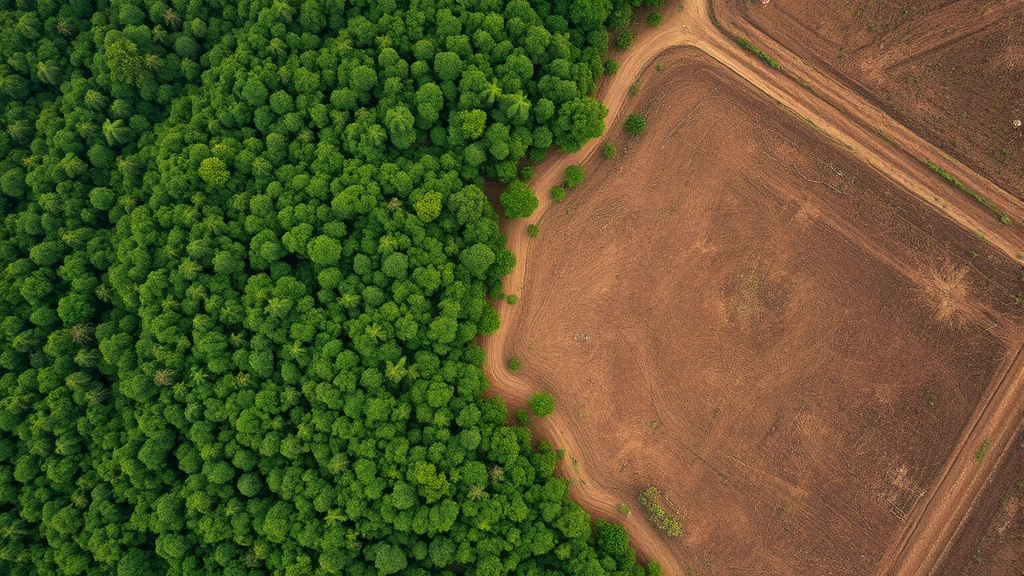
A comprehensive analysis of economic-ecological relationships reveals that countries experiencing rapid GDP growth often simultaneously experience the highest rates of species extinction and habitat conversion. This correlation is not coincidental but rather reflects the fundamental structure of growth-oriented economies that prioritize short-term profit maximization over long-term ecosystem stability. When forests are converted to agricultural land or cleared for infrastructure development, the economic gains accrue to specific industries and investors while the ecological costs are distributed across entire biomes and future generations.
The definition of environment science encompasses understanding these complex trade-offs between human economic systems and natural processes. Studies measuring ecosystem services—the benefits humans derive from nature including pollination, water purification, climate regulation, and nutrient cycling—have quantified losses in the trillions of dollars annually due to economic degradation of ecosystems. Yet these calculations remain largely absent from corporate balance sheets and national economic indicators.
Biodiversity itself functions as natural capital that generates economic value through pharmaceutical compounds, genetic resources, and ecosystem resilience. When species disappear due to economic activities, we lose potential medicines, food security buffers, and adaptive capacity in the face of climate change. The economic logic that drives short-term ecosystem destruction systematically undervalues these long-term biological assets.

Sectoral Impacts on Natural Systems
Different economic sectors exert distinct pressures on ecosystems, though many operate synergistically to amplify environmental damage. Understanding types of environment affected by various industries requires sector-specific analysis that connects production processes to ecological outcomes.
Agricultural economics drives some of the most extensive ecosystem transformations. Industrial farming systems, optimized for maximum yield and profit per acre, have converted approximately 40% of Earth’s land surface to agricultural use. This transformation has eliminated native vegetation, fragmented wildlife habitats, depleted soil carbon, contaminated water resources with chemical runoff, and simplified ecological communities to monocultures. The economic efficiency gains from mechanization, chemical inputs, and genetic modification come paired with ecological costs: soil erosion, pollinator decline, pesticide bioaccumulation, and nutrient cycling disruption.
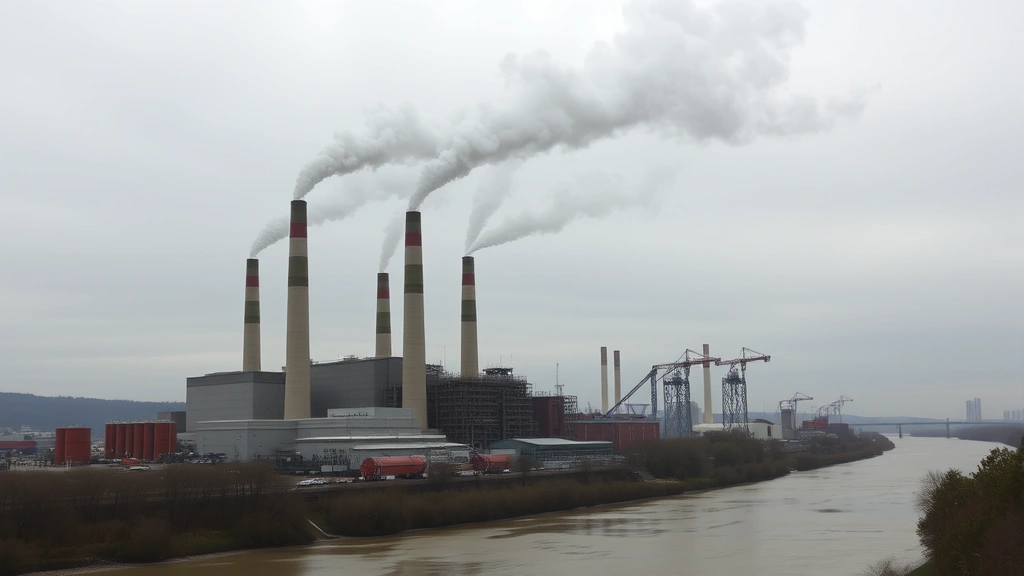
Manufacturing and industrial production generate pollution that degrades ecosystem function across air, water, and soil compartments. Heavy metals from mining and smelting operations accumulate in food chains, affecting wildlife reproduction and human health. Textile manufacturing, chemical production, and electronic goods assembly create persistent organic pollutants that distribute globally through atmospheric and oceanic circulation, affecting ecosystems thousands of kilometers from production sites. The economic benefit of cheap manufactured goods is partially offset by ecosystem degradation costs that remain unpriced in market transactions.
Energy production represents perhaps the most transformative economic sector for ecosystems. Fossil fuel extraction—coal mining, petroleum drilling, natural gas production—directly destroys habitats, contaminates groundwater, and generates greenhouse gas emissions that alter global climate systems. Renewable energy infrastructure, while preferable to fossil fuels, still requires land conversion and resource extraction with ecological consequences. The economic structure of energy markets has historically made fossil fuels artificially cheap by externalizing climate and pollution costs.
The connection between environment and society becomes particularly evident when examining how economic sectors structure human work environments and their ecological footprints. Even service sectors like healthcare create significant environmental impacts through pharmaceutical manufacturing, medical waste, and facility operations. This illustrates how economic activity permeates all human endeavors and their associated ecosystem effects.
Resource Extraction Economics
Resource extraction industries exemplify how economic incentive structures drive ecosystem degradation. Mining operations, forestry, and fisheries extract natural capital at rates that exceed regeneration capacity, treating renewable resources as if they were infinite. Economic analysis of these industries typically calculates only extraction and processing costs while ignoring depletion of the underlying resource base.
Tropical rainforest logging demonstrates this dynamic clearly. Economists measure the value created through timber sales and employment generation, but rarely account for the loss of carbon storage capacity, species habitat, indigenous livelihood systems, and pharmaceutical potential embedded in the forest. When discounted to present value, the short-term economic gain from logging typically exceeds the calculated present value of long-term ecosystem services, creating an economic incentive for deforestation despite enormous ecological losses.
Fisheries economics reveals similar perverse incentives. Industrial fishing fleets optimize for maximum catch per unit effort, driving stocks toward collapse. Subsidies for fuel and vessel construction artificially lower fishing costs, enabling overcapitalization and overharvesting that would be economically irrational without government support. The economic structure rewards depleting fish stocks faster than competitors, creating a tragedy-of-the-commons dynamic where individual economic rationality produces collective ecological catastrophe.
Water extraction for agricultural irrigation, industrial processes, and urban consumption represents another critical resource extraction dynamic. Aquifers accumulated over millennia are being drained within decades to support irrigated agriculture and economic development. The economic accounting treats groundwater extraction as income rather than capital depletion, suggesting sustainable use when actual mining of finite resources is occurring. This accounting error enables continued overextraction despite documented ecosystem damage including wetland collapse, stream desiccation, and agricultural land subsidence.
Environmental Accounting Frameworks
The disconnect between economic growth and ecosystem health partially reflects fundamental flaws in how economies measure value and progress. Gross Domestic Product, the primary metric of economic success, counts resource extraction as income rather than capital depletion. When a forest is clearcut, GDP increases through timber sales, transportation, and processing, while the loss of the forest asset itself is ignored. This accounting framework systematically biases economies toward short-term resource extraction and ecosystem degradation.
Environment and natural resources building requires alternative accounting frameworks that recognize ecosystem assets and their depreciation. Natural capital accounting, promoted by environmental economists and the United Nations Environment Programme, incorporates ecosystem values into national accounts. Countries implementing these frameworks—including Botswana, Costa Rica, and several European nations—demonstrate that true economic progress often involves reduced resource extraction and ecosystem protection.
Ecosystem services valuation attempts to quantify benefits humans derive from nature in monetary terms. Studies estimate annual global ecosystem services at $125-145 trillion, dwarfing the $100 trillion global economy. These valuations include pollination worth tens of billions annually, water filtration preventing costly treatment infrastructure, climate regulation preventing catastrophic warming, and nutrient cycling supporting agriculture. When ecosystem degradation is monetized, the true costs of economic growth become visible.
However, monetary valuation of nature remains controversial among ecologists and environmental philosophers who argue that assigning prices to ecosystems commodifies nature and enables markets to destroy remaining natural systems. The practical tension between economic valuation and ecological protection reflects deeper conflicts between market logic and ecosystem preservation. Understanding human environment interaction definition geography requires recognizing that not all ecosystem values can be captured in monetary terms.
Market Failures in Ecosystem Valuation
Ecosystem degradation persists because markets fail to price environmental costs accurately. Negative externalities—costs imposed on society and ecosystems not reflected in market prices—drive a fundamental wedge between private economic incentives and social welfare. When a manufacturing facility pollutes air and water, the costs of health impacts and ecosystem damage are borne by the public while profits accrue to the company. This creates incentives for excessive pollution.
Carbon emissions exemplify massive market failures in ecosystem valuation. Fossil fuel combustion imposes climate costs estimated at $51 per ton of CO2 or higher, yet coal, oil, and natural gas are priced without reflecting these costs. This underpricing makes fossil fuels economically competitive with renewable alternatives despite their true economic costs being far higher. The result is systematic overuse of carbon-intensive energy, driving climate change that degrades ecosystems globally.
Tragedy of the commons scenarios emerge when ecosystem resources lack property rights and market mechanisms. Shared fisheries, atmospheric capacity for pollution, and migratory wildlife face overexploitation because individual economic actors cannot capture benefits from conservation. Each actor maximizes personal economic gain by extracting resources, yet collective extraction degrades the resource base that all depend upon. This dynamic characterizes many global ecosystem crises including overfishing, climate change, and biodiversity loss.
Information asymmetries compound market failures in ecosystem valuation. Consumers purchasing products typically lack knowledge about ecosystem impacts throughout supply chains. A t-shirt’s price reflects labor and material costs but not water pollution from textile manufacturing, pesticide impacts from cotton production, or carbon emissions from transportation. Without accurate pricing of environmental costs, market signals guide economies toward unsustainable choices. Some economists argue that transparent environmental labeling and supply chain disclosure could improve market efficiency, though critics contend that market mechanisms fundamentally cannot adequately value ecosystem preservation.
Policy Interventions and Economic Restructuring
Addressing the economic-ecological crisis requires policy interventions that either correct market failures or fundamentally restructure economic incentives. Carbon pricing mechanisms, whether through taxes or cap-and-trade systems, aim to internalize climate costs into energy prices. Successful implementations—including Scandinavian carbon taxes and the European Union Emissions Trading System—demonstrate that pricing pollution can drive emissions reductions and economic restructuring toward lower-carbon activities.
Subsidy reform represents another critical intervention. Global governments provide approximately $7 trillion annually in subsidies for activities with environmental costs, including fossil fuel production, industrial agriculture, and overfishing. Redirecting these subsidies toward ecosystem protection and sustainable production would dramatically alter economic incentives. However, political resistance from benefiting industries prevents meaningful subsidy reform in most countries.
Protected area expansion and ecosystem restoration represent direct approaches to ecosystem preservation that work outside market mechanisms. When governments designate forests, wetlands, or marine areas as protected from economic extraction, ecosystems can recover. Evidence from national parks, marine reserves, and restored wetlands demonstrates that ecosystem functions and biodiversity recover when human economic pressure is removed. However, protection requires forgoing economic extraction, creating distributional conflicts between those benefiting from extraction and broader society benefiting from ecosystem services.
Circular economy frameworks attempt to restructure production and consumption to minimize ecosystem impacts. Rather than linear take-make-dispose models, circular approaches emphasize material reuse, recycling, and biological nutrient cycles. Companies implementing circular strategies reduce resource extraction, waste generation, and pollution while often improving economic efficiency. Scaling circular economy approaches requires systemic change in industrial production, consumer behavior, and waste management infrastructure.
Regenerative agriculture and ecosystem-based land management offer alternatives to extractive economic models. These approaches integrate economic production with ecosystem restoration, improving soil health, water cycles, and biodiversity while maintaining productive capacity. Farmers practicing regenerative methods often achieve competitive yields while sequestering carbon and building resilience to climate variability. However, transitioning from industrial to regenerative agriculture requires policy support including crop insurance reform, research funding, and market development for sustainably produced goods.
International agreements including the Paris Climate Agreement, Convention on Biological Diversity, and emerging agreements on plastic pollution attempt to coordinate global responses to ecosystem degradation. However, these frameworks remain weak relative to the scale of environmental challenges, with countries frequently failing to meet commitments. Strengthening international environmental governance requires political will to prioritize ecosystem protection over short-term economic gains.
FAQ
How much economic value do ecosystems provide annually?
Global ecosystem services are valued at approximately $125-145 trillion annually according to environmental economic studies. This includes pollination, water filtration, climate regulation, nutrient cycling, and other functions essential for human survival and economic activity. These values dwarf global GDP, indicating that economies exist within and depend upon ecosystem services.
Which economic sectors cause the most ecosystem damage?
Agriculture, energy production, manufacturing, and resource extraction collectively account for the majority of ecosystem degradation. Industrial agriculture drives habitat loss and biodiversity decline, energy production generates climate-altering emissions, manufacturing creates pollution, and mining directly destroys ecosystems. However, all economic sectors have environmental impacts that remain largely unpriced in markets.
Can markets solve ecosystem degradation through environmental pricing?
Markets can help reduce environmental damage when prices accurately reflect ecosystem costs through mechanisms like carbon taxes or cap-and-trade systems. However, many ecosystem values resist monetary quantification, and market mechanisms cannot fully address biodiversity loss or ecosystem collapse. Most environmental economists argue that pricing mechanisms must be combined with direct protection, regulation, and economic restructuring.
What is the relationship between economic growth and ecosystem health?
Current evidence indicates that conventional economic growth measured through GDP expansion correlates strongly with ecosystem degradation. However, some economists argue that decoupling economic growth from environmental impact is possible through efficiency improvements and renewable energy transition. Others contend that absolute reductions in resource consumption and economic activity are necessary for ecosystem preservation.
How do developing countries balance economic development with ecosystem protection?
Developing countries face acute tensions between using natural resources for economic development and preserving ecosystems for long-term sustainability. Many pursue resource extraction to generate government revenue and employment, while simultaneously suffering greatest impacts from ecosystem degradation including agricultural failure and climate vulnerability. International support for sustainable development alternatives, debt relief, and technology transfer could enable developing countries to pursue ecosystem-compatible economic pathways.


