Tech & Eco Synergy: DeKalb Academy’s Unique Model
DeKalb Academy of Technology & Environment represents a pioneering institutional approach that bridges two traditionally separate domains: technological innovation and environmental stewardship. This educational model demonstrates how integrating digital systems, computational thinking, and ecological science creates a comprehensive framework for addressing contemporary sustainability challenges. The academy’s curriculum synthesizes engineering principles with conservation biology, environmental economics, and systems thinking to prepare students for careers at the intersection of climate action and technological advancement.
The significance of this integrated approach extends beyond individual student outcomes. As global economies increasingly recognize the necessity of green technology transitions, institutions like DeKalb Academy function as laboratories for testing pedagogical models that produce graduates equipped with both technical expertise and ecological literacy. This synergy addresses a critical gap in workforce development, where employers struggle to find professionals who can navigate complex environmental problems using technological solutions while understanding ecological constraints and economic trade-offs.
The academy’s model offers valuable insights into how educational institutions can reshape curricula to reflect the interdisciplinary nature of real-world sustainability challenges. Rather than compartmentalizing technology and environment as separate domains, DeKalb Academy’s integrated framework acknowledges that modern environmental solutions require simultaneous expertise in coding, data analytics, renewable energy systems, ecosystem dynamics, and environmental policy.

Foundational Principles of the DeKalb Academy Model
DeKalb Academy’s educational philosophy rests on understanding that technology and environment are not opposing forces but interconnected systems requiring integrated knowledge. The academy’s foundational approach emphasizes systems thinking, recognizing that environmental challenges operate across multiple scales—from individual organism interactions to global biogeochemical cycles—and that technological solutions must account for these complex relationships.
The model builds on established concepts of human-environment interaction, extending this framework to include technological mediation. Rather than viewing humans as external to ecosystems, the curriculum explores how technologies can either amplify ecological damage or facilitate restoration and sustainable resource management. This perspective aligns with contemporary ecological economics, which emphasizes that economic systems are embedded within and dependent upon natural systems.
A core principle involves recognizing the physical environment as a complex adaptive system where technological interventions produce cascading effects. Students engage with concepts of feedback loops, tipping points, and emergent properties—both in ecological and technological contexts. This dual literacy enables graduates to anticipate unintended consequences of technological deployment and design interventions that work with rather than against ecological processes.
The academy emphasizes interdisciplinary collaboration from the outset. Rather than sequential courses where environmental science follows mathematics, which follows computer science, the curriculum weaves these domains together. Students simultaneously develop programming skills while studying hydrological cycles, learning data visualization techniques while analyzing carbon sequestration rates, and building renewable energy systems while examining energy economics.
Curriculum Integration: Technology Meets Ecology
The curriculum structure reflects an intentional architecture designed to prevent siloed thinking. Core courses integrate content that would traditionally appear in separate departments. A course on “Environmental Data Systems” combines machine learning algorithms with ecosystem monitoring, teaching students to build predictive models for species migration patterns or pollutant dispersal while simultaneously understanding the biological and chemical processes underlying these phenomena.
Advanced coursework explores human-environment interaction examples through a technological lens. Students analyze historical cases where technology either exacerbated or mitigated environmental problems. They examine how the Haber-Bosch process revolutionized agricultural productivity while creating nitrogen pollution crises, how fossil fuel technologies enabled economic growth while generating climate disruption, and how renewable energy technologies present both opportunities and ecological trade-offs requiring careful assessment.
The academy incorporates substantial coursework in environmental economics and policy. Students learn how market mechanisms like carbon pricing, payments for ecosystem services, and cap-and-trade systems function, while simultaneously developing the technical skills to monitor compliance and measure environmental outcomes. This combination proves essential in contemporary environmental management, where policy effectiveness depends on accurate monitoring and adaptive implementation.
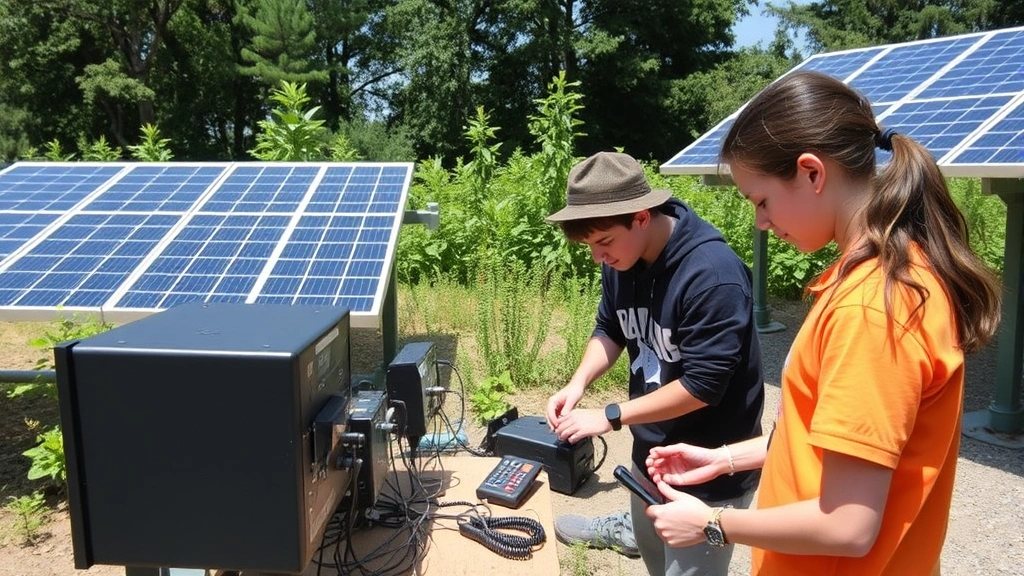
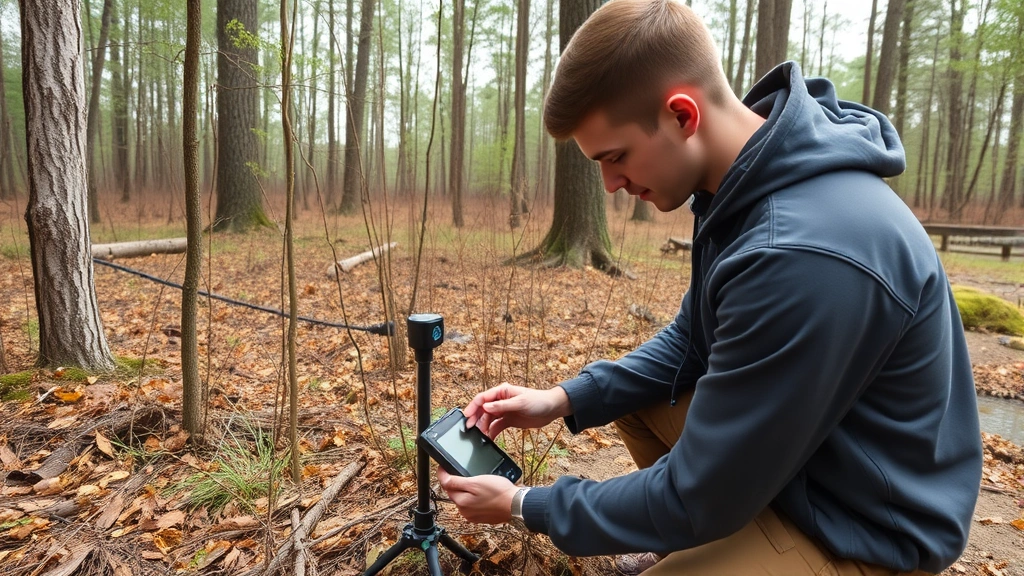
Laboratory and field experiences complement theoretical instruction. Students design and build renewable energy systems, construct and monitor bioswales and constructed wetlands, develop sensor networks for environmental monitoring, and create data visualization platforms for communicating environmental information to policymakers and community stakeholders. These hands-on experiences build practical competence while reinforcing conceptual understanding.
Coursework in systems modeling allows students to simulate complex environmental-technological interactions. Using tools like system dynamics software and agent-based modeling platforms, students explore scenarios involving population growth, resource depletion, technological innovation, and policy interventions. These simulations reveal how small changes in system parameters can produce dramatically different long-term outcomes—a crucial insight for understanding sustainability transitions.
Real-World Application and Project-Based Learning
DeKalb Academy emphasizes authentic problem-solving through capstone projects that address actual environmental challenges in partnership with municipal governments, environmental organizations, and private companies. These projects transform abstract concepts into concrete applications, requiring students to integrate technical expertise with stakeholder engagement, resource constraints, and political realities.
Project examples include developing smart water management systems for municipalities facing drought conditions, creating monitoring networks for urban heat islands and designing green infrastructure interventions to reduce temperatures, building predictive models for invasive species spread and recommending technological and policy responses, and designing circular economy systems for industrial waste streams. Each project requires technical competence alongside understanding of ecological impacts, economic feasibility, and social acceptability.
The project-based approach develops essential professional competencies beyond technical skills. Students learn to communicate complex technical information to non-specialist audiences, negotiate between competing stakeholder interests, work within budget and timeline constraints, and adapt solutions when initial approaches prove infeasible. These capabilities prove essential in professional environmental and technology sectors, where success depends on translating scientific understanding into actionable recommendations.
Partnerships with organizations like World Bank environmental initiatives and regional environmental agencies provide students with exposure to policy-level environmental challenges. Students analyze how environmental regulations shape technology development, how international environmental agreements influence national policy, and how technological innovation can either support or undermine environmental objectives.
Economic Dimensions and Sustainable Development
Understanding the economic dimensions of environmental challenges proves essential for developing effective solutions. DeKalb Academy integrates ecological economics principles throughout its curriculum, helping students grasp how economic systems depend on ecosystem services, how environmental degradation imposes economic costs, and how technological transitions require economic transformation.
The curriculum addresses critical concepts in environmental economics including natural capital accounting, ecosystem service valuation, environmental cost-benefit analysis, and the economics of climate change. Students learn to calculate the economic value of carbon sequestration in forests, quantify the costs of water pollution to downstream communities, and assess the economic returns from renewable energy investments. This quantitative framework enables graduates to make evidence-based arguments about environmental investments to economically-oriented decision-makers.
Coursework examines the relationship between technological innovation and economic growth. Students analyze how renewable energy technologies have achieved dramatic cost reductions through innovation and scale, how efficiency improvements in computing and manufacturing can decouple economic growth from resource consumption, and how circular economy models create economic value from waste streams. These analyses demonstrate that environmental protection and economic prosperity need not conflict, though achieving compatibility requires intentional technological and policy choices.
The academy incorporates substantial coverage of sustainable development frameworks, including the United Nations Environment Programme’s sustainable development approach. Students understand how environmental protection intersects with poverty reduction, health improvement, energy access, and economic development in low- and middle-income countries. This global perspective prevents the parochialism of viewing environmental challenges through a purely wealthy-nation lens.
Students engage with literature on planetary boundaries and biophysical limits to economic growth, examining evidence regarding climate stability, biodiversity loss, nitrogen and phosphorus cycling, freshwater depletion, and other critical thresholds. This grounding in biophysical reality ensures that economic analysis remains constrained by ecological feasibility rather than pretending unlimited growth remains possible within finite planetary systems.
Workforce Development for Green Economy Transitions
DeKalb Academy explicitly positions itself as preparing graduates for careers in expanding green technology sectors. The academy maintains close relationships with employers in renewable energy, environmental consulting, sustainable agriculture, conservation technology, and environmental monitoring industries. These partnerships ensure curriculum relevance and create direct pathways from graduation to employment.
Internship and apprenticeship programs provide students with professional experience while still enrolled. Students work on real projects for employers, applying classroom learning while developing professional networks and understanding workplace culture. Many students transition directly from internships to full-time positions with their host organizations upon graduation.
The academy recognizes that workforce needs vary across regions and evolving technological landscapes. Curriculum includes substantial flexibility allowing students to specialize in areas aligned with regional economic opportunities. Students in agricultural regions might focus on precision agriculture technologies and sustainable farming systems. Students in coastal areas might specialize in marine conservation technologies and coastal resilience. Students in manufacturing regions might focus on industrial ecology and circular economy systems.
Beyond technical skills, the academy emphasizes entrepreneurship and innovation. Students learn to identify environmental problems amenable to technological solutions, assess market viability of potential solutions, secure funding, and build companies or social enterprises addressing environmental challenges. This entrepreneurial focus recognizes that many solutions to environmental problems emerge from innovative startups rather than established corporations or government agencies.
Challenges and Implementation Strategies
Implementing an integrated tech-ecology curriculum presents substantial challenges. Teacher recruitment and professional development prove difficult, as few educators possess deep expertise in both technology and environmental science. DeKalb Academy addresses this through extensive professional development programs, collaborative teaching teams pairing specialists from different domains, and hiring practices that prioritize learning orientation and intellectual humility over pre-existing expertise.
Curriculum coherence requires careful design to avoid superficial integration where technology and environment simply appear in the same course without genuine synthesis. The academy employs curriculum mapping processes ensuring that concepts build progressively, that applications meaningfully integrate rather than simply juxtapose different domains, and that assessment measures genuine interdisciplinary understanding rather than isolated competencies.
Resource constraints limit many schools’ ability to implement similar models. DeKalb Academy’s success depends partly on substantial funding for equipment, software, field sites, and professional development. Scaling this model requires identifying which elements prove essential versus which represent luxuries, and developing strategies for achieving comparable learning outcomes with more limited resources.
Assessment presents particular challenges in interdisciplinary education. Traditional testing measures isolated competencies poorly suited to evaluating integrated understanding. DeKalb Academy employs portfolio assessment, where students compile evidence of learning across projects and coursework, demonstrating their ability to synthesize knowledge from different domains. Performance assessments require students to solve novel problems requiring integration of technical and ecological expertise, revealing whether learning transfers beyond specific course content.
Student background diversity requires attention to equity. Students enter with varying levels of preparation in mathematics, programming, and science. DeKalb Academy provides extensive support including foundational courses, peer tutoring, and mentoring to ensure that all students can access the integrated curriculum. The academy recognizes that excluding students due to preparation gaps means losing potentially talented contributors to environmental and technological solutions.
Maintaining current technology proves challenging as computational tools, programming languages, and hardware platforms evolve rapidly. The curriculum emphasizes principles underlying specific technologies rather than training students on particular platforms, recognizing that specific tools will become obsolete within years. This principle-focused approach requires students to learn fundamental concepts enabling them to master new tools as technologies change.
Evaluation of educational outcomes requires longitudinal tracking of graduate career trajectories, assessing whether integrated training produces professionals more effective at addressing environmental challenges than traditionally trained technologists or environmentalists. DeKalb Academy maintains alumni networks and conducts periodic surveys of graduate career outcomes, using this data to continuously refine curriculum based on evidence regarding which educational approaches best prepare students for real-world impact.
FAQ
What makes DeKalb Academy’s model different from traditional environmental or technology schools?
Rather than offering separate environmental and technology programs, DeKalb Academy integrates these domains throughout the curriculum. Students simultaneously develop technical expertise and ecological literacy, learning to design technological solutions that account for ecological complexity and environmental constraints. This contrasts with traditional approaches where environmental science and technology develop in parallel but rarely intersect, producing graduates who lack expertise in the complementary domain.
How does the academy ensure curriculum remains current as technology evolves?
The curriculum emphasizes foundational principles and problem-solving approaches rather than training on specific tools or platforms. Students learn why certain algorithms work, how sensor technologies function, and principles of system design—knowledge enabling them to quickly master new tools as technology evolves. The academy regularly updates curriculum based on employer feedback and emerging technological trends, but maintains focus on enduring principles rather than chasing transient technological fashions.
What career opportunities does DeKalb Academy prepare students for?
Graduates pursue careers in renewable energy development, environmental consulting, conservation technology, sustainable agriculture, environmental monitoring and data analysis, green infrastructure design, climate adaptation planning, environmental policy analysis, and environmental entrepreneurship. The integrated preparation proves valuable across sectors increasingly recognizing that environmental and technological challenges require professionals with expertise spanning both domains.
How does the academy address equity and access concerns?
The academy provides substantial support for students from underrepresented backgrounds and those entering with limited prior exposure to technology or advanced science. Foundational courses, peer tutoring, mentoring programs, and financial aid ensure that capable students can access the integrated curriculum regardless of prior preparation. The academy recognizes that environmental solutions require diverse perspectives and that excluding talented students from underrepresented groups impoverishes both the institution and the field.
Can this model be replicated in other schools and regions?
While DeKalb Academy’s comprehensive approach requires substantial resources, key elements can transfer to other contexts. Integrating environmental and technology curricula, emphasizing project-based learning addressing real environmental challenges, developing partnerships with employers and environmental organizations, and hiring teachers willing to engage in continuous learning across domains all represent replicable practices. Schools need not achieve complete duplication to benefit from adopting elements of the integrated approach suited to their particular contexts and resources.
How does the academy measure success in preparing environmentally-conscious technologists?
Success metrics include graduate career placements in environmental and technology sectors, employer feedback regarding graduate competence and readiness, longitudinal tracking of graduate contributions to environmental and technological challenges, student portfolio evidence of integrated problem-solving, and assessment of student understanding of connections between technological and ecological systems. The academy recognizes that ultimate success means graduates effectively addressing real environmental challenges throughout their careers, requiring long-term outcome tracking beyond graduation.


