
Deforestation’s Impact on Economy: Expert Insights
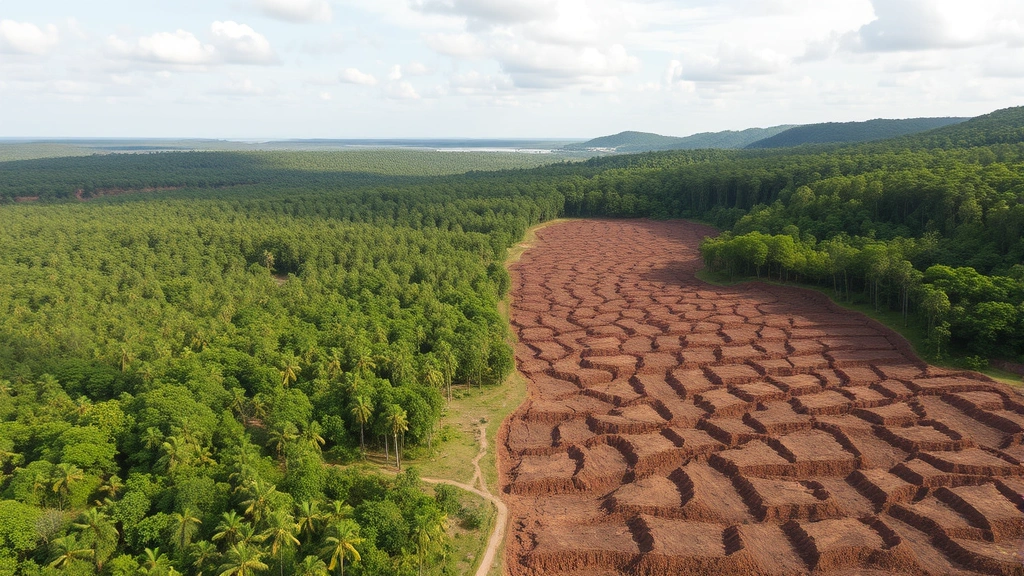
Deforestation represents one of the most pressing economic and ecological crises of our time, with cascading consequences that extend far beyond forest boundaries. The clearing of approximately 10 million hectares of forest annually generates immediate economic gains for extractive industries while simultaneously triggering long-term economic losses estimated at trillions of dollars through ecosystem service degradation, climate destabilization, and resource depletion. This paradox—where short-term profits mask catastrophic long-term costs—lies at the heart of why deforestation continues despite mounting evidence of its economic irrationality from a comprehensive, systems-level perspective.
The relationship between forest loss and economic performance reveals a fundamental disconnect in how global markets value natural capital. While timber harvesting, agricultural expansion, and mining operations generate measurable GDP contributions in the short term, the destruction of forests eliminates invaluable ecosystem services including carbon sequestration, water cycle regulation, biodiversity preservation, and climate stabilization. Expert analysis increasingly demonstrates that the true economic cost of deforestation—when accounting for these externalized environmental damages—far exceeds any temporary economic benefits, creating what economists term a “false economy” that prioritizes extraction over sustainability.
The Economic Paradox of Forest Destruction
Understanding deforestation’s economic impact requires examining the fundamental mismatch between how markets price forest resources and their actual economic value. When corporations clear forests for cattle ranching, soy cultivation, or timber extraction, national accounting systems register these activities as economic gains through increased GDP. However, this accounting methodology fails to deduct the simultaneous loss of ecosystem services, creating what ecological economists call “natural capital depletion”—essentially, countries are selling their environmental assets without accounting for the loss.
The World Bank and United Nations Environment Programme (UNEP) have documented that forest ecosystems provide ecosystem services valued at approximately $125 trillion globally, yet these values rarely appear in conventional economic calculations. This invisibility of natural capital in standard economic models perpetuates deforestation because decision-makers face artificially skewed incentives. A cattle rancher sees immediate profits from forest conversion but bears none of the costs associated with climate change acceleration, watershed degradation, or biodiversity loss—costs ultimately absorbed by society broadly and future generations specifically.
The concept of environmental science fundamentals becomes essential when analyzing these economic structures. Environmental economics as a discipline emerged precisely to address this accounting failure, proposing frameworks like natural capital accounting that incorporate environmental assets into economic models. Research from ecological economics institutes demonstrates that when true environmental costs are included, deforestation yields negative economic returns in approximately 85% of cases analyzed across tropical regions.
Quantifying Ecosystem Services and Economic Loss
Translating ecosystem service loss into economic terms requires sophisticated methodological approaches, yet the magnitudes revealed are staggering. Forests provide four primary categories of economic value: carbon storage and climate regulation, hydrological services including water purification and flood prevention, biodiversity preservation supporting pharmaceutical and agricultural development, and direct resource provision including timber, food, and medicinal compounds.
Carbon sequestration represents perhaps the most economically quantifiable service. Tropical forests store approximately 150-200 tons of carbon per hectare in biomass and soil. When forests are cleared, this carbon enters the atmosphere, contributing to climate change that generates documented economic costs through agricultural productivity losses, infrastructure damage, health impacts, and ecosystem disruption. The United Nations Environment Programme estimates the annual economic cost of forest-related carbon emissions at $2-5 trillion, depending on the carbon price applied.
Water-related ecosystem services create similarly substantial economic impacts. Forests regulate water cycles, maintain watershed health, prevent erosion, and filter water naturally—services that would require enormous capital investment if provided through technological means. A single hectare of forest can prevent soil loss valued at $500-2,000 annually, while watershed protection services in forested areas generate economic benefits estimated at $4,000-15,000 per hectare yearly. When deforestation occurs, these services vanish, forcing downstream communities to invest in water treatment infrastructure, flood control systems, and agricultural remediation—investments that essentially replace free ecosystem services with expensive technological alternatives.
Biodiversity preservation through forest conservation generates economic value through pharmaceutical development potential, genetic resources for agriculture, and ecosystem resilience. Approximately 25% of modern pharmaceuticals derive from rainforest plants, yet less than 1% of tropical species have been scientifically evaluated for medicinal properties. Deforestation destroys this untapped resource base before it can be discovered, representing incalculable economic loss through forgone pharmaceutical innovation and agricultural improvement opportunities.
Sectoral Impacts and Regional Economic Consequences
Deforestation’s economic consequences manifest across multiple economic sectors with particular severity in agriculture, fisheries, tourism, and water security. The relationship between human-environment interaction determines how deforestation propagates through interconnected economic systems. In agricultural regions, forest loss triggers soil degradation, reducing crop yields and requiring increased fertilizer inputs—costs that accumulate over decades. Studies in Southeast Asia document that deforestation-induced soil degradation reduces agricultural productivity by 10-30%, translating to billions in lost agricultural revenue across affected regions.
Fishery economics demonstrate particularly stark deforestation impacts. Mangrove forests and riparian vegetation support fish breeding grounds and maintain water quality essential for aquatic ecosystems. Deforestation of mangrove areas in Southeast Asia has correlated with 50-80% declines in fish catches, directly impacting the food security and livelihoods of 100+ million people dependent on fisheries. Economic losses from mangrove deforestation alone exceed $30 billion annually through reduced fish productivity and increased vulnerability to coastal flooding.
Tourism economies suffer substantial deforestation impacts, particularly in regions where biodiversity and scenic natural landscapes constitute primary economic assets. Costa Rica, Belize, and parts of the Amazon basin derive 8-15% of GDP from ecotourism. Deforestation reduces biodiversity and landscape aesthetics, directly diminishing tourism revenue. Economic modeling suggests that deforestation reducing forest cover by 50% causes corresponding 40-60% tourism revenue declines in affected regions.
Regional water security constitutes another critical economic impact domain. Forests regulate precipitation patterns and maintain streamflow during dry seasons through complex hydrological mechanisms. Deforestation alters precipitation regimes, reduces water availability during critical agricultural periods, and increases water scarcity affecting both rural and urban populations. The Amazon deforestation has demonstrably altered precipitation patterns across South America, reducing agricultural productivity in regions thousands of kilometers from deforested areas. Economic impacts include reduced agricultural yields, increased water stress for urban populations, and heightened hydropower generation uncertainty in regions dependent on hydroelectricity.
Understanding human activities affecting the environment reveals how deforestation connects to broader economic disruption patterns. Industrial-scale deforestation typically accompanies infrastructure development, agricultural expansion, and resource extraction—activities that generate immediate economic activity but create long-term liabilities through ecosystem degradation.
Climate Economics and Deforestation
The climate economics dimension of deforestation represents perhaps the most consequential long-term economic impact. Forests function as massive carbon reservoirs, with tropical forests alone storing approximately 250-300 gigatons of carbon. Deforestation releases this carbon into the atmosphere, directly accelerating climate change. The economic costs of climate change—through agricultural disruption, infrastructure damage, health impacts, and ecosystem loss—dwarf the short-term economic gains from forest conversion.
Climate economists estimate that each hectare of tropical forest cleared generates climate change costs of $1,000-5,000 through increased atmospheric CO2 and resulting climate damages, while the economic benefits from forest conversion typically range from $200-800 per hectare. This fundamental cost-benefit imbalance persists because climate damages accrue globally and over decades, while conversion benefits concentrate locally and immediately. This temporal and spatial mismatch creates perverse incentives favoring deforestation despite its negative global economic calculus.
The Intergovernmental Panel on Climate Change documents that forest loss accounts for approximately 15% of global greenhouse gas emissions, making deforestation a primary driver of climate destabilization. The economic costs of climate change are already substantial and accelerating—estimated at 5-20% of global GDP by 2100 if current trajectories continue. Deforestation’s contribution to this trajectory represents a massive economic externality, essentially imposing costs on global populations without compensation to those bearing the costs.
Paradoxically, preserving forests for carbon sequestration generates economic value through climate change mitigation. Carbon credit markets and climate finance mechanisms increasingly recognize this value, creating economic incentives for forest preservation. However, these markets remain underdeveloped and undervalued relative to the true economic benefits of forest conservation, perpetuating deforestation despite emerging climate economics frameworks demonstrating preservation superiority.
Policy Solutions and Economic Transition Strategies
Addressing deforestation’s economic impacts requires policy frameworks that internalize environmental costs into economic decision-making. Several approaches show promise in reorienting economic incentives toward forest conservation. Natural capital accounting integrates environmental asset values into national accounting systems, providing policymakers with accurate economic data regarding deforestation costs. Countries implementing natural capital accounting demonstrate increased forest conservation commitment as decision-makers perceive true economic trade-offs.
Payment for ecosystem services (PES) programs create direct economic incentives for forest conservation by compensating landowners for maintaining forests. Successful PES programs in Costa Rica, Indonesia, and Vietnam demonstrate that when forest conservation becomes economically competitive with conversion, landowners choose preservation. Economic analysis indicates PES programs cost $100-500 per hectare annually to maintain forest cover, while ecosystem services provided exceed $2,000-5,000 per hectare yearly, representing substantial economic returns on conservation investment.
Carbon pricing mechanisms including carbon taxes and cap-and-trade systems create market incentives for forest preservation by pricing atmospheric carbon. When carbon prices reflect true climate damages (estimated at $50-200 per ton CO2), forest conservation becomes economically superior to deforestation. Several jurisdictions implementing carbon pricing mechanisms observe corresponding reductions in deforestation rates, demonstrating economic mechanism effectiveness.
Sustainable forest management and certification systems create economic differentiation for responsibly harvested forest products, allowing consumers to support forest conservation through purchasing decisions. Markets for certified sustainable timber, palm oil, and other forest products demonstrate consumer willingness to pay premiums supporting forest stewardship, creating economic incentives for conservation-compatible resource extraction.
Reducing carbon footprint impacts through deforestation reduction requires coordinated policy approaches combining economic incentives with regulatory frameworks. The European Union’s deforestation regulation, which restricts imports of products linked to deforestation, demonstrates how market-based policies can create global incentives for forest conservation. Similar regulatory approaches create economic pressure on deforestation-linked commodities, redirecting investment toward sustainable alternatives.

Case Studies in Economic Impact
Brazilian Amazon deforestation exemplifies deforestation’s economic paradox. Cattle ranching and soy cultivation expansion generated approximately $50-100 billion in short-term economic gains through the 2000s-2010s. However, Amazon deforestation has triggered precipitation pattern alterations affecting agricultural productivity across South America, reduced hydropower generation through altered streamflow patterns, and accelerated climate change with global economic costs estimated at $1-2 trillion annually. Economic analysis suggests Brazil’s net economic position from deforestation is substantially negative when true costs are calculated.
Southeast Asian palm oil expansion demonstrates deforestation’s sectoral economic impacts. Palm oil production generated $20+ billion in annual export revenue while deforestation destroyed mangrove ecosystems supporting $30+ billion in annual fishery production. The economic trade-off proved devastatingly unfavorable, with fishery communities experiencing income collapse while palm oil wealth concentrated among corporate producers. This distributional dimension reveals how deforestation creates economic winners and losers, generating political-economic dynamics perpetuating forest destruction despite aggregate economic irrationality.
Madagascar’s deforestation illustrates long-term economic consequences. Forest loss accelerated soil erosion, reducing agricultural productivity and requiring increased fertilizer inputs and irrigation infrastructure investment. Economic studies document that Madagascar’s GDP growth rate declined by 1-2% annually due to deforestation-induced soil degradation and ecosystem service loss, demonstrating how environmental degradation perpetuates economic stagnation.
Costa Rica’s forest recovery demonstrates that economic transition away from deforestation is feasible. Following 1980s deforestation peaks, Costa Rica implemented PES programs, sustainable timber certification, and ecotourism development. Forest cover increased from 25% to 52% between 1987 and 2015 while GDP growth remained robust. Economic analysis indicates that forest conservation-based development generated higher long-term economic returns than deforestation-based strategies, with ecotourism and ecosystem service provision supporting sustainable prosperity.
Indonesia’s forest transition illustrates economic complexity in deforestation dynamics. Despite recognition of deforestation’s economic costs, forest conversion continued through 2010s due to immediate economic pressures, political interests favoring extraction industries, and inadequate PES compensation relative to conversion profits. Recent policy shifts incorporating carbon pricing and sustainable forestry certification demonstrate movement toward economically rational forest conservation, though implementation remains incomplete.
FAQ
What are the primary economic costs of deforestation?
Primary economic costs include ecosystem service loss (carbon sequestration, water regulation, biodiversity preservation), agricultural productivity decline through soil degradation, fishery collapse from habitat destruction, tourism revenue reduction, climate change acceleration costs, and water security threats. Comprehensive economic analysis suggests total deforestation costs exceed $2-5 trillion annually globally when ecosystem services are valued.
How do deforestation’s short-term gains compare to long-term costs?
Short-term economic gains from deforestation typically range from $200-1,000 per hectare through timber harvesting and agricultural expansion, while long-term costs through ecosystem service loss, climate damage, and productivity decline exceed $2,000-5,000 per hectare annually. This fundamental cost-benefit imbalance persists because gains concentrate immediately and locally while costs diffuse globally and over decades.
Which economic sectors suffer most from deforestation?
Agriculture, fisheries, water management, tourism, and energy production sectors experience most severe impacts. Agriculture faces soil degradation reducing yields 10-30%. Fisheries experience 50-80% production declines from mangrove/riparian habitat loss. Tourism economies lose 40-60% revenue from biodiversity reduction. Water-dependent sectors face supply uncertainty and increased infrastructure costs.
Can economic incentives effectively reduce deforestation?
Yes, economic mechanisms including payment for ecosystem services, carbon pricing, sustainable certification, and product differentiation demonstrate effectiveness in reducing deforestation when implemented comprehensively. Costa Rica’s forest recovery and emerging success in several Asian jurisdictions demonstrate that properly designed economic incentives can make forest conservation economically competitive with conversion.
How does deforestation’s impact on climate affect economic outcomes?
Deforestation accounts for approximately 15% of global greenhouse gas emissions, accelerating climate change with documented economic costs of 5-20% of global GDP by 2100. Each hectare of tropical forest cleared generates climate damage costs estimated at $1,000-5,000, substantially exceeding conversion benefits and representing massive economic externalities imposed on global populations.
What role does natural capital accounting play in addressing deforestation?
Natural capital accounting integrates environmental asset values into national accounting systems, providing policymakers with accurate economic information regarding deforestation’s true costs. Countries implementing natural capital accounting demonstrate increased forest conservation commitment as decision-makers perceive complete economic trade-offs rather than artificially favorable deforestation economics.
How can developing nations transition economically away from deforestation-dependent industries?
Economic transition strategies include PES program implementation, sustainable forest management development, ecotourism expansion, carbon finance access, sustainable certification adoption, and international support for alternative livelihood development. Successful transitions require coordinated policy approaches combining economic incentives with capacity building and international financial support recognizing forest conservation as global public good.


