What Drives Economic Growth? Economist Insights and the Environmental Science Connection
Economic growth remains one of the most debated concepts in modern economics, yet its relationship with environmental science is often overlooked. Traditional economists have long focused on capital accumulation, labor productivity, and technological innovation as primary growth drivers. However, contemporary economic analysis increasingly recognizes that sustainable economic expansion depends fundamentally on understanding and valuing natural systems. The definition of environment science—the study of interactions between living organisms and their physical surroundings—directly intersects with how we measure and achieve meaningful economic progress.
The question “what drives economic growth” cannot be adequately answered without examining the ecological foundations upon which all economic activity rests. From fisheries depletion to climate change impacts, the environmental dimension of growth has transitioned from academic curiosity to urgent policy imperative. Leading economists now argue that gross domestic product (GDP) alone provides an incomplete picture of prosperity, necessitating integration of environmental accounting into economic models.
Traditional Growth Drivers and Their Limitations
For decades, economists attributed economic growth primarily to three factors: capital investment, labor force expansion, and technological advancement. The Solow growth model, developed in the 1950s, became the dominant framework for understanding how these elements combine to generate prosperity. This model successfully explained much of the post-war economic expansion in developed nations and provided policy guidance for developing countries pursuing industrialization.
However, this framework contains critical blind spots regarding environmental constraints. It treats natural resources as either infinite or easily substitutable with manufactured capital—assumptions contradicted by mounting empirical evidence. When factories exhaust groundwater supplies, when fisheries collapse from overharvesting, or when air pollution imposes massive health costs, traditional GDP calculations register these as economic gains without accounting for the underlying resource depletion or environmental damage.
The impacts humans have had on the environment demonstrate that growth measured solely through output expansion can mask deteriorating conditions. A factory that doubles production while polluting a river may show impressive GDP growth while simultaneously destroying the ecosystem services that support long-term regional prosperity. This disconnect between conventional growth metrics and actual welfare improvements prompted economists to develop alternative measurement frameworks.
Contemporary growth theory increasingly incorporates environmental constraints as fundamental rather than peripheral considerations. Ecological economics, pioneered by scholars like Herman Daly and Robert Costanza, challenges the assumption that economic systems operate independently from biophysical limits. This perspective aligns more closely with environmental science principles, which emphasize interconnectedness and systemic boundaries.
Environmental Science Fundamentals in Economic Context
Understanding what drives economic growth requires grasping how environment science defines the relationships between organisms and their surroundings. Environmental science encompasses ecology, biogeochemistry, atmospheric science, and conservation biology—disciplines that reveal how natural systems function and respond to perturbations. When economists ignore these fundamentals, they risk designing policies that inadvertently undermine the natural systems supporting economic activity.
The definition of human environment interaction provides crucial context for economic analysis. Every economic transaction involves environmental interaction: extracting resources, processing materials, transporting goods, and managing waste. These interactions follow biophysical laws—energy cannot be created or destroyed, ecosystems have carrying capacities, and nutrient cycles operate on specific timescales. Economists who ignore these constraints inevitably misdirect resources toward unsustainable activities.
Environmental science reveals that economic systems are embedded within ecological systems, not vice versa. The planetary boundaries framework, developed by Johan Rockström and colleagues, identifies nine critical Earth system processes: climate change, biodiversity loss, land-system change, freshwater depletion, ocean acidification, nitrogen and phosphorus cycles, ozone depletion, atmospheric aerosol loading, and chemical pollution. Exceeding safe operating spaces in these domains constrains long-term economic growth regardless of capital accumulation or technological innovation.
Climate change exemplifies how environmental science directly impacts economic growth trajectories. Rising temperatures alter agricultural productivity, increase infrastructure damage from extreme weather, and force costly adaptation investments. The Stern Review on the Economics of Climate Change estimated that unmitigated climate impacts could reduce global GDP by 5-20 percent permanently. This represents a fundamental constraint on growth that traditional economic models failed to capture adequately.
Natural Capital and Ecosystem Services
One of the most important conceptual advances in understanding growth drivers involves recognizing natural capital—stocks of environmental assets that generate flows of services supporting human welfare. Forests provide timber, carbon sequestration, water filtration, and biodiversity habitat. Wetlands filter pollutants, reduce flood risk, and provide nursery grounds for fish populations. Coral reefs support fisheries, protect coastlines, and harbor pharmaceutical compounds. Yet traditional economic accounting treats these assets as free or valueless until extracted or destroyed.
Ecosystem services help humans in quantifiable ways that economists can integrate into growth models. The Millennium Ecosystem Assessment valued global ecosystem services at approximately $125 trillion annually—exceeding global GDP. When ecosystems degrade, this value diminishes directly, yet conventional GDP accounting registers the extraction process as income rather than capital depletion.
Natural capital operates differently from manufactured capital in crucial ways. Unlike factories that appreciate with maintenance, ecosystems degrade under extractive pressure. Fisheries exhibit threshold effects where slight increases in harvest rates trigger population collapse. Forests reach tipping points where deforestation triggers climate feedbacks and ecosystem collapse. Aquifers deplete irreversibly on human timescales. These nonlinear dynamics mean that growth paths sustainable in one decade become catastrophic in the next.
Inclusive wealth accounting attempts to correct this measurement failure by tracking changes in natural, human, and manufactured capital simultaneously. Research by the World Bank and academic institutions demonstrates that countries experiencing rapid GDP growth while depleting natural capital are actually becoming poorer in comprehensive wealth terms. Botswana’s diamond wealth funded impressive GDP growth, yet the country’s inclusive wealth stagnated because natural capital losses offset economic gains.
Human-Environment Interactions Shaping Economic Outcomes
The human environment interaction examples throughout economic history reveal how growth depends on environmental conditions. The collapse of Mayan civilization, the deforestation of Easter Island, and the desertification of the Fertile Crescent all represent cases where unsustainable resource extraction triggered economic and social collapse. Modern economies exhibit similar dynamics at larger scales: overfishing in the North Atlantic, groundwater depletion in the Ogallala Aquifer, and soil degradation across industrial agricultural regions.
These historical patterns inform contemporary understanding of growth drivers. Economist Paul Krugman’s analysis of productivity growth reveals that technological improvements alone cannot overcome resource scarcity indefinitely. Growth requires either discovering new resources, improving extraction efficiency, or developing substitutes—each with escalating difficulty and cost. When resource constraints tighten, growth rates inevitably decline unless economies fundamentally restructure toward sustainability.
The relationship between environmental quality and economic productivity operates through multiple mechanisms. Pollution imposes health costs that reduce labor productivity and increase healthcare expenditures. Water scarcity constrains agricultural output and industrial production. Biodiversity loss reduces ecosystem resilience and increases vulnerability to perturbations. Soil degradation reduces agricultural yields. These environmental impacts translate directly into reduced growth potential, yet conventional economic models treat them as external to growth calculations.
Behavioral economics reveals that human decision-making often fails to account adequately for environmental constraints, particularly when impacts manifest over long timescales or affect distant populations. Firms underinvest in pollution control when regulatory enforcement remains weak. Consumers undervalue sustainability when prices don’t reflect environmental costs. Governments underinvest in ecosystem protection when electoral cycles prioritize short-term growth. These systematic biases create growth paths that appear optimal in the short term but prove destructive over decades.
Measuring Green Growth and Sustainability
Addressing the limitations of conventional growth metrics requires developing comprehensive measurement frameworks that integrate environmental dimensions. The environment and natural resources trust fund renewal initiatives demonstrate growing recognition that sustainable growth requires dedicated investments in ecological restoration and protection. Multiple countries now track adjusted net savings (ANS), which subtracts resource depletion and environmental damage from GDP to yield a more accurate growth measure.
The genuine progress indicator (GPI) adjusts GDP for environmental and social factors, including air and water pollution costs, resource depletion, and ecosystem damage. Countries implementing GPI accounting often discover that while GDP grew substantially, genuine progress stagnated or declined due to environmental deterioration. This finding has profound implications for policy: pursuing growth defined solely as GDP expansion may actually reduce overall welfare when environmental costs are properly accounted.
Planetary boundaries thinking provides another framework for evaluating growth sustainability. Rather than asking “how fast can the economy grow,” this approach asks “what growth path remains compatible with safe operating spaces for critical Earth systems?” Research suggests that wealthy nations must reduce material throughput by 80-90 percent while maintaining or improving living standards—achievable only through radical efficiency improvements and circular economy transitions.
The ethics and environment discussion increasingly recognizes that growth definitions themselves require ethical examination. Should growth mean increasing consumption, improving welfare, or enhancing capabilities? Should it prioritize present generations or account for future welfare? Should it apply uniformly across nations with vastly different development levels? These questions move beyond technical economics into normative terrain where environmental science informs but doesn’t determine answers.
Policy Frameworks for Sustainable Economic Development
Understanding what drives economic growth translates into policy recommendations quite different from conventional approaches. Rather than maximizing growth rate, sustainable development policies aim to optimize welfare subject to environmental constraints. This requires pricing natural capital, internalizing environmental costs, and redirecting investment toward sustainable sectors.
Carbon pricing mechanisms attempt to internalize climate change costs by assigning prices to greenhouse gas emissions. Economists across the political spectrum support carbon pricing as more efficient than regulatory approaches for achieving emissions reductions. However, implementation remains politically contentious and technically complex, with prices in most jurisdictions remaining far below estimated social costs of carbon emissions.
Circular economy frameworks aim to decouple economic growth from resource extraction by extending product lifespans, designing for recycling, and developing biological nutrients that safely return to ecosystems. Early evidence suggests circular approaches can reduce material throughput by 20-30 percent while maintaining economic activity and employment. Full implementation would require fundamental restructuring of production systems, supply chains, and consumption patterns.
Investment in natural capital restoration generates economic returns while improving environmental conditions. Wetland restoration reduces flood damage, mangrove reforestation protects coastlines and supports fisheries, and forest conservation maintains carbon sinks and biodiversity. Economic analyses consistently demonstrate positive returns on ecosystem protection investments, yet capital allocation remains heavily skewed toward extractive industries due to political economy dynamics and short-term financial incentives.
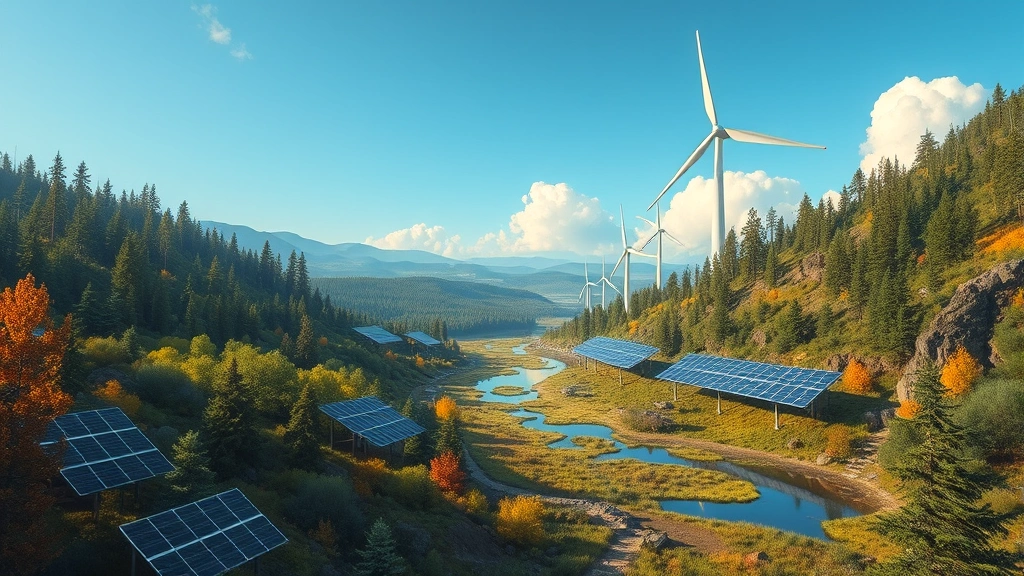
The transition to renewable energy represents a critical growth driver for sustainable economies. Solar and wind technologies have achieved cost parity with fossil fuels in most markets, eliminating the economic argument for continued carbon-intensive energy systems. However, scaling renewable energy requires massive infrastructure investment, grid modernization, and storage technology development—investments that create employment while reducing environmental impacts.
Education and technology transfer accelerate sustainable development, particularly in lower-income nations. Investing in environmental education, clean technology development, and sustainable agriculture increases productivity while reducing environmental pressure. International cooperation through mechanisms like the World Bank‘s environmental programs and UNEP initiatives facilitates knowledge sharing and capital flows toward sustainable development.
Agricultural transformation toward regenerative and agroecological practices simultaneously improves productivity, reduces environmental damage, and enhances farmer resilience. Practices including crop rotation, cover cropping, integrated pest management, and agroforestry increase soil health and carbon sequestration while maintaining yields. Scaling these approaches requires policy support, farmer training, and market development for premium sustainable products.
” alt=”Renewable energy installation and natural landscape integration”>
Beyond GDP: Alternative Growth Metrics
The limitations of GDP as a growth measure have prompted development of alternative frameworks capturing broader welfare dimensions. The Human Development Index incorporates health and education alongside income, revealing that growth doesn’t automatically translate into improved living standards. Bhutan’s Gross National Happiness framework explicitly prioritizes environmental conservation and cultural preservation alongside economic development, demonstrating that alternative growth paradigms are politically viable.
Ecological footprint analysis reveals that current global consumption patterns exceed Earth’s biocapacity by approximately 75 percent, indicating that wealthy nations’ growth remains fundamentally unsustainable. If all humanity consumed at North American levels, approximately five Earths would be required. This constraint means that wealthy nation growth must involve absolute reductions in material throughput—a transition economists call “degrowth” or “post-growth.”
The doughnut economics framework, developed by Kate Raworth, visualizes sustainable development as operating within a safe and just space: above a social foundation meeting human needs but below ecological ceilings representing planetary boundaries. This model reframes growth from linear expansion toward optimization within sustainable boundaries, providing intuitive visualization of how environmental science constrains economic possibilities.
Research from the Ecological Economics Society and institutions like the International Institute for Environment and Development increasingly documents that beyond certain wealth thresholds, additional consumption provides diminishing welfare improvements while generating escalating environmental costs. This finding supports policy transitions toward meeting needs efficiently rather than maximizing consumption volumes.
Sectoral Analysis: Growth in Sustainable Industries
Economic growth increasingly concentrates in sectors aligned with environmental sustainability. Renewable energy, sustainable agriculture, ecological restoration, and green building represent rapidly expanding industries creating employment while reducing environmental pressure. Global renewable energy capacity additions exceeded fossil fuel capacity for the first time in 2020, signaling fundamental energy sector transformation.
The circular economy sector—encompassing recycling, remanufacturing, repair services, and design innovation—represents one of the fastest-growing economic segments. Circular business models often generate higher employment per unit of material processed than linear extraction-based approaches, suggesting that sustainability transitions can enhance rather than reduce job creation.
Ecosystem service industries, including carbon markets, biodiversity credits, and watershed protection payments, represent emerging growth sectors. While imperfect mechanisms, these markets begin translating environmental value into economic signals that guide capital allocation. Expansion of these markets could redirect trillions in capital toward environmental protection.
Sustainable tourism represents another significant growth opportunity, with ecotourism and cultural tourism generating income while incentivizing environmental conservation. Communities protecting forests, coral reefs, and wildlife populations increasingly recognize that conservation generates more sustainable long-term income than extraction-based alternatives.
” alt=”Diverse ecosystem with human communities engaged in sustainable resource management”>
Growth Dynamics in Developing Economies
Lower-income nations face distinct growth challenges reflecting their position within global economic systems and environmental constraints. While wealthy nations achieved development through carbon-intensive industrialization, developing nations must transition directly to sustainable pathways—a more difficult feat given capital constraints and technology access limitations.
However, developing nations possess distinct advantages for sustainable growth. Lower existing infrastructure means that new development can embed sustainability from inception rather than retrofitting existing systems. Abundant natural capital—forests, fisheries, agricultural land—provides foundation for nature-based economies if managed sustainably. Growing renewable energy sectors in countries like Kenya, Brazil, and India demonstrate that clean energy transitions are economically viable even in lower-income contexts.
International climate finance mechanisms attempt to support developing nation transitions, though funding remains far below estimated requirements. The UNFCCC climate agreements commit wealthy nations to supporting developing nation mitigation and adaptation, though implementation lags considerably behind commitments.
Agricultural productivity improvements in developing nations offer significant growth potential while addressing food security and poverty. Sustainable intensification—increasing yields through improved practices rather than expanded land use—can simultaneously support economic growth and environmental conservation. Technology transfer and capacity building remain critical for realizing this potential.
FAQ
What is the primary definition of environment science as it relates to economic growth?
Environment science studies interactions between living organisms and their physical surroundings, encompassing ecology, biogeochemistry, and conservation biology. For economic analysis, this definition matters because all economic activity occurs within and depends upon environmental systems. Growth that degrades these systems inevitably undermines long-term economic viability, making environmental science fundamental rather than peripheral to growth theory.
How do ecosystem services contribute to economic growth?
Ecosystem services—benefits humans derive from natural systems—directly support economic production and welfare. Pollination, water filtration, climate regulation, and nutrient cycling represent essential services without which agriculture, industry, and human survival become impossible. When properly valued, ecosystem services constitute a substantial portion of economic wealth, yet conventional accounting treats them as free until degraded.
Why does GDP fail to capture true economic growth?
GDP measures production volume without distinguishing between activities that enhance welfare and those that merely remedy damage. A factory explosion that requires costly rebuilding registers as economic growth. Resource extraction counts as income rather than capital depletion. Pollution-related health costs appear as medical expenditure growth rather than welfare reduction. These measurement failures cause GDP to overstate growth when environmental degradation occurs simultaneously.
What policy changes would most effectively promote sustainable growth?
Effective policies include carbon pricing to internalize climate costs, natural capital accounting to track resource depletion, circular economy regulations to reduce waste, investment in renewable energy and ecosystem restoration, and educational programs building sustainable practices. No single policy suffices; comprehensive transitions require coordinated policy shifts across energy, agriculture, manufacturing, and consumption systems.
Can economic growth continue indefinitely within planetary boundaries?
Physical growth—increasing material throughput—cannot continue indefinitely given finite planetary resources. However, qualitative growth—improving welfare, capabilities, and efficiency without increasing material consumption—can continue indefinitely. Wealthy nations must transition toward qualitative growth, potentially involving absolute reductions in material throughput while improving living standards through efficiency, equity, and innovation.
How do human-environment interactions shape different growth trajectories?
Different environmental management approaches produce dramatically different long-term outcomes. Societies practicing sustainable resource management maintain productivity indefinitely, while those pursuing extractive approaches experience resource depletion and eventual collapse. Understanding these dynamics allows policymakers to choose growth paths that enhance rather than undermine environmental conditions supporting future prosperity.


