Built Environment’s Impact on Economy: Study Insights
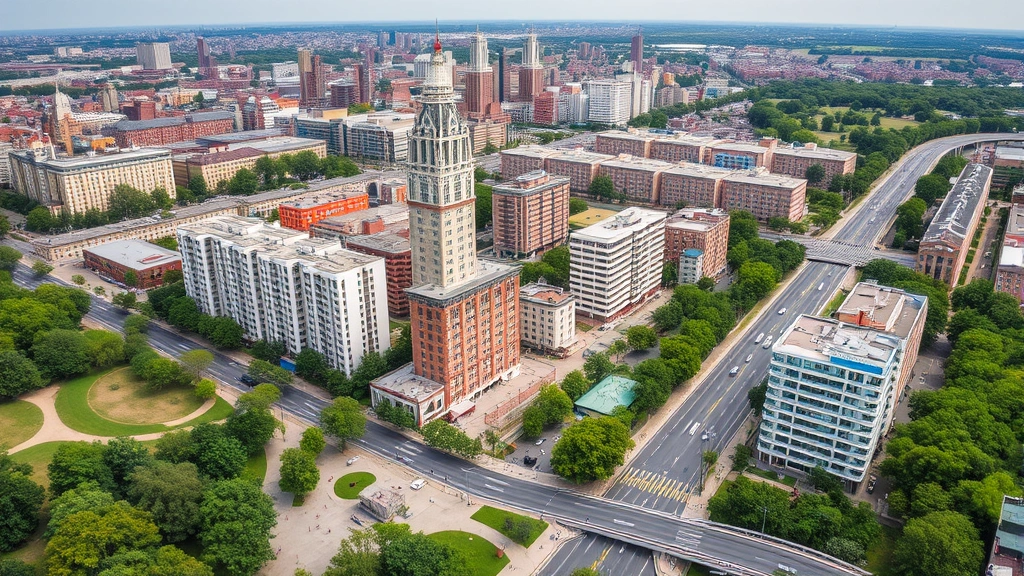
The built environment—encompassing buildings, infrastructure, transportation systems, and urban design—represents one of the most significant economic forces shaping modern societies. As cities expand and development accelerates globally, understanding how the definition of environment science intersects with economic productivity becomes increasingly critical. Recent research demonstrates that the built environment generates trillions in economic value annually while simultaneously creating complex feedback loops that influence inflation, employment, resource allocation, and long-term sustainability.
The relationship between constructed infrastructure and economic performance extends far beyond simple real estate metrics. Buildings and urban systems function as engines of productivity, centers of innovation, and repositories of capital. Yet they also represent humanity’s most visible intervention in natural systems, raising fundamental questions about how environment and society can coexist within planetary boundaries. This comprehensive analysis explores emerging research insights into how the built environment shapes economic outcomes while examining the ecological costs and opportunities embedded within our constructed landscape.
Defining the Built Environment and Economic Scope
The built environment encompasses all human-made physical structures and infrastructure systems that form the backdrop of human activity. This includes residential buildings, commercial real estate, industrial facilities, transportation networks, water and sanitation systems, energy infrastructure, communications networks, and public spaces. Understanding this concept requires recognizing that the built environment represents both tangible assets and systemic frameworks organizing economic life.
From an economic perspective, the built environment constitutes approximately 30-40% of total global capital stock, making it the largest category of fixed assets in most national economies. The construction industry alone employs over 330 million people worldwide, representing roughly 5-10% of global employment. When accounting for design, maintenance, real estate services, and related sectors, built environment-related activities contribute 10-15% of global GDP, rivaling major industrial sectors like manufacturing or agriculture.
The economic significance of the built environment stems from several factors. First, infrastructure and buildings have extraordinarily long lifespans—typically 50-100+ years—creating persistent economic effects across generations. Second, the built environment exhibits characteristics of public goods, with significant positive and negative externalities affecting communities far beyond individual property boundaries. Third, construction and real estate represent major capital-intensive industries with complex supply chains, financing mechanisms, and regulatory frameworks.
Examining types of environment helps clarify how constructed systems interact with natural systems. The built environment can be understood as a distinct environmental category—neither purely natural nor entirely artificial, but rather a hybrid system shaped by human intention yet subject to ecological constraints and processes. This hybrid nature creates unique economic dynamics where market failures, information asymmetries, and long-term uncertainties combine to produce suboptimal outcomes.
Macroeconomic Contributions and GDP Impact
Research from the World Bank indicates that infrastructure quality directly correlates with long-term economic growth, with high-quality infrastructure associated with 1-2 percentage point increases in annual GDP growth rates. Construction and real estate sectors contribute substantially to economic output through multiple channels: direct construction activities, ongoing operational expenses, property transactions, and induced consumption effects.
The built environment’s macroeconomic impact operates through several mechanisms. Investment in construction generates immediate demand for materials, labor, and services, creating multiplier effects throughout the economy. A dollar spent on construction generates $1.50-$2.00 in total economic activity as workers spend wages and suppliers purchase inputs. Over longer timeframes, improved infrastructure raises productivity across all economic sectors by reducing transaction costs, improving connectivity, and enabling specialization.
However, macroeconomic contributions vary substantially based on infrastructure quality and economic context. In developing economies, basic infrastructure investments—roads, electricity, water systems—generate particularly high returns, with benefit-cost ratios often exceeding 10:1. In developed economies with mature infrastructure stocks, marginal returns decline as basic needs are satisfied, though strategic investments in transportation, communications, and energy systems continue generating significant economic benefits.
Recent studies from the International Labour Organization document that construction sector employment multiplies through supporting industries. Each construction worker supports approximately 2-3 additional jobs in manufacturing, transportation, and services. During economic downturns, construction employment exhibits greater volatility than aggregate employment, making the sector economically sensitive but also a potential policy lever for countercyclical stimulus.
Employment and Labor Market Dynamics
The built environment represents one of the most significant employment sectors globally, with direct and indirect employment reaching over one billion workers when including all related activities. Construction employment demonstrates distinctive characteristics compared to other sectors: it exhibits geographic concentration, requires substantial training and skill development, creates both permanent and temporary positions, and shows pronounced cyclicality linked to interest rates and credit availability.
Wage dynamics in built environment sectors reveal important economic patterns. Construction workers typically earn 15-30% premiums compared to average manufacturing wages in developed economies, reflecting skill requirements, physical demands, and occupational hazards. However, wage growth in construction has lagged overall productivity growth in many developed economies, suggesting labor market dynamics increasingly favor capital over labor in this sector.
The relationship between human environment interaction examples includes how employment patterns reshape settlement geography. Real estate development and construction create employment centers that attract migration, generating agglomeration economies. Cities with diverse built environments—mixed-use neighborhoods, varied building types, accessible public transportation—typically exhibit more resilient labor markets with greater employment diversity and lower unemployment rates.
Emerging research highlights how built environment characteristics influence labor productivity. Workers in well-designed office buildings report 10-15% higher productivity, while improved public transportation access correlates with 5-8% wage premiums. These findings suggest that built environment quality represents a significant but often undervalued input into human capital formation and economic productivity.
Infrastructure Investment and Multiplier Effects
Infrastructure investment generates economic multipliers through several channels. Direct multipliers arise from construction employment and material purchases. Indirect multipliers emerge as suppliers purchase inputs from their own suppliers. Induced multipliers result when workers and business owners spend income in the broader economy. Research from the World Bank’s transport infrastructure research indicates total multipliers of 1.5-2.5 for most infrastructure categories, meaning each dollar of infrastructure investment generates $1.50-$2.50 in total economic activity.
However, multiplier effects depend critically on economic context. During periods of full employment and capacity constraints, multipliers approach lower estimates as resources are diverted from other uses. During recessions with substantial idle capacity and unemployment, multipliers approach higher estimates as investment stimulates previously unused resources. This contextual variation explains why infrastructure stimulus proves more effective during downturns but less cost-effective during booms.
The temporal dimension of infrastructure multipliers presents important policy implications. Initial construction-phase multipliers peak within 1-3 years, while long-term productivity benefits accumulate over decades. Transportation infrastructure might generate productivity benefits for 50+ years, creating persistent but gradually declining economic gains. This temporal mismatch between upfront costs and dispersed benefits contributes to systematic underinvestment in infrastructure relative to economically optimal levels.
Different infrastructure types exhibit varying multiplier magnitudes. Transportation infrastructure typically generates multipliers of 1.5-2.0, as improved connectivity reduces transaction costs across all economic sectors. Energy infrastructure multipliers depend on whether investments increase capacity or merely replace aging systems. Water and sanitation infrastructure generates particularly high multipliers in developing economies, with estimates of 2.5-4.0 reflecting substantial health and productivity improvements.
Urban Density and Productivity Clustering
One of the most robust empirical findings in economic research documents that urban agglomeration generates substantial productivity premiums. Workers in dense urban areas earn 20-35% higher wages than comparable workers in rural areas, even accounting for skill differences, education, and occupational composition. These wage premiums reflect productivity advantages stemming from built environment characteristics: reduced spatial friction, knowledge spillovers, specialized service availability, and labor market thickness.
The relationship between built environment density and economic productivity operates through multiple mechanisms. Agglomeration economies arise when firms cluster geographically, reducing input costs through supplier concentration and enabling knowledge transfer among competing firms. Urbanization economies emerge from city size itself, as larger cities support more diverse services and specialized occupations. These economies generate compounding advantages, as successful cities attract additional investment and talent, reinforcing their economic dominance.
However, agglomeration benefits exhibit diminishing returns at very high densities. Cities exceeding certain density thresholds experience congestion costs, housing affordability pressures, and environmental degradation that offset productivity gains. Research suggests optimal urban densities exist between 150-300 people per hectare, though this varies by climate, topography, and development patterns. This finding challenges both urban sprawl and excessive densification, suggesting balanced development approaches optimize economic performance.
The built environment’s role in enabling economic and environmental insights extends through how urban form shapes innovation. Cities with mixed-use neighborhoods, accessible public spaces, and diverse building types facilitate serendipitous encounters and knowledge exchange. These informal interaction patterns contribute to innovation rates that correlate with urban density, with patent generation per capita increasing 2-4 fold in major metropolitan areas compared to rural regions.
Real Estate Markets and Capital Formation
Real estate represents the largest asset class in most developed economies, constituting 40-60% of total national wealth. This enormous capital stock creates complex economic dynamics where real estate prices, construction investment, and credit availability become intertwined with broader macroeconomic performance. Understanding these relationships proves essential for comprehending how the built environment influences economic stability and growth.
Real estate markets exhibit distinctive characteristics distinguishing them from other asset markets. Properties are immobile, heterogeneous, and illiquid, creating information asymmetries and high transaction costs. Real estate typically represents the largest purchase individuals make, requiring substantial leverage and long-term financing. These characteristics make real estate markets prone to boom-bust cycles, where optimistic expectations drive prices above fundamental values, eventually correcting through painful adjustments.
The relationship between real estate cycles and broader economic performance proves substantial and complex. Real estate booms increase construction employment, generate wealth effects encouraging consumption, and improve collateral values supporting additional borrowing. These dynamics amplify economic expansions, making real estate-driven growth appear particularly robust. However, subsequent corrections prove equally dramatic, as collapsing property values reduce collateral, constrain credit availability, and reverse wealth effects, amplifying recessions.
Recent analysis from ecological economics journals documents how real estate markets systematically undervalue environmental amenities and externalities. Properties with superior environmental characteristics—access to green space, clean air, water quality—command price premiums of 5-15%, yet these premiums fail to reflect true environmental values. This market failure contributes to systematic overbuilding in environmentally sensitive areas and underprotection of natural systems.
The built environment’s influence on capital formation extends through real estate’s role as collateral. In developing economies, property ownership represents the primary collateral available for small business loans, making real estate markets critical for entrepreneurship and economic development. Weak property rights and uncertain titling reduce collateral values, constraining credit availability and limiting business expansion. Strengthening real estate institutions thus generates substantial economic benefits beyond direct real estate returns.
Environmental Externalities and Hidden Costs
While the built environment generates substantial economic benefits, it also produces significant negative externalities—costs imposed on society without corresponding compensation. Construction and building operations account for approximately 30-40% of global carbon emissions, 25-30% of waste generation, and substantial water consumption. These environmental costs rarely enter economic calculations, creating systematic underpricing of built environment activities.
The economic concept of externalities proves crucial for understanding why markets systematically overproduce environmentally damaging built environment outcomes. When construction firms do not bear the full environmental costs of their activities, they rationally construct more than the socially optimal amount. Similarly, building operators who do not pay for pollution or resource depletion have insufficient incentives to invest in efficiency improvements. This divergence between private and social costs represents a fundamental market failure.
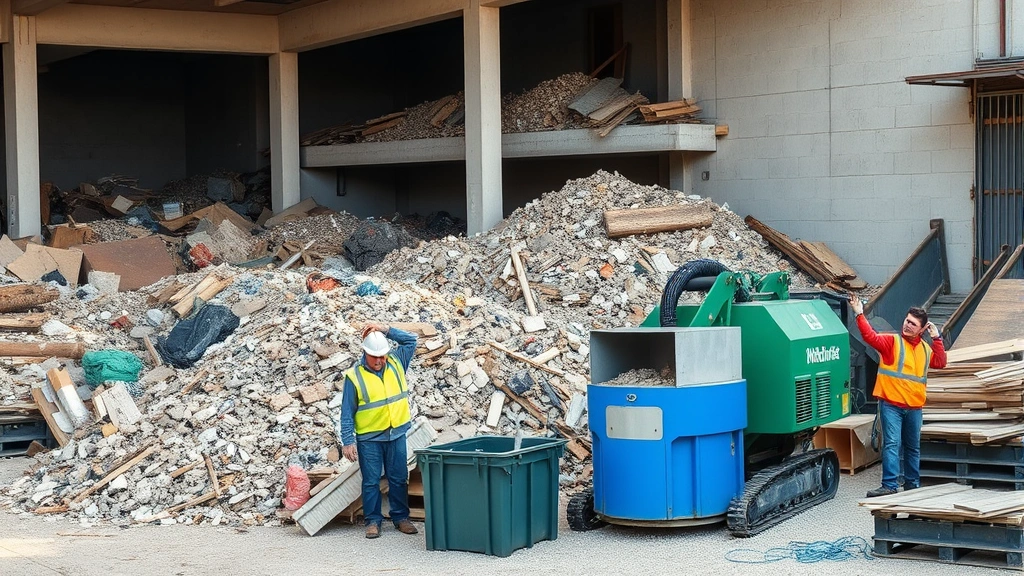
Research from the United Nations Environment Programme quantifies environmental costs of the built environment at 5-15% of construction project costs, yet these costs rarely appear in financial analyses. Material extraction for construction generates habitat loss, soil degradation, and water pollution. Building operations consume 20-30% of global energy, contributing substantially to climate change. End-of-life demolition generates enormous waste streams, with construction waste comprising 25-40% of total solid waste in developed economies.
The temporal dimension of environmental externalities proves particularly significant. Carbon emissions from building operations extend across 50-100 year lifespans, creating persistent climate impacts from today’s construction decisions. Embodied carbon in construction materials creates immediate emissions, while operational carbon accumulates gradually. This temporal distribution means that climate costs of today’s building decisions will be borne primarily by future generations, creating intergenerational equity concerns.
Quantifying environmental externalities in monetary terms remains methodologically challenging but economically essential. Estimates suggest environmental costs of built environment activities range from 5-20% of total economic value generated, depending on methodology and assumptions. These hidden costs mean that apparently profitable developments often generate net losses when environmental impacts are properly accounted for, revealing systematic misallocation of resources.
Sustainable Built Environment Economics
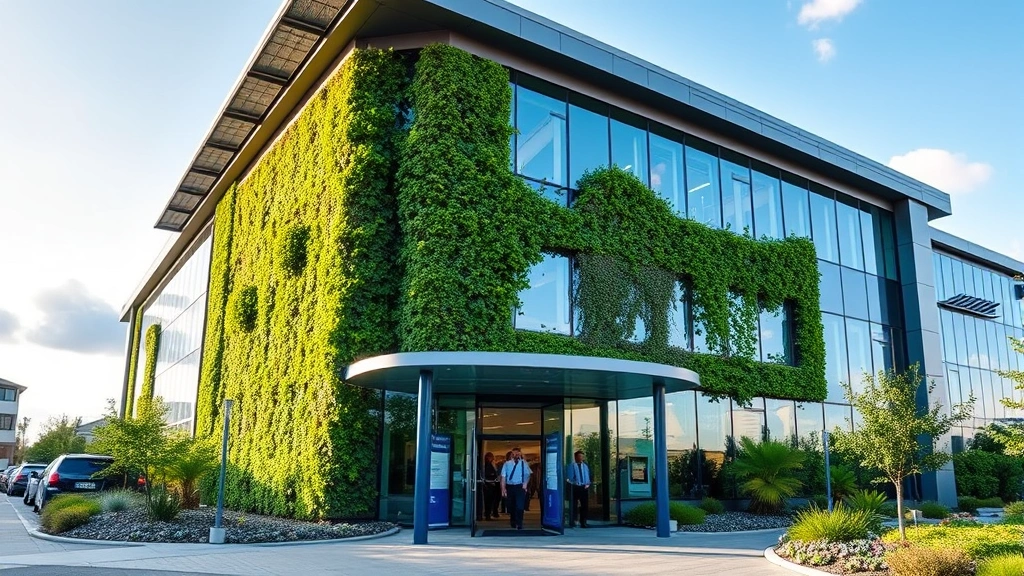
Recognizing environmental externalities has spurred development of sustainable built environment practices, creating new economic opportunities while reducing negative impacts. Green building, sustainable transportation, renewable energy infrastructure, and circular economy principles applied to construction represent growing economic sectors with significant growth potential.
Economic analysis of sustainable built environment investments reveals favorable returns in many cases. Energy-efficient buildings reduce operational costs by 20-40%, generating payback periods of 5-10 years while providing benefits throughout 50+ year lifespans. Green infrastructure—parks, wetlands, permeable pavements—reduces flooding, improves air quality, and enhances property values while costing 10-50% less than conventional gray infrastructure. Renewable energy systems increasingly achieve cost parity with fossil fuel alternatives, with solar and wind becoming the cheapest electricity sources in many regions.
The transition to sustainable built environments creates both challenges and opportunities. Upfront capital costs for sustainable technologies exceed conventional alternatives, requiring financing mechanisms and policy incentives to overcome initial barriers. However, lifecycle cost analyses typically favor sustainable approaches, suggesting market failures prevent adoption of economically superior technologies. Addressing these failures through carbon pricing, regulatory standards, and information provision could unlock substantial economic benefits.
Employment implications of sustainable built environment transitions prove complex. Renewable energy and green building sectors create jobs across manufacturing, installation, and maintenance, potentially offsetting job losses in fossil fuel industries. However, geographic and occupational transitions create adjustment challenges, particularly for workers in declining fossil fuel sectors. Effective policy addresses these transition costs through worker retraining, community economic development, and income support.
The concept of environment awareness increasingly influences built environment economics as consumers, investors, and policymakers recognize sustainability’s importance. Green building certifications (LEED, Passive House, Living Building Challenge) command price premiums of 5-15%, reflecting both real efficiency benefits and consumer preferences for sustainability. Institutional investors increasingly incorporate environmental, social, and governance criteria in real estate decisions, redirecting capital toward sustainable development.
Regional Disparities and Development Inequities
The built environment’s economic impacts distribute unevenly across regions, with profound implications for development trajectories and inequality. Developed economies benefit from mature, high-quality infrastructure networks accumulated over centuries, while developing economies struggle with infrastructure deficits that constrain economic growth. This infrastructure gap represents a major contributor to persistent international inequality.
Infrastructure investment requirements differ dramatically across development levels. Developing countries need approximately $1.5-$2.0 trillion annually in infrastructure investment to achieve sustainable development goals, yet current investment reaches only $1.0-$1.2 trillion. This $500-800 billion annual gap perpetuates infrastructure deficits that constrain productivity, increase business costs, and limit economic opportunities. Closing this gap requires substantial increases in domestic resource mobilization, foreign direct investment, and development assistance.
Within countries, regional disparities in built environment quality reflect and reinforce broader inequalities. Rural areas typically lack adequate transportation, electricity, water, and communications infrastructure, limiting economic opportunities and driving rural-to-urban migration. Yet rapid urbanization without adequate infrastructure planning creates slums and informal settlements where millions lack basic services. This paradox—rural infrastructure deficits driving urban overcrowding—reflects systematic underinvestment in balanced regional development.
The economic geography of the built environment increasingly concentrates economic activity in major metropolitan areas, creating divergent regional trajectories. Prosperous cities attract investment, talent, and innovation, while declining regions struggle with aging infrastructure, population loss, and limited investment. This divergence creates political tensions, as residents in declining regions perceive unfair distribution of development benefits. Addressing these disparities requires strategic infrastructure investments in underserved regions, though returns on such investments may prove lower than in prosperous areas.
Equity considerations in built environment development raise important economic questions. Should infrastructure investment maximize aggregate economic returns, or should it prioritize reducing regional disparities? Should development patterns prioritize density and efficiency, or should they preserve rural communities and lifestyles? These questions lack purely economic answers, as they involve value judgments about distribution, community preservation, and development patterns. Nonetheless, economic analysis can illuminate trade-offs and help identify approaches achieving multiple objectives.
FAQ
What comprises the built environment from an economic perspective?
The built environment includes all human-made physical structures and infrastructure systems: buildings (residential, commercial, industrial), transportation networks, utilities (water, electricity, communications), public spaces, and supporting systems. Economically, it represents the largest category of fixed capital assets, constituting 30-40% of total global capital stock and generating 10-15% of global GDP when including all related activities.
How does infrastructure investment generate economic multipliers?
Infrastructure investment creates multiplier effects through three channels: direct effects (construction employment and material purchases), indirect effects (supplier purchases from their own suppliers), and induced effects (worker and business spending in the broader economy). Total multipliers typically range from 1.5-2.5, meaning each dollar of infrastructure spending generates $1.50-$2.50 in total economic activity. Multiplier size depends on economic context, with larger multipliers during recessions with idle resources and smaller multipliers during booms with capacity constraints.
Why do cities generate productivity premiums?
Urban agglomeration creates productivity advantages through multiple mechanisms: reduced spatial friction lowers transaction costs, knowledge spillovers enable learning from nearby firms, specialized services concentrate in cities serving diverse needs, and thick labor markets enable better matching between workers and jobs. These agglomeration economies generate wage premiums of 20-35% for comparable workers in dense urban areas versus rural locations. However, benefits exhibit diminishing returns at extreme densities, with evidence suggesting optimal urban densities between 150-300 people per hectare.
What environmental costs does the built environment impose?
The built environment generates substantial environmental externalities: construction and operations account for 30-40% of global carbon emissions, 25-30% of waste generation, and significant water consumption. Environmental costs are rarely reflected in financial analyses, representing an estimated 5-20% of total economic value generated. These hidden costs mean apparently profitable developments often generate net losses when environmental impacts are properly accounted for, revealing systematic resource misallocation.
How can sustainable built environment practices improve economics?
Sustainable built environment investments often generate favorable economic returns: energy-efficient buildings reduce operational costs by 20-40% with 5-10 year payback periods, green infrastructure costs 10-50% less than conventional alternatives while providing multiple benefits, and renewable energy increasingly achieves cost parity with fossil fuels. Market failures prevent adoption of economically superior sustainable technologies, suggesting policy interventions (carbon pricing, regulations, information provision) could unlock substantial economic benefits while reducing environmental impacts.
What explains regional infrastructure disparities?
Developing countries face infrastructure deficits of $500-800 billion annually, constraining economic growth and perpetuating poverty. Within countries, rural areas lack adequate infrastructure while rapid urbanization creates overcrowded cities with inadequate services. This paradox reflects systematic underinvestment in balanced regional development. Addressing disparities requires substantial increases in infrastructure investment in underserved regions, though returns may be lower than in prosperous areas, raising equity-efficiency trade-offs requiring value-based policy judgments.


