Built Environment’s Economic Impact: A Comprehensive Study
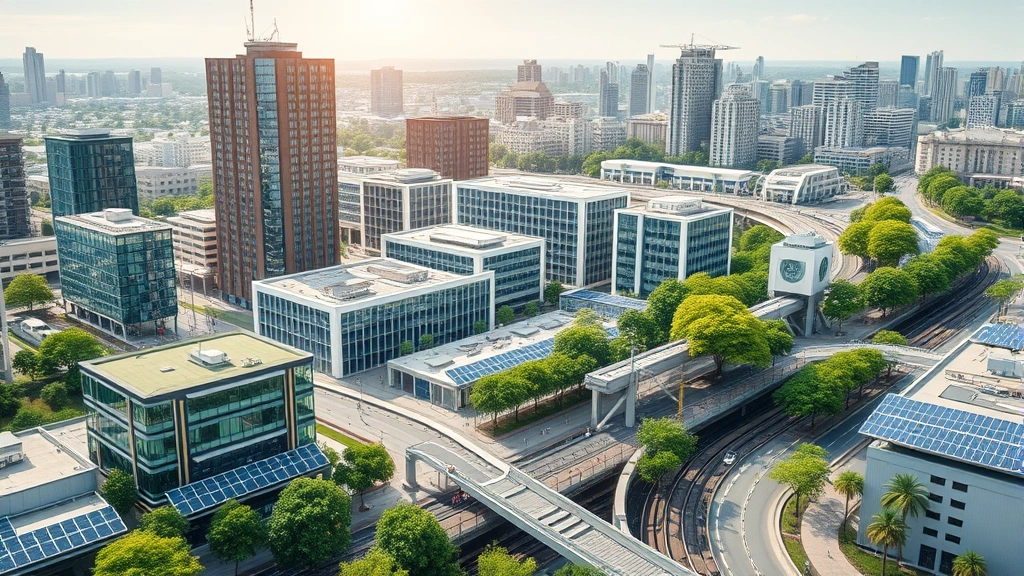
The built environment—comprising buildings, infrastructure, transportation systems, and urban landscapes—represents one of the most significant economic engines in modern societies. This interconnected system of human-made structures doesn’t merely serve functional purposes; it generates trillions in economic value annually while simultaneously shaping employment patterns, investment flows, and productivity metrics across global economies. Understanding the definition of built environment is essential for policymakers, economists, and business leaders seeking to optimize development strategies and create sustainable economic growth.
The economic impact of the built environment extends far beyond construction costs. It encompasses property values, operational expenses, labor markets, consumer spending patterns, and macroeconomic indicators. Recent research demonstrates that the built environment sector accounts for approximately 13% of global GDP, employs over 110 million people worldwide, and influences consumption behaviors affecting nearly every economic sector. This article explores the multifaceted economic dimensions of the built environment, examining how physical infrastructure shapes prosperity, inequality, and long-term economic resilience.
Understanding Built Environment Economics
The built environment encompasses all human-constructed physical infrastructure within which economic activities occur. This includes residential buildings, commercial properties, industrial facilities, transportation networks, utilities, parks, and public spaces. To fully grasp its economic significance, we must examine the physical environment within which these structures exist and how human interventions create economic value.
Economic analysis of the built environment requires understanding several interconnected components. First, there’s the capital stock—the accumulated value of all constructed assets, which in developed nations represents 50-60% of total national wealth. Second, there’s the flow of economic activity generated through construction, maintenance, operation, and utilization of these structures. Third, there are the externalities—both positive and negative—that built environments generate for surrounding communities and ecosystems.
The built environment functions as both an economic input and output. As an input, it provides the physical infrastructure necessary for production, distribution, and consumption of goods and services. As an output, investment in built environment represents a significant component of capital formation and aggregate demand in modern economies. This dual nature makes understanding its economic impact crucial for comprehensive economic policy.
Construction Industry and Economic Multipliers
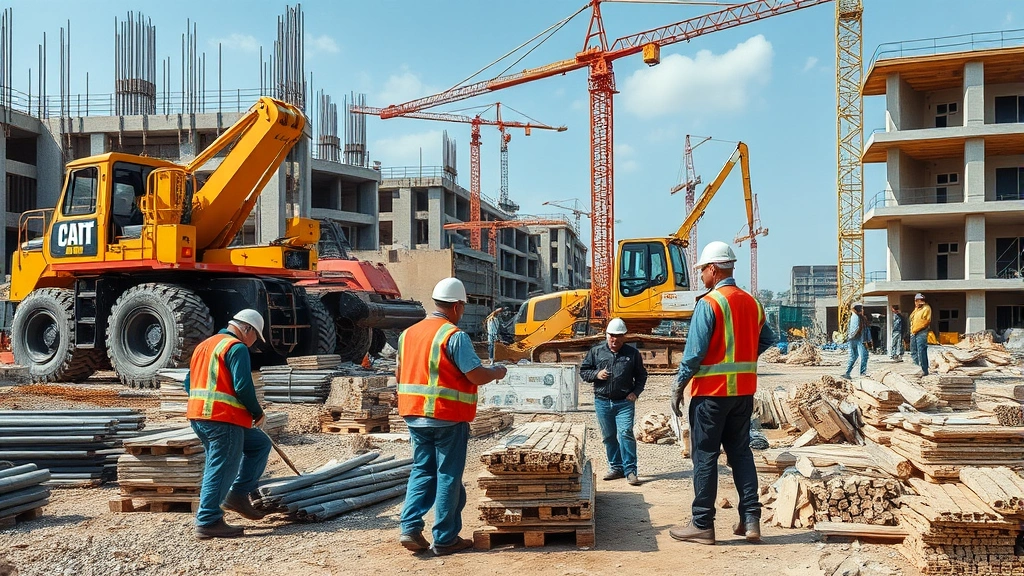
The construction sector serves as a primary economic driver, with global construction output valued at approximately $13.5 trillion annually. This industry demonstrates particularly strong economic multiplier effects—each dollar spent on construction generates additional economic activity through supply chains, labor compensation, and induced consumption.
Construction multipliers vary significantly by project type and geographic context. Infrastructure projects typically generate multipliers between 1.5 and 2.5, meaning each dollar invested produces $1.50 to $2.50 in total economic activity. Building construction generates slightly lower multipliers (1.3-1.8) due to higher import content in materials. These multipliers reflect the labor-intensive nature of construction and the substantial local procurement requirements.
The employment effects are particularly pronounced. Construction employs approximately 7% of the global workforce directly, with indirect employment reaching 15-20% when considering supply chain positions. A single large infrastructure project can generate hundreds or thousands of jobs across multiple skill levels, from unskilled laborers to specialized engineers and project managers. This employment diversity makes construction investment an attractive economic stimulus tool during economic downturns.
Material procurement generates substantial economic activity beyond direct construction spending. Cement production alone generates $250 billion annually in global economic value, while steel, lumber, glass, and other building materials support millions of additional jobs. This supply chain complexity means construction investment distributes economic benefits across numerous industries and geographic regions.
Real Estate Markets and Wealth Creation
Real estate represents the largest asset class globally, valued at approximately $280 trillion—more than three times global GDP. This immense capital stock generates substantial wealth for property owners while serving as collateral for credit creation, fueling broader economic expansion. The built environment, through real estate markets, fundamentally shapes wealth distribution and intergenerational economic mobility.
Residential property ownership constitutes the primary wealth-building mechanism for middle-class households in most developed economies. In the United States, home equity accounts for approximately 30% of household wealth, while globally, residential real estate represents 60-70% of total real estate value. This concentration means housing market performance directly impacts household balance sheets, consumer confidence, and discretionary spending patterns.
Commercial real estate generates returns through rental income and property appreciation, attracting institutional investors, pension funds, and sovereign wealth funds. These capital flows create demand for professional services, including legal, accounting, valuation, and property management services. The human environment interaction through real estate markets demonstrates how physical space allocation profoundly influences economic opportunities and social outcomes.
Property price dynamics reveal important economic relationships. Regions with robust environment and society integration typically experience more stable property values and stronger long-term appreciation. Conversely, areas with environmental degradation, poor infrastructure, or inadequate public services face declining property values, reducing wealth accumulation opportunities for residents.
Urban Infrastructure Investment Returns
Urban infrastructure investment generates some of the highest economic returns of any public investment category. The World Bank estimates that infrastructure investment produces economic returns of 15-40% annually, depending on project type, implementation quality, and local conditions.
Transportation infrastructure particularly demonstrates strong economic benefits. Efficient public transit systems reduce commute times, increase labor market accessibility, and decrease transportation costs for households and businesses. Studies indicate that improved transit access increases property values by 5-15% within walking distance of transit stations, creates agglomeration benefits that increase productivity, and reduces traffic congestion costs estimated at $160 billion annually in the United States alone.
Water and sanitation infrastructure generates substantial economic returns through disease prevention, increased agricultural productivity, and reduced healthcare expenditures. The World Bank estimates that every dollar invested in water and sanitation infrastructure returns $4-12 in economic benefits through improved health, increased productivity, and agricultural gains.
Energy infrastructure—particularly renewable energy systems—increasingly dominates investment priorities. Solar and wind infrastructure now account for over 50% of new electricity generation capacity in many developed nations. These investments generate employment, reduce operational costs compared to fossil fuels, and create energy security benefits that reduce economic vulnerability to price fluctuations and supply disruptions.
Digital infrastructure—broadband networks, data centers, and telecommunications systems—represents a rapidly growing category of built environment investment. High-speed internet access increases business productivity, enables remote work, and expands market access for rural enterprises. Economic analysis suggests broadband investment generates multipliers of 2.0-3.0, among the highest of any infrastructure category.
Employment and Labor Market Dynamics
The built environment sector employs over 110 million people globally across construction, real estate, property management, and related services. This employment encompasses a diverse range of skills and compensation levels, from entry-level construction workers to specialized engineers and property developers.
Construction employment demonstrates countercyclical characteristics valuable for economic stabilization. During economic downturns, construction employment typically declines more severely than overall employment, but also recovers quickly when conditions improve. This volatility reflects construction’s sensitivity to interest rates, credit availability, and business confidence. Policymakers leverage this characteristic by using infrastructure investment as countercyclical stimulus during recessions.
Wage structures in built environment sectors typically exceed average wages, particularly for skilled trades. Electricians, plumbers, and HVAC technicians earn 20-40% above median wages in most developed economies, reflecting skill requirements and apprenticeship investments. This wage premium makes construction careers attractive for workers seeking middle-class incomes without college degrees, contributing to economic mobility and reducing income inequality.
The built environment generates substantial service employment beyond construction itself. Property management, maintenance, cleaning, security, and facility operations employ millions globally. These services are labor-intensive, difficult to automate, and provide employment opportunities for workers with varying educational backgrounds. Property service employment typically pays 10-20% above minimum wages, creating pathways to economic self-sufficiency.
Environmental Costs and Economic Externalities
While the built environment generates substantial economic benefits, it also produces significant negative externalities—costs borne by society rather than priced into economic transactions. The construction and operation of built environment structures accounts for approximately 40% of global carbon emissions, 35% of waste generation, and 25% of water consumption.
These environmental costs impose substantial economic burdens. Climate change damages attributable partly to built environment emissions are projected to cost 1-5% of global GDP annually by 2050 without mitigation. Water scarcity created partly through construction activities costs approximately $260 billion annually in lost agricultural productivity and industrial output. Air pollution from buildings and transportation infrastructure costs $2.4 trillion annually in health expenditures and lost productivity.
Ecological economics frameworks demonstrate that environmental externalities represent genuine economic costs, not merely environmental concerns. When properly valued, these externalities reduce the net economic benefit of built environment development significantly. Some analyses suggest that when environmental costs are fully accounted for, the net economic contribution of poorly planned built environment development becomes negative.
The concept of economic and ecological integration recognizes that long-term economic prosperity requires environmental sustainability. Built environment development that degrades natural capital—through habitat destruction, pollution, or resource depletion—ultimately reduces long-term economic potential by undermining the natural systems upon which human prosperity depends.
Sustainable Built Environment Economics
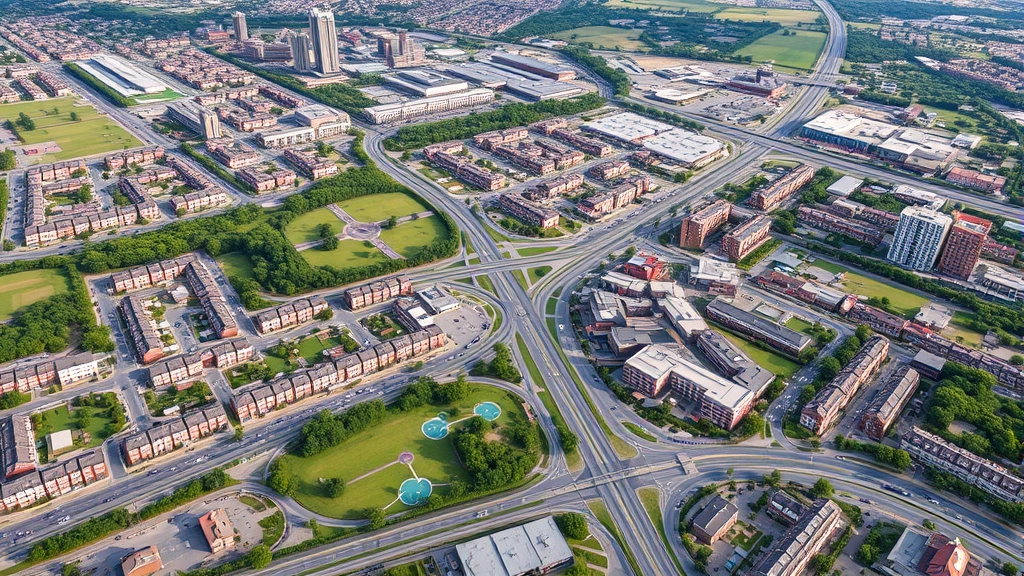
Sustainable built environment development integrates environmental protection with economic optimization, creating structures that generate long-term economic returns while maintaining ecological integrity. This approach increasingly dominates development strategy as evidence accumulates that environmental degradation imposes substantial economic costs.
Green building practices—incorporating energy efficiency, sustainable materials, and ecological design—demonstrate compelling economic returns. LEED-certified buildings reduce operating costs by 20-30% through energy and water savings, experience 3-5% higher occupancy rates, and command 3-5% rental premiums. Over a 30-year building lifecycle, these operational savings often exceed the modest green building premium (typically 1-3% of construction costs).
Renewable energy infrastructure increasingly demonstrates superior economics compared to fossil fuel alternatives. Solar photovoltaic costs have declined 90% over the past decade, making solar cheaper than coal or natural gas in most markets. Wind energy costs have declined 70%, approaching grid parity in optimal locations. These cost reductions mean renewable energy infrastructure now represents the lowest-cost electricity source in most regions, making environmental sustainability economically optimal.
Nature-based infrastructure—parks, wetlands, forests, and green corridors—generates economic returns through recreation, stormwater management, temperature regulation, and biodiversity protection. Urban parks increase nearby property values by 5-15%, reduce stormwater management costs by 25-50%, and provide health benefits estimated at $10,000-$15,000 per capita annually through recreation and mental health improvements.
Circular economy principles applied to built environment development create additional economic value. Construction waste recycling, material reuse, and modular building design reduce material costs, create new business opportunities, and extend building lifecycles. Some analyses suggest circular economy approaches could reduce built environment lifecycle costs by 20-40% while eliminating waste.
Regional Disparities and Economic Inequality
Built environment development patterns profoundly influence regional economic inequality. Regions with robust built environment investment experience accelerating economic growth, while regions with inadequate infrastructure face economic stagnation and population decline. This dynamic creates self-reinforcing patterns of regional divergence.
Developed nations have invested trillions in built environment infrastructure over decades, creating competitive advantages in productivity, quality of life, and business environment. Developing nations, constrained by limited capital and competing priorities, often lack adequate infrastructure, limiting economic potential. The World Bank estimates that infrastructure deficits in developing nations cost approximately 2-3% of annual GDP growth, a cumulative burden that compounds over decades.
Within developed nations, regional disparities reflect historical investment patterns. Prosperous metropolitan regions benefit from agglomeration effects—concentrated economic activity, specialized labor pools, and knowledge spillovers—that create self-reinforcing economic growth. Declining regions, having received limited recent investment, struggle to attract businesses and talent, creating downward spirals of declining property values, reduced tax revenues, and deteriorating services.
These patterns create significant equity concerns. Individuals born in well-developed regions enjoy superior educational facilities, transportation access, employment opportunities, and quality of life compared to those in underdeveloped regions. This geographic inequality becomes increasingly difficult to overcome through individual effort, as regional economic potential constrains opportunity regardless of personal capability.
Addressing regional inequality requires substantial built environment investment in underserved areas. However, such investment faces economic challenges—lower returns on investment in areas with limited economic activity, difficulty attracting private capital, and political obstacles to public spending redistribution. Solving regional inequality through built environment development remains one of contemporary economics’ most significant challenges.
FAQ
What exactly is included in the definition of built environment?
The built environment encompasses all human-constructed physical infrastructure: residential and commercial buildings, transportation systems, utilities, parks, industrial facilities, and public spaces. It represents the physical manifestation of human economic and social organization, distinct from the natural environment but inevitably interconnected with it.
How much of global GDP does the built environment represent?
The built environment sector accounts for approximately 13% of global GDP directly through construction and real estate activities. When including indirect effects through employment, consumption, and economic activity dependent on built environment infrastructure, the total contribution reaches 25-30% of global economic output.
Why do construction projects generate economic multipliers?
Construction projects generate multipliers because construction spending distributes income to workers and suppliers, who then spend this income on goods and services, creating additional economic activity. This ripple effect—where initial spending generates secondary and tertiary spending—creates total economic impact exceeding the initial investment.
How does built environment investment compare to other public spending in terms of economic returns?
Infrastructure investment typically generates higher returns than other public spending categories. Infrastructure returns of 15-40% annually exceed returns from most social programs (5-15%) or defense spending (0-5%). This makes infrastructure investment economically efficient, though returns vary substantially by project type and implementation quality.
Can sustainable built environment development be economically competitive with conventional development?
Yes, increasingly sustainable development demonstrates superior economics. Green buildings reduce operating costs by 20-30%, renewable energy has become the cheapest electricity source, and nature-based infrastructure provides superior cost-benefit ratios compared to conventional approaches. Environmental sustainability and economic efficiency increasingly align rather than conflict.
How does built environment quality affect economic inequality?
Built environment quality profoundly influences inequality through multiple mechanisms: property value impacts on household wealth, employment opportunities in developed regions, quality of life differences affecting human capital development, and business environment effects on entrepreneurship and productivity. Unequal built environment investment perpetuates and amplifies economic inequality across generations.
What role does the built environment play in climate change economics?
The built environment accounts for approximately 40% of global carbon emissions through construction materials production, building operations, and transportation infrastructure. Decarbonizing the built environment represents essential climate strategy, requiring substantial investment in energy efficiency, renewable energy, and sustainable materials—investments that increasingly demonstrate superior economics compared to conventional approaches.


