

Can Ecosystems Boost the Economy? Research Insights
The relationship between natural ecosystems and economic prosperity has evolved from theoretical speculation to empirical reality. Contemporary research demonstrates that healthy ecosystems generate substantial economic value through services that underpin human productivity, resilience, and long-term growth. This paradigm shift challenges conventional economic models that treat nature as an infinite resource rather than a finite capital asset requiring stewardship.
Ecosystem services—the benefits humans derive from natural systems—represent a critical but often invisible foundation of economic activity. From pollination and water purification to climate regulation and carbon sequestration, these services maintain the conditions necessary for commerce, agriculture, and human settlement. When quantified through rigorous economic analysis, their contribution rivals or exceeds that of traditional industrial sectors.
Understanding this connection requires examining how ecological health translates into measurable economic outcomes, exploring the mechanisms through which degraded ecosystems impose costs on society, and identifying policy frameworks that align conservation with prosperity.
Ecosystem Services and Economic Value
Ecosystem services encompass four primary categories that directly or indirectly support economic activity. Provisioning services include tangible products such as timber, fish, freshwater, and agricultural crops. These represent the most immediately recognized economic contributions, yet they constitute only one dimension of ecological value. A forest, for instance, generates revenue through timber harvesting, but this single-use perspective dramatically underestimates its total economic worth.
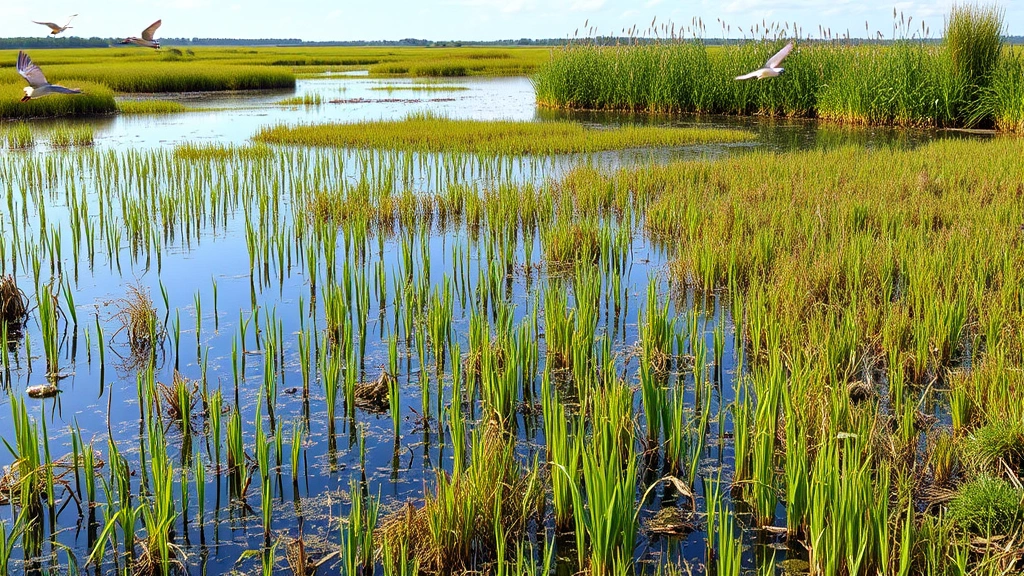
Regulating services maintain conditions essential for life and commerce. Wetlands filter pollutants from water, forests regulate climate through carbon storage and transpiration, and coral reefs protect coastal communities from storm surge. These services prevent costly infrastructure damage, reduce public health expenditures, and enable agricultural productivity. Research from the United Nations Environment Programme indicates that natural water filtration by ecosystems saves municipalities billions in water treatment costs annually.
Supporting services enable all other ecosystem functions: nutrient cycling, soil formation, and primary production. While less visible than provisioning services, they remain economically fundamental. Soil degradation alone costs the global economy approximately $400 billion annually in reduced agricultural productivity.
Cultural services—recreation, aesthetic value, spiritual significance, and educational opportunities—generate tourism revenue and enhance quality of life. Mountain ecosystems, coastal areas, and forests attract billions in annual tourism spending, supporting employment and local economies.
The interconnection between these service categories demonstrates why siloed economic analysis fails to capture ecological contributions. A mangrove forest simultaneously provides fish nursery habitat (provisioning), storm protection (regulating), coastal stabilization (supporting), and ecotourism opportunities (cultural).

Quantifying Nature’s Contribution to GDP
Traditional GDP measurements exclude ecosystem service flows, creating a systematic undervaluation of natural capital. Pioneering research by ecological economists has developed methodologies to assign economic values to these services, revealing their staggering magnitude.
A landmark 1997 study estimated global ecosystem services at $33 trillion annually—nearly double the world’s GDP at that time. While subsequent research has refined these estimates, the fundamental conclusion remains: natural systems contribute more economic value than most recognize. Recent analyses suggest that ecosystem services represent 50-80% of total economic value in developing nations, where populations depend more directly on natural resources.
Pollination services alone, essential for one-third of global food production, are valued at $15-20 billion annually. Coral reef ecosystems provide $375 billion in annual economic benefits through fisheries, tourism, and coastal protection. Tropical forests contribute an estimated $2-5 trillion in carbon sequestration services, with substantial implications for climate stability and avoided climate damage costs.
The World Bank’s extensive research on natural capital accounting demonstrates that countries incorporating ecosystem values into national accounting frameworks reveal starkly different economic pictures than conventional GDP measures. Nations depleting fisheries, forests, or freshwater appear prosperous by traditional metrics while actually experiencing capital depletion.
Valuation methodologies vary in sophistication. Market-based approaches assign prices based on actual transactions for ecosystem products. Cost-based approaches estimate the expense of replacing ecosystem services with technological alternatives—water treatment plants replacing wetland filtration, for example. Revealed preference methods infer value from human behavior, such as property price premiums near natural areas. Stated preference approaches survey willingness to pay for environmental amenities.
These diverse methods, though imperfect, consistently demonstrate that ecosystem conservation often represents superior economic returns compared to conversion to alternative land uses. A forest generating $2,000 annually per hectare through sustainable harvesting and tourism typically provides greater long-term value than agricultural conversion generating short-term gains followed by soil degradation and declining productivity.
Cost of Ecosystem Degradation
Economic analysis of ecosystem degradation reveals cascading costs that far exceed the immediate financial gains from resource extraction or land conversion. These costs manifest through multiple channels: reduced productivity, increased disaster vulnerability, health impacts, and foregone future benefits.
Deforestation exemplifies this dynamic. While timber harvesting generates immediate revenue, forest loss imposes substantial costs through soil erosion, hydrological disruption, reduced carbon sequestration, biodiversity loss, and climate change acceleration. Studies estimate that permanent forest conversion costs $2,000-5,000 per hectare in forgone ecosystem services—expenses borne by society rather than timber companies.
Wetland destruction provides another instructive case. Historically viewed as wastelands suitable for development, wetlands are now understood as irreplaceable economic assets. Destruction of one hectare of wetland eliminates services worth $10,000-15,000 annually in water filtration, flood mitigation, and fisheries support. Hurricane damage in wetland-depleted regions demonstrates this vividly: communities lacking mangrove protection or coastal marsh buffers experience exponentially greater storm damage than protected areas.
Agricultural soil degradation imposes escalating costs as productivity declines. Global soil loss reduces agricultural productivity by approximately 0.3% annually, requiring increased fertilizer inputs, irrigation, and land expansion to maintain yields. The economic cost of this degradation—$400 billion annually—represents a hidden tax on food systems.
Biodiversity loss, often dismissed as an environmental concern disconnected from economics, directly impacts economic resilience. Monoculture agricultural systems, while initially productive, prove economically fragile when pest outbreaks or disease emerge. Diverse ecosystems provide genetic resources for crop improvement, pharmaceutical development, and adaptive capacity. The economic value of genetic diversity preserved in natural ecosystems exceeds trillions of dollars in potential agricultural and medical applications.
Water system degradation illustrates how ecosystem damage creates economic cascades. Polluted or depleted aquifers impose costs through increased water treatment, reduced agricultural productivity, and restricted industrial operations. India’s groundwater depletion, driven by unsustainable extraction, threatens economic productivity across agricultural, industrial, and municipal sectors simultaneously.
Natural Capital Accounting
Recognizing ecosystem services as economic assets requires fundamentally restructuring how societies measure economic performance. Natural capital accounting frameworks extend national accounting systems to incorporate environmental assets and their changes.
This approach treats ecosystems analogously to human-made capital: valuable assets that generate income streams and require maintenance investment. A forest represents capital stock; harvesting represents income; degradation represents capital depletion. This perspective reveals that many ostensibly prosperous nations are actually experiencing capital depletion that conventional GDP masks.
The World Bank has pioneered natural capital accounting, demonstrating that adjusted net savings measures—which subtract natural capital depreciation from conventional savings—provide more accurate assessments of economic sustainability. Countries with positive GDP growth but negative adjusted net savings are consuming capital unsustainably, reducing future productive capacity.
Implementation of natural capital accounting requires developing standardized valuation methodologies, establishing baseline ecosystem assessments, and tracking changes over time. Several nations, including Costa Rica, India, and various European countries, have integrated natural capital accounting into policy frameworks, revealing priorities that conventional economics obscures.
The System of Environmental-Economic Accounting (SEEA), developed by the UN, provides internationally standardized approaches for integrating environmental and economic data. Adoption of SEEA principles enables cross-national comparisons and identifies how ecosystem changes affect economic trajectories.
Natural capital accounting reveals that investments in ecosystem restoration often generate superior returns compared to conventional infrastructure. Wetland restoration costs $10,000-50,000 per hectare but generates annual benefits of $10,000-15,000 indefinitely. Conventional cost-benefit analysis demonstrates positive returns within 5-10 years, with benefits continuing for centuries.
Case Studies in Ecological Economics
Empirical research demonstrates the economic value of ecosystem conservation across diverse contexts and geographies.
Costa Rica’s Payment for Ecosystem Services Program pioneered market-based conservation mechanisms. By compensating landowners for maintaining forest cover, the program reversed deforestation while generating economic benefits. Participants receive approximately $60-100 per hectare annually—modest compensation that nevertheless proves economically rational compared to agricultural alternatives in marginal lands. The program simultaneously generates tourism revenue (ecotourism represents 25% of Costa Rica’s export earnings) and maintains hydrological services supporting hydroelectric generation and water supply.
New York City’s Watershed Protection exemplifies how ecosystem conservation provides cost-effective alternatives to technological infrastructure. Rather than constructing $8 billion water treatment facilities, the city invested $1.5 billion in watershed ecosystem restoration and protection. This approach simultaneously provides superior water quality, maintains biodiversity, supports recreation and tourism, and costs approximately one-sixth as much as technological alternatives.
Indonesia’s Mangrove Restoration demonstrates economic returns from ecosystem rehabilitation. Mangrove ecosystems provide fish nursery habitat, coastal protection, and carbon sequestration. Restoration projects costing $200-500 per hectare generate benefits exceeding $2,000 annually through fisheries enhancement, storm protection, and carbon credit potential.
Kenya’s Pastoralist Biodiversity Conservation shows how ecosystem management aligns with cultural practices and economic development. Pastoral systems maintaining wildlife habitat generate tourism revenue exceeding pastoral product value while preserving ecosystem function. Communities receiving revenue-sharing from wildlife tourism maintain conservation practices that conventional development approaches might eliminate.
Germany’s Renewable Energy Integration demonstrates how ecosystem services enable economic transitions. Maintaining wetland and forest ecosystems facilitates renewable energy infrastructure development through groundwater recharge (supporting hydroelectric generation) and wind resource availability patterns influenced by vegetation patterns.
Policy Integration and Market Mechanisms
Translating ecosystem service values into economic policy requires mechanisms that internalize environmental costs and reward conservation. Multiple approaches have emerged, each with distinct advantages and limitations.
Payment for Ecosystem Services (PES) directly compensates landowners for maintaining ecosystem functions. These programs range from government-funded initiatives to market-based mechanisms where beneficiaries pay conservation practitioners. PES succeeds when payment levels exceed opportunity costs of alternative land uses and when enforcement prevents program participants from claiming credit for conservation they would perform anyway.
Environmental Taxes impose costs on activities degrading ecosystems, creating economic incentives for conservation. Carbon taxes, water pollution fees, and resource extraction taxes align private costs with social costs. Effectiveness depends on tax levels sufficient to change behavior and revenue recycling through reduced distortionary taxes or conservation investments.
Tradeable Permits establish ecosystem service markets where participants buy and sell conservation rights. Wetland mitigation banking, carbon credit markets, and biodiversity offset programs create financial incentives for ecosystem restoration while allowing flexibility in where conservation occurs. These mechanisms work best when property rights are clearly defined, monitoring is rigorous, and additionality standards ensure credits represent genuine conservation gains beyond baseline expectations.
Green Bonds and Conservation Finance mobilize capital for ecosystem restoration by securitizing future ecosystem service flows. These instruments attract investors seeking both financial returns and environmental impact, expanding conservation funding beyond traditional government budgets.
Integrated Land-Use Planning incorporates ecosystem service values into spatial planning decisions. Rather than treating conservation and development as opposing land uses, integrated approaches identify where ecosystem services provide greatest economic value and ensure development occurs in locations where ecosystem loss imposes minimal economic costs.
Effective policy integration requires overcoming political economy obstacles: entrenched interests benefiting from ecosystem degradation, short-term budget constraints conflicting with long-term ecosystem investments, and jurisdictional misalignment between ecosystem boundaries and political units. ecological economics research increasingly emphasizes institutional design enabling coordination across these barriers.
Future Economic Models
Emerging economic frameworks attempt to move beyond incremental ecosystem service valuation toward fundamental restructuring of economic theory and practice around ecological constraints.
Circular Economy Models conceptualize economic activity as regenerative rather than extractive. Rather than linear production-consumption-disposal patterns, circular approaches minimize resource throughput by extending product lifecycles, recovering materials, and designing for regeneration. These models recognize that ecosystem services depend on material cycling, making circular approaches economically rational rather than merely environmentally virtuous.
Regenerative Economics goes further, proposing economic activity that actively enhances ecosystem function. Agricultural systems building soil carbon and biodiversity, manufacturing processes restoring water quality, and development patterns enhancing habitat represent economic activities that generate ecosystem service increases alongside conventional economic value.
Doughnut Economics proposes replacing growth maximization with sufficiency frameworks: ensuring all humans access resources meeting basic needs (the doughnut’s inner ring) while remaining within planetary boundaries (the outer ring). This framework acknowledges that beyond sufficiency levels, additional consumption generates declining wellbeing while accelerating ecological damage.
Stakeholder Capitalism expands corporate accountability beyond shareholder returns to include ecosystem and community impacts. This approach recognizes that long-term business success depends on healthy ecosystems and functioning communities—economic interests align with ecosystem stewardship rather than opposing it.
Bioregional Economics proposes organizing economic activity around ecological units (watersheds, ecosystems, bioregions) rather than political boundaries. This alignment reduces externalities, improves feedback between economic activity and ecological consequences, and enables adaptive management.
These emerging frameworks increasingly influence policy and business practice. The European Union’s circular economy action plan, corporate net-positive biodiversity commitments, and global net-zero emissions pledges reflect this shift toward ecosystem-centered economic models.
Research from the International Human Dimensions Programme demonstrates that transitions toward ecosystem-centered economics prove politically feasible when supported by transparent communication about economic benefits, equitable distribution of transition costs, and stakeholder participation in design.
The convergence of ecological necessity and economic rationale creates unprecedented opportunity for systemic economic transformation. Ecosystem restoration generates employment, builds infrastructure resilience, and creates markets for sustainable products and services. Analysis by the UNEP indicates that transitioning toward ecosystem-centered economics could generate 24 million jobs globally while reducing ecosystem degradation.
Understanding how ecosystems boost the economy requires abandoning false dichotomies between environmental protection and economic development. Rigorous economic analysis reveals that healthy ecosystems represent superior economic assets compared to degraded ones, that ecosystem restoration generates returns exceeding technological alternatives, and that long-term economic prosperity depends on maintaining ecosystem function. The emerging evidence base supporting this conclusion has evolved from theoretical possibility to empirical certainty, making the economic case for ecosystem conservation increasingly compelling to policymakers, investors, and business leaders.
FAQ
How much do ecosystem services contribute to global GDP?
Ecosystem services contribute an estimated $125-145 trillion annually in economic value, though estimates vary based on valuation methodologies. This represents approximately 1.5-2 times global GDP, underscoring nature’s fundamental economic importance. The contribution proves particularly significant in developing nations where populations depend more directly on natural resources.
Can ecosystem service values be accurately quantified?
Valuation methodologies continue evolving, with no perfect approach. Market-based, cost-based, and preference-based methods each provide insights while acknowledging uncertainty. Despite methodological limitations, consistent findings across diverse approaches indicate that ecosystem conservation generates substantial economic value, even using conservative estimates that likely undervalue services.
Do ecosystem conservation investments provide positive economic returns?
Research demonstrates that ecosystem restoration and conservation typically generate returns exceeding conventional investments over long time horizons. Wetland restoration, forest protection, and mangrove conservation all show positive return on investment within 5-15 years, with benefits continuing indefinitely. The challenge involves financing initial investments and overcoming political economy obstacles favoring short-term extraction.
How does ecosystem degradation affect economic growth?
Ecosystem degradation imposes costs through reduced agricultural productivity, increased disaster vulnerability, health impacts, and foregone future benefits. Adjusted net savings measures incorporating ecosystem depreciation reveal that many ostensibly prosperous nations experience negative economic growth when environmental costs are included, indicating unsustainable capital depletion.
What policies most effectively incorporate ecosystem values into economic decisions?
Effective approaches combine multiple mechanisms: natural capital accounting revealing true economic values, payment for ecosystem services aligning private incentives with conservation, environmental taxes internalizing ecosystem damage costs, and integrated land-use planning incorporating ecosystem services into development decisions. Success requires overcoming political economy obstacles through transparent communication about economic benefits and equitable distribution of transition costs.