
Creating a Conducive Learning Environment: Expert Tips for Economic and Ecological Integration
A conducive learning environment extends far beyond classroom walls and desk arrangements. In the context of modern education addressing economic sustainability and ecological awareness, creating spaces where learners can synthesize complex information about environmental science definitions and economic systems requires intentional design, psychological safety, and structural support. The intersection of pedagogy, environmental economics, and ecosystem management demands learning environments that accommodate multidisciplinary thinking and foster critical engagement with real-world challenges.
The economic implications of education quality are substantial. According to research from the World Bank, educational environments that promote deep learning contribute to long-term economic productivity and informed decision-making regarding natural resource management. When students understand how humans affect the environment through properly designed learning experiences, they develop the analytical capacity to evaluate trade-offs between economic growth and ecological preservation—a critical competency for future leaders in both sectors.
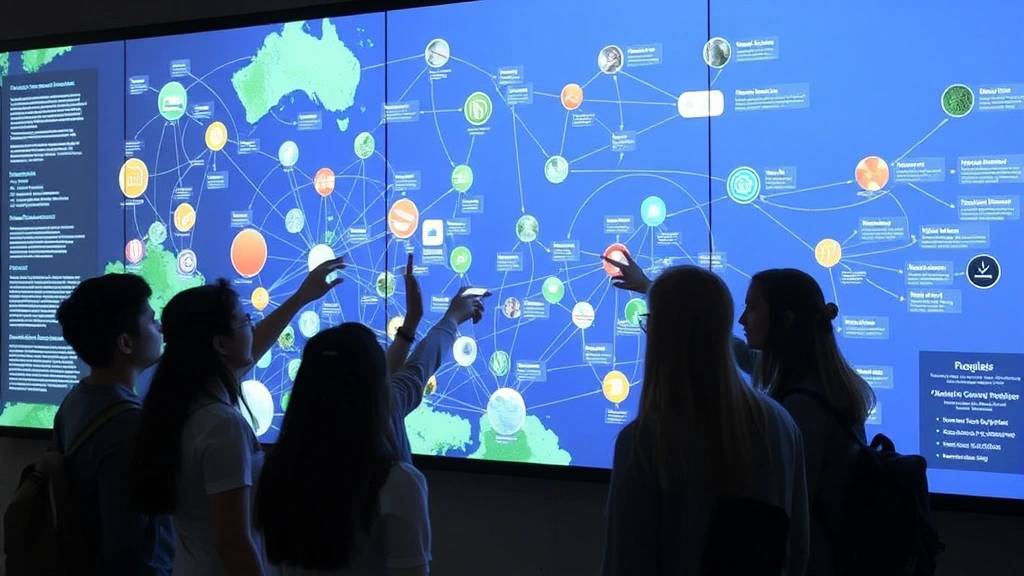
Physical Environment Design and Ecological Principles
The physical characteristics of learning spaces profoundly influence cognitive engagement and retention. Research in environmental psychology demonstrates that natural lighting, air quality, temperature regulation, and biophilic design elements—incorporating natural materials and views of vegetation—enhance concentration and reduce cognitive load. When designing a conducive learning environment, these factors become not merely comfort considerations but essential components of educational efficacy.
From an ecological economics perspective, the construction and operation of educational facilities represent significant resource flows. Sustainable building design that incorporates passive heating, cooling, daylighting, and renewable energy systems models the very principles students study regarding what constitutes the built environment. Students learning about ecosystem services while occupying buildings designed to minimize environmental impact experience embodied learning—the integration of intellectual understanding with sensory experience.
Flexible spatial arrangements support different pedagogical approaches. Open collaborative zones, focused individual study areas, and discussion spaces accommodate varied learning modalities. This flexibility reflects principles of adaptive management common in ecological resource management, where systems must respond to changing conditions and feedback. The physical environment itself becomes a teaching tool demonstrating resilience and adaptability principles applicable to both natural and economic systems.
Noise management deserves particular attention. Research shows that acoustic environments significantly affect concentration, especially for students processing complex economic or environmental data. Strategic use of sound-absorbing materials, spatial separation of different activities, and designated quiet zones create microenvironments within larger spaces, each optimized for specific cognitive tasks. This granular approach to environmental design parallels the ecosystem management principle of habitat heterogeneity—diversity of conditions supporting diverse needs.
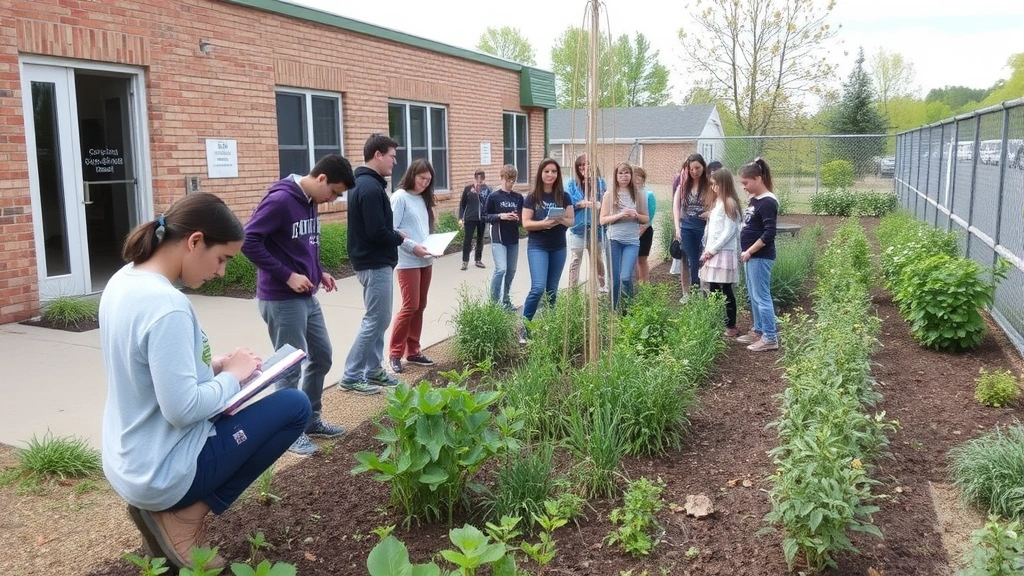
Psychological Safety and Economic Risk-Taking
Psychological safety—the shared belief that one can take interpersonal risks without fear of negative consequences—fundamentally determines whether students engage authentically with challenging material. In environments where human environment interaction is studied through case analysis and debate, psychological safety enables students to voice unpopular economic positions or challenge prevailing assumptions about environmental policy without social penalty.
Creating psychological safety requires intentional instructor behavior and classroom norms. When educators acknowledge uncertainty, admit mistakes, and demonstrate genuine curiosity about alternative viewpoints, they model intellectual humility. This proves especially important when discussing contentious topics at the intersection of economics and ecology—carbon pricing mechanisms, conservation trade-offs, or resource allocation decisions where reasonable people disagree profoundly.
The economic dimension of psychological safety manifests in students’ willingness to engage in productive failure—attempting difficult problems, making errors, and learning from mistakes. In traditional competitive grading environments, this risk-taking carries high social and psychological costs. Conducive learning environments employ assessment strategies that separate learning from evaluation, allowing multiple attempts, revision opportunities, and formative feedback before high-stakes summative assessment.
Diverse perspectives strengthen learning in environmental economics contexts. When students from different cultural, socioeconomic, and geographic backgrounds contribute viewpoints shaped by their various experiences, the learning environment becomes richer. However, this diversity only benefits learning when psychological safety ensures all voices are genuinely heard and valued. Creating such environments requires explicit attention to power dynamics, inclusive facilitation techniques, and accountability mechanisms when exclusionary behavior occurs.
Technology Integration for Systems Thinking
Modern environmental economics demands systems thinking—the ability to recognize interconnections, feedback loops, and emergent properties in complex adaptive systems. Technology tools enable visualization and simulation of these dynamics in ways that static text cannot achieve. System dynamics modeling software, geospatial analysis platforms, and data visualization tools transform abstract economic-ecological relationships into tangible, manipulable representations.
Digital platforms supporting collaborative learning enable distributed participation while maintaining synchronous interaction. When students work on shared documents analyzing environmental policy instruments or modeling ecosystem service valuations, they develop shared understanding while maintaining individual visibility. Version control systems allow tracking how ideas evolve, creating transparency in the learning process itself.
However, technology integration must serve pedagogical purposes rather than becoming an end in itself. A conducive learning environment maintains intentional boundaries around technology use. Excessive screen time, notification interruptions, and algorithmic content curation can fragment attention and undermine deep learning. Effective technology integration uses tools strategically—employing digital tools for data analysis and visualization while preserving analog methods for reflection, discussion, and creative synthesis.
Regarding environment variables in Python and other programming contexts, introducing students to computational tools for environmental analysis builds practical skills while deepening conceptual understanding. When students write code to process ecological or economic datasets, they must understand both the technical syntax and the substantive meaning of variables they manipulate. This integration of technical and conceptual learning exemplifies how technology, when properly deployed, enhances rather than replaces human cognition.
Curriculum Structure and Interdisciplinary Learning
Content organization significantly influences how students construct understanding. Traditional disciplinary silos—separating economics from ecology, policy from science—fragment knowledge and prevent students from recognizing how different domains illuminate shared problems. Conducive learning environments employ curricular structures that explicitly integrate disciplines while maintaining disciplinary rigor.
Problem-based and project-based learning approaches naturally integrate multiple perspectives. When students tackle authentic challenges—designing payment for ecosystem services schemes, evaluating carbon sequestration projects, or assessing sustainable fishery management policies—they must draw on economic theory, ecological principles, policy analysis, and stakeholder engagement simultaneously. These integrated experiences build the synthetic thinking required for real-world environmental and economic problem-solving.
Scaffolding ensures students develop foundational knowledge before tackling complex integration. Novice learners require explicit instruction in disciplinary basics before combining perspectives. Scaffolding strategies include guided inquiry, worked examples, and progressive complexity increase. As students develop expertise, scaffolding gradually reduces, and students take increasing responsibility for identifying relevant knowledge and integrating perspectives independently.
Coherence across courses and programs matters significantly. When individual courses exist as isolated units with no connection to broader learning objectives, students struggle to integrate knowledge. Coherent curriculum designs align learning outcomes across courses, employ consistent terminology and frameworks, and explicitly reference prior and subsequent coursework. This structural coherence models the systems thinking essential for understanding environmental economics.
Assessment Methods in Complex Systems
Assessment approaches profoundly shape what students learn and how deeply they engage. Traditional multiple-choice exams testing isolated facts and simple procedures poorly measure the complex competencies required for environmental economics work. Conducive learning environments employ diverse assessment methods aligned with learning objectives and pedagogical approaches.
Performance-based assessments require students to demonstrate competence through authentic tasks—analyzing real policy documents, conducting field research, developing management recommendations, or creating data visualizations. These assessments measure whether students can actually apply knowledge to meaningful problems rather than merely recognizing correct answers on tests.
Formative assessment—ongoing feedback during learning—proves essential for deep learning. Regular low-stakes quizzes, discussion participation assessment, draft reviews, and peer feedback provide information about understanding while the learning process remains active. This contrasts with summative assessment—high-stakes evaluations determining final grades—which comes too late to influence learning itself.
Portfolio assessment enables students to demonstrate growth over time, incorporating diverse evidence of learning. A student portfolio might include research papers, data analysis projects, reflective essays, field notes, and collaborative project reports. Portfolios reveal the learning journey—how understanding evolves, how students integrate new knowledge with prior understanding, and how they apply learning across contexts.
Authentic assessment contexts enhance relevance and motivation. When assessments resemble real professional work—consulting reports, policy briefs, scientific papers—rather than artificial test formats, students recognize the practical importance of their learning. This authenticity proves particularly valuable in environmental economics, where students can evaluate whether their learning prepares them for actual professional practice.
Community Engagement and Stakeholder Involvement
Learning environments do not exist in isolation from broader communities. Conducive learning environments extend beyond institutional boundaries to incorporate community stakeholders, local knowledge, and authentic environmental and economic challenges. This expansion serves multiple functions: it grounds abstract concepts in concrete local contexts, builds relationships between educational institutions and communities, and ensures curriculum remains responsive to evolving real-world challenges.
Community-based learning projects connect students directly with local environmental and economic issues. Partnerships with environmental organizations, government agencies, businesses, and community groups create opportunities for students to conduct research addressing genuine stakeholder questions. Students investigating local water quality issues, analyzing municipal sustainability initiatives, or evaluating conservation program effectiveness engage with authentic problems while contributing value to their communities.
Indigenous knowledge and community expertise deserve recognition alongside academic disciplines. Many communities possess centuries of accumulated understanding about local ecosystems and sustainable resource management. Integrating this knowledge respectfully—with appropriate intellectual property protections and community benefit-sharing—enriches learning while honoring knowledge holders. This integration acknowledges that environmental and economic understanding extends beyond academic disciplines to encompass diverse ways of knowing.
Stakeholder engagement in learning design ensures curriculum addresses genuine needs. When educators, students, community members, employers, and policymakers collaborate to define learning objectives and content, the resulting curriculum better serves all stakeholders. Regular feedback loops enable curriculum evolution as external conditions change and new challenges emerge.
Interdisciplinary team teaching models support comprehensive environmental economics education. When economists, ecologists, policy analysts, and community practitioners teach alongside one another, they model the collaborative work required in professional practice. Students observe how different disciplines approach shared problems, appreciate diverse expertise, and develop respect for disciplinary contributions while recognizing limits of any single perspective.
According to research from the United Nations Environment Programme, educational initiatives integrating community engagement demonstrate superior outcomes in both learning and environmental outcomes. Communities benefit from student research and energy, students gain authentic learning experiences, and educational institutions strengthen their social relevance and impact.
FAQ
What physical features most significantly impact learning effectiveness?
Research identifies natural lighting, air quality, temperature control, and acoustic management as top physical factors. Beyond these fundamentals, biophilic design elements incorporating natural materials and vegetation views enhance cognitive function. Flexible spatial arrangements supporting different pedagogical approaches also matter substantially. The specific design should reflect the discipline—environmental economics education benefits particularly from spaces modeling sustainable building principles.
How can educators establish psychological safety while maintaining academic rigor?
Psychological safety and rigor are complementary rather than contradictory. Rigorous standards combined with supportive feedback, multiple assessment opportunities, and transparent expectations create environments where students engage seriously with challenging material. Modeling intellectual humility, acknowledging uncertainty, and demonstrating genuine curiosity about student ideas—while maintaining clear disciplinary standards—establishes the combination effectively.
What role should technology play in creating conducive learning environments?
Technology serves learning best when deployed strategically for specific pedagogical purposes rather than as a default approach. Digital tools excel at data visualization, simulation, collaboration, and computational analysis. However, technology should not replace discussion, reflection, and analog thinking. Balanced integration—using technology where it enhances learning while preserving space for non-digital engagement—proves most effective.
How can institutions ensure curriculum coherence across courses and programs?
Coherence develops through collaborative planning where educators align learning outcomes, identify content overlap and sequencing, employ consistent frameworks and terminology, and explicitly reference connections across courses. Regular curriculum review processes, faculty learning communities focused on integration, and student feedback mechanisms all support coherence development and maintenance.
How do assessment methods influence what and how students learn?
Assessment powerfully shapes learning because students study what they believe will be assessed. Multiple assessment methods measuring different competencies encourage diverse learning approaches. Authentic assessments resembling professional practice motivate engagement. Formative assessment during learning proves more influential than summative assessment after learning concludes. Performance-based assessments measuring application surpass knowledge recall assessments in developing transferable competencies.


