
Can Ecosystem Services Boost GDP? Economist Insights on Natural Capital and Economic Growth
The relationship between ecosystem services and gross domestic product represents one of the most critical yet underexplored frontiers in modern economics. For decades, traditional GDP measurements have ignored the economic value of forests absorbing carbon, wetlands filtering water, pollinator populations sustaining agriculture, and countless other natural processes that underpin human prosperity. Today, leading economists and environmental scientists are challenging this fundamental accounting error, demonstrating that ecosystem services—the benefits humans derive from functioning natural systems—can and should be quantified as significant contributors to economic growth and national wealth.
This paradigm shift has profound implications for policy makers, investors, and corporations worldwide. When ecosystem services are properly valued and integrated into economic models, they often represent 5-20% of GDP in developed nations and substantially higher percentages in developing economies dependent on natural resource extraction and agriculture. The question is no longer whether ecosystem services have economic value, but how to measure, monetize, and protect these critical assets while ensuring sustainable economic development.
Understanding Ecosystem Services and Their Economic Value
Ecosystem services encompass four primary categories: provisioning services (food, water, timber), regulating services (climate regulation, pollination, flood control), supporting services (nutrient cycling, soil formation), and cultural services (recreation, spiritual value, aesthetic benefits). Each category generates measurable economic value that conventional GDP accounting systematically excludes.
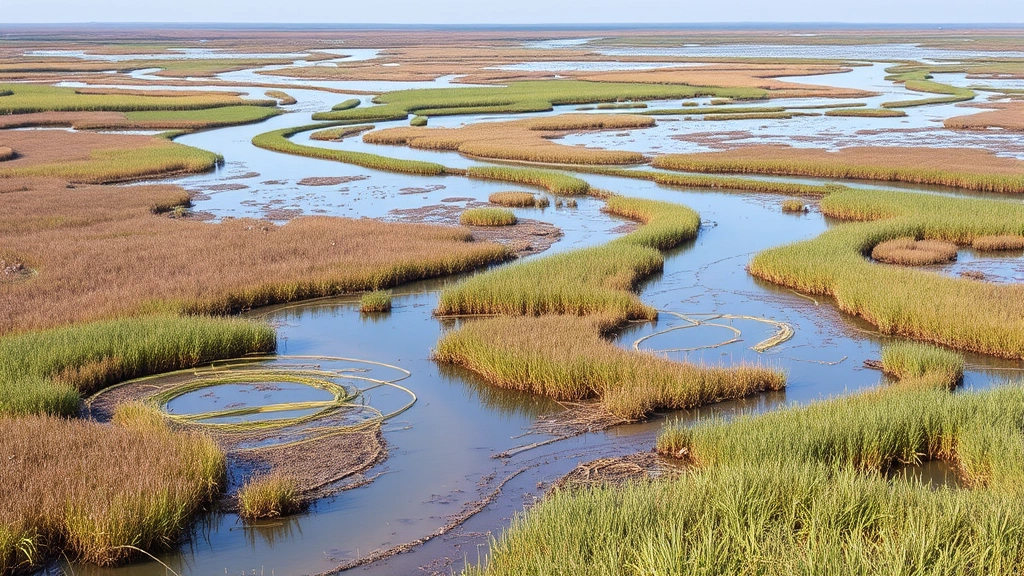
Consider pollination services alone. A comprehensive assessment by the United Nations Environment Programme valued global pollination services at approximately $15-20 billion annually, yet this value never appears in national GDP calculations. Similarly, coastal wetlands provide storm surge protection, fishery habitat, and water purification worth thousands of dollars per hectare annually—benefits that become painfully apparent only when these ecosystems are destroyed and expensive artificial infrastructure must replace them.
The economic mechanisms underlying ecosystem service valuation involve several established methodologies. The hedonic pricing method examines how ecosystem proximity affects property values. The travel cost method measures recreation demand by analyzing how far people travel to access natural amenities. The contingent valuation method uses surveys to determine what people would pay for ecosystem protection. The replacement cost method calculates what artificial systems would cost to replicate natural services. Each approach has strengths and limitations, but collectively they provide robust frameworks for translating ecological functions into economic units.
Understanding the definition of environment in science proves essential for economists attempting to quantify these services. Environmental systems operate as integrated wholes, where disruption in one component cascades through the entire network. This interconnectedness means ecosystem service valuation must account for complex dependencies and threshold effects that simple linear economic models often miss.

GDP Accounting and the Natural Capital Gap
Traditional GDP measurement treats natural capital extraction as pure income rather than capital depletion. When a nation harvests its forests, GDP increases immediately through timber sales, while the permanent loss of future forest services never appears as a negative entry. This accounting framework creates perverse economic incentives that systematically undervalue conservation and overvalue extraction.
The World Bank’s extensive research on genuine savings and adjusted net national income demonstrates that when natural capital depreciation is properly accounted for, many nations show substantially lower genuine wealth growth than their nominal GDP figures suggest. Countries experiencing rapid resource depletion may report positive GDP growth while experiencing negative genuine economic progress—a hidden deficit that eventually becomes catastrophic when resource stocks collapse.
Integrating ecosystem services into GDP requires developing satellite accounts that track natural capital alongside conventional economic statistics. Several nations now maintain these accounts: Costa Rica values its forest ecosystem services at 2.5-3.5% of GDP; Indonesia’s wetland and forest services contribute 5-10% of national wealth; Australia’s ecosystem services represent approximately 4-6% of GDP. These figures, when properly integrated into policy frameworks, reveal that conservation investments often generate superior returns compared to extraction-based development strategies.
The conceptual framework involves treating nature as capital stock that generates service flows. A forest provides not just timber (a one-time capital extraction) but continuous flows of carbon sequestration, water filtration, biodiversity habitat, and recreation value. Accounting systems must recognize this distinction between sustainable yield flows and destructive capital liquidation.
Case Studies: Quantifying Ecosystem Services Globally
Madagascar provides a compelling example of ecosystem service valuation in developing contexts. The island’s remaining rainforests generate approximately $60-80 million annually in ecosystem services through water regulation, carbon storage, and pharmaceutical biodiversity. Yet local communities receive minimal compensation, while timber companies capture short-term extraction profits. Strategic revaluation of these services has enabled payment for ecosystem services (PES) programs that provide sustainable income while protecting forests—demonstrating how proper valuation can align economic incentives with conservation goals.
New Zealand’s comprehensive natural capital accounting framework quantifies freshwater ecosystem services at NZ$20-30 billion annually, including water purification, flow regulation, and nutrient cycling. This accounting explicitly recognizes that New Zealand’s agricultural productivity depends fundamentally on ecosystem service flows, creating policy momentum for integrated water and land management. The framework has influenced regulatory decisions, infrastructure investment priorities, and conservation funding allocation.
Understanding environment and society interactions requires examining how economic valuation affects policy outcomes. The Payments for Ecosystem Services program in Costa Rica has redirected substantial government resources toward forest conservation by quantifying hydrological services, carbon sequestration, and biodiversity value. Landowners receive direct payments for maintaining forest cover, creating economic incentives that compete successfully with cattle ranching and agriculture. Over twenty years, this program has reversed deforestation trends while generating measurable carbon and biodiversity benefits.
China’s Grain-for-Green program represents perhaps the world’s largest ecosystem service investment, spending over $100 billion to restore degraded lands and reduce erosion. The program explicitly values soil conservation, water filtration, and carbon sequestration services, calculating that ecosystem restoration generates economic returns through reduced downstream flooding, improved water quality, and agricultural productivity gains that exceed conversion costs within 20-30 year timeframes.
Policy Frameworks and Economic Integration
Integrating ecosystem services into economic policy requires institutional innovation across multiple governance levels. The World Bank promotes natural capital accounting as a prerequisite for sustainable development finance. The System of Environmental-Economic Accounting (SEEA) provides standardized methodologies for national accounting systems, enabling cross-country comparisons and international policy coordination.
Green GDP initiatives attempt to adjust national accounts by subtracting environmental depreciation from conventional GDP. While methodologically challenging, these frameworks have influenced policy in several nations. South Korea, for instance, now produces adjusted GNI figures that account for natural capital depletion, revealing that genuine economic growth substantially lags behind nominal GDP growth. This accounting transparency has shifted policy discussions toward more sustainable development pathways.
Carbon pricing mechanisms represent a crucial policy innovation for ecosystem service monetization. By placing explicit prices on carbon dioxide and other greenhouse gases, cap-and-trade systems and carbon taxes create markets for one critical ecosystem service: atmospheric carbon sequestration. The EU Emissions Trading System, despite its complexities, has valued carbon sequestration at €50-100 per ton, generating economic signals that influence investment decisions across energy, transportation, and land-use sectors.
Biodiversity offset requirements increasingly mandate that development projects compensate for ecosystem damage by protecting equivalent natural areas. These “no net loss” policies create markets for ecosystem services, enabling conservation organizations to generate revenue through biodiversity credits. While imperfect, these mechanisms have channeled billions toward habitat protection and restoration.
Exploring human-environment interaction definitions clarifies how policy design shapes economic outcomes. When policies treat nature as free or infinitely renewable, humans extract ecosystem services unsustainably. When policies establish explicit values and property rights, economic actors internalize environmental costs, shifting behavior toward sustainable practices.
Challenges and Methodological Debates
Despite growing recognition of ecosystem service value, significant methodological and conceptual challenges persist. Valuation inherently involves assumptions about discount rates, time horizons, and substitutability that profoundly affect results. A forest’s ecosystem services value over 100 years depends critically on what discount rate economists apply—standard 3% rates yield vastly different results than ecological discount rates that reflect genuine long-term sustainability constraints.
The commodification debate raises fundamental questions about whether all ecosystem services should be priced and traded. Critics argue that monetization frameworks can erode intrinsic environmental values and enable wealthy actors to purchase rights to degrade ecosystems. Indigenous communities often resist ecosystem service valuation that translates their territories into financial metrics, preferring rights-based frameworks that recognize cultural and spiritual relationships with nature beyond economic calculation.
Aggregation challenges complicate ecosystem service accounting. How should economists combine carbon sequestration services, pollination services, water filtration, and biodiversity habitat into single valuation metrics? Different methodologies yield vastly different results, and adding ecosystem services across regions or nations requires accounting for spatial heterogeneity in both service provision and service demand.
Uncertainty quantification remains underdeveloped in ecosystem service economics. Ecological systems involve complex nonlinear dynamics, threshold effects, and regime shifts that standard economic models struggle to represent. A forest’s pollination services might collapse suddenly if bee populations fall below critical densities, yet economic models typically assume smooth, continuous relationships between ecosystem condition and service provision.
The permanence problem raises questions about whether ecosystem services should be valued as perpetual flows or subject to extinction risk. Climate change, invasive species, and other emerging threats may fundamentally alter ecosystem service provision in ways that current valuation frameworks inadequately capture. Valuing a forest’s carbon sequestration services requires assumptions about forest survival and productivity decades into the future—assumptions increasingly undermined by climate instability.
Future Directions: Green GDP and Beyond
Leading economists anticipate that ecosystem service integration will become standard practice within the next decade. The World Bank’s natural capital initiative aims to support all nations in implementing comprehensive natural capital accounting by 2030. This institutional momentum reflects growing recognition that conventional GDP provides dangerously incomplete information about genuine economic progress.
Technological innovation enables increasingly sophisticated ecosystem service measurement. Remote sensing technologies can now monitor forest cover, vegetation health, and land-use change at global scales with meter-level resolution. Biodiversity genomics enables rapid species inventorying and ecosystem monitoring. These data systems support ecosystem service valuation by reducing information asymmetries and enabling real-time accounting.
Regenerative economics frameworks extend ecosystem service thinking beyond valuation toward active ecosystem restoration that enhances both natural capital stocks and human well-being. Rather than merely preventing ecosystem degradation, regenerative approaches invest in restoring degraded ecosystems, creating “ecosystem service supply chains” that generate employment while rebuilding natural capital. Mangrove restoration in Southeast Asia, for instance, simultaneously provides coastal protection, fishery habitat, carbon sequestration, and employment—demonstrating how ecosystem service thinking can align economic and environmental objectives.
Corporate natural capital accounting represents an emerging frontier where companies quantify ecosystem service dependencies and impacts. Leading corporations now report natural capital risks and opportunities, recognizing that supply chain resilience depends fundamentally on ecosystem service provision. A beverage company’s water security depends on watershed ecosystem services; an agricultural company’s productivity depends on pollination services; a pharmaceutical company’s innovation pipeline depends on biodiversity conservation. Explicit accounting of these dependencies creates financial incentives for ecosystem protection that extend far beyond regulatory compliance.
Understanding positive human impact on the environment through ecosystem service economics reveals that prosperity and environmental protection need not conflict. When ecosystem services are properly valued, investments in conservation, restoration, and sustainable management generate economic returns that exceed extraction-based alternatives. The challenge lies in translating this economic insight into institutional reform, policy innovation, and behavioral change at scales commensurate with ecological crises.
Academic research increasingly demonstrates that ecosystem service integration improves economic forecasting and policy outcomes. Studies published in Ecological Economics and related journals document cases where proper ecosystem service valuation has prevented economically catastrophic environmental degradation. The evidence suggests that ignoring ecosystem services represents not moral idealism but economic negligence—a failure to account for genuine wealth and productive capacity.
The relationship between how humans affect the environment and economic outcomes becomes increasingly direct as ecosystem service frameworks mature. Human activities degrade ecosystem services worth trillions annually, yet conventional accounting treats this destruction as economically neutral or even positive. Correcting this accounting error represents perhaps the most important economic reform available to contemporary policy makers, with potential to redirect global investment flows toward genuine prosperity that sustains both human well-being and ecological integrity.
FAQ
What percentage of GDP do ecosystem services typically represent?
Ecosystem services generally contribute 5-20% of GDP in developed nations and often 20-50% in developing economies. Specific percentages vary dramatically by nation based on economic structure, natural resource endowments, and ecosystem condition. Tropical nations with extensive forests typically derive higher percentages of genuine wealth from ecosystem services than industrialized nations, though absolute values may be lower due to smaller total economies.
How do economists measure the value of ecosystem services like clean air or biodiversity?
Multiple methodologies exist: hedonic pricing examines how ecosystem proximity affects property values; travel cost methods measure recreation demand; contingent valuation uses surveys; replacement cost methods calculate artificial system expenses; and market-based approaches observe actual ecosystem service transactions. Each method has strengths and limitations, and robust valuations typically employ multiple approaches to triangulate results.
Can ecosystem service payments actually prevent deforestation?
Evidence from Costa Rica, Indonesia, and other nations demonstrates that properly designed payment for ecosystem services programs can effectively incentivize conservation. Success requires adequate payment levels, secure property rights, monitoring capacity, and alignment with local development aspirations. When designed poorly, PES programs may prove ineffective or generate perverse incentives.
What are the main criticisms of ecosystem service valuation?
Critics raise concerns about commodification of nature, inappropriate discount rates, aggregation challenges, uncertainty quantification, permanence problems, and potential for wealthy actors to purchase rights to ecosystem degradation. Additionally, some argue that reducing nature to economic metrics undermines intrinsic environmental values and indigenous rights frameworks.
How will climate change affect ecosystem service valuations?
Climate change threatens ecosystem service provision through altered precipitation patterns, temperature shifts, species range changes, and increased extreme weather events. Valuation frameworks must incorporate climate risk, potentially reducing service values substantially. Some regions may experience ecosystem service losses worth billions annually, while others might gain new services, creating complex distributional consequences.
Are there international standards for ecosystem service accounting?
Yes, the System of Environmental-Economic Accounting (SEEA) provides standardized methodologies endorsed by the UN, World Bank, and national statistical agencies. However, implementation varies substantially across nations, and harmonizing global ecosystem service accounts remains a work in progress requiring continued institutional development.


