Kids’ Books on Ecosystems: Top 10 Picks for Young Environmental Learners
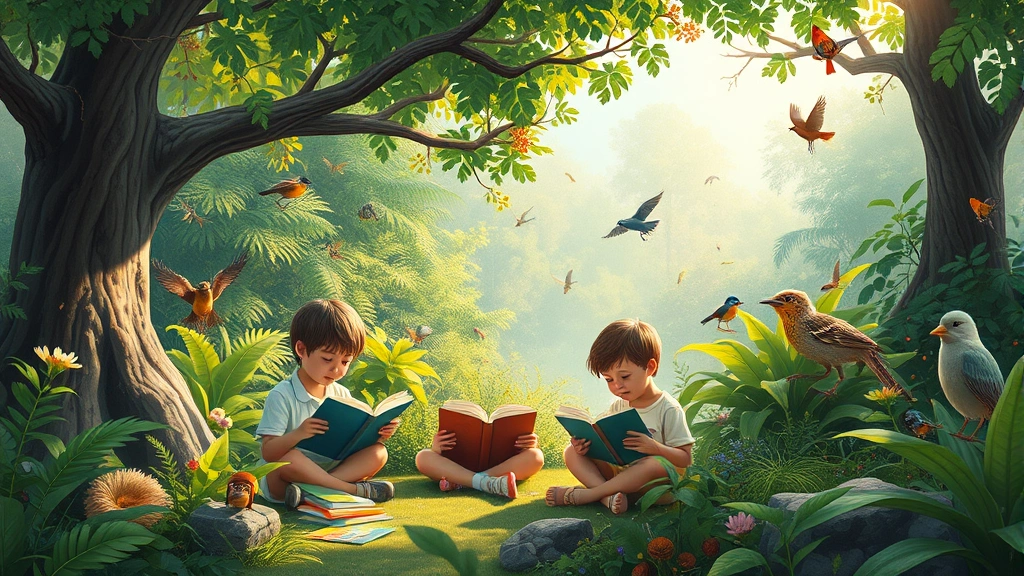
Teaching children about ecosystems doesn’t require lengthy lectures or complex scientific terminology. Instead, children’s books about the environment offer engaging narratives that transform ecological concepts into memorable stories. These carefully curated books combine vibrant illustrations, relatable characters, and age-appropriate explanations to help young readers understand how living organisms interact with their surroundings and depend on one another for survival.
The foundation of environmental literacy begins in childhood. When children grasp foundational ecosystem concepts—food webs, biodiversity, habitat destruction, and conservation—they develop the cognitive framework necessary to make informed decisions later in life. Research from environmental education organizations demonstrates that children exposed to nature-based literature show increased interest in careers that help the environment and demonstrate stronger environmental stewardship behaviors throughout adolescence and adulthood.
This comprehensive guide presents ten outstanding children’s books that illuminate ecosystem dynamics while maintaining the wonder and excitement that characterizes quality children’s literature. Each selection addresses different age groups, ecosystem types, and ecological themes, ensuring parents and educators can find the perfect match for their specific audience.
Why Ecosystem Books Matter for Children
Ecosystems represent complex systems where every organism plays a specific role. Children naturally think in concrete, story-based terms rather than abstract ecological models. Picture books and illustrated narratives bridge this gap, allowing young minds to visualize interconnected relationships between predators and prey, plants and pollinators, and organisms and their physical environments.
According to research from environmental education specialists, children who engage with nature-themed literature demonstrate measurable improvements in systems thinking—the ability to understand how different components interact within larger wholes. This cognitive skill extends beyond ecology into mathematics, social studies, and problem-solving across disciplines.
Furthermore, exposure to environmental education through storytelling cultivates emotional connections to nature. When children develop affection for fictional characters living within specific ecosystems, they simultaneously develop genuine concern for real ecosystems and their inhabitants. This emotional engagement transforms abstract conservation concepts into personally meaningful priorities.
Books also democratize access to ecosystem knowledge. Not all children have equal access to outdoor experiences, field trips, or nature centers. Quality children’s literature ensures that every child, regardless of geographic location or socioeconomic circumstances, can explore rainforests, coral reefs, arctic tundras, and temperate forests through vivid descriptions and artistic representations.
The Top 10 Books on Ecosystems for Kids
1. The Tiny Seed by Eric Carle (Ages 3-7)
Eric Carle’s signature die-cut pages and vibrant collage illustrations make The Tiny Seed an exceptional introduction to plant life cycles and seasonal ecosystems. The narrative follows a minuscule seed’s journey through diverse environments—deserts, mountains, oceans, and cities—demonstrating how seeds disperse and adapt to different habitats.
Beyond the botanical focus, this book implicitly teaches ecological resilience. The tiniest seed, despite initial disadvantages, ultimately thrives because it possesses inherent adaptability. Young readers internalize that success within ecosystems depends not on size but on appropriate adaptation to environmental conditions. The book’s tactile elements engage multiple learning modalities, making it memorable for preschool and early elementary audiences.
2. Who Eats What? Food Chains and Food Webs by Patricia Lauber (Ages 5-9)
Patricia Lauber’s Who Eats What? directly addresses one of the most fundamental ecosystem concepts: energy transfer through feeding relationships. The book presents multiple food chains—from ocean ecosystems to forest floors—using clear language and detailed illustrations that help children visualize energy flow from producers through various consumer levels.
The genius of this book lies in its progression from simple linear food chains to complex food webs. Children gradually understand that ecosystems rarely function as simple chains; instead, organisms participate in multiple feeding relationships simultaneously. This conceptual advancement prepares young readers for more sophisticated ecological thinking while remaining accessible to early elementary learners.
3. The Great Kapok Tree: A Tale of the Amazon Rainforest by Lynne Cherry (Ages 6-10)
Lynne Cherry’s illustrated narrative transforms the Amazon rainforest into a character-driven ecosystem narrative. A man with an axe arrives to fell an enormous kapok tree, but as he rests, various rainforest animals speak to him about their dependence on the tree and the broader forest ecosystem.
This book masterfully communicates how humans affect the environment through a poignant narrative structure. Rather than presenting conservation as abstract moral imperative, the story demonstrates tangible consequences of deforestation through the voices of jaguars, anacondas, poison dart frogs, and countless other species. The watercolor illustrations capture rainforest biodiversity with remarkable detail, inspiring awe and respect for tropical ecosystems.
4. Stranger in the Woods by Carl R. Sams II and Jean Stoick (Ages 4-8)
This photographic board book uses real wildlife photography to introduce forest ecosystems to very young children. The narrative follows a lost fawn’s journey through woods where it encounters numerous forest inhabitants, each playing specific ecological roles. The stunning photography makes ecosystems feel immediate and real rather than fantastical.
The book’s greatest strength lies in its sensory engagement. Real photographs of actual animals, plants, and forest environments create stronger neural connections than illustrations alone. Young children develop genuine familiarity with forest dwellers—their appearances, behaviors, and habitats—building foundational knowledge for later ecological understanding.
5. What Do You Do With a Kangaroo? by Mercer Mayer (Ages 4-8)
While less explicitly focused on ecosystem concepts than other selections, Mercer Mayer’s whimsical narrative introduces children to diverse animal behaviors and habitats. The book’s imaginative premise—a girl wakes to find various animals in her home—creates opportunities to discuss where these animals naturally live, what they eat, and how they behave in their native ecosystems.
This book works particularly well as a springboard for ecosystem discussions. Parents and educators can pause at each animal’s appearance to ask: Where does this animal live? What does it eat? What other animals live in that same place? These questions transform a simple picture book into an interactive ecology lesson.
6. Ecosystems by Rebecca Stefoff (Ages 8-12)
Rebecca Stefoff’s Ecosystems provides older elementary readers with comprehensive ecosystem overview without sacrificing accessibility. The book explains biotic and abiotic factors, explores various ecosystem types (forests, grasslands, deserts, aquatic systems), and discusses how ecosystems change over time.
The book’s structured approach suits children developing more sophisticated scientific thinking. Rather than narrative-based learning, Stefoff employs explanatory text supported by detailed illustrations and diagrams. This transition from story-based to information-based learning reflects children’s cognitive development during middle elementary years, making it ideal for readers ready for more formal scientific presentation.
7. The Mangrove Tree: Planting Trees to Feed Families by Susan L. Roth and Cindy Trumbore (Ages 6-10)
This beautifully illustrated book combines environmental education with social responsibility narratives. The story follows a young girl in Bangladesh whose community plants mangrove trees, which simultaneously provide food security and protect coastal ecosystems from cyclone damage.
The book demonstrates positive human impact on the environment through practical, locally-grounded action. Rather than presenting environmental conservation as something distant or abstract, the narrative shows how ecosystem protection directly benefits human communities. Children learn that environmental stewardship and human welfare are interconnected rather than contradictory.
8. A Tree Is Nice by Janice May Udry (Ages 3-7)
This Caldecott Medal-winning classic celebrates trees and their ecological importance through lyrical prose and charming illustrations. The book explores multiple ways trees benefit both human communities and broader ecosystems—providing shade, food, oxygen, and habitat for countless organisms.
Though written in 1956, Udry’s gentle approach remains remarkably effective. Young children develop genuine appreciation for trees as ecosystem providers rather than viewing them as mere landscape features. The book’s poetic language introduces environmental concepts without didacticism, making it memorable and emotionally resonant.
9. Swamp Song by Don Wood (Ages 5-9)
Don Wood’s vivid illustrations transform swamp ecosystems from perceived wastelands into thriving, interconnected communities. The book celebrates wetland biodiversity—frogs, dragonflies, herons, turtles, and countless aquatic plants—presenting swamps as valuable ecosystems rather than undesirable environments.
This book particularly benefits children living in or near wetland regions, as it validates their local ecosystems as worthy of study and protection. The rhythmic text and detailed artwork combine to create an immersive swamp experience, helping children understand why wetland conservation matters ecologically and aesthetically.
10. Up in the Trees by Kate Messner (Ages 6-10)
Kate Messner’s Up in the Trees explores forest canopy ecosystems, revealing the complex world existing in tree branches. The book demonstrates that forests contain distinct ecological layers—canopy, understory, and forest floor—each hosting specialized organisms adapted to particular conditions.
The book’s cross-sectional illustrations clearly show vertical ecosystem stratification, helping children understand that ecosystems possess three-dimensional complexity. This visual approach makes abstract ecological concepts concrete and memorable, particularly for visual learners who benefit from detailed scientific illustration.
How to Choose the Right Ecosystem Book
Selecting appropriate ecosystem books requires considering multiple factors beyond age-level recommendations. Children’s developmental stages, prior knowledge, and personal interests significantly influence book selection effectiveness.
Age and Reading Level: Picture books suit preschool and early elementary children, while chapter books work for older elementary readers. However, some advanced younger readers enjoy more complex texts, while some older children prefer illustrated narratives. Assess individual children’s reading preferences rather than relying solely on age guidelines.
Ecosystem Type: Children develop stronger interest in books featuring ecosystems they’ve personally experienced or encountered. A child who visited a beach might engage more deeply with ocean ecosystem books, while a child living in forests might prefer woodland narratives. Consider matching book selections to children’s environmental experiences.
Learning Style: Some children learn best through narrative and emotional engagement, while others prefer information-based presentations. A child who responds to stories might excel with The Great Kapok Tree, while a child who enjoys facts might prefer Stefoff’s Ecosystems. Diverse book selections accommodate varied learning preferences within families or classrooms.
Conservation Messages: Some books emphasize environmental problems, while others celebrate nature’s beauty or highlight conservation solutions. Consider children’s emotional resilience and existing environmental knowledge when selecting books with heavier conservation themes. Balance problem-focused narratives with books celebrating nature’s magnificence.
Integrating Books with Environmental Action
Reading ecosystem books creates optimal learning when combined with direct environmental engagement. Books serve as gateways to outdoor exploration and hands-on ecological activities.
After reading The Tiny Seed, children might plant seeds and observe germination and growth. Following Who Eats What?, children could create food webs from their local environments or observe predator-prey interactions in yards or parks. The Mangrove Tree might inspire children to learn about local tree planting initiatives or participate in environmental restoration projects.
This integration transforms books from passive entertainment into active learning catalysts. Children who read ecosystem narratives then engage in environmental activities develop stronger conceptual understanding and deeper personal commitment to environmental stewardship. The combination of literary engagement and practical experience creates lasting learning far exceeding what either approach accomplishes independently.
Parents and educators might also encourage children to create ecosystem books themselves—writing and illustrating narratives about local ecosystems, fictional habitats, or imagined future environmental scenarios. This creative response deepens comprehension while developing scientific communication skills.
Building a Home Ecosystem Library
Creating a comprehensive home library of ecosystem books provides ongoing environmental education opportunities. Rather than purchasing all ten books simultaneously, consider strategic acquisition over time, prioritizing books matching children’s current developmental stages and interests.
Diversify selections across ecosystem types—include forest, ocean, grassland, desert, and wetland books to broaden children’s ecological knowledge. Balance narrative-driven books with information-based texts to accommodate varied learning styles. Incorporate books addressing environmental protection and conservation alongside celebratory nature literature.
Public libraries offer excellent resources for building ecosystem libraries affordably. Most libraries maintain extensive children’s environmental literature collections, allowing families to borrow books before deciding on purchases. Library staff can recommend additional titles matching specific interests, expanding beyond these ten selections.
Consider organizing books by ecosystem type or age level to encourage regular reading. When books remain visible and accessible, children naturally gravitate toward them, supporting independent environmental learning. Rotate displayed books periodically to maintain novelty and interest.
Book clubs or reading groups amplify library benefits. Families reading the same ecosystem books simultaneously can discuss concepts, share observations, and plan related activities together. Group engagement increases accountability and enjoyment while extending learning through peer interaction.
FAQ
What age should children start learning about ecosystems?
Children can begin learning ecosystem concepts as early as age three through picture books and outdoor exploration. Concepts progress in complexity—very young children learn that animals live in specific places and eat particular foods, while older children understand food webs, energy flow, and ecosystem succession. Start with age-appropriate books and gradually introduce more sophisticated concepts.
Are these books available in digital formats?
Most of these titles are available through e-book platforms, library digital collections, and audiobook services. However, physical books often provide superior experiences for young children, particularly for board books and picture books where tactile engagement and illustration quality matter significantly. Consider purchasing physical copies while supplementing with digital formats for convenience.
Can these books work for classroom instruction?
Absolutely. These books work exceptionally well for classroom ecosystem units. Teachers can read books aloud to entire classes, then facilitate discussions connecting narratives to curriculum standards. Many titles include teaching guides or suggested activities. Books also support differentiated instruction, allowing students reading at various levels to engage with ecosystem concepts.
How can I encourage reluctant readers to engage with ecosystem books?
Match books to specific interests—a child interested in reptiles might engage more deeply with books featuring snakes or lizards. Allow children to choose books from recommended lists rather than mandating specific selections. Incorporate audiobook versions for children who struggle with independent reading. Create interactive experiences—listening to books while observing actual ecosystems, or creating ecosystem projects inspired by books—increases engagement for reluctant readers.
Are there ecosystem books for teenagers?
Yes, though this list focuses on elementary-aged children. Teenagers benefit from more sophisticated texts addressing ecosystem services, human-environment interactions, and conservation challenges. Consider titles from environmental science authors like Rachel Carson or contemporary environmental educators addressing climate change and biodiversity loss for older readers.
How do these books connect to environmental careers?
Children who develop strong ecosystem understanding through literature often pursue environmental careers in ecology, conservation, environmental science, or policy. These books build foundational knowledge supporting later academic and career choices in environmental fields. Discussing how characters in books might grow up to become ecologists, conservationists, or environmental educators helps children envision environmental careers as achievable possibilities.


