
Can Economy Thrive Without Ecosystems? Study Insights
The relationship between economic growth and ecosystem health represents one of the most critical questions facing contemporary civilization. For decades, mainstream economic models operated under the assumption that nature existed as an infinite resource to be exploited for profit maximization. However, mounting scientific evidence and groundbreaking economic research now demonstrate conclusively that this paradigm is fundamentally flawed. The economy is not separate from ecosystems—it is entirely embedded within them, dependent upon their services, stability, and regenerative capacity.
Recent comprehensive studies from leading ecological economics institutions reveal that the global economy loses between $4.7 trillion and $20.2 trillion annually in ecosystem service degradation. These staggering figures represent what economists call natural capital depletion—the systematic destruction of the biological systems that underpin all economic activity. Without functional ecosystems, no economy can sustain itself, regardless of technological advancement or financial sophistication. This article explores the scientific evidence, economic mechanisms, and policy implications of this fundamental truth.
The Fallacy of Economic Independence from Nature
Traditional neoclassical economics treats the natural world as an external factor, a mere input to production processes alongside labor and capital. This conceptual framework, developed primarily during the industrial revolution when natural resources appeared limitless, has proven catastrophically inadequate for understanding 21st-century economic realities. The human-environment interaction operates as a bidirectional system where economic activities fundamentally alter ecological structures, which in turn constrains future economic possibilities.
Ecological economics, an emerging field that integrates thermodynamics, biology, and systems thinking with economic theory, challenges the growth-at-all-costs mentality. Unlike conventional economics, which assumes infinite substitutability between natural and manufactured capital, ecological economics recognizes that certain ecosystem functions are irreplaceable. Photosynthesis cannot be replicated by machines. Pollination cannot be mechanically replicated at scale. Water purification by wetlands cannot be engineered more efficiently than natural processes. These biophysical realities impose hard limits on economic expansion.
Research from the World Bank demonstrates that nations with the highest per-capita natural capital depletion rates experience slower long-term economic growth and greater macroeconomic volatility. Countries that have systematically depleted fisheries, forests, and groundwater reserves face economic stagnation even as GDP initially grew. This pattern reveals a crucial insight: short-term economic gains achieved through ecosystem destruction represent a form of capital liquidation, not genuine wealth creation. An economy that exhausts its natural capital is borrowing from future generations while calling it prosperity.
Ecosystem Services: The Foundation of Economic Value
All economic activity depends upon what ecologists term ecosystem services—the flows of resources and life-support functions that nature provides. These services fall into four primary categories: provisioning services (food, water, materials), regulating services (climate, water purification, pollination), supporting services (nutrient cycling, soil formation), and cultural services (recreation, spiritual value, aesthetic experience).
The global economy relies on these services in quantifiable ways. Agricultural productivity depends entirely on pollination services provided by insects, worth approximately $15-20 billion annually in North America alone. Coastal fisheries, which provide protein to over 3 billion people globally, depend on healthy mangrove ecosystems and coral reefs that function as nurseries and feeding grounds. Freshwater availability depends on watershed protection and groundwater recharge systems that operate across decades and centuries. Climate regulation through carbon sequestration in forests, wetlands, and ocean ecosystems represents perhaps the most economically significant ecosystem service, preventing climate catastrophe that would cost trillions in economic damages.
When economists calculate the replacement cost of ecosystem services through artificial means, the economic case for preservation becomes overwhelming. Constructed wetland treatment systems cost 5-10 times more than natural wetlands to build and maintain while providing inferior water purification. Artificial pollination through human labor costs 10-50 times more than natural pollination by wild bee populations. Seawalls and hurricane barriers cost vastly more than mangrove restoration while providing less comprehensive coastal protection. These comparisons demonstrate that ecosystem preservation is not merely an environmental imperative but an economic necessity.
The impacts humans have had on the environment have systematically degraded these services. Habitat destruction, pollution, climate change, and overexploitation of species have reduced global ecosystem service capacity by an estimated 14-25% over the past 50 years, precisely the period of accelerated economic growth in developed nations.
” alt=”Ecosystem service visualization showing forest providing water purification, carbon sequestration, and biodiversity habitat with economic value indicators”>
Quantifying the Economic Cost of Ecological Collapse
Recent comprehensive assessments quantify the economic damage from ecosystem degradation with unprecedented precision. The United Nations Environment Programme estimates that land degradation alone costs the global economy $23 trillion annually in lost productivity and ecosystem services. Deforestation costs approximately $2-5 trillion per year when accounting for carbon release, biodiversity loss, and hydrological disruption. Overfishing reduces global fisheries value by $80-100 billion annually while destroying future productive capacity.
These costs are not abstract environmental concerns—they translate directly into economic losses for businesses and households. Farmers face declining yields due to pollinator loss and soil degradation. Fishing communities experience economic collapse as fish stocks vanish. Coastal communities face escalating hurricane damages as mangrove protection disappears. Water-dependent industries from agriculture to manufacturing face supply constraints as aquifers deplete and rivers run dry. Insurance companies struggle with climate-related claims that exceed projections because ecosystem buffers have deteriorated.
The economic concept of natural capital accounting attempts to incorporate ecosystem value into standard financial metrics. When nations calculate genuine savings (total savings minus natural capital depletion), the results prove shocking. Many nations with positive GDP growth show negative genuine savings, indicating they are becoming poorer in real terms even as conventional economic statistics show expansion. This accounting revelation explains the paradox of countries experiencing GDP growth while living standards decline—they are liquidating natural capital to fund consumption.
Research published in leading ecological economics journals demonstrates that ecosystem collapse triggers cascading economic failures. The loss of one ecosystem service often precipitates failures in others. Forest loss reduces water availability, which reduces agricultural productivity, which increases food prices, which triggers economic instability. Coral reef destruction reduces fish stocks, which reduces food security and income for coastal communities, which increases poverty and social instability. These interconnected failures mean that ecosystem degradation poses systemic economic risk comparable to financial crises.
Case Studies: Economic Systems in Crisis
Historical examples provide compelling evidence that economies cannot thrive without functional ecosystems. The Mesopotamian civilization, once the economic powerhouse of the ancient world, collapsed when irrigation-driven salinization destroyed agricultural productivity. The Mayan civilization, despite remarkable technological and organizational achievements, experienced economic and political collapse when deforestation and soil degradation undermined agricultural capacity. More recently, the North Atlantic cod fishery experienced catastrophic collapse in the 1990s when overfishing destroyed a resource that had supported economic activity for 500 years.
Contemporary case studies reveal ongoing patterns. The Aral Sea region of Central Asia experienced economic devastation when irrigation diversion caused the sea to shrink by 90%, destroying fisheries, altering regional climate, and impoverishing millions. The groundwater depletion occurring across the High Plains of North America threatens the economic viability of agricultural regions that depend on the Ogallala Aquifer. Southeast Asian economies face escalating economic costs from mangrove destruction and coastal land subsidence linked to aquifer depletion. These examples demonstrate that ecosystem degradation inevitably produces economic consequences regardless of how sophisticated financial systems become.
The COVID-19 pandemic itself revealed ecosystem-economy linkages when zoonotic disease spillover from degraded ecosystems triggered a global economic crisis. The emergence of novel pathogens correlates directly with habitat destruction that brings wildlife into closer contact with human populations. This represents a concrete example of how ecosystem degradation translates into economic vulnerability and systemic risk.
Human-Environment Interaction and Economic Resilience
Sustainable economic development requires fundamentally rethinking human-environment interaction patterns. Resilient economies operate within ecological limits while maintaining ecosystem services. This requires transitioning from extractive economic models to regenerative models that enhance rather than degrade natural capital.
Economic resilience depends on ecosystem diversity and redundancy. Monoculture agricultural systems are economically fragile because they depend on single crop varieties, single pollinators, and simplified soil communities. Diversified agroforestry systems prove more economically stable because they provide multiple income streams and greater resilience to pest outbreaks and climate variability. This principle applies broadly: economically diverse regions that maintain ecosystem diversity prove more resilient to economic shocks than regions dependent on single industries or ecosystem services.
Indigenous economic systems, which have sustained human populations for thousands of years in diverse ecosystems, demonstrate that economies can thrive while enhancing ecosystem health. These systems typically operate with deep understanding of ecosystem limits, incorporate long-term thinking (decisions evaluated for seven-generation impacts), and use harvesting practices that maintain or enhance ecosystem productivity. The economic performance of indigenous territories, which cover 22% of global land area while containing 80% of remaining biodiversity, proves that economic viability and ecosystem health are compatible objectives.
Strategies to reduce carbon footprint and regenerate ecosystems create economic opportunities rather than constraints. Renewable energy transitions, while requiring upfront investment, reduce long-term energy costs while eliminating ecosystem degradation from fossil fuel extraction and combustion. Forest restoration creates employment while restoring ecosystem services. Regenerative agriculture increases farmer profitability while rebuilding soil carbon and ecosystem health. These examples demonstrate that economic transition toward ecosystem compatibility generates rather than destroys economic value.

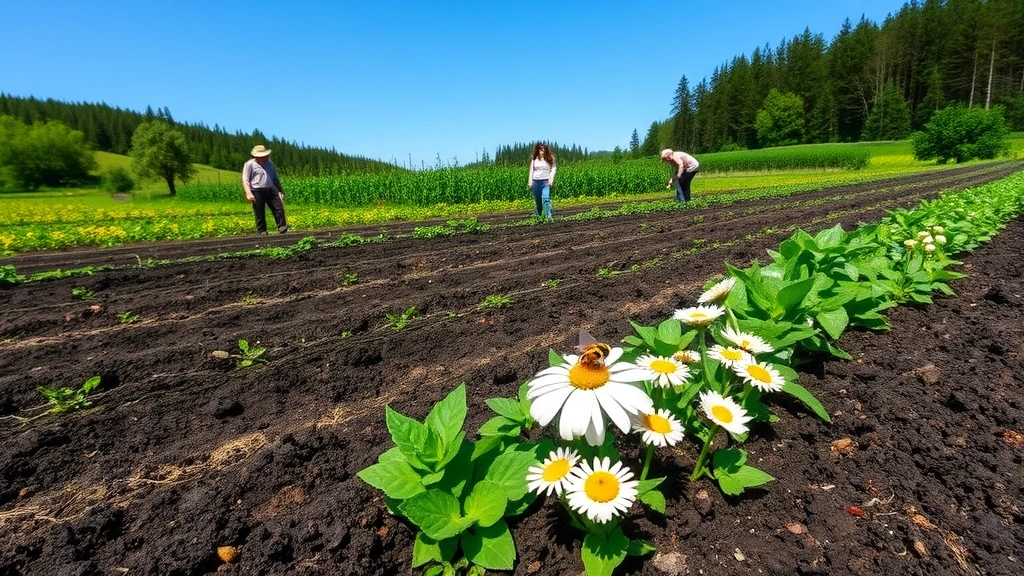
” alt=”Regenerative agricultural landscape showing diverse crops, healthy soil, pollinator habitat, and farmers harvesting with forest in background”>
Transitioning to Regenerative Economic Models
The transition to economies that thrive within ecological limits requires fundamental restructuring of production and consumption systems. Renewable energy adoption represents a critical component, eliminating the ecosystem degradation inherent in fossil fuel extraction while providing energy security and economic benefits through reduced operating costs.
Circular economy principles, which minimize waste and maximize resource efficiency, reduce ecosystem pressure while improving economic productivity. Linear take-make-waste models inherently require continuous ecosystem destruction to replace depleted resources. Circular systems that reuse, repair, and recycle materials dramatically reduce resource extraction while creating employment in remanufacturing and repair sectors. Companies implementing circular economy principles report improved profitability alongside reduced environmental impact.
Regenerative agriculture, which rebuilds soil carbon and biodiversity while improving productivity, demonstrates that food production can enhance rather than degrade ecosystems. Practices including cover cropping, diverse rotations, reduced tillage, and integrated livestock management increase yields while rebuilding soil health. Farmers transitioning to regenerative systems initially require investment and technical support, but achieve superior long-term profitability through reduced input costs and premium market prices for regeneratively produced goods.
Urban regeneration and green infrastructure investments create economic value while restoring ecosystem function in degraded areas. Urban forests provide cooling that reduces energy costs, absorb stormwater that reduces flooding and water treatment costs, and improve air quality that reduces healthcare costs. Green roofs and living walls reduce building energy requirements while creating habitat. Community gardens, which provide food production and community benefits, generate economic and social value while improving urban ecosystem health.
Fashion and consumption patterns require transformation toward sustainable fashion brands and practices that eliminate the ecosystem destruction inherent in fast fashion. Conventional textile production consumes vast water quantities, generates toxic pollution, and drives habitat destruction for cotton cultivation. Sustainable alternatives using organic materials, recycled fibers, and circular design principles reduce environmental impact while often improving working conditions and economic benefits for producers.
Policy Frameworks and Market Mechanisms
Achieving the transition to ecosystem-compatible economies requires policy frameworks that internalize environmental costs into economic decisions. Current market prices systematically undervalue ecosystem services, creating perverse incentives for degradation. A forest is worth more dead (converted to agriculture or timber) than alive (providing water purification, carbon sequestration, and biodiversity services) under current pricing systems. This reflects market failure rather than genuine economic logic.
Carbon pricing mechanisms, whether through carbon taxes or cap-and-trade systems, begin to internalize climate costs into economic decisions. Eliminating subsidies for fossil fuel extraction and agricultural practices that degrade ecosystems removes distortions that incentivize degradation. Establishing payments for ecosystem services, where beneficiaries of ecosystem services compensate those who maintain them, creates economic incentives for preservation. Costa Rica’s pioneering payment for ecosystem services program demonstrates that these mechanisms can simultaneously improve conservation outcomes and provide income to rural communities.
Natural capital accounting, which incorporates ecosystem values into national accounting systems, provides policymakers with accurate information about genuine economic performance. UNEP and the World Bank have developed standardized natural capital accounting methodologies that nations are increasingly adopting. These systems reveal that many nations pursuing growth are actually experiencing capital depletion, providing crucial information for policy correction.
Regulatory frameworks establishing minimum ecosystem integrity standards prevent the race-to-the-bottom dynamics where nations compete for investment by weakening environmental protections. International agreements establishing protected areas, fisheries management standards, and biodiversity conservation targets create level playing fields while preventing the tragedy of the commons where individual economic actors degrade shared resources.
Investment frameworks that incorporate ecosystem risk into financial analysis increasingly drive capital toward regenerative enterprises. Environmental, social, and governance (ESG) investing, while imperfect, directs capital toward companies with superior environmental performance. This creates competitive advantages for ecosystem-compatible businesses while increasing costs for degradative enterprises. As climate and biodiversity risks become increasingly material to financial performance, capital markets will increasingly reward ecosystem compatibility.
Institutional innovations including benefit corporations, social enterprises, and cooperative ownership structures enable businesses to prioritize ecosystem health alongside profitability. These organizational forms have demonstrated that companies can generate strong financial returns while delivering superior environmental and social outcomes. Scaling these models requires supportive policy frameworks and investor education about the superior long-term returns available from ecosystem-compatible enterprises.
FAQ
Can technology substitute for ecosystem services?
While technology can partially substitute for some ecosystem services, comprehensive substitution is neither economically feasible nor physically possible. Photosynthesis cannot be mechanically replicated. Pollination through wild species costs vastly less than artificial pollination. Water purification by natural wetlands proves more efficient than constructed systems. Technology can enhance ecosystem service provision (precision agriculture increases yields while reducing inputs) but cannot replace natural systems at scale.
Don’t wealthy nations prove economies can thrive despite environmental degradation?
Wealthy nations have achieved high living standards partly through ecosystem degradation, but this reflects capital liquidation rather than sustainable prosperity. These nations increasingly import ecosystem-intensive products from developing countries, externalizing environmental costs. They face escalating costs from climate change, resource scarcity, and ecosystem service loss. Their apparent success depends on historical natural capital accumulation and importing ecosystem services from elsewhere—a model that fails when resources deplete globally.
Will renewable energy and efficiency eliminate ecosystem constraints?
Energy transition and efficiency improvements prove essential but insufficient alone. Renewable energy production requires land and materials. Even with dramatic efficiency gains, continued economic expansion eventually encounters biophysical limits. Genuine sustainability requires combining energy transition with reduced consumption, circular economy principles, and regenerative production systems. Technology enables but cannot substitute for fundamental changes in economic structure and consumption patterns.
How quickly can economies transition to ecosystem-compatible models?
Transition timelines vary by context but generally require 20-30 years for complete system transformation. However, components can transition faster (renewable energy adoption accelerates exponentially) while others require longer (soil regeneration requires years of practice). The challenge is that ecosystem degradation accelerates while transition proceeds, creating urgency. Early transition provides advantages including first-mover benefits in renewable technology markets and ecosystem service preservation that increases long-term resilience.
What role do developing nations play in ecosystem-compatible economic transitions?
Developing nations face acute challenges in balancing immediate poverty reduction with long-term sustainability. However, these nations possess advantages including abundant natural capital, younger populations, and lower existing infrastructure lock-in. Supporting developing nation transitions through technology transfer, climate finance, and debt relief enables them to leapfrog directly to renewable and regenerative systems rather than replicating the extractive development path of wealthy nations. This approach simultaneously addresses poverty, climate change, and biodiversity conservation.
Can circular economy principles achieve sustainability alone?
Circular economy principles dramatically reduce resource extraction and environmental impact but cannot alone achieve sustainability without addressing consumption volumes. A circular economy producing excessive material goods still requires vast energy and generates pollution. Circular principles must combine with reduced consumption, particularly in wealthy nations, to achieve genuine sustainability. This requires cultural shifts valuing experiences and relationships over material accumulation.


