
Rating Environments: Expert Analysis on ECERS and Early Childhood Development
The Early Childhood Environment Rating Scale (ECERS) represents a pivotal framework in understanding how physical and social environments shape developmental outcomes for young children. As researchers increasingly recognize the profound connections between environmental quality and human development, ECERS has emerged as a critical assessment tool that bridges early childhood education with broader environmental and ecological principles. This comprehensive analysis examines how ECERS functions as both a practical evaluation instrument and a window into the complex relationships between spaces, care practices, and child development trajectories.
Understanding ECERS requires acknowledging that environments extend beyond physical structures. They encompass the interconnected systems of materials, interactions, policies, and practices that collectively influence how children learn, grow, and develop their foundational relationships with the world around them. The scale’s evolution reflects decades of research demonstrating that environmental quality—from air quality and natural light to social interactions and learning materials—directly impacts cognitive, emotional, and physical development during critical early years.
Understanding ECERS: Core Components and Historical Development
The Early Childhood Environment Rating Scale emerged from pioneering work by Thelma Harms, Richard Clifford, and Debby Cryer in the 1980s, representing a systematic attempt to quantify environmental quality in early childhood settings. The original ECERS focused on preschool environments, but subsequent iterations expanded the framework to encompass infant-toddler settings (ITERS-R) and family child care homes (FCCERS-R). This evolution reflects growing recognition that how environments shape human behavior and development applies across all ages and contexts.
The scale operates on a seven-point rating system, with detailed descriptors defining what constitutes quality at each level. Rather than employing a simple checklist approach, ECERS provides nuanced guidance that acknowledges the complexity inherent in environmental assessment. Scores of 1-2 indicate inadequate conditions, 3-4 represent minimal quality, 5-6 demonstrate good quality, and a score of 7 represents excellent conditions. This graduated approach recognizes that environmental quality exists on a continuum rather than as a binary adequate/inadequate distinction.
The theoretical foundation underlying ECERS draws from multiple disciplines. Developmental psychology contributes understanding of how sensory experiences, social interactions, and environmental structure support learning. Ecological perspectives emphasize the importance of natural elements and spaces that connect children with living systems. Educational research demonstrates how organized materials and intentional design facilitate exploration and discovery. By synthesizing these perspectives, ECERS functions as an interdisciplinary tool that acknowledges the complexity of environments.
Assessment Dimensions and Scoring Methodology
ECERS assesses environments across multiple dimensions, each capturing different aspects of quality. The scale typically examines space and furnishings, personal care routines, language and reasoning experiences, activities and materials, interaction patterns, program structure, and parent involvement. Each dimension reflects research-based understanding of factors that influence child development and wellbeing.
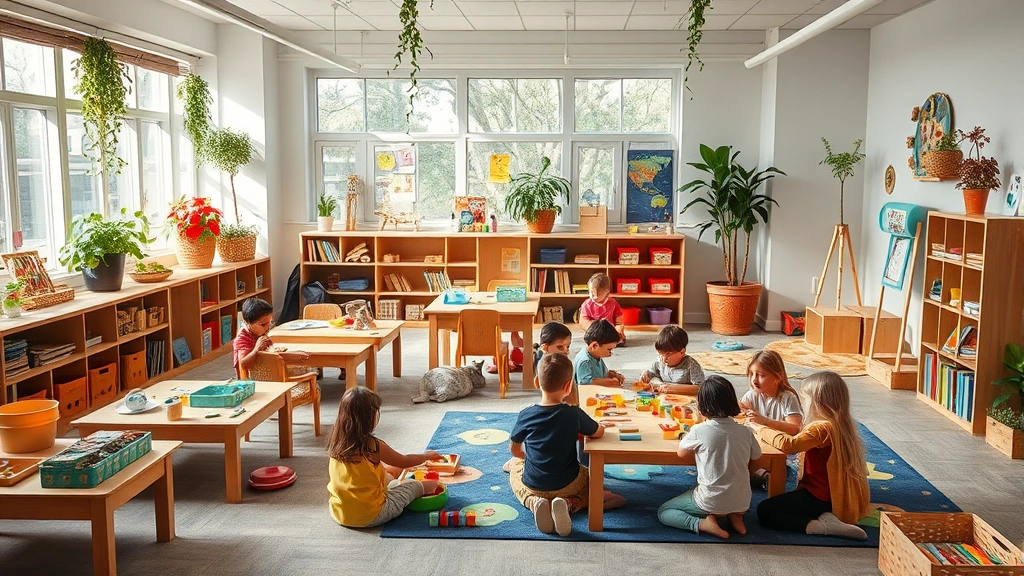
Space and furnishings assessment considers how physical layout supports different types of play and learning. Quality environments provide clearly defined activity areas, accessible materials organized at child height, comfortable spaces for rest and quiet activities, and opportunities for both group and solitary engagement. The assessment recognizes that physical organization communicates expectations and shapes behavior patterns. When materials are visible and accessible, children develop agency and independence. When spaces are cluttered or poorly organized, developmental opportunities diminish.
Personal care routines evaluation focuses on how caregivers approach fundamental activities like feeding, diaper changing, and toileting. Rather than viewing these moments as mere custodial tasks, ECERS recognizes them as rich opportunities for language development, secure attachment, and learning about bodily autonomy. High-quality environments transform routine care into intentional interactions where caregivers maintain eye contact, use language, and respond to individual needs. This perspective aligns with understanding how human interactions within environments shape developmental pathways.
The language and reasoning dimension assesses the quantity and quality of verbal interactions, exposure to books and literacy materials, and opportunities for cognitive challenge. Research demonstrates that the language-rich environments correlate strongly with vocabulary development, later reading success, and academic achievement. Quality ECERS environments feature adults who engage in extended conversations with children, ask open-ended questions, and provide narrative descriptions of ongoing activities.
Activities and materials assessment examines both the variety of learning experiences offered and the quality of materials available. High-quality environments provide manipulatives, blocks, art supplies, dramatic play props, sensory materials, and books representing diverse topics and perspectives. Critically, materials reflect the cultural backgrounds of enrolled children and their families, supporting identity development and belonging. The assessment also considers whether materials remain current, well-maintained, and genuinely engaging rather than token decorations.
Environmental Quality and Child Development Outcomes
Extensive research establishes robust connections between ECERS scores and measurable child outcomes. Studies consistently demonstrate that children in higher-quality environments as measured by ECERS show better language development, stronger pre-academic skills, improved social competence, and more secure attachments to caregivers. These associations persist across diverse populations and geographic contexts, suggesting that quality environmental factors transcend cultural boundaries while also accommodating cultural variation.
The mechanisms through which environmental quality influences development operate at multiple levels. At the neurobiological level, enriched environments with varied sensory stimulation, responsive interactions, and opportunities for exploration support optimal brain development. The first five years represent a critical period of rapid neural development, and environmental quality directly influences the formation of neural connections underlying all future learning and behavior.
At the social-emotional level, high-quality environments provide secure bases from which children can explore, responsive adults who validate feelings and model emotional regulation, and peer interactions that develop social skills. Children in quality environments develop stronger self-regulation capacities, better peer relationships, and more positive self-concepts. These social-emotional foundations prove as important as academic skills for long-term success.
Cognitive development flourishes in environments providing appropriate challenge, autonomy in exploration, and adult scaffolding of learning. When environments match children’s developmental levels while providing slight challenge, children remain optimally engaged. Adults who observe carefully, follow children’s interests, and extend learning through questions and provocations facilitate deeper understanding than environments relying on didactic instruction.
Research from longitudinal studies demonstrates that quality early childhood environments produce benefits extending far beyond early childhood. Children who attend high-quality programs show higher graduation rates, increased earnings in adulthood, and greater civic engagement. These long-term returns on investment in quality early childhood environments rival or exceed returns from many other educational interventions, making environmental quality a matter of economic significance alongside developmental importance.

Implementation Challenges and Practical Considerations
Despite clear evidence supporting ECERS as a quality indicator, implementation presents numerous challenges. First, conducting reliable ECERS assessments requires extensive training and experience. Assessors must complete certification processes ensuring consistent interpretation of rating criteria. This requirement creates capacity limitations, as certified assessors remain scarce in many regions, making comprehensive environmental assessment difficult for programs seeking improvement.
Second, ECERS assessments require substantial time investment. A complete assessment typically requires four to eight hours of observation and documentation, making repeated assessments for program improvement purposes resource-intensive. Programs operating with tight budgets and limited administrative staff often struggle to prioritize assessment activities, even when they recognize their importance.
Third, ECERS focuses primarily on structural and process quality—observable, measurable features of environments. While these dimensions prove important, they don’t capture all aspects of quality that matter for development. Factors like caregiver warmth, authentic relationships, and the intangible qualities that make environments feel welcoming and affirming prove more difficult to quantify but equally important. Programs might achieve high ECERS scores while lacking the relational warmth that characterizes truly excellent environments.
Fourth, implementing improvements based on ECERS findings requires resources that many programs lack. Addressing deficiencies in space, materials, or staff training often demands financial investments beyond program budgets. Without accompanying funding or technical assistance, ECERS assessment becomes an exercise in identification without remedy—programs learn what needs improvement but lack capacity to improve.
Fifth, the scale’s development reflected particular cultural and educational values that may not align with all communities’ priorities and perspectives. While more recent iterations have incorporated greater cultural responsiveness, tensions remain between standardized assessment approaches and culturally-grounded educational philosophies. Communities with distinct values regarding child-rearing, play, discipline, and family involvement may experience ECERS recommendations as culturally incongruent.
Connecting Early Childhood Environments to Broader Ecological Systems
Understanding ECERS gains depth when connected to broader ecological and environmental perspectives. The concept of environment extends beyond classroom walls to encompass the natural world and children’s connections with living systems. Research increasingly demonstrates that direct contact with nature supports children’s physical health, cognitive development, emotional wellbeing, and environmental values formation. Quality early childhood environments integrate natural elements—plants, natural light, outdoor access, and living materials—rather than relying exclusively on manufactured materials.
This ecological perspective aligns with understanding how positive human-environment relationships develop from childhood experiences. Children who spend time in natural settings develop greater affinity for environmental conservation and sustainability. They understand themselves as part of interconnected ecosystems rather than separate from nature. These foundational environmental values, formed during early childhood, influence behaviors and choices throughout life.
Quality early childhood environments also model sustainable practices that communicate environmental values. Programs that compost, recycle, conserve water and energy, and reduce waste demonstrate commitment to ecological responsibility. Children who participate in gardening, composting, and nature observation develop understanding of natural cycles and their own role in environmental stewardship. These practices integrate environmental education seamlessly into daily routines rather than treating it as an isolated subject.
Furthermore, environmental justice perspectives highlight how access to quality early childhood environments varies significantly by race, ethnicity, and socioeconomic status. Low-income communities and communities of color often have fewer high-quality early childhood programs, less access to natural spaces, and greater exposure to environmental hazards. Addressing disparities in environmental quality for young children represents both an educational and environmental justice imperative. Programs serving marginalized communities require additional resources and support to achieve quality standards, yet often receive fewer resources than programs serving affluent communities.
The connection between early childhood environmental quality and broader ecological systems also operates through the lens of economic analysis. Research from World Bank and ecological economics institutions demonstrates that investments in early childhood quality produce economic returns through improved human capital development. When children develop stronger cognitive skills, social competence, and environmental values in quality settings, society benefits through increased productivity, reduced social costs, and more sustainable behaviors. This economic perspective complements developmental and ecological arguments for prioritizing environmental quality in early childhood settings.
Future Directions and Emerging Research
Contemporary research increasingly examines how ECERS-assessed environments can better incorporate ecological and sustainability dimensions. Some researchers propose expanded frameworks that explicitly assess environmental sustainability practices, access to nature, and environmental education integration. These enhanced approaches recognize that quality early childhood environments must prepare children for ecological realities while providing the developmental benefits long established by ECERS research.
Technology integration represents another emerging consideration. Modern environments increasingly incorporate digital tools, yet research on optimal technology use in early childhood remains evolving. Future iterations of ECERS-like instruments may need to assess technology integration quality—whether digital tools genuinely enhance learning or replace valuable hands-on, nature-based, and social experiences.
Additionally, research examining cultural variations in environmental quality preferences and practices may lead to more culturally-responsive assessment approaches. Rather than applying uniform standards globally, future work might develop frameworks acknowledging legitimate cultural differences while maintaining commitments to child wellbeing and development. This nuanced approach would honor diverse ways of supporting children while ensuring that all children access environments supporting healthy development.
Longitudinal research following children from assessed early childhood environments through adolescence and adulthood continues expanding understanding of how environmental quality during early years influences life trajectories. UNEP and related organizations increasingly recognize early childhood as a critical intervention point for environmental values and behaviors formation, suggesting integration of ECERS-type assessment with environmental outcome tracking.
Professional development for early childhood educators represents another priority area. Research indicates that caregiver knowledge, attitudes, and intentionality significantly influence how well environments support development. Programs investing in comprehensive professional development for staff show greater ECERS improvement and stronger child outcomes. Future work should emphasize building educator capacity for environmental assessment and improvement rather than relying solely on external assessments.
Finally, policy work connecting ECERS findings to funding, regulation, and professional standards continues evolving. Some states and countries have incorporated ECERS-aligned quality standards into licensing requirements, quality rating and improvement systems, and professional competency frameworks. Strengthening these policy connections ensures that assessment findings translate into actual environmental improvements benefiting children.
FAQ
What does ECERS actually measure?
ECERS measures observable dimensions of early childhood environment quality including space organization, materials, caregiver interactions, activities, routines, and program structure. It uses a seven-point scale to rate quality across multiple domains, providing comprehensive environmental assessment rather than measuring individual child outcomes directly.
How does ECERS relate to child development outcomes?
Research consistently demonstrates that children in higher-ECERS-rated environments show better language development, stronger pre-academic skills, improved social competence, and more secure attachments. These advantages persist into elementary school and beyond, suggesting long-term benefits from quality early childhood environments.
Can programs improve their ECERS scores?
Yes, programs can improve ECERS scores through intentional changes to physical space, materials, caregiver training, and daily practices. However, improvements require resources, time, and often technical assistance. Programs with strong leadership and adequate funding typically show greater improvement over time.
Is ECERS culturally appropriate for all communities?
ECERS was developed within particular cultural and educational contexts, and while recent versions incorporate greater cultural responsiveness, tensions remain. Communities with distinct child-rearing philosophies may experience some ECERS recommendations as culturally incongruent, suggesting the need for culturally-adapted assessment approaches.
How does environmental quality in early childhood relate to sustainability and ecological values?
Quality early childhood environments that incorporate nature access, outdoor play, and environmental stewardship practices help children develop environmental values and understanding of interconnected ecosystems. These foundational experiences influence environmental behaviors throughout life, making early childhood environmental quality significant for long-term sustainability.
What resources do programs need to implement ECERS recommendations?
Implementing ECERS recommendations typically requires funding for materials, space modifications, staff training, and sometimes facility improvements. Programs also benefit from technical assistance, professional development, and ongoing coaching to sustain quality improvements over time.


