
Social Environment’s Impact on Economy: Case Study and Economic Analysis
The social environment represents the complex web of cultural norms, institutional frameworks, social relationships, and human behaviors that shape economic outcomes at local, regional, and global scales. Understanding how social structures influence economic performance has become increasingly critical as economists recognize that traditional models overlooking these dimensions produce incomplete and often inaccurate predictions. This comprehensive analysis examines the multifaceted relationship between social environmental factors and economic development, drawing on empirical evidence and real-world case studies to demonstrate the profound interconnections between how societies organize themselves and their material prosperity.
The intersection of social environment and economic systems reveals that markets do not operate in a vacuum. Rather, they are deeply embedded within social contexts characterized by trust, reciprocity, institutional quality, and cultural values. When social environments deteriorate—marked by increased inequality, weakened institutions, or eroded social capital—economic productivity declines measurably. Conversely, societies that cultivate strong social cohesion, inclusive institutions, and equitable resource distribution demonstrate superior long-term economic resilience and growth trajectories. This relationship operates bidirectionally: economic policies reshape social structures while social conditions constrain or enable economic opportunities.
Defining Social Environment in Economic Context
The definition of social environment encompasses the aggregate of social institutions, cultural systems, interpersonal relationships, and collective behaviors that constitute the human context within which economic activity occurs. This concept extends beyond mere demographic characteristics to include the quality of social bonds, institutional trust, governance structures, educational systems, and cultural values regarding work, entrepreneurship, and resource distribution. Within ecological economics and environmental economics frameworks, the social environment intersects critically with natural resource management and sustainability outcomes.
Social environment differs fundamentally from the physical or natural environment, though the two interact substantially. While the definition of environment in science traditionally emphasized biophysical components, contemporary analysis recognizes that human societies mediate all environmental outcomes through social structures. The quality of institutions, enforcement of property rights, and collective decision-making processes determine whether natural resources are managed sustainably or exploited destructively.
Understanding the types of environment includes recognizing that social environments can be characterized along multiple dimensions:
- Institutional Quality: Strength of rule of law, property rights protection, and governance transparency
- Social Capital: Networks of trust, reciprocity, and civic participation that facilitate cooperation
- Inequality Metrics: Distribution of wealth, opportunity, and status across populations
- Cultural Values: Shared beliefs regarding entrepreneurship, innovation, and environmental stewardship
- Human Capital: Educational attainment, health outcomes, and workforce capabilities
- Trust Levels: Confidence in institutions, markets, and fellow citizens
Mechanisms Linking Social Environment to Economic Performance
The pathways through which social environments influence economic outcomes operate across multiple levels and timeframes. Understanding these mechanisms requires integrating insights from institutional economics, behavioral economics, and ecological economics to recognize how social structures shape resource allocation, innovation patterns, and sustainability trajectories.
Transaction Costs and Institutional Efficiency: Societies with strong institutions and high social trust experience dramatically lower transaction costs. When individuals and firms trust that contracts will be enforced and property rights protected, they invest more confidently in productive activities. Conversely, in environments characterized by institutional weakness and pervasive corruption, economic actors must allocate substantial resources to monitoring, negotiation, and protection—resources unavailable for productive investment. The human environment interaction examples frequently demonstrate how institutional capacity directly determines environmental management effectiveness.
Social Capital and Knowledge Diffusion: Dense networks of social relationships facilitate information flow, technology adoption, and collaborative problem-solving. Regions with high social capital experience faster diffusion of innovations, more effective knowledge transfer between generations, and stronger entrepreneurial ecosystems. These advantages compound over time, creating persistent regional divergence in economic performance. Research from the World Bank demonstrates that social capital predicts economic growth rates independently of physical and human capital measures.
Inequality and Macroeconomic Stability: Extreme inequality undermines economic performance through multiple channels: reduced aggregate demand, decreased social stability, lower educational investment by disadvantaged populations, and increased political volatility. When wealth becomes highly concentrated, consumer spending patterns shift toward luxury goods with lower employment multipliers, and investment in public goods like education and infrastructure declines. The resulting skills gaps constrain productivity growth and innovation capacity.
Environmental Stewardship and Resource Management: Social environments determine whether communities adopt sustainable resource management practices or engage in destructive extraction. The relationship between environment and society reveals that inclusive institutions, equitable benefit-sharing, and strong community governance typically produce superior environmental outcomes compared to centralized or extractive governance systems. Communities with secure property rights and meaningful participation in decision-making invest in long-term resource sustainability.
Case Study: Rwanda’s Post-Conflict Social Reconstruction and Economic Transformation
Rwanda presents a compelling case study of how deliberate reconstruction of social environments can catalyze rapid economic development. Following the devastating 1994 genocide that killed approximately 800,000 people and destroyed most social institutions, Rwanda faced the daunting challenge of rebuilding from profound social fragmentation and institutional collapse.
Initial Conditions and Social Devastation: The genocide created extreme social trauma, destroyed trust networks, decimated institutional capacity, and left deep psychological wounds throughout society. Traditional economic frameworks would have predicted decades of stagnation. However, Rwanda’s leadership prioritized social reconstruction alongside economic development, implementing policies designed to rebuild social cohesion and institutional capacity.
Reconstruction Mechanisms: Rwanda’s approach integrated several social environment interventions:
- Reconciliation Institutions: The establishment of the International Criminal Tribunal and community-based Gacaca courts addressed historical trauma while rebuilding social trust through truth-telling and restorative justice processes
- Inclusive Governance: Constitutional provisions mandating female representation and minority participation created inclusive institutions that rebuilt confidence in governance systems
- National Identity Building: Deliberate promotion of shared Rwandan identity over ethnic categories reduced social fragmentation and enabled cooperation across historically divided groups
- Human Capital Investment: Massive expansion of primary and secondary education rebuilt the knowledge base and created opportunities for younger generations untainted by conflict
- Technology Adoption: Rapid adoption of mobile technology and digital services leapfrogged traditional infrastructure gaps while building networks of economic participation
Economic Outcomes: Rwanda achieved average GDP growth exceeding 7 percent annually for two decades following reconstruction, transforming from one of Africa’s poorest nations to an upper-middle-income trajectory. This dramatic reversal resulted directly from social environment reconstruction enabling institutional function and interpersonal cooperation. The improvement in social cohesion reduced transaction costs, increased investment confidence, and enabled collective action for development initiatives.
Rwanda’s experience demonstrates that social environment improvements can generate economic returns comparable to or exceeding physical infrastructure investments. The reconstruction of trust, institutional capacity, and social cohesion created conditions enabling rapid productivity growth and structural economic transformation.

Nordic Model: Social Cohesion as Sustained Economic Advantage
While Rwanda represents post-conflict reconstruction, the Nordic countries (Denmark, Finland, Norway, Sweden) exemplify how sustained investment in social environments produces long-term economic advantages. The Nordic model integrates high social trust, inclusive institutions, equitable resource distribution, and strong environmental stewardship into a coherent system generating both economic prosperity and high quality of life.
Institutional Foundations: Nordic societies developed strong institutions characterized by rule of law, transparent governance, low corruption, and effective public administration. These institutional qualities reduce transaction costs, increase investment confidence, and enable long-term planning. Business leaders in Nordic countries report high confidence in contract enforcement and property rights protection, enabling them to invest in research, development, and workforce training rather than institutional safeguards.
Social Capital and Trust: Nordic countries rank among the world’s highest in social trust measures. Citizens trust institutions, fellow citizens, and public officials to behave ethically and in collective interest. This high-trust environment enables efficient markets, effective public service delivery, and strong civic participation. The positive impacts on the environment by humans often emerge from high-trust societies capable of collective environmental management.
Inequality and Shared Prosperity: Nordic countries maintain relatively low income inequality through progressive taxation, universal social services, and strong labor protections. This distributional equity strengthens aggregate demand, supports broad-based consumer spending, and ensures educational and health investments reach entire populations. Lower inequality correlates with higher social cohesion, reduced crime, better health outcomes, and stronger democratic engagement.
Economic Performance: Nordic countries consistently rank among the world’s most competitive economies, highest in innovation metrics, and leaders in environmental sustainability. They achieve simultaneous success across economic growth, social equality, and environmental protection—outcomes traditional economic models suggest impossible. The Nordic experience demonstrates that high social investment need not constrain economic dynamism; rather, it can enable superior long-term performance through enhanced social cooperation and human capital development.
The Nordic model’s sustainability derives from virtuous cycles: inclusive institutions build trust, trust reduces transaction costs and increases investment, investment generates prosperity, prosperity enables continued social investment, and this investment maintains social cohesion. These self-reinforcing dynamics prove remarkably resilient to external shocks.
Inequality and Economic Stagnation: Brazil’s Experience
Brazil presents a contrasting case study where extreme inequality within the social environment has constrained economic development despite abundant natural resources and significant human capital. Brazil possesses vast biodiversity, substantial mineral wealth, agricultural capacity, and a population exceeding 215 million. Yet persistent inequality, institutional weakness, and social fragmentation have limited economic growth and generated severe environmental degradation.
Structural Inequality and Its Economic Costs: Brazil’s Gini coefficient consistently ranks among the world’s highest, with the wealthiest 10 percent controlling approximately 55 percent of national income while the poorest 50 percent control roughly 10 percent. This extreme concentration creates multiple economic inefficiencies:
- Demand-Side Constraints: Wealth concentration reduces aggregate consumer demand as wealthy individuals save larger proportions of income. This limits market size for domestic industries and reduces employment opportunities in consumer goods sectors
- Educational Underinvestment: Wealthy families invest in private education while poor families cannot afford adequate schooling, creating persistent skills gaps and limiting productivity growth
- Health System Fragmentation: Dual healthcare systems (private for wealthy, public for poor) reduce public health quality and create inefficiencies through duplicated infrastructure
- Institutional Distrust: Extreme inequality correlates with weak institutions, high corruption, and limited civic participation as wealthy groups capture governance structures for private benefit
Environmental Implications: Brazil’s inequality intersects critically with environmental degradation. Wealthy groups control vast land areas used for cattle ranching and agricultural monocultures, driving Amazon deforestation and ecosystem destruction. Poor populations, lacking secure property rights and economic alternatives, engage in subsistence extraction from remaining forests. The absence of shared environmental stewardship norms—resulting from social fragmentation—enables rapid resource depletion.
Growth Limitations: Despite periodic commodity booms enriching portions of the economy, Brazil has experienced persistently lower growth rates than comparably developed regions. The 2010s saw growth averaging below 2 percent annually, insufficient to raise living standards broadly. This stagnation reflects how extreme inequality constrains human capital development, limits domestic market size, and reduces institutional capacity for coordinated economic transformation.
Brazil’s experience demonstrates that natural resource wealth and population size cannot overcome social environment deficits. The combination of extreme inequality, institutional weakness, and social fragmentation creates economic inefficiencies that offset potential advantages from resource endowments. Reversing this trajectory requires deliberate social environment reconstruction through progressive redistribution, institutional strengthening, and inclusive governance.
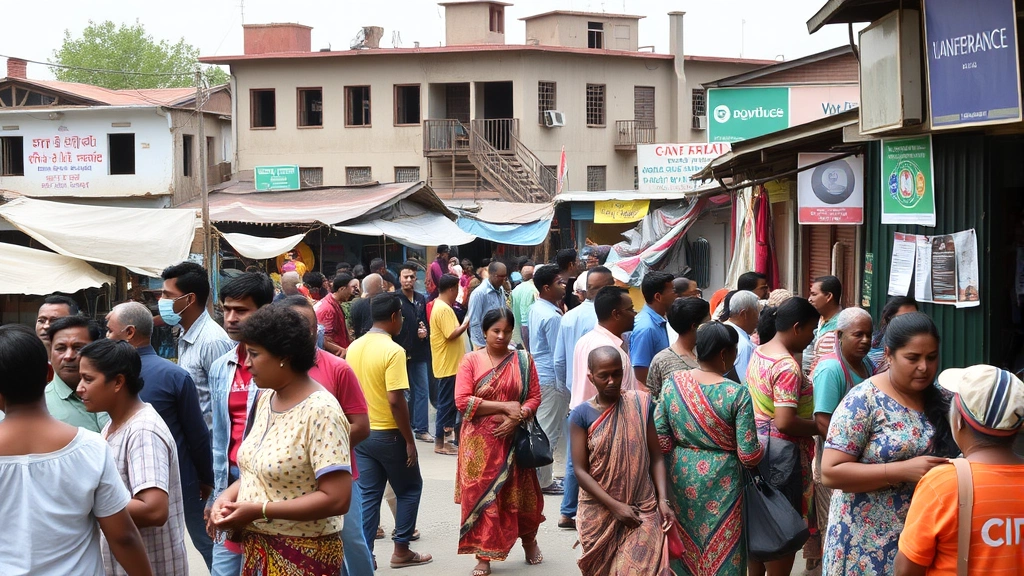
Environmental Justice and Economic Sustainability
The intersection of social environment, economic systems, and ecological sustainability reveals critical linkages between equity and environmental outcomes. Environmental justice—the principle that environmental benefits and burdens should distribute equitably across populations—directly influences economic sustainability and long-term prosperity.
Distributive Justice and Resource Depletion: When environmental benefits concentrate among wealthy populations while environmental costs burden poor communities, the resulting social tensions undermine institutional capacity for sustainable resource management. Conversely, when communities share environmental benefits equitably and participate meaningfully in resource management decisions, they develop incentives and social norms supporting sustainability. Communities with secure property rights and benefit-sharing arrangements typically invest in long-term resource conservation rather than short-term extraction.
Procedural Justice and Institutional Capacity: Meaningful participation of affected communities in environmental decision-making strengthens institutional capacity for sustainable management. Inclusive governance processes generate better information, build social consensus, and create accountability mechanisms that reduce corruption and elite capture. Research on community-based natural resource management demonstrates superior environmental outcomes compared to centralized or top-down approaches.
Recognition Justice and Cultural Values: Respecting diverse cultural values regarding environmental stewardship and resource use enhances both social cohesion and environmental outcomes. Indigenous communities, despite representing small population proportions, steward approximately 80 percent of remaining biodiversity. This effectiveness results from cultural values, institutional practices, and property arrangements developed over centuries. Recognizing and supporting these systems proves economically efficient alongside ethically appropriate.
Climate Change and Social Environment: Climate change mitigation and adaptation strategies succeed only when they address underlying social environment conditions. Decarbonization requires technological innovation alongside social transformation—changes in consumption patterns, production systems, and institutional structures. Wealthy nations must accept proportionally larger reduction burdens while supporting development in poorer nations, requiring unprecedented international cooperation grounded in justice principles. Without addressing inequality and building social trust internationally, climate cooperation will fail.
Policy Implications and Future Directions
Understanding social environment’s economic impact suggests several policy priorities for governments, institutions, and international organizations seeking to promote sustainable prosperity.
Institutional Strengthening: Investments in institutional quality—transparent governance, rule of law, property rights protection, and corruption reduction—generate high economic returns through reduced transaction costs and increased investment confidence. International support for institutional development, particularly in fragile states, should constitute development priority alongside infrastructure investment.
Equitable Development Strategies: Economic growth strategies must prioritize broad-based human capital development, equitable access to opportunity, and inclusive governance. Progressive taxation, universal education and healthcare, and labor protections strengthen both social cohesion and long-term economic performance. Evidence from Nordic countries demonstrates that equity and growth are compatible when pursued through inclusive institutional frameworks.
Environmental Governance Reform: Sustainable resource management requires decentralizing governance authority to communities with direct resource dependence, ensuring equitable benefit distribution, and incorporating diverse knowledge systems. Community-based management, particularly when supporting indigenous rights and cultural values, produces superior environmental and economic outcomes compared to centralized extraction models.
Social Capital Investment: Deliberate investment in social capital—civic participation, community organizations, trust-building initiatives—generates economic returns through improved cooperation, knowledge diffusion, and institutional effectiveness. Post-conflict societies particularly benefit from reconciliation processes, inclusive governance, and identity-building initiatives that rebuild social cohesion.
International Cooperation: Global challenges including climate change, pandemic response, and biodiversity loss require unprecedented international cooperation grounded in justice principles and equitable burden-sharing. Building social trust internationally, establishing transparent governance mechanisms, and ensuring equitable benefit distribution from global commons become essential for addressing shared challenges.
The United Nations Environment Programme increasingly emphasizes that environmental sustainability requires addressing underlying social and economic inequalities. Similarly, research from ecological economics journals demonstrates that sustainable development requires simultaneous progress on social, economic, and environmental dimensions through integrated policy frameworks addressing all three domains.
FAQ
What exactly constitutes the social environment in economic analysis?
The social environment encompasses institutions, cultural values, social relationships, and governance structures that shape economic behavior. This includes institutional quality, social trust levels, inequality distribution, educational systems, and civic participation. These factors influence economic outcomes by affecting transaction costs, investment confidence, innovation rates, and resource management effectiveness.
How does the social environment differ from the natural environment?
The natural environment comprises biophysical systems and ecosystems, while the social environment consists of human institutions and relationships. However, they interact substantially—social structures determine how natural resources are managed, whether sustainability principles are followed, and how environmental benefits and burdens distribute across populations. Economic analysis must integrate both dimensions to understand development outcomes.
Can countries with weak social environments achieve economic growth?
Countries with weak institutions and low social trust can experience temporary growth periods, particularly when driven by commodity exports or foreign investment. However, sustained development requires social environment improvements. Without institutional strengthening, corruption increases, inequality worsens, and growth becomes increasingly unstable. Long-term prosperity depends on addressing underlying social environment conditions.
What is the relationship between inequality and economic performance?
Extreme inequality constrains economic growth through multiple mechanisms: reduced aggregate demand, lower educational investment by poor populations, institutional weakness enabling elite capture, and reduced social cohesion. Research demonstrates that moderate inequality coexists with strong growth, but extreme inequality correlates with slower growth, lower innovation, and weaker institutions. Equitable societies typically achieve superior long-term economic performance.
How does environmental justice relate to economic sustainability?
Environmental justice—equitable distribution of environmental benefits and meaningful community participation in resource management—directly influences economic sustainability. When communities share environmental benefits and control resource management, they develop incentives and social norms supporting long-term conservation. Conversely, when environmental costs concentrate among poor communities while wealthy groups capture benefits, social tensions undermine institutional capacity for sustainable management.
Can social environment improvements generate economic returns comparable to infrastructure investment?
Yes, evidence from Rwanda and other post-conflict societies demonstrates that social environment reconstruction—rebuilding institutions, trust, and cohesion—can generate economic returns exceeding physical infrastructure investment. By reducing transaction costs, increasing investment confidence, and enabling cooperation, social improvements facilitate productivity growth and structural transformation. The most effective development strategies integrate both social and physical infrastructure investment.


