
Impact of Economy on Ecosystems: A Deep Dive
The relationship between economic systems and ecological health represents one of the most critical challenges of our time. As global economies expand and industrial activities intensify, the physical environment experiences unprecedented pressures that threaten biodiversity, climate stability, and resource availability. Understanding how economic decisions cascade through natural systems is essential for developing sustainable pathways forward. This article explores the multifaceted connections between economic activity and ecosystem degradation, examining both the mechanisms of harm and emerging solutions.
Economic growth has historically been measured through metrics like Gross Domestic Product (GDP), which prioritizes production and consumption without accounting for environmental costs. This fundamental disconnect between economic progress and ecological wellbeing has created what economists call “natural capital depletion.” When a nation harvests its forests faster than they regenerate, or depletes aquifers beyond recharge rates, conventional economics records only the immediate economic gain while ignoring the long-term ecological and economic losses.
How Economic Systems Degrade Ecosystems
The core mechanism linking economies to ecosystem damage involves what ecologists call “externalities”—costs imposed on the environment and society that aren’t reflected in market prices. When a manufacturing facility pollutes a river, the company avoids cleanup costs while downstream communities bear the health and economic consequences. This market failure creates perverse incentives where destruction becomes profitable.
Understanding the definition of environment science helps clarify these relationships. The physical environment comprises interconnected systems—atmosphere, hydrosphere, lithosphere, and biosphere—that function as integrated wholes. Economic activities disrupt these systems through pollution, resource extraction, habitat conversion, and waste generation. Research from the World Bank’s Environmental Department indicates that ecosystem service losses cost the global economy approximately 5-10% of GDP annually through degraded water supplies, lost fisheries, reduced crop yields, and climate impacts.
The concept of human environment interaction examples demonstrates how economic decisions at individual and corporate levels aggregate into systemic ecological change. A single plastic manufacturing facility produces manageable quantities of waste; thousands of factories across continents create an ocean plastic crisis affecting marine ecosystems globally. Similarly, individual agricultural decisions to use chemical fertilizers seem rational economically, but collectively they’ve created massive dead zones in waterways worldwide.

Industrial Agriculture and Soil Degradation
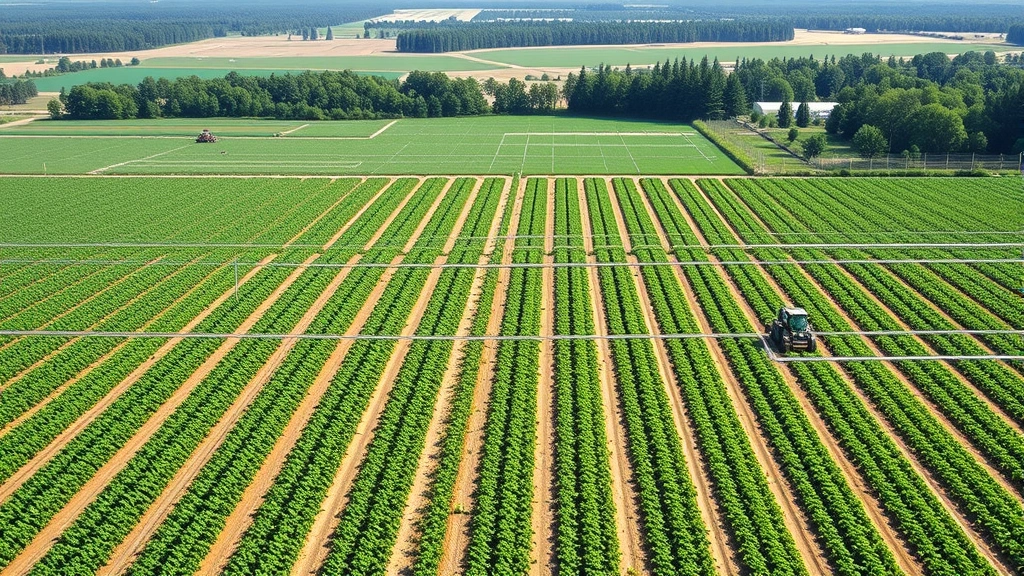
Agricultural economics have fundamentally transformed how humans interact with land, often with severe ecological consequences. Industrial farming prioritizes short-term yields through intensive monoculture, chemical inputs, and mechanization. While these approaches increased food production dramatically during the Green Revolution, they simultaneously undermined the long-term productivity of agricultural ecosystems.
Soil degradation represents a critical but often invisible economic-ecological problem. The United Nations estimates that 24 billion tons of fertile soil are lost annually through erosion, salinization, and compaction. Since soil formation requires centuries, this loss constitutes a massive transfer of wealth from future generations to current economic actors. Economically, this appears as increased agricultural productivity in the present; ecologically, it represents capital depletion of irreplaceable natural resources.
Chemical fertilizers and pesticides, while economically efficient in the short term, create downstream ecological costs. Nitrogen runoff from agricultural regions creates hypoxic zones in coastal waters, destroying fisheries that support millions of people economically and nutritionally. The economic calculation that justified pesticide use—killing crop pests to maximize yield—ignores the elimination of beneficial insect populations, pollinator collapse, and pesticide bioaccumulation through food chains.
Regenerative agriculture demonstrates how economic restructuring can align with ecosystem restoration. By reducing synthetic inputs, implementing crop rotation, and building soil organic matter, farmers can maintain profitability while restoring ecosystem functions. However, transitioning from industrial to regenerative systems requires economic incentives—subsidies, price premiums, and payment for ecosystem services—that challenge established agricultural economics.
Extractive Industries and Habitat Destruction
Mining, logging, and oil extraction represent economically significant sectors that directly destroy ecosystems through habitat removal and fragmentation. A single large-scale mining operation can devastate thousands of acres of habitat, while oil extraction in pristine ecosystems like the Arctic creates pollution risks and disrupts wildlife migration patterns. The environment and society relationship becomes starkly apparent in resource extraction zones, where immediate economic gains accrue to corporations and distant consumers while local communities and ecosystems bear long-term costs.
The economics of extraction involve what’s termed “resource curse”—the paradox where regions with abundant natural resources often experience slower economic development, greater inequality, and more environmental degradation. This occurs because extraction-based economies create few stable jobs, generate government revenue that’s often poorly managed, and discourage economic diversification. Meanwhile, ecosystem services—water purification, climate regulation, biodiversity—are permanently compromised.
Deforestation for timber, agriculture, and development exemplifies this dynamic. Tropical forests contain over half of Earth’s terrestrial species while occupying only 6% of land surface. Economic models that value standing forests only for timber harvesting ignore their roles in carbon sequestration, water cycle regulation, and indigenous livelihoods. When forests are cleared for cattle ranching or soy cultivation, the immediate economic gain to producers and consumers of these products far exceeds the market value of ecosystem services lost—yet that ecological loss is never compensated.
Restoration economics increasingly shows that preserving ecosystems often generates greater long-term economic value than destroying them. Mangrove forests provide natural storm protection worth billions in avoided hurricane damage, fish nurseries supporting commercial fisheries, and carbon sequestration. Yet they’re regularly destroyed for aquaculture and development because the immediate economic incentive exceeds ecosystem service valuations in market calculations.
The Carbon Economy and Climate Disruption
The global economy fundamentally depends on fossil fuels, creating a carbon-based energy system that destabilizes Earth’s climate. This represents perhaps the largest externality in human history—the cost of atmospheric carbon accumulation is borne by all ecosystems and future humanity, while the profits from fossil fuel extraction and combustion concentrate in corporate and investor hands. Climate disruption itself generates enormous economic costs through extreme weather, agricultural disruption, health impacts, and infrastructure damage.
Understanding types of environment affected by carbon emissions reveals the systemic nature of climate impacts. The physical environment—atmosphere, oceans, ice sheets, and terrestrial ecosystems—all experience disruption from greenhouse gas accumulation. These environmental changes cascade into economic disruptions: crop failures reduce food security, sea-level rise threatens coastal infrastructure and real estate, and shifting precipitation patterns stress water supplies.
The economic structure of carbon-intensive industries creates powerful resistance to decarbonization. Fossil fuel companies, utilities, and transportation sectors have built infrastructure, business models, and political influence around cheap carbon energy. Transitioning to renewable energy requires massive capital reallocation, technological transformation, and economic restructuring—changes that threaten incumbent industries’ profitability, even as they’re essential for long-term economic and ecological stability.
Carbon pricing mechanisms—whether carbon taxes or cap-and-trade systems—attempt to address this market failure by making carbon costs visible in economic calculations. However, most existing carbon prices remain far below the true social cost of carbon (estimated at $50-200 per ton), creating insufficient incentive for rapid decarbonization. Research from ecological economics institutes suggests that achieving climate stability requires transforming energy systems, transportation, agriculture, and industrial processes simultaneously—a transition as significant as previous economic revolutions.
Economic Inequality and Environmental Justice
The economic-ecological crisis intersects deeply with inequality. Wealthy nations and individuals disproportionately consume resources and generate pollution, while poor communities—often in the Global South—experience the most severe environmental degradation and have fewest resources to adapt. This creates what environmental justice scholars call “pollution inequality,” where marginalized populations live near waste facilities, refineries, and industrial sites.
Economic systems that externalize environmental costs create perverse incentives where the wealthy can purchase clean environments while the poor absorb pollution. A wealthy neighborhood in a developed nation may have strict environmental regulations and clean air, while the manufacturing that produces their goods occurs in regions with minimal environmental protection. This geographic displacement of environmental costs allows wealthy economies to appear environmentally responsible while depending on ecosystem destruction elsewhere.
Indigenous communities, despite occupying only 22% of global land area, steward ecosystems containing 80% of remaining biodiversity. Yet economic development priorities often target these lands for resource extraction, displacing indigenous peoples and destroying ecosystems they’ve sustainably managed for millennia. The economic value of indigenous land management—maintaining forest carbon stocks, preserving biodiversity, protecting water sources—remains largely uncompensated in market economies.
Addressing this requires economic restructuring that recognizes ecosystem service values, compensates communities for conservation, and ensures that environmental protection benefits aren’t concentrated among the wealthy. Payment for ecosystem services, benefit-sharing from genetic resources, and indigenous land rights represent emerging mechanisms, though they remain marginal within dominant economic systems.
Circular Economy Solutions
The circular economy represents a fundamental reimagining of economic structure to align with ecological principles. Rather than the linear “take-make-waste” model that characterizes industrial economies, circular systems emphasize material cycling, waste elimination, and regeneration. Products are designed for disassembly and reuse, nutrients cycle between biological and technical systems, and energy comes from renewable sources.
Implementing circular economy principles requires changes across production, consumption, and waste management. Careers that help the environment increasingly involve circular economy design—industrial ecology, regenerative agriculture, circular supply chain management, and ecosystem restoration. These roles represent economic opportunities emerging from ecological necessity.
Companies implementing circular principles often discover economic benefits alongside environmental improvements. Reducing material inputs lowers production costs, eliminating waste reduces disposal expenses, and designing for durability builds customer loyalty. IKEA’s transition toward circular furniture design, Patagonia’s repair and recycling programs, and Interface’s carpet recycling systems demonstrate that profitability and circularity can align.
However, scaling circular economy principles to replace linear systems requires systemic economic changes. Extended producer responsibility policies must hold manufacturers accountable for products throughout their lifecycle. Tax structures should shift from income taxation toward resource and pollution taxes, making waste more expensive than conservation. Investment in circular infrastructure—remanufacturing facilities, material recovery systems, and regenerative agriculture—requires capital reallocation from extractive industries.
Policy Frameworks for Ecological Economics
Transforming economic systems to respect ecological limits requires policy innovation grounded in ecological economics—a discipline that integrates ecological principles into economic analysis. Unlike mainstream economics that treats nature as infinite and substitutable, ecological economics recognizes biophysical limits and the primacy of ecosystem services for human wellbeing.
Key policy mechanisms include natural capital accounting, which measures ecosystem asset depletion alongside economic production. Costa Rica pioneered payment for ecosystem services, compensating landowners for forest conservation, watershed protection, and carbon sequestration. The United Nations Environment Programme (UNEP) has developed frameworks for integrating environmental costs into national accounting systems, revealing that many nations are actually experiencing economic decline when environmental degradation is properly accounted.
Carbon pricing, whether through taxes or cap-and-trade systems, attempts to make climate costs economically visible. However, effectiveness depends on price levels sufficient to drive behavioral change and investment in alternatives. Renewable energy subsidies accelerate clean energy deployment, though they work best alongside carbon pricing to create consistent incentives against fossil fuels.
Land use policies prove critical for ecosystem protection. Protected areas preserve biodiversity and ecosystem functions, though they’re most effective when integrated with sustainable use in surrounding regions. Indigenous land rights protection often proves more effective for conservation than government-managed protected areas, combining ecological effectiveness with social justice.
Regenerative agriculture subsidies and payments for ecosystem services can align agricultural economics with soil restoration and biodiversity conservation. Reducing agricultural subsidies that incentivize industrial monoculture would remove perverse incentives driving ecological degradation. Trade policies must incorporate environmental standards to prevent resource extraction and pollution-intensive production from simply relocating to regions with weaker environmental protections.
International frameworks like the Paris Climate Agreement and the Convention on Biological Diversity establish commitments to environmental protection, though implementation remains inconsistent. Stronger frameworks linking trade, investment, and development assistance to environmental performance could accelerate the economic transition toward sustainability.
FAQ
What is the physical environment and how does economy affect it?
The physical environment encompasses Earth’s natural systems—atmosphere, water bodies, soil, and living organisms. Economic activities affect it through resource extraction, pollution generation, habitat destruction, and greenhouse gas emissions. Industrial production, agriculture, transportation, and energy generation all impose environmental costs that market prices don’t capture.
How much does ecosystem degradation cost the global economy?
The World Bank estimates annual ecosystem service losses at 5-10% of global GDP, though some analyses suggest costs are substantially higher when accounting for climate impacts, biodiversity loss, and resource depletion. Specific impacts vary by region and ecosystem type.
Can economic growth be compatible with ecosystem protection?
Decoupling economic growth from environmental impact is theoretically possible through efficiency improvements, renewable energy, and circular economy principles. However, current global trends show continued ecosystem degradation despite efficiency gains, suggesting that transformative changes beyond technological improvements are necessary.
What role do indigenous communities play in ecosystem protection?
Indigenous peoples steward ecosystems containing the majority of global biodiversity through sustainable management practices developed over millennia. Recognizing indigenous land rights and incorporating traditional ecological knowledge into conservation strategies often proves more effective than excluding indigenous communities from land management.
How can individuals contribute to economic-ecological transformation?
Individual actions include supporting circular economy businesses, reducing consumption, advocating for policy changes, and supporting indigenous land rights and environmental justice movements. However, systemic change requires policy and corporate transformation beyond individual consumer choices.


