What Is the Physical Environment? Expert Insight
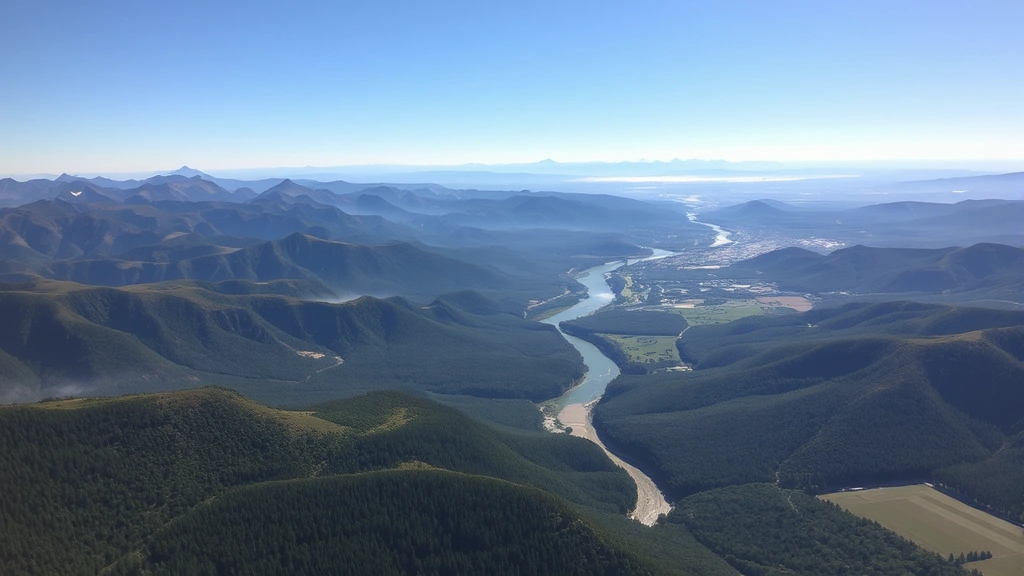
The physical environment encompasses all non-living natural components of Earth that interact with living organisms and human societies. This foundational concept bridges environmental science, ecology, economics, and policy-making, serving as the material basis for all economic activity and ecosystem services. Understanding the physical environment requires examining its components—atmosphere, hydrosphere, lithosphere, and biotic elements—and recognizing how these systems interconnect through biogeochemical cycles, energy flows, and material transformations that sustain life and support human civilization.
Defining the physical environment with precision matters profoundly for environmental economics and ecosystem valuation. When economists assess natural capital, calculate ecosystem service values, or measure environmental degradation, they must first establish what constitutes the physical environment and how its components function. This definition shapes policy decisions affecting billions of people, influences corporate sustainability strategies, and determines how societies allocate resources toward environmental protection versus exploitation. The physical environment is not merely a collection of inert materials; it represents a complex, dynamic system generating flows of resources and services that economists increasingly recognize as essential to human welfare and economic stability.

Core Components of the Physical Environment
The physical environment comprises four interconnected spheres that collectively support all terrestrial and aquatic life. The atmosphere forms Earth’s gaseous envelope, regulating temperature through greenhouse gas dynamics, facilitating weather patterns, and enabling photosynthesis through carbon dioxide provision. Atmospheric composition—approximately 78% nitrogen, 21% oxygen, and 1% argon plus trace gases—creates conditions essential for aerobic respiration and climate stability. The hydrosphere includes all water systems: oceans containing 97% of Earth’s water, freshwater in glaciers and ice caps, groundwater, surface water bodies, and atmospheric water vapor. Water’s unique thermodynamic properties—high heat capacity, solvent abilities, and phase-change characteristics—make it irreplaceable for chemical weathering, nutrient transport, and climate regulation.
The lithosphere represents the solid Earth: continental and oceanic crust, soil systems, and mineral deposits. Soil formation through weathering and organic matter accumulation creates the foundation for terrestrial productivity, storing carbon and regulating water infiltration. Mineral resources extracted from the lithosphere fuel industrial economies, while geological structures influence water availability and natural hazard exposure. The biotic components of the physical environment—though sometimes categorized separately in the biosphere—constitute the living dimension of environmental systems. Flora, fauna, microorganisms, and their interactions create food webs, nutrient cycling pathways, and genetic diversity that stabilize ecosystem functions. Understanding these four spheres as integrated rather than isolated systems proves critical for environmental science and resource management. When examining definition of environment science, scholars emphasize these systemic connections.
Physical environment components operate across multiple scales simultaneously. At the molecular scale, chemical bonds store energy and facilitate reactions. At the organismal scale, individual plants and animals exhibit metabolic processes and behavioral adaptations. Ecosystem scales encompass communities and their physical habitats, while biome scales represent large geographic regions with characteristic climate and vegetation. Global scales involve planetary systems like ocean currents, atmospheric circulation, and biogeochemical cycles. Economic activity occurs across all these scales—from local resource extraction to global supply chains—making environmental degradation at any scale potentially consequential for economic systems. This multi-scale perspective connects physical environment definition to practical concerns in environment and natural resources building and policy implementation.
Biogeochemical Cycles and System Integration
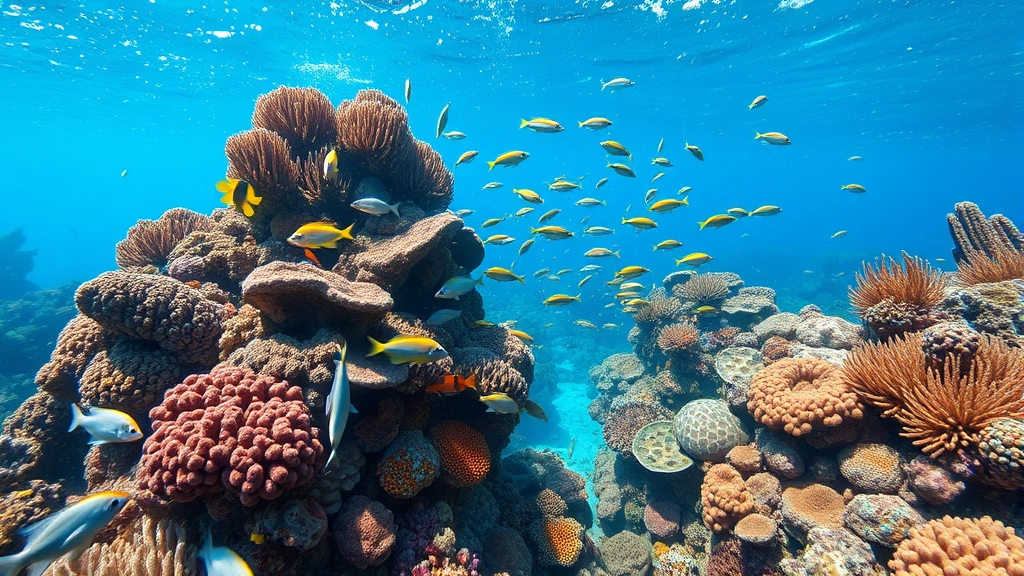
The physical environment functions through interconnected biogeochemical cycles that move energy and matter between living and non-living components. The carbon cycle exemplifies this integration: atmospheric carbon dioxide enters plants through photosynthesis, becomes incorporated into biomass and soil, returns to the atmosphere through respiration and decomposition, and accumulates in geological deposits over millennia. Human activities—particularly fossil fuel combustion and deforestation—have dramatically accelerated atmospheric carbon concentration from pre-industrial levels of 280 parts per million to current levels exceeding 420 ppm, fundamentally altering climate systems and ocean chemistry. This disruption demonstrates how human economic activity can overwhelm natural biogeochemical regulatory capacity.
The nitrogen cycle involves transformations between atmospheric nitrogen, nitrate in soil, proteins in biomass, and ammonia in water. Nitrogen availability limits primary productivity in many ecosystems, making nitrogen fixation—performed by specialized bacteria and lightning-induced atmospheric oxidation—essential for ecosystem productivity. Industrial nitrogen fixation for fertilizer production now exceeds natural fixation globally, creating nutrient imbalances, coastal dead zones, and groundwater contamination. The phosphorus cycle lacks an atmospheric component, moving through rock weathering, biological uptake, and sediment deposition. Phosphorus mining and synthetic fertilizer application have increased bioavailable phosphorus, driving eutrophication in aquatic systems. The hydrological cycle circulates water through evaporation, condensation, precipitation, infiltration, and runoff, regulating freshwater distribution and chemical weathering rates.
These cycles interact in complex ways that environmental economists must understand when valuing natural capital. Water quality depends on nitrogen and phosphorus cycling; climate stability depends on carbon cycling; soil fertility depends on nitrogen and phosphorus cycling. Disrupting one cycle cascades through others, creating economic costs through reduced agricultural productivity, increased water treatment expenses, and climate-related damages. Research from World Bank environmental programs quantifies these interconnections, estimating that ecosystem service disruption costs global economies hundreds of billions annually. Understanding the physical environment means recognizing that these cycles represent economic assets—natural capital stocks generating flow values through regulatory and provisioning services.
Physical Environment and Economic Systems
Economic systems fundamentally depend on physical environment functions, yet conventional economics has historically treated natural capital as infinite or substitutable. The physical environment provides three essential economic services: provisioning services (food, freshwater, timber, minerals, genetic resources), regulating services (climate regulation, water purification, flood mitigation, disease control), and supporting services (nutrient cycling, soil formation, oxygen production, habitat provision). Every economic transaction ultimately depends on these services, from agriculture to manufacturing to service provision. A farmer’s productivity depends on soil formation processes developed over millennia; a pharmaceutical company’s innovation depends on genetic diversity maintained in natural ecosystems; an energy company’s infrastructure depends on climate stability provided by biogeochemical cycles.
Physical environment degradation creates what economists call negative externalities—costs imposed on society but not reflected in market prices. When a factory pollutes water, downstream users bear costs of treatment or health effects, yet the factory’s accounting rarely captures these expenses. When deforestation reduces water infiltration, flooding damages increase, yet the logger’s profits don’t account for flood-mitigation service loss. These market failures mean prices don’t reflect true scarcity of environmental services, leading to overexploitation. Understanding the physical environment in economic terms requires moving beyond price-based valuation to encompass biophysical limits and irreversibility thresholds. Some environmental damage—species extinction, ice sheet collapse, aquifer depletion—proves irreversible on human timescales, creating potential for catastrophic economic disruption.
The relationship between environmental degradation and economic inequality deserves emphasis. Wealthy populations often externalize environmental costs onto poorer communities through global supply chains, pollution export, and resource extraction in developing nations. Understanding the physical environment’s economic dimensions requires examining justice dimensions: who benefits from environmental resource use, and who bears costs of environmental degradation? This connects directly to broader questions about environment and society interactions and sustainable development pathways that benefit all populations rather than concentrating gains while dispersing harms.
Ecosystem Services and Natural Capital
Ecological economists have developed sophisticated frameworks for understanding how physical environment components generate economic value through ecosystem services. The Millennium Ecosystem Assessment, a comprehensive UN-sponsored evaluation, identified and quantified major ecosystem services globally. Wetlands filter water and provide flood mitigation worth thousands of dollars per hectare annually. Coral reefs provide fish nurseries, coastal protection, and tourism value exceeding $375,000 per hectare per year. Forests provide carbon storage, water regulation, and biodiversity habitat worth $2,000-5,000 per hectare annually, depending on location and forest type. Pollination services—performed by bees, birds, and other animals—generate estimated global value of $15-20 billion annually in agricultural productivity.
Valuing these services involves methodological challenges that reveal deep questions about human-environment relationships. Contingent valuation surveys ask people how much they’d pay to protect environmental amenities. Hedonic pricing examines how environmental quality affects real estate values. Replacement cost methods calculate expenses of replacing ecosystem services with technological alternatives—for instance, artificial water treatment replacing natural wetland filtration. Benefit transfer applies valuations from studied sites to unstudied locations. Each method involves assumptions and limitations, yet all reach similar conclusions: natural capital provides enormous economic value, often worth more preserved than converted. A mangrove forest left standing provides greater long-term economic value through fisheries support, storm protection, and carbon storage than cleared for shrimp farming, yet market prices don’t capture this reality, leading to mangrove destruction across Southeast Asia and West Africa.
Understanding physical environment services connects to career pathways in environmental protection. Professionals working in careers that help the environment apply these concepts to design conservation strategies, environmental impact assessments, and restoration projects. Ecological economists, environmental engineers, conservation biologists, and policy analysts all require deep understanding of how physical environment components provide measurable economic value. This professionalization of environmental knowledge reflects growing recognition that environmental protection isn’t a luxury but an economic necessity.
Measuring and Monitoring Physical Environment Change
Quantifying physical environment conditions requires sophisticated monitoring systems combining ground-based measurements, remote sensing, and modeling. Atmospheric monitoring through networks like NOAA’s Global Monitoring Laboratory tracks carbon dioxide, methane, ozone, and aerosol concentrations. Satellite instruments measure atmospheric composition, cloud cover, and radiation balance. Hydrological monitoring involves stream gauges measuring water flow, groundwater wells measuring aquifer levels, and satellite altimetry measuring sea level. Water quality monitoring measures dissolved oxygen, nutrient concentrations, temperature, and contaminant levels. Lithosphere monitoring includes soil sampling for carbon content and contamination, seismic networks measuring earthquake activity, and satellite imaging tracking land use change and erosion.
These monitoring systems reveal dramatic environmental changes occurring on decadal timescales. Global average temperatures have increased approximately 1.1°C since pre-industrial times, with acceleration over recent decades. Sea levels have risen approximately 21 centimeters since 1880, accelerating to current rates of 3-4 millimeters annually. Atmospheric carbon dioxide concentrations increase approximately 2-3 ppm annually. Ocean acidification reduces seawater pH by 0.1 units per century—seemingly small but representing 30% increase in hydrogen ion concentration. Biodiversity indicators show population declines averaging 68% among monitored vertebrate species since 1970. These changes occur at rates unprecedented in recent geological history, creating challenges for ecosystem adaptation and economic planning.
Monitoring data feeds into environmental accounting systems that attempt to measure sustainable development. Natural capital accounting extends conventional national accounting to include environmental assets and their depletion. Rather than treating resource extraction as pure income, natural capital accounting recognizes depletion of non-renewable resources and degradation of renewable resources as reduction in national wealth. Countries implementing natural capital accounts—including Australia, Mexico, and several European nations—reveal that conventional GDP growth often masks declining environmental wealth. These accounting innovations represent crucial steps toward aligning economic measurement with biophysical reality, ensuring that human environment interaction examples include recognition of environmental costs alongside economic benefits.
Environmental Economics Perspective
Environmental economics provides theoretical and practical frameworks for understanding physical environment value and designing policies for sustainable resource management. The field emerged from recognition that environmental quality represents an economic good—scarce, valuable, and subject to supply and demand dynamics—yet often priced at zero because markets haven’t developed. Cap-and-trade systems create markets for pollution rights, allowing firms to buy and sell permits to emit greenhouse gases or other pollutants. Pigouvian taxes impose charges on pollution or resource extraction, internalizing environmental costs into prices. Payments for ecosystem services compensate landowners for conservation activities, creating economic incentives for environmental protection.
These policy instruments rest on fundamental economic principle: equimarginal principle suggests optimal environmental protection occurs where marginal benefit of additional environmental quality equals marginal cost of achieving it. Too little environmental protection leaves valuable ecosystem services unprotected; too much environmental protection imposes excessive costs on productive activities. Finding this balance requires understanding both ecological thresholds—points beyond which ecosystem damage becomes irreversible—and economic valuation of alternative land uses. Climate change presents extreme challenge for this framework because potential catastrophic impacts create uncertainty about appropriate discount rates and valuation methodologies.
Research from institutions like UNEP (United Nations Environment Programme) demonstrates that environmental investments often generate positive economic returns through avoided damages, health benefits, and ecosystem service provision. Restoring wetlands costs thousands to tens of thousands of dollars per hectare but provides flood mitigation, water purification, and habitat services worth multiples of restoration costs. Renewable energy transition requires upfront capital investment but provides long-term energy cost reductions and health benefits from avoided air pollution. Understanding the physical environment from economic perspective means recognizing that environmental protection often represents wise economic investment rather than constraint on economic growth. This perspective increasingly dominates policy discussions at national and international levels, reflected in commitments to carbon neutrality, biodiversity protection, and circular economy transitions.
FAQ
What is the simplest definition of physical environment?
The physical environment encompasses all non-living natural elements and systems—atmosphere, water, soil, minerals, and their interactions—that form the material basis for life and economic activity. It includes the abiotic components of Earth’s systems, distinguishing them from living organisms, though these components interact intimately with biotic elements.
How does the physical environment differ from the natural environment?
Physical environment specifically emphasizes non-living components and processes, while natural environment encompasses both living and non-living elements. The natural environment includes ecosystems, organisms, and habitats alongside physical systems. In practice, these terms often overlap, though environmental scientists may use them to emphasize different aspects of environmental systems.
Why is understanding the physical environment important for economics?
Economic activity fundamentally depends on physical environment resources and services. Understanding physical environment means recognizing that all economic production ultimately depends on natural capital—stocks of environmental assets—and ecosystem services they generate. This understanding reveals true costs of environmental degradation and identifies opportunities for sustainable economic development that maintains environmental asset bases.
What are the main threats to the physical environment currently?
Primary threats include climate change from greenhouse gas accumulation, biodiversity loss from habitat destruction, pollution from industrial and agricultural chemicals, resource depletion from overexploitation, and land use change from development. These threats often interact, creating compounding environmental damage. Understanding these threats requires examining physical environment monitoring data and ecological research on ecosystem responses.
How can societies measure physical environment health?
Physical environment health assessment employs multiple indicators: atmospheric composition and temperature, water quality and quantity, soil productivity and carbon content, biodiversity measures, and ecosystem service provisioning capacity. Comprehensive assessment requires integrating these indicators into frameworks like natural capital accounting that reveal whether environmental assets are declining or remaining stable.
What role do biogeochemical cycles play in the physical environment?
Biogeochemical cycles—carbon, nitrogen, phosphorus, and hydrological cycles—constitute the functional mechanisms through which the physical environment sustains life and regulates conditions for civilization. These cycles move essential elements and water between living and non-living components, distributing nutrients and energy. Human disruption of these cycles creates environmental degradation with direct economic consequences.


