Role of Critical Environment Technicians: Expert Insight
Critical environment technicians represent an essential workforce bridging scientific knowledge and practical environmental management. These skilled professionals operate at the intersection of ecological monitoring, regulatory compliance, and sustainable resource management, addressing some of the most pressing environmental challenges facing modern societies. As industries expand and environmental pressures intensify, the demand for qualified technicians who can accurately assess, monitor, and mitigate environmental impacts continues to grow exponentially.
The work of critical environment technicians extends far beyond routine monitoring tasks. These professionals conduct sophisticated environmental assessments, analyze complex data sets, troubleshoot contamination issues, and ensure compliance with increasingly stringent environmental regulations. Their expertise directly influences corporate decision-making, policy implementation, and the effectiveness of environmental protection strategies across sectors ranging from manufacturing and energy production to agriculture and urban development.

What Are Critical Environment Technicians?
Critical environment technicians are specialized professionals who implement and maintain environmental management systems, conduct field investigations, and ensure organizations meet environmental standards and regulations. Unlike environmental scientists who typically focus on research and theoretical frameworks, these technicians translate scientific principles into actionable operational procedures. They serve as the practical backbone of environmental management programs, working directly with equipment, conducting field sampling, analyzing data, and documenting results with precision and accuracy.
The role encompasses significant responsibility for protecting both natural ecosystems and human health. Critical environment technicians work in diverse settings including manufacturing facilities, waste management sites, water treatment plants, construction projects, and government environmental agencies. Their work directly supports environmental science applications in real-world contexts, translating theoretical knowledge into measurable environmental improvements.
These professionals must understand the complex relationships between human environment interaction and ecosystem health. They recognize that industrial activities, agricultural practices, and urban development create cascading environmental effects that require careful monitoring and management. Their expertise helps organizations minimize negative impacts while optimizing resource efficiency.
Core Responsibilities and Daily Tasks
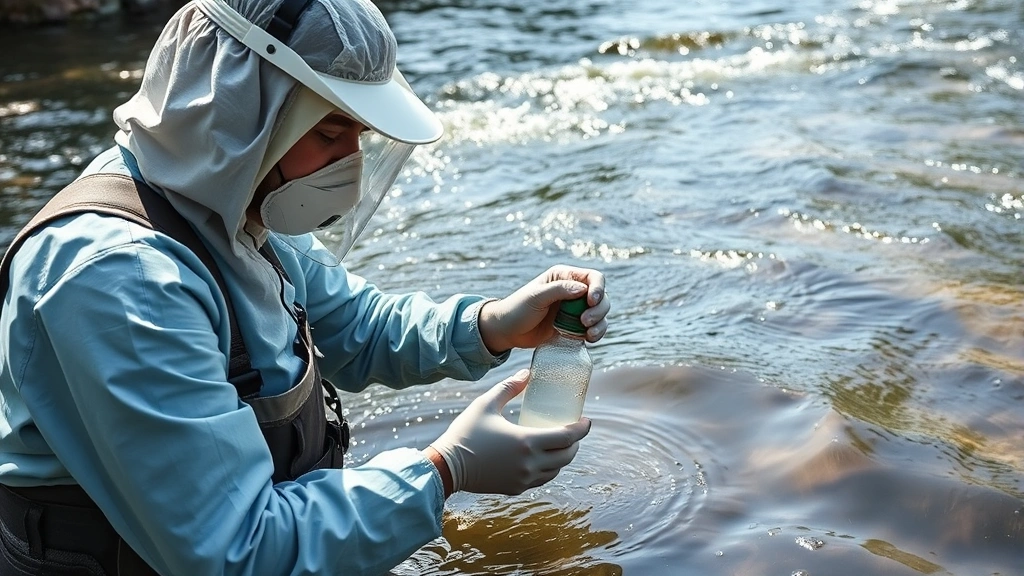
The daily responsibilities of critical environment technicians vary significantly based on their specific sector and organization, yet several core functions remain consistent. These professionals conduct environmental sampling across multiple media including air, water, soil, and biological samples. They operate specialized equipment such as spectrometers, chromatographs, pH meters, dissolved oxygen analyzers, and particulate matter monitors. Each measurement requires meticulous attention to detail, proper calibration protocols, and adherence to standardized testing procedures.
Environmental monitoring represents a substantial portion of technician responsibilities. They establish monitoring networks, collect samples at predetermined locations and intervals, and maintain detailed documentation of all field activities. This work supports environment and society relationships by ensuring that industrial and commercial activities remain within acceptable environmental parameters. Data collected through these monitoring programs informs regulatory decisions, remediation efforts, and long-term environmental planning.
Critical environment technicians also conduct site assessments and environmental audits. When contamination is suspected or discovered, these professionals investigate the extent and nature of the problem, identify potential sources, and recommend appropriate remediation strategies. This investigative work requires systematic thinking, problem-solving ability, and thorough understanding of contaminant behavior in various environmental media.
Documentation and reporting constitute essential responsibilities. Technicians prepare detailed reports of their findings, maintain compliance documentation, and communicate results to engineers, scientists, regulators, and management personnel. Clear communication of technical information to diverse audiences—from highly specialized professionals to non-technical stakeholders—represents a critical skill in this role.
Quality assurance and quality control activities ensure the validity and reliability of all environmental data. Technicians calibrate equipment regularly, maintain laboratory standards, participate in proficiency testing programs, and implement corrective actions when quality objectives are not met. This commitment to data quality directly impacts the credibility of environmental assessments and the effectiveness of management decisions based on that data.
Essential Skills and Competencies
Success as a critical environment technician requires a diverse skill set combining technical expertise, analytical thinking, and practical problem-solving ability. Technical competency forms the foundation, including proficiency with environmental testing equipment, understanding of analytical methods, and knowledge of relevant regulations and standards. Technicians must master complex instrumentation, understand the scientific principles underlying various testing procedures, and recognize when results fall outside expected parameters.
Data analysis and interpretation skills enable technicians to extract meaningful information from environmental measurements. They must understand statistical concepts, recognize trends and anomalies in data sets, and communicate findings effectively. Modern environmental work increasingly relies on digital tools and software platforms, requiring technicians to maintain current technological competencies.
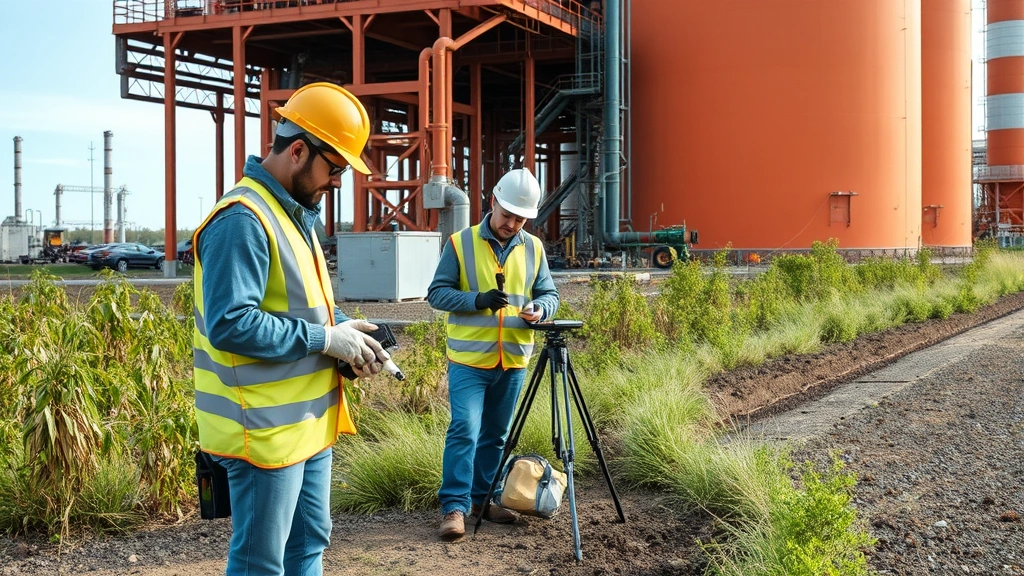
Field work capabilities distinguish environmental technicians from purely laboratory-based professionals. They must safely operate in challenging field conditions, work at heights, handle hazardous materials appropriately, and maintain accurate field notes and chain-of-custody documentation. Physical stamina, attention to detail, and commitment to safety protocols are non-negotiable requirements.
Regulatory knowledge ensures that organizations maintain compliance with environmental laws and standards. Technicians must understand applicable regulations including the Clean Air Act, Clean Water Act, Resource Conservation and Recovery Act, and state-specific environmental requirements. This regulatory literacy helps technicians recognize compliance issues before they become violations.
Communication abilities enable technicians to translate technical information into formats accessible to diverse audiences. They prepare technical reports for specialists, create summaries for management, and explain environmental concepts to community stakeholders. Effective communication prevents misunderstandings and ensures that environmental findings influence appropriate decision-making.
Problem-solving orientation allows technicians to address unexpected challenges in the field or laboratory. When equipment malfunctions, when results seem inconsistent, or when environmental conditions complicate sampling procedures, technicians must troubleshoot systematically and implement solutions that maintain data quality.
Educational Pathways and Certifications
Multiple educational pathways lead to careers as critical environment technicians. Most positions require at minimum an associate degree in environmental science, environmental technology, chemistry, or a related field. These two-year programs provide foundational knowledge in environmental principles, analytical chemistry, environmental regulations, and practical laboratory techniques. Community colleges and technical schools throughout North America offer these programs, making environmental technician education accessible to students from diverse backgrounds.
Some technicians pursue bachelor’s degrees in environmental science or engineering, which provide deeper technical knowledge and often lead to advancement opportunities. Bachelor’s graduates may transition into supervisory roles, specialized positions, or advanced technical work that requires more extensive theoretical understanding.
Professional certifications enhance career prospects and demonstrate commitment to professional standards. The Certified Environmental Technician (CET) credential, offered through the National Association of Environmental Professionals, represents a widely recognized certification. Other relevant certifications include Certified Environmental Compliance Auditor (CECA), Hazardous Waste Operations and Emergency Response (HAZWOPER) certification, and water quality certifications specific to particular testing parameters.
Continuing education maintains and expands technician competencies throughout their careers. Environmental regulations evolve, new testing methods develop, and technological advances create opportunities for professional growth. Many employers require technicians to maintain current certifications and complete annual training hours in specialized areas.
Hands-on training in specific equipment and methodologies often occurs through employer-provided programs or manufacturer training. This specialized training ensures that technicians can operate equipment safely and effectively, adhering to established protocols that ensure data quality and safety compliance.
Impact on Environmental Compliance
Critical environment technicians serve as primary implementers of environmental compliance strategies within organizations. Their work directly determines whether facilities meet regulatory requirements and whether environmental impacts remain within acceptable limits. This responsibility carries significant weight, as non-compliance can result in substantial fines, operational shutdowns, legal liability, and reputational damage.
The data collected by technicians forms the foundation for environmental compliance documentation. Regulatory agencies require organizations to demonstrate ongoing monitoring and maintenance of environmental standards. Technicians provide the evidence through meticulously documented sampling results, analysis reports, and compliance certifications. Without competent technicians conducting rigorous monitoring, organizations cannot prove compliance even if they are actually meeting standards.
Technicians also identify emerging compliance issues before they become violations. By recognizing trends in environmental data, they alert management and engineering teams to potential problems requiring corrective action. This proactive approach prevents violations and demonstrates good environmental stewardship to regulatory agencies.
The work of critical environment technicians supports broader types of environment protection efforts. Whether monitoring air quality at industrial facilities, testing effluent at wastewater treatment plants, or assessing soil contamination at remediation sites, technicians contribute to comprehensive environmental protection across multiple environmental compartments.
Career Growth and Industry Demand
Employment demand for environmental technicians continues to grow as environmental regulations expand and organizations prioritize sustainability. The U.S. Bureau of Labor Statistics projects steady growth in environmental science and protection occupations, with environmental technicians representing a significant portion of this workforce. Industries including manufacturing, energy production, waste management, construction, and government agencies all employ critical environment technicians.
Career advancement opportunities abound for experienced technicians. Many transition into supervisory roles overseeing teams of technicians and coordinating environmental programs. Others specialize in particular environmental disciplines such as air quality, water quality, hazardous waste management, or contaminated site remediation. Some technicians pursue further education and transition into environmental engineering or environmental science careers.
Salary prospects for critical environment technicians remain attractive, with median wages exceeding those of many comparable technical positions. Compensation varies based on geographic location, industry sector, experience level, and educational credentials. Technicians in specialized fields or supervisory positions typically earn higher wages than entry-level technicians.
The transition to sustainable economics and positive impacts on the environment by humans creates expanding opportunities for environmental technicians. As organizations implement renewable energy systems, circular economy practices, and ecosystem restoration projects, they require technicians to monitor environmental performance and ensure that sustainability initiatives achieve intended outcomes.
Challenges and Future Directions
Critical environment technicians face evolving challenges as environmental problems become more complex and regulatory requirements more stringent. Climate change introduces new variables to environmental monitoring. Traditional baseline data may no longer reflect appropriate comparison points as climate patterns shift. Technicians must adapt monitoring protocols to capture climate-related environmental changes while maintaining consistency with historical data.
Emerging contaminants present ongoing challenges. Pharmaceuticals, personal care products, microplastics, and novel industrial chemicals increasingly appear in environmental samples. Traditional testing methods may not adequately detect or quantify these substances, requiring technicians to adopt new analytical approaches and maintain current knowledge of contaminant science.
Technology integration transforms environmental monitoring. Remote sensing, autonomous monitoring stations, real-time data transmission, and artificial intelligence applications enhance environmental assessment capabilities. Technicians must develop digital literacy and adapt to technology-driven work environments while maintaining the field skills that remain essential.
Interdisciplinary collaboration becomes increasingly important as environmental challenges span multiple domains. Critical environment technicians work alongside engineers, scientists, economists, and policy professionals. Success requires ability to understand diverse perspectives and communicate effectively across disciplinary boundaries.
The future of environmental technician work increasingly emphasizes environmental topics related to circular economy principles, ecosystem service assessment, and nature-based solutions. Technicians will monitor environmental outcomes of green infrastructure projects, assess biodiversity impacts, and evaluate carbon sequestration effectiveness. This evolution expands the scope of environmental technician work beyond traditional pollution monitoring toward comprehensive ecosystem assessment.
Looking forward, critical environment technicians will play essential roles in implementing climate adaptation strategies, monitoring renewable energy environmental impacts, and assessing ecological restoration outcomes. Their work will increasingly inform economic decisions about natural capital valuation and ecosystem service provision. As societies transition toward sustainable economic models, the expertise of environmental technicians becomes increasingly valuable to informed decision-making.
FAQ
What education do I need to become a critical environment technician?
Most positions require an associate degree in environmental science, environmental technology, chemistry, or related fields from accredited technical schools or community colleges. Some employers accept high school diplomas combined with extensive on-the-job training, though advancement opportunities are typically limited without additional credentials. Bachelor’s degrees provide competitive advantages for advancement into specialized or supervisory positions.
What certifications should critical environment technicians pursue?
The Certified Environmental Technician (CET) credential from the National Association of Environmental Professionals represents the primary professional certification. Additional certifications including HAZWOPER, water quality certifications, and industry-specific credentials enhance career prospects and demonstrate specialized competency. Continuing education maintains current certifications throughout your career.
What industries employ critical environment technicians?
Environmental technicians work across diverse sectors including manufacturing, energy production, waste management, water utilities, construction, consulting firms, government environmental agencies, and remediation companies. The breadth of employment opportunities reflects the universal need for environmental compliance and monitoring across virtually all economic sectors.
What is the job outlook for environmental technicians?
Employment projections indicate steady growth in environmental technician positions, driven by expanding environmental regulations, organizational sustainability commitments, and increasing emphasis on environmental monitoring. Growing awareness of climate change and pollution issues further supports demand for skilled environmental professionals.
How much do critical environment technicians earn?
Median wages for environmental technicians vary by location, industry, and experience, but typically range from $40,000 to $65,000 annually. Supervisory positions, specialized roles, and technicians in high-cost regions may earn substantially more. Salary growth accelerates with experience, advanced certifications, and movement into leadership positions.
What daily challenges do environmental technicians face?
Environmental technicians work in challenging field conditions including extreme weather, hazardous materials, and physically demanding situations. They must maintain meticulous attention to detail while working under time and budget constraints. Balancing regulatory requirements with operational efficiency creates ongoing professional challenges requiring judgment and problem-solving ability.


