
Boosting Economy with Biodiversity: Study Insights
Recent economic research reveals a compelling paradox: the world’s most biodiverse regions often struggle with poverty, while wealthy nations have systematically degraded their natural ecosystems. This disconnect stems from how traditional economics measures value. When we fail to account for how humans affect the environment through biodiversity loss, we ignore trillions of dollars in ecosystem services. Forests, wetlands, coral reefs, and grasslands provide pollination, water purification, climate regulation, and genetic resources that underpin economic productivity across all sectors.
Emerging evidence from ecological economics demonstrates that biodiversity protection and economic growth are not mutually exclusive—they are deeply interconnected. Countries investing in conservation report measurable returns through sustainable agriculture, pharmaceutical development, ecotourism, and climate resilience. This article synthesizes recent studies examining how biodiversity-rich strategies reshape economic development, challenge conventional cost-benefit analyses, and create pathways toward genuine prosperity that respects planetary boundaries.

Biodiversity as Economic Capital
Traditional economic frameworks treat biodiversity as an externality—a factor outside market calculations. However, leading ecological economists now conceptualize biological diversity as essential capital infrastructure, comparable to manufactured capital or human capital. The World Bank estimates that natural capital comprises approximately 26% of total wealth in developing countries, with biodiversity representing a significant portion of this valuation.
When we examine specific case studies, the economic logic becomes undeniable. Madagascar’s rainforests, containing 90% endemic species found nowhere else on Earth, represent incalculable genetic repositories. Yet these forests face destruction for subsistence farming and timber extraction. Studies demonstrate that protecting these ecosystems generates greater long-term economic returns through pharmaceutical discoveries, climate stabilization, and watershed protection than conversion to agricultural land yields short-term returns. The concept of human environment interaction fundamentally shifts when we recognize biodiversity as a productive asset rather than a constraint on development.
Research from the Convention on Biological Diversity indicates that every dollar invested in biodiversity conservation returns between $5 and $15 in ecosystem service benefits. This ratio compares favorably to most infrastructure investments and far exceeds returns from extractive industries that degrade biological systems. Countries like Costa Rica, which dedicated 25% of land to protected areas while maintaining economic growth, demonstrate this principle in practice.
Ecosystem Services Valuation
Quantifying ecosystem services requires sophisticated methodologies that translate biological processes into economic metrics. Pollination services alone—entirely dependent on biodiversity—represent over $500 billion annually in global agricultural output. Waterbirds, bats, insects, and native plants provide these services freely when ecosystems remain intact, yet their loss imposes staggering costs on farmers requiring expensive mechanical or chemical alternatives.
Water purification exemplifies another critical service. Wetlands and riparian forests naturally filter contaminants, preventing waterborne diseases and reducing treatment costs. A study of New York City’s watershed demonstrated that protecting Catskill Mountain forests cost $1.5 billion—substantially less than the $8 billion required for artificial water treatment infrastructure. This analysis reveals how creating optimal conditions for natural systems often proves more economically efficient than engineered substitutes.
Carbon sequestration represents perhaps the most economically significant ecosystem service. Forests, mangroves, seagrass meadows, and peatlands absorb atmospheric carbon dioxide, mitigating climate change. As carbon pricing mechanisms expand globally, these natural carbon sinks generate measurable economic value. Tropical rainforests alone sequester approximately 150-200 tons of carbon per hectare, equivalent to hundreds of dollars per year at current carbon prices.
Researchers from the University of Cambridge and UNEP have developed standardized protocols for ecosystem service accounting. These methodologies enable governments to incorporate natural capital depreciation into national accounting systems, revealing that many nations actually experience negative economic growth when environmental degradation is properly accounted for.
Agricultural Productivity and Genetic Diversity
Modern agriculture depends almost entirely on biodiversity, yet industrial farming practices systematically reduce it. Crop genetic diversity provides insurance against pests, diseases, and climate variability. The Irish Potato Famine occurred partly because monoculture farming eliminated genetic variation that might have conferred disease resistance. Contemporary agriculture faces similar risks as farmers worldwide depend on increasingly narrow genetic bases.
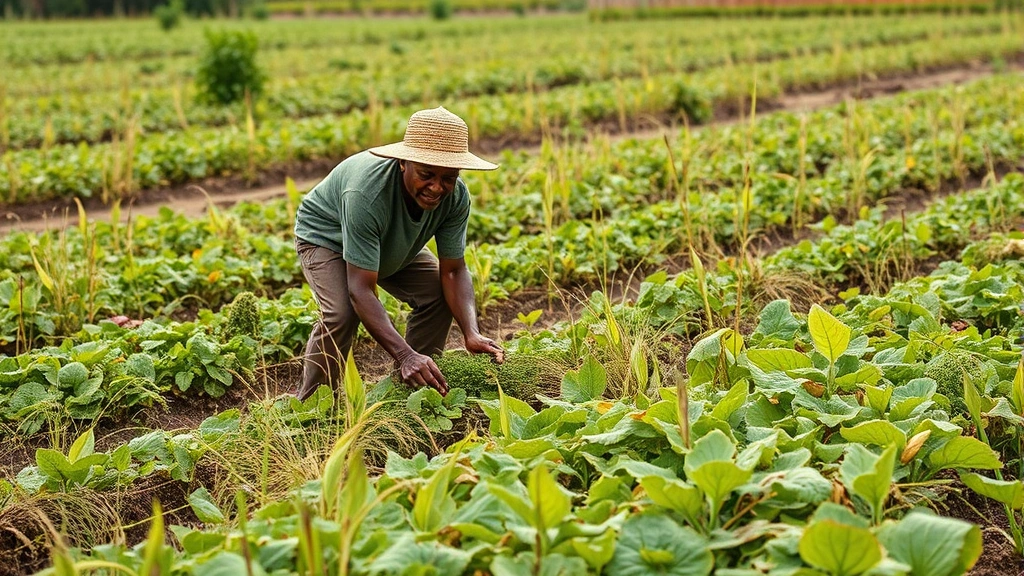
Studies examining polyculture and agroforestry systems—approaches that integrate multiple species within agricultural landscapes—show productivity matching or exceeding monocultures while building resilience. These systems maintain soil health, reduce pest pressure through natural predator-prey relationships, and provide diversified income streams. Farmers practicing environmental stewardship across multiple variables report 20-30% higher long-term profitability than conventional monoculture operators.
Crop wild relatives—uncultivated species related to domesticated crops—represent irreplaceable genetic resources. These plants often possess traits essential for adaptation to climate change: drought tolerance, disease resistance, and nutritional density. Yet crop wild relatives face extinction as natural habitats disappear. The Crop Trust estimates that protecting these genetic resources requires investments of less than $1 per person annually, while potential losses from preventable crop failures would cost hundreds of billions.
Indigenous agricultural systems, developed over millennia, demonstrate sophisticated biodiversity management. Traditional farmers in the Andes maintain thousands of potato varieties, each adapted to specific elevations, climates, and soil conditions. As global temperatures shift, this genetic diversity becomes increasingly valuable. Economic analyses show that supporting indigenous agricultural knowledge systems generates better returns than attempting to replace traditional practices with industrial monoculture.
Pharmaceutical and Biotechnology Returns
Approximately 40% of modern pharmaceutical drugs derive from natural compounds discovered in biodiversity-rich regions. The economic value is staggering: a single drug discovery can generate billions in revenue. Aspirin originated from willow bark; the Madagascar periwinkle yields compounds for treating childhood leukemia and Hodgkin’s disease; Pacific yew trees produce Taxol, a cancer therapeutic worth billions annually.
Yet pharmaceutical companies invest minimal resources in bioprospecting relative to potential returns. The problem stems from how intellectual property systems allocate benefits. Companies from wealthy nations extract genetic material from biodiverse developing countries without adequate compensation to source nations or indigenous communities possessing traditional knowledge. This inequitable distribution discourages conservation in biodiversity-rich regions, where local communities see few economic benefits from protecting forests that global pharmaceutical companies profit from.
Biotechnology industries increasingly depend on biodiversity. Enzymes from thermophilic bacteria enable PCR technology fundamental to genetic research. Compounds from marine organisms inspire drug development and materials science. As synthetic biology advances, the economic value of natural genetic libraries accelerates. Protecting biodiversity represents an investment in future pharmaceutical pipelines and biotechnological innovation.
Research published in Nature demonstrates that regions with highest endemism—unique species found nowhere else—correlate strongly with pharmaceutical potential. Yet these same regions often lack resources for conservation. Economic policies that fairly distribute bioprospecting revenues could simultaneously fund conservation and benefit source nations.
Ecotourism and Recreation Economics
Ecotourism represents one of the fastest-growing economic sectors globally, valued at over $300 billion annually. Unlike extractive industries that destroy the biological resources they depend on, ecotourism creates economic incentives to maintain biodiversity. A single charismatic megafauna species—elephants, tigers, gorillas—can generate more revenue through tourism than through poaching or habitat conversion.
Costa Rica exemplifies ecotourism success. By protecting biodiversity and marketing itself as an eco-destination, the country attracts millions of visitors annually, generating over $4 billion in tourism revenue while maintaining 25% of land in protected areas. This economic model supports both conservation and development, creating employment in rural communities while preserving ecosystems.
Beyond charismatic megafauna, biodiversity-rich landscapes provide recreational and spiritual benefits that economists increasingly quantify. Hiking, birdwatching, fishing, and nature photography generate trillions in global spending. Mental health benefits from nature exposure reduce healthcare costs. Studies show that proximity to biodiverse natural areas correlates with reduced stress, depression, and anxiety, generating measurable public health savings.
The economic value of nature-based recreation extends to property values. Real estate adjacent to protected areas and biodiverse landscapes commands significant premiums. This capitalization of nature’s value in property markets demonstrates how markets implicitly recognize biodiversity’s economic importance when prices reflect ecosystem proximity.
Climate Resilience and Risk Reduction
Biodiversity provides crucial resilience against climate change impacts. Diverse forests withstand extreme weather better than monocultures; diverse agricultural systems tolerate drought and flooding; diverse fisheries adapt to changing ocean conditions. Economic modeling of climate scenarios reveals that biodiversity protection reduces adaptation costs substantially.
Mangrove forests protect coastlines from storm surge while sequestering carbon at rates 10 times higher than terrestrial forests. Their economic value for coastal protection alone exceeds $50,000 per hectare, yet they face destruction for aquaculture and development. Protecting these ecosystems represents climate adaptation infrastructure that costs far less than seawalls or other engineered alternatives.
Coral reefs support fisheries feeding over 1 billion people and generate $375 billion annually in economic value through fishing, tourism, and pharmaceutical compounds. Yet reef degradation accelerates as ocean temperatures rise and acidification increases. The economic case for reef protection through climate mitigation and adaptation far exceeds costs of coral restoration programs.
Insurance and financial markets increasingly incorporate biodiversity loss into risk assessments. Companies dependent on pollination, water availability, or climate stability face growing financial risks from ecosystem degradation. This economic recognition drives corporate investment in biodiversity protection along supply chains, representing a market-driven conservation mechanism.
Policy Integration and Implementation
Translating biodiversity’s economic value into policy requires fundamental shifts in how governments measure prosperity and allocate resources. Several approaches show promise. Natural capital accounting integrates ecosystem service values into national GDP calculations, revealing true economic performance. Nations adopting these systems—including Australia, Mexico, and several European countries—discover that conventional GDP growth masks environmental depreciation.
Payment for ecosystem services programs directly compensate landowners for maintaining biodiversity. Costa Rica’s payment scheme, among the world’s most successful, pays farmers for forest conservation, carbon sequestration, and water protection. This mechanism aligns private incentives with public ecological benefits, creating sustainable funding for conservation.
Biodiversity offsets allow developers to compensate for habitat destruction by funding conservation elsewhere. While controversial, well-designed offset programs can generate net conservation benefits. The key involves ensuring additionality—that funded conservation would not occur without offset payments—and permanence.
International agreements including the Convention on Biological Diversity increasingly incorporate economic frameworks. The Kunming-Montreal Global Biodiversity Framework includes targets for mainstreaming biodiversity into economic sectors and redirecting harmful subsidies. These policy developments recognize that achieving conservation goals requires economic transformation, not just environmental protection.
However, implementation remains challenging. Developing nations often lack capacity for complex biodiversity valuation and accounting. Wealthy nations sometimes resist policies that threaten established economic interests. Overcoming these barriers requires technical support, technology transfer, and financial mechanisms ensuring that biodiversity protection does not impose unfair burdens on developing countries.
FAQ
How do economists measure biodiversity’s economic value?
Economists use multiple methodologies: market-based approaches value traded goods like timber and fish; cost-replacement methods estimate expenses for replacing ecosystem services artificially; contingent valuation surveys reveal what people would pay to preserve ecosystems; and hedonic pricing analyzes how biodiversity affects property values and other market prices. Combining these approaches provides comprehensive economic assessments.
Can biodiversity protection occur without limiting economic growth?
Evidence increasingly suggests biodiversity protection and economic growth are complementary. Studies show that sustainable built environments that incorporate natural systems outperform conventional development economically. Countries like Costa Rica and Bhutan demonstrate that strong environmental protection and economic development coexist successfully. However, this requires shifting from extractive toward regenerative economic models.
What role should indigenous communities play in biodiversity economics?
Indigenous peoples manage approximately 80% of remaining biodiverse regions despite comprising 5% of global population. Recognizing indigenous land rights and compensating communities for traditional ecological knowledge represents both ethical imperative and economically sound policy. Research demonstrates that indigenous-managed lands maintain biodiversity more effectively than government-protected areas, justifying economic investments in indigenous conservation leadership.
How do carbon markets affect biodiversity protection economics?
Carbon markets create financial incentives for forest and wetland conservation, generating revenue streams supporting biodiversity protection. However, carbon-focused policies risk neglecting non-carbon ecosystem values. Integrated approaches that value multiple ecosystem services—pollination, water purification, and biodiversity itself—alongside carbon sequestration provide more comprehensive economic frameworks than carbon-only schemes.
What barriers prevent biodiversity economics from driving policy?
Key obstacles include: short-term political incentives favoring immediate extraction over long-term ecosystem benefits; entrenched interests in extractive industries; insufficient funding for ecosystem service valuation in developing countries; difficulty quantifying non-market values; and disagreement about appropriate discount rates for future ecosystem benefits. Overcoming these requires political will, technical capacity building, and international support mechanisms.


