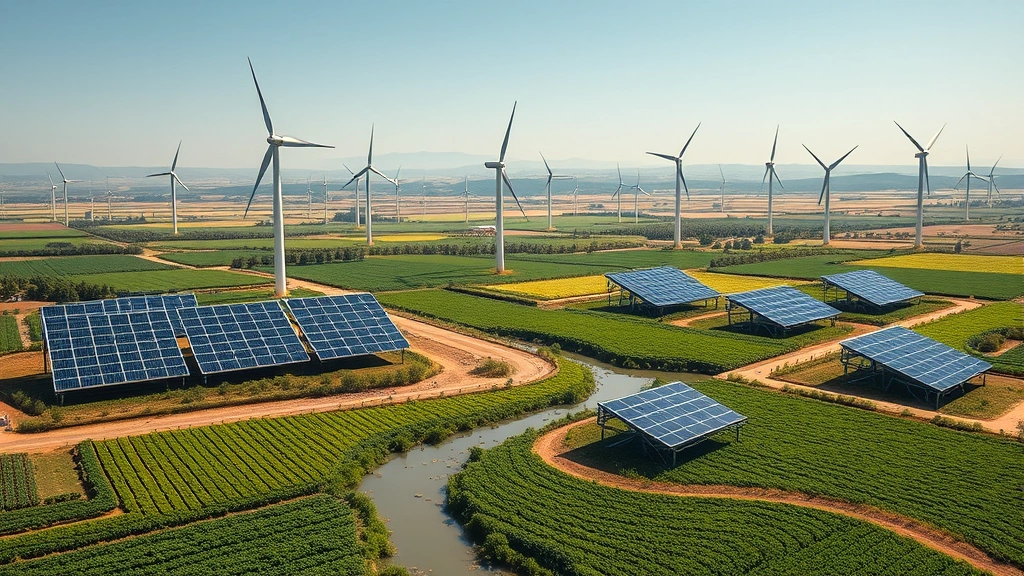
Adapting Economies to Environment: Analyst Insights
The relationship between economic systems and environmental sustainability has evolved from a peripheral concern to a central imperative for policymakers, businesses, and investors worldwide. As climate change accelerates, biodiversity collapses, and resource depletion threatens supply chains, economies must fundamentally restructure their operational frameworks. This transformation represents one of the most significant economic shifts since industrialization, requiring integration of ecological principles into core economic models and decision-making processes.
Understanding how to adapt economies to environmental constraints demands rigorous analysis of interconnected systems. The traditional growth paradigm, which externalized environmental costs, can no longer sustain competitive advantage or long-term prosperity. Leading economists and environmental analysts now recognize that human environment interaction fundamentally shapes economic outcomes. Organizations implementing adaptive strategies demonstrate resilience while creating new market opportunities in green technologies, regenerative agriculture, and circular economy models.
This comprehensive analysis examines how forward-thinking economies are restructuring to align with environmental realities, supported by empirical research, case studies, and strategic frameworks that demonstrate profitability and sustainability are complementary objectives rather than competing priorities.

The Economic-Environmental Nexus: Understanding Systemic Integration
Economic systems operate within biophysical boundaries that determine resource availability, waste absorption capacity, and service provision. Understanding the definition of environment science provides essential context for economic analysis. The environment functions as both a resource provider and waste sink—two critical economic functions that mainstream economics historically undervalued. This oversight created systematic distortions where environmentally destructive activities appeared economically rational because their true costs were not reflected in market prices.
The concept of biological community of interacting organisms and their physical environment reveals how economic production depends entirely on ecosystem services. Pollination, water filtration, climate regulation, and nutrient cycling represent trillions of dollars in annual economic value that remain largely unpriced. When economies adapt to environmental constraints, they essentially acknowledge that continued extraction of these services without compensation inevitably leads to system collapse.
Recent analysis from the World Bank’s environmental economics division demonstrates that nations implementing comprehensive environmental accounting—which values natural capital alongside financial capital—consistently outperform those using traditional GDP metrics. Countries measuring genuine progress or adjusted net savings reveal that conventional growth rates mask underlying environmental degradation and resource depletion.
Adapting economies to environmental realities requires fundamental reconceptualization of value creation. This means integrating ecosystem health metrics into corporate earnings reports, sovereign credit ratings, and investment decisions. The transition acknowledges that economic productivity ultimately depends on ecosystem productivity, creating direct incentives for environmental stewardship.

Macroeconomic Restructuring for Environmental Adaptation
National economies pursuing environmental adaptation implement structural changes across multiple dimensions. Energy systems transition from fossil fuels to renewable sources, manufacturing shifts toward circular economy principles, and agricultural production adopts regenerative practices. These transitions simultaneously reduce environmental impact and create new economic opportunities.
The financial sector plays a crucial catalytic role in macroeconomic restructuring. Central banks increasingly incorporate climate risk into monetary policy frameworks. The United Nations Environment Programme (UNEP) estimates that transitioning to sustainable energy systems alone requires approximately $2 trillion in annual investment by 2030. This represents unprecedented capital reallocation from carbon-intensive to clean technology sectors.
Employment transformation accompanies sectoral restructuring. Fossil fuel industry jobs decline while renewable energy, ecosystem restoration, and green manufacturing employment expand. Evidence from countries with aggressive environmental adaptation policies shows net employment gains despite transition challenges. Germany’s energy transition, known as the Energiewende, has created over 300,000 jobs in renewable energy and related sectors, offsetting coal industry employment losses.
Macroeconomic adaptation also requires rethinking trade relationships. Supply chain resilience becomes critical as environmental disruptions increase. Economies with diverse, localized production systems prove more resistant to climate shocks than those dependent on long, fragile global supply chains. This drives reinvestment in regional manufacturing capacity and agricultural diversification.
Sectoral Transformation and Green Investment
Different economic sectors face distinct adaptation imperatives. Agriculture, representing approximately 4% of global GDP but employing over 1 billion people, must transition toward regenerative practices that rebuild soil health while maintaining productivity. This transformation involves crop rotation, reduced chemical inputs, and integration of livestock management—approaches that simultaneously improve environmental outcomes and farm profitability through reduced input costs and premium market access.
Manufacturing sectors pursuing environmental adaptation implement circular economy principles that eliminate waste through product redesign, material recovery, and reuse systems. Companies like Interface, the carpet manufacturer, have restructured entire production systems around zero-waste objectives while improving financial performance. The circular economy model creates competitive advantages through material cost reductions, supply chain resilience, and brand differentiation.
The built environment sector—construction, real estate, and urban development—accounts for approximately 40% of global carbon emissions and 30% of waste generation. Adaptation strategies include green building standards, urban densification to reduce transportation demands, and retrofitting existing structures for energy efficiency. These investments demonstrate compelling return profiles: energy-efficient buildings reduce operating costs while commanding premium rental rates and asset valuations.
Financial services transformation proves essential for broader economic adaptation. Banks and investment firms implementing comprehensive environmental risk assessment identify climate-related financial risks early, while those ignoring environmental factors face stranded asset exposure. World Resources Institute research indicates that portfolios weighted toward sustainable companies outperform conventional indices over medium to long-term horizons, reflecting both risk mitigation and growth opportunity positioning.
Technology and innovation sectors experience explosive growth as environmental adaptation drives demand for clean energy solutions, efficiency technologies, and monitoring systems. Venture capital investment in climate technology exceeded $60 billion in 2021, doubling from 2015 levels, signaling investor confidence in adaptation-driven growth opportunities.
Pricing Environmental Externalities
Economic adaptation fundamentally requires accurate pricing of environmental impacts. Carbon pricing mechanisms—whether through carbon taxes or cap-and-trade systems—represent critical policy tools for internalizing previously external environmental costs. When carbon emissions carry economic consequences, market participants naturally shift toward lower-carbon alternatives.
The abbreviation of environment in policy discussions often obscures the specificity of environmental pricing mechanisms. Different environmental impacts require distinct pricing approaches: carbon pricing addresses climate impacts, nitrogen taxes address water pollution, plastic fees address waste accumulation, and biodiversity credits address ecosystem degradation. Comprehensive environmental adaptation requires multi-dimensional pricing that reflects the full spectrum of environmental impacts.
Evidence from jurisdictions implementing carbon pricing demonstrates measurable emissions reductions without economic collapse. British Columbia’s carbon tax, implemented in 2008, reduced emissions 5-15% below baseline projections while maintaining economic growth. The European Union Emissions Trading System, despite design limitations, has driven substantial investment in clean energy and efficiency technologies across member states.
Environmental pricing also drives innovation by creating economic incentives for developing lower-impact alternatives. When fossil fuels face carbon pricing, renewable energy becomes cost-competitive without subsidies. When virgin plastic carries disposal fees, recycled materials gain economic advantage. This mechanism-driven innovation proves more durable than subsidy-dependent programs because it creates permanent competitive advantages rather than temporary advantages dependent on government support continuation.
Innovation and Technological Adaptation
Technological innovation represents a critical adaptation pathway, though not a complete solution. Battery technology breakthroughs enable electric vehicle adoption, renewable energy storage, and grid modernization. Precision agriculture technologies optimize fertilizer and water application, reducing environmental impact while improving yields. Carbon capture and sequestration technologies, though currently expensive, demonstrate technical feasibility for removing atmospheric carbon.
However, technological optimism must be tempered by recognition of rebound effects and system complexity. More efficient cars encourage increased driving, offsetting some emissions reductions. Energy-efficient buildings may enable larger structures, partially offsetting efficiency gains. Genuine environmental adaptation requires combining technological innovation with behavioral change, policy restructuring, and consumption pattern modification.
Biotechnology innovations offer promising adaptation pathways across multiple sectors. Engineered microorganisms can remediate contaminated sites, convert agricultural waste into biofuels, and enhance plant nutrient uptake. Synthetic biology enables production of bioplastics, lab-grown meat, and high-yield crops requiring fewer inputs. These technologies represent genuine innovations creating new economic value while reducing environmental impact.
Digital technologies enable environmental adaptation through real-time monitoring, optimization, and coordination. Internet of Things sensors track resource use at granular levels, identifying efficiency opportunities invisible to traditional management. Artificial intelligence optimizes complex systems—from electrical grids to supply chains—reducing waste and improving responsiveness to environmental variability.
Policy Frameworks Driving Economic Transition
Effective economic adaptation requires supportive policy frameworks that align incentives toward environmental sustainability. Carbon pricing, as discussed, represents one critical policy tool. Complementary policies include renewable energy standards requiring utilities to source minimum percentages from clean sources, efficiency standards for buildings and vehicles, and circular economy regulations mandating waste reduction and material recovery.
Industrial policy approaches, historically associated with manufacturing development in East Asia, now prove valuable for clean energy transition. Targeted support for renewable energy manufacturing, battery production, and related supply chains accelerates technological maturation and cost reduction. South Korea’s industrial policy support for battery manufacturing positioned it as a global leader, creating substantial export revenues and employment.
Fiscal policy restructuring—shifting taxation from income and capital toward resource extraction and environmental degradation—creates powerful incentives for economic adaptation. Reduced income taxes funded by increased resource and pollution taxes reward productive economic activity while penalizing environmental damage. Multiple countries have implemented environmental tax reforms demonstrating this approach’s viability for funding public services while improving environmental outcomes.
Regulatory frameworks addressing specific sectors drive targeted adaptation. Building codes mandating energy efficiency standards, agricultural regulations limiting chemical inputs, and manufacturing standards requiring waste reduction and recycling create level playing fields where all competitors face identical environmental requirements. This removes competitive disadvantage concerns that often stall environmental policy implementation.
International policy coordination, though challenging, proves essential for addressing transnational environmental challenges like climate change and ocean acidification. Trade agreements increasingly incorporate environmental standards, preventing carbon leakage where production simply relocates to jurisdictions with weaker environmental rules. The Convention on Biological Diversity and climate agreements like the Paris Accord represent attempts at coordinated global environmental governance.
Business Model Evolution and Competitive Advantage
Forward-thinking businesses recognize that environmental adaptation creates competitive advantages across multiple dimensions. Companies reducing material intensity through efficiency and circular design lower production costs while improving environmental performance. Organizations transparent about environmental impacts build brand loyalty and customer trust, commanding premium pricing. Businesses investing in employee well-being through sustainable working conditions and career development attract top talent in competitive labor markets.
The concept of 10 ways to protect the environment increasingly appears in corporate strategy documents, though individual corporate actions matter less than systemic transformation. However, individual companies demonstrating environmental leadership create demonstration effects, proving viability of sustainable business models and pressuring competitors toward adoption.
Supply chain resilience emerges as critical competitive advantage as environmental disruptions increase. Companies with diverse supplier bases, local sourcing options, and supply chain transparency navigate climate shocks more effectively than those dependent on single suppliers in vulnerable regions. This drives investment in regional production capacity and supplier relationship deepening.
Financial performance data increasingly shows that environmental leaders outperform laggards. Research from MSCI and similar research organizations demonstrates that companies with strong environmental, social, and governance (ESG) profiles show superior risk-adjusted returns over 5-10 year periods. This reflects both risk mitigation—avoiding stranded assets and regulatory penalties—and growth positioning in expanding sustainable markets.
The transition to environmental adaptation does not represent sacrifice of profitability but rather recognition that long-term profitability depends on environmental sustainability. Companies viewing adaptation as cost burden rather than opportunity inevitably fall behind competitors recognizing adaptation as competitive necessity and market opportunity.
Customer preferences increasingly favor environmentally responsible companies, particularly among younger demographics. This creates market segmentation where sustainable products command price premiums, enabling companies to recover adaptation investment costs through revenue growth. Market research consistently shows that 60-70% of consumers consider environmental impact in purchasing decisions, though actual purchasing behavior lags stated preferences.
FAQ
How can small businesses adapt to environmental constraints without excessive costs?
Small businesses often discover that environmental adaptation generates cost savings through reduced material waste, lower energy consumption, and decreased regulatory compliance burdens. Starting with efficiency measures—LED lighting, water conservation, waste reduction—requires modest capital investment while generating rapid financial returns. Participation in industry associations focused on sustainability provides access to best practices and shared resources. Government programs offering technical assistance and financing for environmental improvements help overcome initial capital barriers.
What role does consumer behavior play in economic adaptation?
Consumer choices fundamentally drive market demand, incentivizing companies toward sustainable practices. However, individual consumer actions alone prove insufficient for systemic transformation—policy frameworks and corporate restructuring matter equally. The most effective approach combines consumer pressure for sustainable options with policies making sustainable choices the economically rational default for businesses.
Can developing economies afford environmental adaptation?
Environmental adaptation represents not luxury but necessity for all economies, regardless of development level. Developing countries often face greatest climate change impacts despite contributing least to the problem. However, leapfrogging opportunities exist where developing economies can build clean energy and circular economy infrastructure from inception rather than retrofitting existing fossil fuel-dependent systems. International climate finance and technology transfer facilitate this pathway.
How do we measure economic success if GDP growth declines during transition?
GDP growth deceleration during environmental adaptation reflects measurement limitations rather than genuine economic decline. Alternative metrics like genuine progress indicator, adjusted net savings, and inclusive wealth accounting better capture economic welfare by incorporating environmental and social factors. Most research indicates that well-designed environmental adaptation maintains or increases economic welfare while reducing environmental impact, even if conventional GDP growth slows temporarily.
What is the timeline for complete economic transition to environmental sustainability?
Complete transition will require decades, with critical milestones in the 2030-2050 timeframe for achieving climate neutrality in developed economies. However, transition speed varies by sector—renewable energy adoption accelerates rapidly while building stock transitions slowly due to long infrastructure lifespans. Most analyses indicate that rapid early action reduces total transition costs and complexity compared to delayed action requiring more disruptive later changes.


