Is Nuclear Power Eco-Friendly? Scientist Insights on Environmental Impact
Nuclear energy represents one of the most contentious debates in environmental science and energy economics. While proponents highlight its potential as a low-carbon energy source, critics raise legitimate concerns about radioactive waste, mining impacts, and catastrophic accident risks. Understanding whether nuclear power is truly eco-friendly requires examining the complete lifecycle—from uranium extraction through decommissioning—and comparing it objectively against fossil fuels and renewable alternatives.
Scientists increasingly recognize that addressing climate change demands a nuanced perspective on nuclear energy. The International Energy Agency projects nuclear power could double by 2050 to meet climate targets, yet environmental economists debate whether this represents genuine ecological progress or a false solution that diverts resources from renewable energy development. This article synthesizes peer-reviewed research and expert consensus to evaluate nuclear power’s actual environmental footprint.
Carbon Emissions and Climate Impact
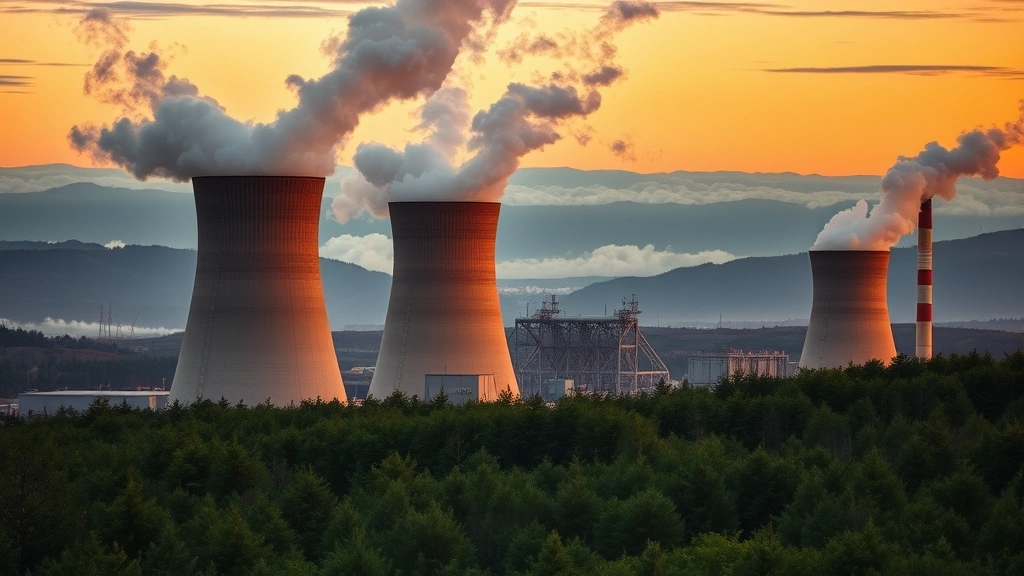
Nuclear power’s primary environmental advantage lies in its near-zero operational carbon emissions. Once operational, nuclear plants generate electricity without releasing CO₂, making them substantially cleaner than coal, natural gas, or oil-fired power stations. According to the World Nuclear Association, nuclear energy prevents approximately 470 million metric tons of CO₂ emissions annually—equivalent to removing 100 million cars from roads.
However, the complete lifecycle analysis tells a more complex story. Lifecycle assessments (LCAs) conducted by the International Panel on Climate Change indicate nuclear power produces approximately 12 grams of CO₂-equivalent per kilowatt-hour when accounting for construction, fuel processing, decommissioning, and waste management. This remains significantly lower than natural gas (490g CO₂e/kWh) and coal (820g CO₂e/kWh), but comparable to wind energy (11g CO₂e/kWh) and slightly higher than solar (48g CO₂e/kWh across its lifecycle).
The construction phase represents a substantial carbon investment. Building a modern nuclear reactor requires enormous quantities of concrete and steel, consuming significant energy. A typical 1,000 MW reactor takes 10-15 years to construct, during which emissions accumulate. Only after 5-8 years of operation does a nuclear plant offset its construction-phase carbon debt. This timeframe matters considerably when addressing urgent climate timelines—renewable installations achieve carbon neutrality within 1-3 years.
Uranium Mining and Extraction
The uranium supply chain creates substantial environmental consequences often overlooked in promotional discussions. Global uranium mining produces approximately 65,000 metric tons annually, primarily from Kazakhstan, Canada, and Australia. Mining operations require extensive water consumption, habitat disruption, and generate radioactive tailings.
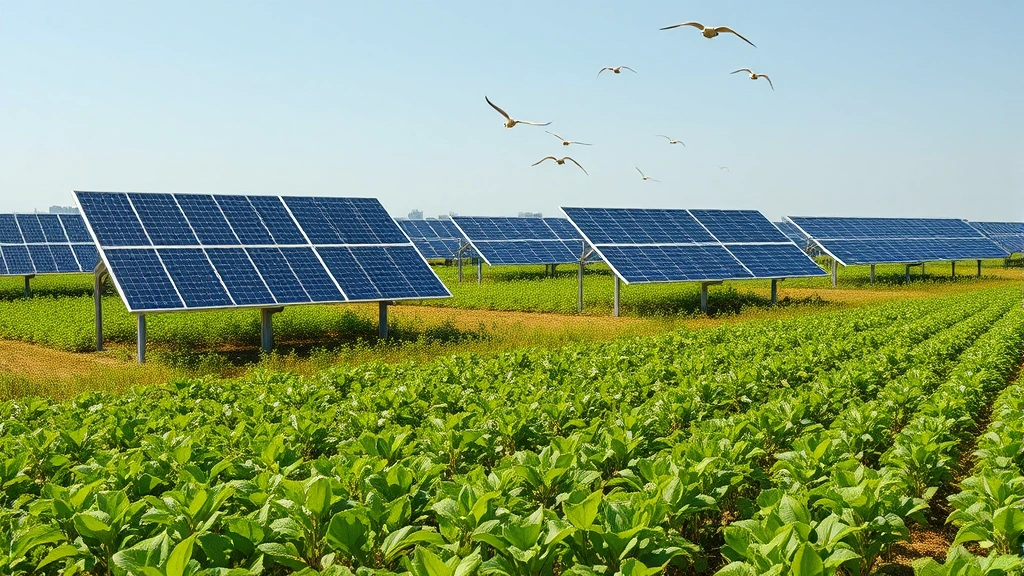
Uranium extraction involves either open-pit mining or in-situ leaching (ISL). Open-pit operations create massive environmental disruptions—the Olympic Dam mine in Australia spans 6.7 square kilometers and generates 500,000 tons of waste rock daily. In-situ leaching injects sulfuric acid solutions underground to dissolve uranium ore, creating contamination risks to groundwater aquifers. The United Nations Environment Programme documented persistent groundwater contamination at legacy uranium mining sites in the American Southwest, affecting Indigenous communities decades after mining ceased.
Kazakhstan dominates global uranium production (40% of supply), but mining operations there occur in environmentally sensitive regions near the Aral Sea—already devastated by Soviet-era environmental catastrophes. The expansion of nuclear energy would intensify pressure on these fragile ecosystems. Additionally, uranium mining involves extraction of other radioactive elements, including radium and thorium, which contaminate tailings storage facilities. Improper management creates long-term radiation hazards persisting for thousands of years.
Radioactive Waste Management
Perhaps nuclear energy’s most problematic environmental aspect involves radioactive waste disposal. A single 1,000 MW reactor generates approximately 27 metric tons of spent fuel annually. This waste remains hazardous for 100,000+ years—a timeframe exceeding human civilization’s entire recorded history. No country has successfully implemented a permanent geological repository for high-level waste, despite decades of research and billions in investment.
Currently, spent fuel accumulates in temporary storage pools and dry casks at reactor sites worldwide. Over 250,000 metric tons of spent fuel exist globally with no permanent disposal solution. This represents an unresolved environmental liability transferred to future generations. The United States abandoned its Yucca Mountain repository project after 30 years and $15 billion investment, leaving no long-term disposal pathway. France, despite generating 70% of electricity from nuclear power, still lacks a permanent disposal solution for its 1,700 metric tons of high-level waste.
Geological repositories face technical uncertainties. Selecting sites requires identifying geologically stable regions with minimal seismic activity, absent groundwater flow, and stable chemical conditions for millennia. Finland’s Onkalo repository, the world’s first permanent deep geological repository, required 20 years of study and cost €3.5 billion for a single country’s waste. Expanding nuclear capacity globally would demand multiple repositories, each requiring similar investments and geological certainty.
Low and intermediate-level waste (95% of radioactive waste by volume) creates additional challenges. This material includes contaminated tools, protective equipment, and reactor components. While less hazardous than spent fuel, it remains radioactive for centuries. Most countries store this waste in concrete bunkers or shallow repositories, creating potential contamination risks if geological stability assumptions prove incorrect.
Thermal Pollution and Ecosystem Effects
Nuclear plants require massive cooling systems, making them water-intensive facilities. A typical reactor consumes 40-60 billion liters of water annually for cooling—equivalent to supplying 500,000-750,000 people. This creates thermal pollution affecting aquatic ecosystems when heated water returns to rivers or coastal zones.
Thermal discharge raises water temperatures by 5-15°C, disrupting fish migration patterns, reducing oxygen availability, and altering reproductive cycles of temperature-sensitive species. European studies document fish population declines in rivers hosting nuclear plants. During heat waves, plants must reduce output or shut down entirely when cooling water temperatures approach regulatory limits—a vulnerability becoming more severe as climate change increases ambient temperatures.
Cooling water intake systems entrap fish and aquatic larvae, causing massive mortality. The United States Environmental Protection Agency estimates power plants kill 3.4 billion fish and over 1 trillion aquatic organisms annually through intake systems and thermal discharge. Nuclear plants contribute significantly to this mortality, particularly in coastal regions where plants concentrate.
The relationship between nuclear expansion and negative environmental effects extends beyond thermal pollution. Plant construction requires clearing land, constructing transmission infrastructure, and establishing exclusion zones. While individual plants occupy relatively small footprints (typically 1-2 square kilometers), expanding nuclear capacity would fragment ecosystems and increase cumulative habitat loss.
Safety Risks and Catastrophic Potential
While modern nuclear plants incorporate advanced safety systems, the possibility of catastrophic accidents creates environmental risks fundamentally different from other energy sources. Chernobyl (1986) and Fukushima (2011) demonstrate that despite engineering safeguards, severe accidents remain possible.
The Chernobyl exclusion zone spans 2,600 square kilometers of permanently contaminated land. Radiation levels remain sufficiently high to prevent permanent human habitation. The accident released 5,200 petabecquerels of radioactivity, contaminating soil across Eastern Europe. Even today, certain regions in Belarus and Ukraine exhibit elevated radioactive cesium-137 concentrations. The environmental recovery timeline extends beyond human lifespans.
Fukushima’s triple meltdown contaminated 1,600 square kilometers with radioactive material, displacing 160,000 residents. Cleanup costs exceeded $200 billion, with decommissioning continuing decades later. Radioactive water accumulation at the site requires ongoing treatment. Marine contamination persists despite water treatment systems. These accidents illustrate that catastrophic environmental consequences, while statistically rare, carry immense magnitude when they occur.
Climate change increases nuclear accident risks. Rising sea levels threaten coastal plants. Extreme weather events compromise cooling systems. The IPCC warns that nuclear infrastructure faces increasing climate-related vulnerabilities, potentially creating correlated failures across multiple facilities during extreme events.
Complete Lifecycle Environmental Cost
Comprehensive lifecycle assessments reveal nuclear power’s environmental impact extends across multiple dimensions. The World Bank’s analysis of energy sources identifies several categories where nuclear creates environmental costs:
- Water consumption: Nuclear plants consume 2-3 times more water per unit energy than renewable alternatives
- Land disruption: Including mining operations, uranium milling, and waste storage, nuclear requires 7-8 times more land disturbance per unit energy than solar
- Biodiversity impact: Mining operations and thermal pollution reduce species diversity in affected regions
- Chemical pollution: Uranium processing releases heavy metals (arsenic, selenium) alongside radioactive contamination
- Waste toxicity: Radioactive waste represents the only energy source generating waste hazardous for geological timescales
When examining how environmental impacts accumulate across these categories, nuclear power demonstrates how humans affect the environment through energy infrastructure. The complete environmental footprint encompasses mining impacts, construction emissions, operational water consumption, thermal pollution, and waste management obligations extending millennia into the future.
Ecological economists argue that properly accounting for long-term waste management costs reveals nuclear’s true environmental expense. If future waste management failures impose costs on descendant populations, current nuclear expansion essentially externalizes environmental liabilities. This raises ethical questions about intergenerational equity—whether present generations should impose radioactive waste burdens on countless future generations.
Comparison with Renewable Energy
Direct comparison between nuclear and renewable energy sources reveals critical advantages favoring renewables from an environmental perspective. Solar photovoltaic installations achieve carbon neutrality within 2-3 years, while nuclear requires 5-8 years. Wind turbines generate power within 6-9 months of installation. This temporal advantage matters substantially when addressing urgent climate timelines—delaying carbon reductions to construct multi-decade nuclear projects may prove counterproductive.
Renewable installations create minimal permanent environmental damage. Decommissioning solar panels and wind turbines produces recyclable materials without radioactive hazards. Land beneath solar panels and around wind turbines remains productive for agriculture or ecosystem restoration. Conversely, nuclear exclusion zones require permanent abandonment.
The scalability advantage favors renewables. Solar capacity additions exceed nuclear by 50-fold annually. A solar farm achieves full operational capacity within months; a nuclear plant requires 10-15 years. For addressing climate urgency, renewable deployment velocity substantially outpaces nuclear’s construction timelines.
However, nuclear advocates correctly note that renewables create their own environmental costs. Solar panel manufacturing requires energy-intensive silicon processing and uses toxic chemicals. Wind turbines require substantial materials—a 3 MW turbine contains 150 tons of steel and 250 tons of concrete. Battery storage for grid stability involves mining lithium, cobalt, and nickel with significant environmental impacts. The comparison remains complex rather than definitively favoring one source.
Ecological Economics Perspective
Ecological economics—which integrates environmental science with economic theory—offers critical insights into nuclear power’s sustainability. This field recognizes that infinite economic growth on a finite planet proves impossible, requiring economies to operate within ecological boundaries.
From this perspective, nuclear expansion presents problematic tradeoffs. The World Bank’s energy analysis identifies that resources devoted to nuclear construction could generate substantially more renewable capacity. A dollar invested in nuclear yields electricity after 15+ years; the same dollar invested in solar yields electricity within 1-2 years. For achieving carbon reduction targets, capital efficiency favors renewables.
Additionally, ecological economics emphasizes ecosystem service valuation. Nuclear plants disrupt ecosystem services—water purification, species habitat, nutrient cycling—that provide economic value exceeding standard cost-benefit analyses. Mining operations destroy ecosystem services worth billions in lost agricultural productivity and water resources.
The precautionary principle—central to ecological economics—suggests that when activities raise threats to the environment, precautionary measures should be taken even before full scientific certainty. Applied to nuclear waste, this principle suggests that generating hazardous waste persisting 100,000+ years without proven permanent disposal solutions violates precautionary logic.
Research from ecological economics journals demonstrates that accounting for true environmental costs—including negative effects humans have on the environment—substantially increases nuclear’s effective cost. When environmental externalities receive proper valuation, renewables demonstrate superior economic performance alongside environmental benefits.
However, ecological economists also recognize nuclear’s role in specific contexts. In regions with limited renewable resources, geography unsuitable for solar/wind, or existing nuclear infrastructure, continued operation of safe plants may prove preferable to fossil fuel replacement. The question becomes not whether nuclear is absolutely eco-friendly, but whether specific nuclear projects represent optimal environmental choices compared to available alternatives.
FAQ
Does nuclear power produce zero emissions?
Nuclear plants produce zero emissions during operation, but lifecycle assessments including construction, uranium mining, fuel processing, and decommissioning reveal approximately 12g CO₂-equivalent per kilowatt-hour—substantially lower than fossil fuels but comparable to renewables.
What happens to nuclear waste?
Currently, no permanent disposal solution exists. Over 250,000 metric tons of spent fuel accumulates globally in temporary storage. Finland’s Onkalo represents the world’s first permanent deep geological repository, but it serves only one country’s waste. Most waste remains in concrete bunkers or pools indefinitely.
How does nuclear compare to solar and wind?
Nuclear achieves carbon neutrality after 5-8 years; solar and wind within 1-3 years. Renewables deploy 50+ times faster than nuclear. However, nuclear provides baseload power without storage, while renewables require battery infrastructure. The comparison depends on specific regional contexts.
Is nuclear energy expanding or declining?
Nuclear capacity remains relatively stagnant globally. Renewable capacity additions exceed nuclear by 50-fold annually. However, some countries (France, China) continue nuclear expansion while others (Germany, Belgium) phase out plants.
Can nuclear solve climate change?
Nuclear cannot independently solve climate change. Even tripling nuclear capacity wouldn’t eliminate fossil fuels without massive renewable and efficiency investments. Climate solutions require diversified energy portfolios including renewables, efficiency, electrification, and potentially some nuclear in appropriate contexts.
What are the worst nuclear accidents?
Chernobyl (1986) and Fukushima (2011) represent major accidents, though Three Mile Island (1979) and Kyshtym (1957) also caused significant environmental damage. Modern plants incorporate enhanced safety systems, but catastrophic accident potential persists.
Is uranium mining environmentally destructive?
Yes. Uranium mining generates radioactive tailings, contaminates groundwater, disrupts ecosystems, and creates long-term environmental liabilities. Kazakhstan’s uranium mining, supplying 40% of global demand, occurs in environmentally sensitive regions already stressed by previous ecological disasters.


