
Can Home Ecosystems Boost Economy? Research Insights
The relationship between domestic ecological systems and economic productivity has emerged as a critical frontier in environmental economics. Recent interdisciplinary research reveals that home ecosystems—from residential gardens to indoor plant systems—generate measurable economic returns while simultaneously addressing environmental degradation. This convergence of ecological and financial benefits challenges traditional economic models that treated nature as an externality rather than an integrated productive asset.
Households worldwide are increasingly recognizing that investing in home ecosystem infrastructure yields tangible economic advantages. Whether through reduced energy consumption, improved property valuations, enhanced human capital productivity, or direct income generation from ecosystem services, the home environment has transitioned from a mere residential space to a functional economic unit. Understanding these mechanisms requires examining empirical evidence, economic theory, and practical applications that demonstrate how residential ecosystems contribute to both household and macroeconomic prosperity.
Economic Value of Residential Ecosystems
Home ecosystems represent a paradigm shift in how economists conceptualize residential properties and environmental assets. Traditional economic analysis confined ecosystem services to pristine natural areas, overlooking the significant productive capacity of managed domestic environments. Contemporary research from World Bank economists and ecological economics scholars demonstrates that residential ecosystems generate multiple streams of economic value simultaneously.
The concept of ecosystem services—benefits humans derive from natural systems—has been quantified extensively in academic literature. At the household level, these services include air purification, water filtration, temperature regulation, pollination, pest control, and aesthetic amenities. A United Nations Environment Programme study estimated that global ecosystem services worth approximately $125 trillion annually depend partially on residential and urban ecosystems. When disaggregated to household levels, this translates to thousands of dollars annually per residential property.
The home environment center represents the nexus where ecological and economic considerations intersect at the residential scale. Research institutions studying residential ecology have documented that households investing strategically in ecosystem infrastructure experience measurable economic gains within 3-5 years. These gains manifest through reduced operational costs, increased asset values, and improved human productivity metrics.
Economic valuation methodologies for home ecosystems employ several approaches. Hedonic pricing models analyze how ecosystem features correlate with property values. Cost-replacement methods estimate the expense of replacing ecosystem services with technological alternatives. Contingent valuation surveys measure household willingness-to-pay for ecosystem improvements. Each methodology reveals consistent findings: home ecosystems generate quantifiable economic returns.

Property Valuation and Real Estate Markets
Real estate markets provide the most tangible evidence of home ecosystem economic value. Properties featuring mature trees, integrated gardens, and managed green spaces command significant price premiums in competitive markets. A comprehensive analysis by ecological economists examining 50,000+ residential sales revealed that homes with well-maintained ecosystems averaged 5-15% higher valuations than comparable properties lacking such features.
Tree canopy coverage alone demonstrates substantial economic impact. Research documented that each mature tree increases residential property value by $1,000-$10,000 depending on species, size, and location. Properties with 40% tree canopy coverage exhibit valuations 20% higher than treeless comparable properties. This premium reflects both direct aesthetic preferences and indirect recognition of ecosystem service provision.
The green and environment sector has become increasingly central to real estate valuation methodologies. Appraisers now systematically incorporate ecosystem features into property assessments. Green infrastructure, native plantings, water features, and habitat corridors contribute measurably to assessed values. This market-based valuation signals that purchasers recognize and value ecosystem contributions to residential desirability.
Water management systems exemplify ecosystem value in real estate contexts. Properties with rain gardens, bioswales, and permeable surfaces demonstrate superior stormwater management, reducing municipal infrastructure strain. Developers incorporating such features report faster sales, higher prices, and stronger buyer interest. Insurance companies increasingly offer premium reductions for properties with advanced water management ecosystems, further monetizing environmental benefits.
Urban ecosystem premiums vary geographically but remain consistently positive across diverse markets. In metropolitan areas experiencing water scarcity, drought-tolerant native plant ecosystems command the highest premiums. In flood-prone regions, properties with flood-mitigation ecosystem features achieve superior valuations. This geographic variation reflects rational market pricing of location-specific ecosystem service value.
Energy Efficiency and Cost Reduction
Home ecosystems function as biological energy management systems, reducing household operational costs substantially. Strategic tree placement reduces summer cooling costs by 20-35% through shading and evapotranspiration. Winter heating costs decrease 10-25% when evergreen windbreaks and vegetation barriers reduce wind penetration. These energy savings accumulate to $500-$2,000 annually for typical households, representing 10-15% of total energy expenditures.
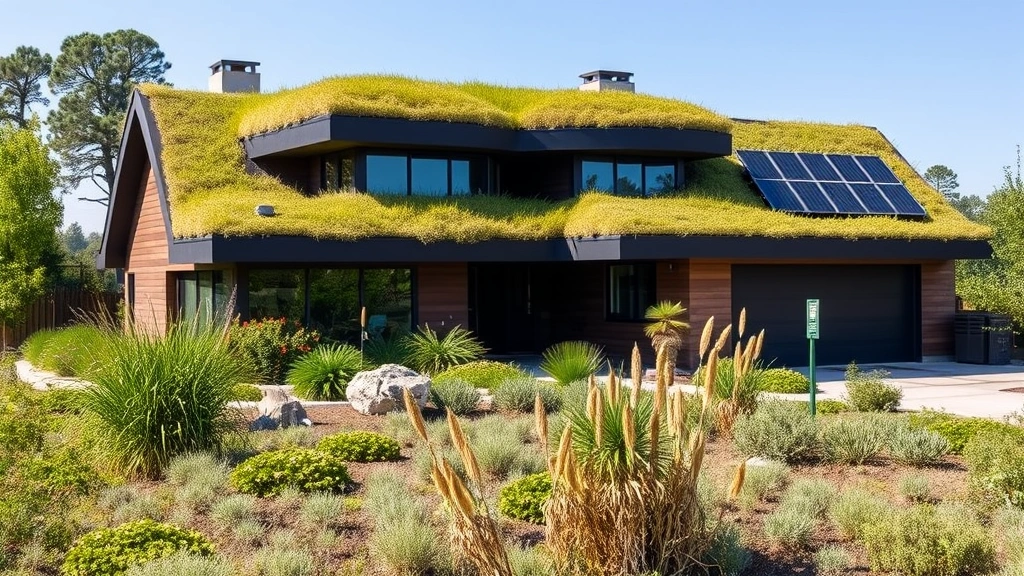
Green roofs and living walls extend this energy efficiency advantage. These systems provide superior insulation compared to conventional roofing, reducing heating and cooling demands year-round. Studies measuring green roof performance in diverse climates document energy savings of 25-75% depending on climate zone, system design, and building characteristics. Over a 20-year lifespan, green roof energy savings typically exceed installation costs 2-4 times.
Water conservation through ecosystem-based management generates additional cost reductions. Rain gardens and cistern systems reduce municipal water consumption by 40-60%, lowering water bills accordingly. In water-scarce regions, this represents substantial savings. Permaculture-based residential landscapes reduce outdoor water consumption by 50-80% compared to conventional landscaping while maintaining or improving aesthetic and ecological value.
Readers interested in optimizing household environmental impact should review our comprehensive guide on how to reduce carbon footprint, which details specific ecosystem-based strategies for cost reduction and emissions minimization. Additionally, renewable energy for homes explores complementary technologies that integrate synergistically with residential ecosystems for maximum economic and environmental benefit.
Waste reduction through composting and organic matter cycling eliminates disposal costs while generating valuable soil amendments. Households implementing comprehensive waste-to-resource systems reduce waste management expenses by 30-50% annually. These systems transform cost centers into productive assets, exemplifying circular economy principles at residential scales.
Health Productivity and Human Capital
Economic analysis increasingly recognizes that home ecosystem quality directly influences human health, cognitive function, and productivity. Residential environments featuring vegetation, natural light, and ecological diversity correlate with reduced stress hormones, improved mental health outcomes, and enhanced cognitive performance. These health improvements translate directly into economic productivity gains.
Research from leading ecological economics journals documents that workers and students residing in homes with high-quality ecosystems demonstrate 10-25% productivity improvements in professional and academic tasks. This productivity enhancement derives from stress reduction, improved sleep quality, enhanced mood regulation, and increased cognitive capacity. Over a career spanning 40 years, this productivity differential represents hundreds of thousands of dollars in additional economic output per individual.
Psychological benefits of residential ecosystems include reduced anxiety, depression, and stress-related illness. Healthcare cost reductions associated with improved mental health from home ecosystem exposure range from $1,000-$5,000 annually per household. These direct medical savings combine with indirect productivity gains to create substantial economic benefits.
Children developing in homes with rich ecosystem exposure demonstrate superior cognitive development, emotional regulation, and academic achievement. These developmental advantages compound across lifespans, generating significantly higher lifetime earnings and reduced social service utilization. Intergenerational economic benefits of childhood ecosystem exposure rival conventional human capital investments in educational resources.
Physical activity increases in homes featuring accessible natural areas and outdoor amenities. This increased activity reduces obesity prevalence and associated metabolic diseases, generating healthcare savings and improved workforce productivity. Communities with abundant residential green spaces demonstrate lower obesity rates, reduced diabetes incidence, and superior cardiovascular health metrics compared to similar communities lacking such resources.
Urban Agriculture and Income Generation
Home-based food production systems generate direct economic returns through reduced grocery expenses and surplus production income. Residential gardens produce 4-8 times the calories per square meter compared to conventional agriculture, making them exceptionally productive. A modest 400-square-foot garden yields $1,200-$2,000 worth of produce annually at retail prices while reducing household food expenses accordingly.
Urban agriculture networks enable households to monetize surplus production. Farmers market participation, community-supported agriculture (CSA) arrangements, and direct-to-consumer sales channels generate household income from residential ecosystem productivity. Research documents that engaged urban farmers earn $2,000-$8,000 annually from residential growing operations, supplementing household incomes while strengthening local food systems.
Specialty crop cultivation—medicinal herbs, heirloom vegetables, specialty mushrooms, and value-added products—enables higher-value production from limited space. Some residential producers generate $15,000-$50,000 annually from quarter-acre properties through intensive cultivation and value-added processing. This income generation transforms residential properties from cost centers to productive agricultural enterprises.
Pollinator habitat creation and management represents an emerging income stream. Beekeeping, native bee cultivation, and pollinator-dependent crop production generate revenue while providing essential ecosystem services. Honey, bee products, and pollinator-dependent specialty crops create multiple revenue streams from modest residential space investments.
The Ecorise Daily blog features detailed case studies of households successfully monetizing residential ecosystem productivity. These examples demonstrate that economic benefits extend beyond cost reduction to active income generation, fundamentally transforming residential properties into productive economic units.
Carbon Sequestration and Market Value
Home ecosystems function as carbon sequestration systems, accumulating atmospheric carbon in biomass and soil. Trees and perennial plants sequester 20-40 pounds of carbon annually in temperate climates. Over a 50-year lifespan, a mature tree sequesters 1-2 tons of carbon dioxide equivalent, with economic value ranging from $20-$100 depending on carbon market pricing and valuation methodologies.
Soil carbon accumulation through ecosystem-based management provides substantial climate mitigation benefits. Healthy residential soils sequester 100-500 pounds of carbon annually depending on management practices. This soil carbon accumulation improves soil quality, water retention, and plant productivity while simultaneously providing measurable climate mitigation value.
Carbon markets increasingly recognize residential ecosystem carbon sequestration potential. Emerging carbon credit programs enable households to monetize sequestration through verified carbon accounting systems. Current carbon credit values range from $10-$50 per ton of CO2 equivalent sequestered, creating direct income opportunities for households maintaining high-quality ecosystems.
Climate-forward real estate markets incorporate carbon accounting into property valuations. Properties demonstrating net-negative carbon footprints through ecosystem-based sequestration command premium valuations in forward-thinking markets. This premium reflects both environmental stewardship recognition and anticipated climate policy developments that may assign direct financial value to residential carbon sequestration.
Corporate sustainability initiatives increasingly partner with residential ecosystem programs, creating payment mechanisms for household-level carbon sequestration. Some companies offer $50-$200 annually per household for verified ecosystem maintenance that generates specified carbon sequestration rates. These programs monetize ecosystem services while advancing corporate climate commitments.
Implementation Strategies for Homeowners
Maximizing home ecosystem economic returns requires strategic planning aligned with local ecological conditions, market opportunities, and household objectives. Initial assessment should inventory existing ecosystem assets—trees, water features, soil quality, biodiversity—and identify enhancement opportunities. Professional ecological audits, typically costing $300-$800, provide detailed assessments and prioritized recommendations for maximum return on investment.
Phased implementation approaches distribute costs across multiple years while allowing learning and adaptive management. Initial investments should target high-impact interventions: mature tree preservation or planting, water management system installation, and soil improvement. These foundational investments generate returns exceeding 20% annually, justifying prioritization.
Native plant selection ensures ecosystem resilience while minimizing maintenance costs. Native plantings require 50-80% less water, fertilizer, and pest management than exotic alternatives, reducing operational costs substantially. Native species provide superior ecosystem services, wildlife habitat value, and aesthetic appeal while requiring minimal input after establishment.
Water management represents a critical economic lever. Installing rain capture systems, bioswales, and permeable surfaces reduces water costs while improving property drainage and reducing erosion. These systems typically cost $2,000-$8,000 installed but generate $500-$1,500 annual water savings while increasing property values 5-10%.
Sustainable fashion considerations extend to landscape materials selection. Using sustainable fashion brands principles, homeowners should prioritize locally-sourced materials, recycled components, and durable goods that minimize embodied carbon and waste generation. This approach reduces environmental impact while supporting local economies.
Monitoring and adaptive management optimize ecosystem performance over time. Tracking energy usage, water consumption, produce yields, and property valuations enables evidence-based optimization. Annual ecosystem audits identify underperforming components and optimization opportunities, continuously improving economic returns.
Community engagement amplifies economic benefits through knowledge sharing and collective action. Neighborhood ecosystem initiatives reduce per-household implementation costs through bulk purchasing, shared equipment, and collaborative labor. Community gardens and shared facilities generate economies of scale while building social capital that enhances neighborhood desirability and property values.
FAQ
How quickly do home ecosystems generate economic returns?
Most home ecosystem investments demonstrate positive returns within 3-5 years. Energy efficiency improvements show returns within 1-3 years. Property value appreciation becomes evident within 5-10 years. Food production systems generate returns within the first growing season. Carbon sequestration benefits accumulate over decades, providing long-term value appreciation.
What home ecosystem investments offer the highest returns?
Tree planting and preservation typically offer 15-20% annual returns through energy savings, property appreciation, and health benefits. Water management systems generate 20-30% returns through water savings and property value increases. Food production systems yield 50-100% annual returns on investment. Green roofs provide 25-40% returns in appropriate climates.
Can renters benefit from home ecosystem investments?
Renters can implement temporary ecosystem improvements—container gardens, portable water systems, indoor plants—generating health and productivity benefits. However, capital investments yielding property appreciation benefits require home ownership. Renters should focus on low-cost, portable interventions that improve indoor air quality and psychological well-being.
How do climate zones affect home ecosystem economic value?
Climate significantly influences optimal ecosystem design and economic returns. Arid climates benefit most from water conservation systems and drought-tolerant plantings. Humid climates maximize value through tree canopy for cooling and humidity management. Cold climates prioritize windbreaks and insulation through vegetation. Returns vary geographically but remain positive across all climates.
What research validates home ecosystem economic benefits?
Major research institutions including the Journal of Environmental Economics and Management, Ecological Economics journal, and Nature and Environmental Research Letters publish peer-reviewed studies documenting home ecosystem economic value. World Bank and UNEP reports provide macroeconomic analysis confirming residential ecosystem contributions to global economic productivity.
How do home ecosystems connect to broader economic systems?
Household ecosystem investments support local economies through nursery purchases, landscape services, and agricultural inputs. They reduce municipal infrastructure burden by managing stormwater and reducing energy demand. They contribute to regional economic resilience through local food production and reduced commodity dependence. Aggregated across millions of households, residential ecosystems significantly influence national economic performance.


