Human Impact on Ecosystems: A Study of Environmental Interaction and Ecological Consequences
The relationship between humanity and Earth’s ecosystems represents one of the most critical challenges of our era. As global populations exceed 8 billion and industrial activities intensify, the scale of human-environment interaction has fundamentally altered planetary systems. From atmospheric composition to soil degradation, from biodiversity loss to water cycle disruption, evidence demonstrates that human activities now rival geological forces in reshaping our world. This comprehensive study examines the multifaceted dimensions of human impact on ecosystems, exploring mechanisms of degradation, measurable consequences, and pathways toward sustainable coexistence.
Understanding human impact requires interdisciplinary analysis combining ecology, economics, and systems thinking. The Anthropocene epoch—characterized by human dominance over natural systems—reflects centuries of industrial expansion, agricultural intensification, and resource extraction. Yet recent decades have accelerated these impacts exponentially. Climate change, habitat destruction, pollution, and species extinction now occur at rates unprecedented in human history. This examination synthesizes scientific evidence with economic frameworks to illuminate how human choices reshape ecosystems and what interventions might restore balance.
Mechanisms of Ecosystem Degradation
Human impact on ecosystems operates through interconnected mechanisms that fundamentally alter natural processes. Primary drivers include habitat conversion, resource overexploitation, pollution introduction, climate modification, and invasive species dispersal. These mechanisms rarely function in isolation; instead, they interact synergistically, amplifying degradation beyond what individual factors would produce.
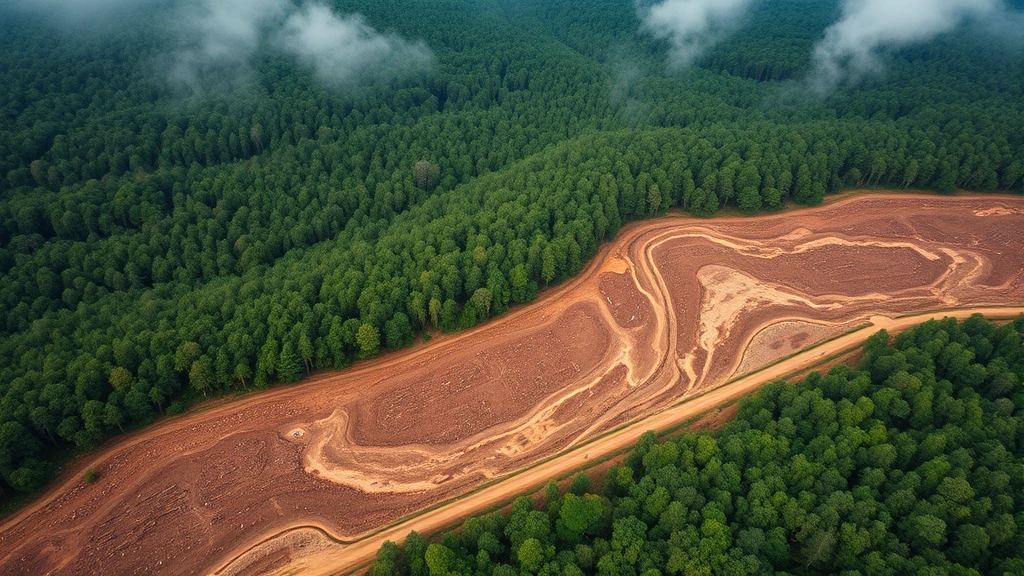
Habitat conversion represents the most immediate mechanism of ecosystem damage. When forests become agricultural land, wetlands transform into urban development, or grasslands convert to industrial sites, entire ecological communities lose their physical foundation. The World Bank estimates that approximately 10 million hectares of forest disappear annually, primarily through agricultural expansion and urban sprawl. This conversion is rarely reversible on human timescales, as soil structure, nutrient cycling, and species composition require decades or centuries to re-establish.
Resource overexploitation pushes many populations beyond sustainable harvest levels. Commercial fishing removes approximately 90 million tons of marine biomass yearly, disrupting ocean food webs and depleting fish stocks at rates exceeding reproductive capacity. Similarly, freshwater extraction for irrigation and municipal use depletes aquifers faster than precipitation can replenish them. In regions like the Indus Valley and Middle East, groundwater depletion threatens agricultural viability and human water security simultaneously.
Pollution introduction—ranging from plastic microparticles to persistent organic pollutants—introduces toxic substances into ecosystems where they accumulate through food chains. Heavy metals concentrate in predator tissues; pharmaceutical residues alter fish reproduction; microplastics penetrate every ecosystem from deep ocean trenches to Arctic ice. These contaminants persist for decades or centuries, creating long-term ecological debt that future generations inherit.
Climate Change and Atmospheric Systems
Anthropogenic climate change represents perhaps the most pervasive human impact on ecosystems, fundamentally altering temperature regimes, precipitation patterns, and atmospheric composition. Since industrialization, atmospheric carbon dioxide has increased from 280 ppm to over 420 ppm, driving global temperature increases of approximately 1.1°C. This seemingly modest temperature rise masks dramatic regional variations and ecosystem-specific impacts that cascade through interconnected systems.
Rising temperatures alter species phenology—the timing of biological events like migration, flowering, and reproduction. Many species evolved migration timing based on photoperiod (day length), which remains constant while food availability shifts earlier with warming. This phenological mismatch creates trophic cascades where predators arrive after prey populations peak, reducing feeding success and reproductive output. Bird populations in Europe have declined by up to 2.7 billion individuals partly through such mismatches.
Changing precipitation patterns create differential ecosystem impacts. While some regions experience increased rainfall, others face intensified droughts. The Amazon rainforest approaches a tipping point where reduced precipitation combined with increased temperatures could trigger transition toward savanna-like conditions, releasing massive carbon stores and eliminating one of Earth’s primary carbon sinks. Simultaneously, extreme precipitation events increase flood frequency, soil erosion, and nutrient runoff that degrades aquatic ecosystems.
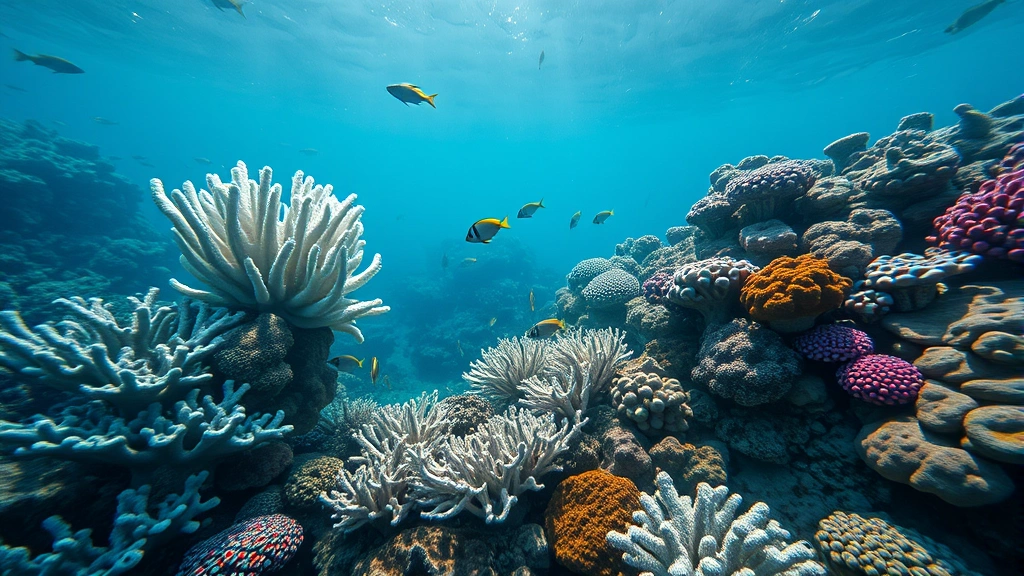
Ocean acidification—a direct consequence of elevated atmospheric CO₂—reduces carbonate ion availability, making shell formation energetically expensive for mollusks, corals, and crustaceans. Pteropods, critical food sources for many fish species, show shell dissolution in waters already experiencing acidification. These changes propagate through marine food webs, ultimately affecting human food security for millions dependent on seafood protein.
To understand your own contribution to climate systems, explore how to reduce carbon footprint through actionable lifestyle modifications that compound across communities.
Biodiversity Loss and Species Extinction
Current extinction rates exceed background rates by 100-1,000 fold, indicating we’re experiencing the sixth mass extinction in Earth’s history—the first caused by a single species. Biodiversity loss operates through habitat destruction (the primary driver), climate change, pollution, overexploitation, and invasive species. Unlike previous extinction events caused by volcanic eruptions or asteroid impacts, this extinction unfolds gradually enough that human societies struggle to perceive its urgency.
Amphibians face particularly acute threats, with over 7,000 species (approximately 30% of all amphibians) threatened with extinction. Chytrid fungus, a pathogen facilitated by climate change and transported through global trade, has driven numerous species to extinction. Amphibians’ permeable skin and dual aquatic-terrestrial lifecycles make them sensitive to environmental contaminants and habitat fragmentation. Their loss cascades through ecosystems; tadpoles control algae in aquatic systems while adult amphibians consume vast quantities of insects, regulating pest populations.
Pollinator decline threatens food security for billions. Honeybees, wild bees, butterflies, and other pollinators face pesticide exposure, habitat loss, and disease. Approximately 75% of global crops depend at least partially on animal pollination. Declines in pollinator populations directly reduce crop yields for fruits, nuts, and seeds, with economic costs estimated at hundreds of billions annually. Wild pollinator loss cannot be fully compensated through managed honeybees alone, as wild pollinators provide ecological services and genetic diversity.
Large predator extinction fundamentally alters ecosystem structure through trophic cascades. When wolves were eliminated from Yellowstone, elk populations exploded, overgrazing riparian vegetation and destabilizing stream ecosystems. Reintroduction of wolves restored vegetation, stabilized elk populations, and allowed stream recovery—demonstrating how apex predators regulate entire ecosystems. Yet globally, large predators have declined by 95% over the past century, leaving ecosystems fundamentally destabilized.
Marine megafauna decline—including whales, sharks, and large fish—removes ecological engineers that structure ocean ecosystems. Whale populations recovered through international protection, yet face renewed threats from climate change and pollution. Their decline removes nutrient cycling services; whale feces fertilize phytoplankton that form the ocean’s primary productivity base, supporting all marine life.
Water Systems and Pollution
Freshwater and marine water systems face unprecedented degradation through pollution, overextraction, and ecosystem modification. Approximately 80% of global wastewater returns to ecosystems untreated, carrying pathogens, nutrients, and industrial chemicals. This pollution creates dead zones in coastal areas where nutrient runoff triggers algal blooms that subsequently decompose, consuming all dissolved oxygen.
Agricultural runoff represents the dominant water pollutant globally. Synthetic fertilizers and pesticides leach into groundwater and surface waters, contaminating drinking water supplies for hundreds of millions. The Mississippi River discharges so much nutrient-laden water into the Gulf of Mexico that a dead zone the size of New Jersey develops annually. Similar dead zones now exist in the Baltic Sea, Black Sea, and numerous coastal regions where agricultural intensification concentrates.
Plastic pollution has emerged as a defining environmental crisis. Approximately 8 million metric tons of plastic enter oceans annually, fragmenting into microplastics that infiltrate food webs. Marine organisms ingest plastic particles, reducing feeding efficiency and introducing toxic additives into tissues. Microplastics now appear in human blood, lungs, and placentas, representing an emerging human health threat alongside ecosystem damage.
Industrial chemical pollution persists for decades through bioaccumulation. Persistent organic pollutants like DDT and PCBs were banned decades ago yet continue accumulating in wildlife tissues, particularly in apex predators and polar regions where cold temperatures slow degradation. These chemicals disrupt reproduction, immune function, and development across multiple generations.
Groundwater depletion threatens long-term water security. The Ogallala Aquifer, which supplies irrigation for the American Great Plains, has been depleted by approximately 30% since intensive extraction began in the 1950s. At current extraction rates, significant portions will be depleted within decades, forcing agricultural abandonment across productive regions. Similar situations exist in South Asia, the Middle East, and northern China, where aquifer depletion coincides with population growth and increasing water demands.
Agricultural Impact and Soil Degradation
Modern agriculture represents humanity’s most extensive ecosystem transformation, occupying approximately 40% of ice-free land. While agriculture provides essential nutrition for 8 billion people, current practices degrade the soil and biological systems upon which long-term food security depends. Soil degradation, biodiversity loss within agricultural systems, and chemical pollution interconnect to threaten agricultural sustainability.
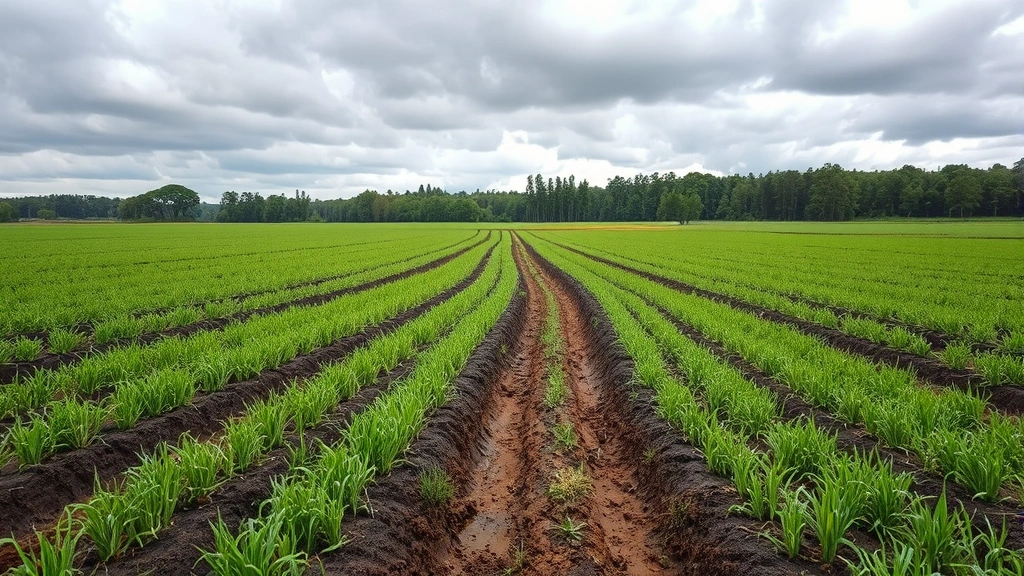
Soil erosion removes fertile topsoil at rates exceeding natural formation by orders of magnitude. Approximately 24 billion tons of fertile soil are lost annually through erosion, reducing agricultural productivity and degrading downstream water quality through sediment loading. Conventional tillage practices expose soil to wind and water erosion; monoculture agriculture eliminates plant diversity that would stabilize soil structure; and irrigation causes salinization that renders soil unproductive.
Synthetic pesticide and fertilizer use, while increasing short-term yields, degrades long-term soil health. Pesticides eliminate beneficial soil organisms including earthworms, mycorrhizal fungi, and nitrogen-fixing bacteria that provide essential ecosystem services. Excessive nitrogen fertilizer application saturates soil beyond plant uptake capacity, leaching into groundwater and surface waters. This creates environmental costs—water pollution, dead zones, biodiversity loss—that economic analyses often externalize, underestimating true agricultural costs.
Monoculture agriculture eliminates agricultural biodiversity, reducing ecosystem services and increasing pest vulnerability. Traditional polyculture systems maintained dozens of crop varieties and integrated livestock, creating resilience through diversity. Modern monocultures depend on external inputs—pesticides, fertilizers, irrigation—to maintain productivity, increasing vulnerability to pest outbreaks, disease, and climate variability. When crop failures occur, food security collapses for populations dependent on single commodities.
Explore sustainable food choices through our guide on benefits of eating organic food, which examines how dietary decisions influence agricultural ecosystems and personal health simultaneously.
Economic Dimensions of Environmental Damage
Economic analysis of human environmental impact reveals that conventional GDP measurements systematically undervalue ecosystem services and externalize environmental costs. When forests are converted to agricultural land, GDP increases through timber sales and crop production, yet ecosystem services worth trillions annually—carbon storage, water purification, biodiversity habitat, climate regulation—disappear from economic accounts. This accounting error creates perverse incentives that economically reward ecosystem destruction.
The United Nations Environment Programme estimates that ecosystem service degradation costs the global economy approximately 5-14% of GDP annually. Pollination service loss alone costs $15 billion yearly; water purification disruption costs hundreds of billions; and climate regulation loss accelerates damages across all economic sectors. These costs are borne disproportionately by poor populations lacking resources to adapt or purchase ecosystem services.
Ecological economics frameworks recognize that Earth’s ecosystems operate within biophysical limits that economic growth cannot exceed indefinitely. Unlike conventional economics that treats natural capital as infinitely substitutable with human capital, ecological economics acknowledges that some ecosystem services—like photosynthesis that forms the base of all food webs—cannot be replaced through technology or economic substitution. This recognition suggests that perpetual economic growth on a finite planet is physically impossible.
Natural capital accounting attempts to incorporate environmental costs into economic measurements. By valuing ecosystem services—carbon storage, pollination, water filtration, nutrient cycling—economists can calculate true economic costs of environmental degradation. When these costs are incorporated, many industrial activities prove economically unprofitable; they only appear profitable because they externalize environmental expenses onto society and future generations.
Carbon pricing mechanisms attempt to internalize climate costs into economic decisions. By assigning monetary value to carbon emissions, carbon taxes or cap-and-trade systems create economic incentives for emissions reduction. However, current carbon prices (averaging $5-10 per ton) remain far below the social cost of carbon (estimated at $50-200 per ton), meaning pricing mechanisms fail to adequately reflect true environmental costs.
Pathways to Sustainable Interaction
Reversing human environmental impact requires systemic transformation across energy, agriculture, transportation, and consumption systems. Individual actions matter but prove insufficient without structural changes in economic incentives, technological infrastructure, and policy frameworks. Pathways forward operate across multiple scales simultaneously: individual behavioral change, community-level initiatives, national policy, and international agreements.
Renewable energy transition represents the foundational shift required to address climate change and reduce ecosystem disruption from fossil fuel extraction. Solar and wind energy have become cost-competitive with fossil fuels while eliminating air pollution, mining damage, and climate emissions. However, energy transition requires massive infrastructure investment, grid modernization, and storage technology development. Explore renewable energy for homes to understand household-level transition possibilities and systemic implications.
Agricultural transformation toward regenerative practices restores soil health while maintaining productivity. Cover cropping, reduced tillage, integrated crop-livestock systems, and agroforestry rebuild soil organic matter, enhance water retention, sequester carbon, and restore agricultural biodiversity. Research demonstrates that regenerative agriculture can maintain yields while reducing input costs and environmental impact. Scaling these practices requires policy support, farmer education, and market development for regeneratively-produced foods.
Protected area expansion and ecosystem restoration create refugia where natural processes can recover. Currently, approximately 17% of terrestrial ecosystems and 8% of marine ecosystems receive protection. Expanding protected areas to 30% by 2030, a target endorsed by numerous conservation organizations, would require protecting additional ecosystems while ensuring that existing protected areas receive adequate funding and management. Restoration of degraded ecosystems—reforestation, wetland reconstruction, grassland recovery—accelerates recovery and restores ecosystem services.
Circular economy models eliminate waste through product design that enables reuse, repair, and recycling. Linear “take-make-dispose” models inherently generate pollution and resource depletion; circular models maintain material value in use cycles, dramatically reducing extraction pressure. Implementing circular economies requires redesigning manufacturing processes, developing reverse logistics systems, and creating markets for secondary materials. Explore sustainable fashion brands as an example of circular economy application in consumer sectors.
Policy and governance frameworks must align economic incentives with ecological limits. This requires carbon pricing that reflects true climate costs, elimination of fossil fuel subsidies (estimated at $7 trillion annually when externalities are included), protection of ecosystem services, and enforcement of environmental regulations. International cooperation through frameworks like the Paris Climate Agreement and Convention on Biological Diversity provides mechanisms for coordinated action, though enforcement remains weak and commitments often fall short of requirements.
Individual action gains meaning through participation in collective transformation. Environment volunteer opportunities enable direct contribution to ecosystem restoration, community education, and advocacy for systemic change. Simultaneously, personal consumption choices—dietary shifts toward plant-based foods, reduced material consumption, renewable energy adoption—reduce individual environmental footprints while signaling market demand for sustainable alternatives.
Explore comprehensive environmental perspectives through Ecorise Daily’s blog, which examines diverse dimensions of human-environment interaction and sustainability pathways. Additionally, research from Ecological Economics journal provides peer-reviewed analysis of environmental economics and policy effectiveness. The World Resources Institute synthesizes research on environmental challenges and solutions across global contexts.
FAQ
What is the primary human impact on ecosystems?
Habitat destruction represents the leading driver of ecosystem degradation, followed by climate change, pollution, overexploitation, and invasive species. These mechanisms interact synergistically, amplifying total impact beyond individual factors. Agricultural expansion, urban development, and resource extraction convert natural ecosystems to human-dominated systems at unprecedented rates, eliminating species habitat and disrupting ecological processes.
How does human activity cause climate change?
Fossil fuel combustion for energy, industrial processes, and agriculture releases carbon dioxide and methane that accumulate in the atmosphere, trapping heat and warming the planet. Deforestation eliminates carbon sinks while releasing stored carbon. These greenhouse gas emissions have increased atmospheric CO₂ from 280 ppm to over 420 ppm since industrialization, driving approximately 1.1°C of global warming with cascading ecosystem impacts.
What ecosystem services do humans depend on?
Humans depend on countless ecosystem services including pollination (crop production), water purification (drinking water and irrigation), carbon sequestration (climate regulation), nutrient cycling (soil fertility), pest control (agricultural productivity), and climate regulation (temperature stability). Economic valuation estimates these services worth trillions annually; their loss directly threatens human food security, water access, and economic stability.
Can ecosystems recover from human damage?
Many ecosystems possess resilience and can recover if degradation pressures decrease sufficiently. Reforestation restores forest ecosystems over decades; wetland restoration rebuilds water purification capacity; and species reintroduction restores ecosystem function. However, recovery timescales extend far beyond human lifespans for many ecosystems; some damage like species extinction proves irreversible. Prevention through sustainable practices proves far more effective than restoration after damage occurs.
What individual actions reduce environmental impact?
Individual actions include reducing energy consumption, transitioning to renewable energy sources, adopting plant-based diets, reducing material consumption and waste, supporting sustainable businesses, and participating in environmental restoration. While individual actions prove insufficient for addressing systemic environmental challenges, they reduce personal environmental footprints, demonstrate market demand for sustainable alternatives, and build political momentum for policy change.


