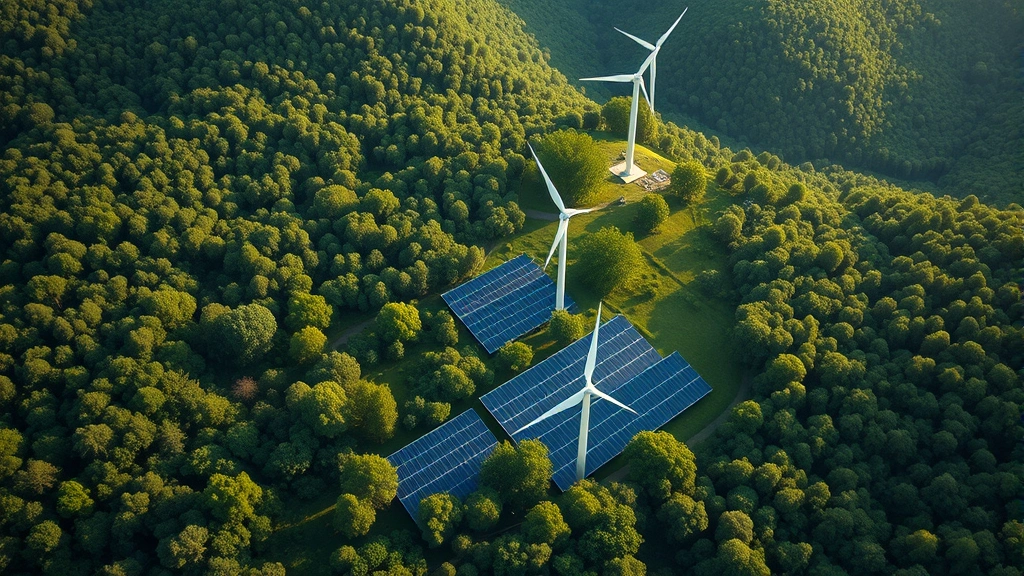
Can Green Economy Save Ecosystems? Economist Insight
The intersection of economic policy and ecological preservation has become one of the most pressing questions of our time. As biodiversity loss accelerates and ecosystem services deteriorate globally, economists and environmental scientists increasingly ask whether a green economy framework can genuinely reverse ecological damage or merely serve as a market-based palliative. This question demands rigorous analysis of how economic incentives, policy instruments, and market mechanisms either align with or contradict fundamental ecological principles.
The green economy concept emerged as a response to the perceived failure of traditional economic models to account for natural capital depletion. Rather than treating environmental protection as an external cost, green economy proponents argue that sustainable development integrates ecological health directly into economic valuation and decision-making. However, critics contend that rebranding extractive systems with “green” rhetoric masks continued environmental degradation. Understanding this debate requires examining the theoretical foundations, empirical evidence, and practical implementation challenges of green economy initiatives.

Green Economy Fundamentals: Theory and Practice
The green economy represents a paradigm shift in how we conceptualize the relationship between human economic activity and natural systems. Defined by the United Nations Environment Programme (UNEP) as an economy that results in improved human well-being and social equity while significantly reducing environmental risks and ecological scarcities, the green economy operates on several core principles. First, it acknowledges that ecosystem services—pollination, water purification, climate regulation, nutrient cycling—constitute genuine economic assets. Second, it proposes that market mechanisms can efficiently allocate these resources when properly designed. Third, it suggests that technological innovation and policy reform can decouple economic growth from resource consumption.
However, the practical implementation reveals significant complexities. A green economy requires substantial upfront investment in renewable energy infrastructure, sustainable agriculture, ecosystem restoration, and circular economy systems. Renewable energy transition exemplifies both the promise and challenges—while solar and wind technologies continue declining in cost, their deployment still requires policy support, grid modernization, and industrial transformation that disrupts established economic interests. The transition also demands addressing distributional equity, as communities dependent on extractive industries face economic displacement without adequate support mechanisms.
Economist perspectives on green economy viability span a spectrum. Ecological economists, drawing from systems thinking, emphasize biophysical limits to growth and argue that true sustainability requires absolute decoupling of economic activity from material throughput. Mainstream environmental economists tend toward optimism about technological solutions and market-based instruments, believing that properly priced environmental goods can maintain growth trajectories while reducing ecological impact. Heterodox economists raise concerns about whether market mechanisms adequately capture systemic risks and long-term ecological thresholds.

Natural Capital Accounting and Ecosystem Valuation
Central to green economy implementation is the challenge of valuing natural capital—quantifying ecosystem services in monetary terms so they enter economic calculations. Environmental science definitions distinguish between different ecosystem services: provisioning services (food, water, materials), regulating services (climate, flood control, pollination), supporting services (nutrient cycling, soil formation), and cultural services (recreation, spiritual value). Translating these into economic metrics presents methodological and philosophical challenges.
The World Bank has invested significantly in natural capital accounting, developing frameworks for countries to measure wealth beyond GDP. World Bank natural capital initiatives demonstrate that when ecosystem services are properly valued, many countries appear far less wealthy than traditional GDP metrics suggest. Indonesia, for example, experiences annual natural capital losses equivalent to 7-10% of GDP through forest depletion and environmental degradation. These accounting approaches provide powerful evidence that ecological destruction represents genuine economic loss, not merely environmental concern.
Yet valuation methods remain contested. How do we price the existence value of biodiversity? What monetary equivalent captures the spiritual significance of sacred ecosystems? Should we use market prices (what people actually pay), replacement costs (what it would cost to replace services artificially), or contingent valuation (what people hypothetically would pay)? Different methodologies yield vastly different results. A pristine rainforest might be valued at $500 per hectare annually using direct use values (timber, medicines) but $5,000-$10,000 when including carbon sequestration, flood prevention, and biodiversity preservation services.
The gap between theoretical valuation and actual policy implementation remains substantial. Even when natural capital accounting shows massive ecosystem losses, political and economic systems often discount these losses heavily when compared to immediate extraction profits. This reflects what ecological economists call the “tragedy of the commons”—when ecosystem services lack clear ownership and market prices, individual actors face incentives to overexploit shared resources regardless of aggregate social costs.
Market-Based Conservation Mechanisms
Green economy approaches increasingly rely on market instruments to internalize environmental costs: carbon pricing, payment for ecosystem services (PES), biodiversity offsetting, and tradable permits. These mechanisms theoretically harness market efficiency to achieve conservation goals while allowing economic activity to continue. Carbon pricing exemplifies both the potential and limitations of this approach.
Carbon markets—whether cap-and-trade systems or carbon taxes—aim to price greenhouse gas emissions, making polluters bear environmental costs. The European Union Emissions Trading System, the world’s largest carbon market, has generated revenue for renewable energy investment and created incentives for efficiency improvements. Yet carbon pricing alone has proven insufficient to drive the decarbonization rates required for climate stabilization. Prices remain too low in many systems to fundamentally alter investment decisions, and political pressure frequently weakens price signals. Additionally, carbon pricing doesn’t address non-climate environmental damages: habitat destruction, pollution, biodiversity loss.
Payment for ecosystem services represents another market mechanism gaining prominence. Landowners receive compensation for maintaining forests, wetlands, or grasslands rather than converting them to agriculture or development. Costa Rica pioneered PES programs in the 1990s, paying farmers to preserve forest cover. The approach has expanded globally, with mixed results. Successful PES programs require accurate baseline establishment (would the land have been conserved anyway?), adequate payment levels (must exceed alternative land use profits), and effective monitoring. Many PES initiatives fail because payments prove insufficient relative to extraction alternatives, or because additionality—whether the payment actually changed behavior—cannot be verified.
Biodiversity offsetting permits developers to damage ecosystems in one location while funding conservation or restoration elsewhere. This market mechanism enables development while theoretically maintaining net biodiversity. However, critical limitations emerge: wetlands destroyed in one location cannot be fully replaced by wetlands created elsewhere due to unique species assemblages and ecological histories. Offsetting can create perverse incentives, where developers profit from destroying high-value ecosystems and purchasing cheaper offsets. Without strict additionality requirements and ecological equivalence standards, offsetting becomes ecological arbitrage rather than genuine conservation.
Reducing carbon footprint at individual and corporate levels demonstrates both the promise and limitations of market-based approaches. While corporate sustainability commitments have driven some genuine emissions reductions, many rely on offsetting mechanisms of questionable integrity. Carbon credits from forestry projects frequently overstate sequestration rates or lack permanence, as forests remain vulnerable to fires, disease, or future clearing.
The Rebound Effect and Economic Paradoxes
A fundamental challenge to green economy assumptions involves the rebound effect—the phenomenon where efficiency improvements lead to increased consumption, partially or fully offsetting environmental benefits. When vehicles become more fuel-efficient, lower per-mile costs may encourage additional driving. When renewable energy becomes cheaper, increased electricity consumption may offset carbon reductions. Historical data consistently shows that energy efficiency improvements reduce energy intensity but frequently increase total energy consumption.
This paradox reveals a critical tension within green economy frameworks. If economic growth continues while environmental impact decreases, the rebound effect must be overcome through absolute decoupling—where material and energy throughput decline while economic output increases. Empirical evidence for sustainable absolute decoupling remains limited. While some developed nations have reduced material consumption while maintaining GDP growth, this often reflects outsourcing of production to developing nations, meaning global material throughput actually increased.
Ecological economists argue that rebound effects expose fundamental limitations of market-based approaches to sustainability. If consumers and firms respond to lower environmental prices by increasing consumption, pricing mechanisms alone cannot achieve ecological targets. This suggests that complementary policies—regulatory standards, consumption limits, cultural shifts toward sufficiency—must accompany market instruments. However, implementing such policies faces political resistance from growth-dependent economic interests.
Case Studies in Green Economy Implementation
Examining specific green economy initiatives reveals how theoretical frameworks translate (or fail to translate) into ecological outcomes. Costa Rica provides a frequently cited success narrative: the country reversed deforestation through PES programs, renewable energy expansion, and conservation investment. Forest cover increased from 25% in 1987 to over 50% by 2020. However, scrutiny reveals complications. Much reforestation involved planting monoculture tree plantations rather than restoring biodiverse native forests. Agricultural intensification and pesticide use increased on remaining farmland. International commodity prices and agricultural subsidies, not purely green economy mechanisms, drove land use changes.
Germany’s Energiewende (energy transition) demonstrates renewable energy scaling but also reveals green economy challenges. Germany expanded renewables to 46% of electricity by 2022, creating green industries and employment. Yet total energy consumption remains high, and emissions reductions fell short of targets due to coal power plant retention and industrial energy demand. The transition required massive subsidies—estimated at €200 billion through 2025—raising questions about economic efficiency and distributional impacts on lower-income households facing higher energy costs.
China’s green economy investments represent the world’s largest environmental spending, with massive renewable energy capacity, electric vehicle production, and ecosystem restoration programs. Yet these occur alongside continued coal expansion, industrial pollution, and resource extraction. This reflects how green economy initiatives can coexist with, rather than replace, extractive economic models. China’s approach suggests that green economy elements integrate into growth-focused development rather than fundamentally transforming economic relationships with nature.
Institutional Barriers and Policy Gaps
Beyond technical and economic challenges, institutional structures significantly constrain green economy effectiveness. Ecorise Daily blog coverage frequently documents how policy implementation gaps undermine conservation goals. International trade agreements often prioritize market access over environmental standards, creating races to the bottom where countries compete by weakening environmental regulations. Intellectual property regimes restrict technology transfer to developing nations, slowing renewable energy and sustainable agriculture adoption globally.
National accounting systems and corporate financial reporting remain fundamentally misaligned with ecological reality. Companies can report record profits while depleting natural capital, because ecosystem damage doesn’t appear in balance sheets. GDP growth statistics reward resource extraction and environmental damage remediation equally, creating perverse incentives. Reforming these systems would require coordinating changes across nations and industries with entrenched interests in current arrangements.
Corruption and weak governance particularly undermine green economy initiatives in developing nations. Conservation programs face embezzlement and misappropriation. Environmental engineers working on restoration projects encounter insufficient funding and political commitment. Carbon offset programs suffer from fraudulent project certification. Without institutional capacity and political will to enforce environmental regulations, market mechanisms prove ineffective.
The temporal mismatch between market incentives and ecological timescales creates additional friction. Markets discount future benefits heavily, while ecological recovery requires multi-generational timescales. Wetland restoration may take 20-50 years to recover full ecosystem function, but market actors need returns within 5-10 year horizons. This fundamental temporal misalignment suggests that markets alone cannot adequately protect ecosystems requiring long-term protection.
Integrating Environmental Science with Economic Policy
Moving beyond current green economy limitations requires deeper integration of ecological principles into economic theory and policy. UNEP economic assessments increasingly recognize that ecosystem tipping points and non-linear ecological responses demand precautionary approaches that markets alone cannot provide. When ecosystems face collapse thresholds—coral reef bleaching, rainforest dieback, permafrost thaw—waiting for market signals to respond proves ecologically catastrophic.
Integrative approaches combine market mechanisms with regulatory standards, ecological restoration, and democratic governance. Carbon pricing works best when combined with renewable energy mandates and fossil fuel phase-out timelines. Biodiversity offsetting requires strict no-net-loss standards and ecological equivalence requirements. Payment for ecosystem services succeeds when protecting high-value ecosystems at risk of conversion, combined with alternative livelihood support for displaced communities.
Ecological economics journals publish growing research demonstrating that sustainability requires addressing distribution and justice alongside efficiency. Green economy frameworks that concentrate benefits among wealthy nations and individuals while imposing costs on vulnerable populations lack legitimacy and stability. True green economy transformation demands equitable transitions, indigenous rights protection, and democratic participation in environmental decision-making.
Technological innovation remains important but insufficient. While renewable energy, sustainable agriculture, and circular economy technologies continue improving, deployment rates lag far behind what climate and biodiversity targets require. This reflects not technological constraints but political-economic structures that prioritize short-term profits over long-term ecological stability. Transforming these structures requires policy courage that extends beyond green economy mechanisms to fundamental questions about economic purpose and ecological limits.
The Path Forward: Realistic Assessment
Can a green economy save ecosystems? The honest answer: partially, if implemented rigorously and complemented by non-market approaches. Green economy mechanisms—natural capital accounting, carbon pricing, payment for ecosystem services—provide useful tools for internationalizing environmental costs and creating conservation incentives. When properly designed and enforced, they can slow ecological degradation and redirect capital toward sustainable activities.
However, green economy frameworks cannot substitute for fundamental economic transformation. Markets cannot adequately price existence value, future generations’ interests, or systemic collapse risks. Rebound effects and growth imperatives mean that efficiency improvements alone prove insufficient. Distributional inequities embedded in current economic systems persist in green economy variants unless explicitly addressed through policy.
The most promising path forward integrates green economy instruments within broader frameworks that include: regulatory standards and ecological limits; democratic governance ensuring community participation; indigenous rights and knowledge protection; just transition support for affected workers and communities; and cultural shifts toward sufficiency rather than endless consumption. Sustainable fashion and other consumer-focused initiatives demonstrate how market segments can shift toward lower-impact alternatives, but scaling these requires systemic changes in production, distribution, and consumption patterns.
Ultimately, saving ecosystems requires recognizing that economies exist within ecological systems, not vice versa. Green economy approaches represent necessary but insufficient steps toward genuine sustainability. The question becomes not whether green economy mechanisms alone can save ecosystems—they cannot—but how these tools integrate into comprehensive transformations that genuinely align economic activity with ecological boundaries and social justice.
FAQ
What is the core difference between green economy and sustainable development?
Sustainable development represents a broader framework encompassing environmental protection, social equity, and economic development. Green economy focuses specifically on how economic structures and market mechanisms can integrate environmental protection. Green economy is a subset of sustainable development approaches.
Do carbon markets actually reduce emissions?
Carbon markets reduce emissions compared to business-as-usual scenarios, but typically achieve less reduction than direct regulation or carbon taxes would at equivalent prices. Effectiveness depends on price levels, regulatory design, and complementary policies. Markets alone have proven insufficient to meet climate targets.
Can biodiversity offsetting truly compensate for ecosystem destruction?
Biodiversity offsetting rarely achieves genuine net-zero loss due to ecological uniqueness and lag times in ecosystem recovery. It works best for common, resilient ecosystems and becomes problematic when applied to rare, irreplaceable habitats. Strict additionality and ecological equivalence standards are essential.
How do developing nations view green economy initiatives?
Perspectives vary widely. Some nations embrace green economy tools as pathways to sustainable development and green industries. Others view green economy requirements as constraining development opportunities and representing wealthy nation hypocrisy—demanding conservation in poor countries while having industrialized through resource extraction.
What role does technology play in green economy success?
Technology enables green economy implementation through renewable energy, efficient production, and sustainable agriculture innovations. However, technology alone proves insufficient without policy support, behavioral change, and systemic economic transformation. The rebound effect often limits technological benefits.


