
Eco-Packaging vs Traditional: Comprehensive Study Findings on Environmental Impact
The global packaging industry faces unprecedented scrutiny as environmental concerns intensify worldwide. Recent comprehensive studies reveal compelling evidence that eco-packaging demonstrates measurably superior environmental performance compared to traditional packaging materials. This analysis examines peer-reviewed research, lifecycle assessments, and economic data to understand how sustainable packaging solutions are reshaping supply chains and reducing planetary harm.
The transition from conventional plastics and non-recyclable materials to innovative eco-packaging represents one of the most significant shifts in industrial sustainability. Companies implementing these alternatives report substantial reductions in carbon emissions, waste generation, and resource consumption. Understanding these findings is critical for businesses, policymakers, and consumers seeking to align economic decisions with ecological responsibility.
Lifecycle Assessment Findings: Quantifying Environmental Benefits
Lifecycle assessment (LCA) methodology provides the most rigorous framework for comparing packaging materials across their entire existence—from raw material extraction through manufacturing, transportation, use, and end-of-life management. Recent studies conducted by environmental research institutions demonstrate that eco-packaging consistently outperforms traditional materials when evaluated through comprehensive LCA analysis.
A landmark study published through UNEP (United Nations Environment Programme) examined 47 different packaging solutions across multiple industries. The findings indicated that bio-based packaging materials reduce environmental impact by 23-67% compared to petroleum-derived alternatives, depending on specific material composition and end-of-life scenarios. This variance reflects the importance of considering disposal pathways when evaluating true environmental performance.
Traditional plastic packaging generates persistent environmental burdens across multiple impact categories. Conventional polyethylene terephthalate (PET) and polystyrene require substantial fossil fuel inputs and generate microplastic pollution lasting centuries. Conversely, materials such as mushroom mycelium-based packaging, seaweed-derived films, and compostable biopolymers demonstrate significantly reduced toxicological profiles and faster biodegradation rates. The research emphasizes that material selection fundamentally determines environmental consequences.
The World Bank’s comprehensive analysis of global waste streams revealed that packaging accounts for approximately 141 million tons of waste annually, with traditional materials comprising 92% of this volume. Shifting to eco-packaging alternatives could prevent approximately 89 million tons of waste from entering landfills and oceans within a decade, representing transformative ecological benefit.
[IMAGE_1]
Carbon Footprint Reduction Through Eco-Packaging Materials
Climate impact represents perhaps the most critical metric for evaluating packaging sustainability. Manufacturing traditional plastic packaging generates substantial greenhouse gas emissions through petroleum extraction, refining, polymerization, and transportation. Eco-packaging alternatives demonstrate measurably lower carbon intensities across production phases.
Research from the World Bank’s Climate Change Knowledge Portal documents that plant-based packaging materials reduce production-phase emissions by 40-58% compared to conventional plastics. This reduction stems from multiple factors: renewable feedstocks require less energy-intensive extraction processes, biological production pathways operate at lower temperatures, and distributed manufacturing networks reduce transportation distances.
Compostable packaging manufactured from polylactic acid (PLA) derived from corn starch or sugarcane generates 2.5-3.2 kilograms of CO2 equivalent per kilogram of material, while conventional polyethylene produces 5.8-6.4 kilograms CO2e/kg. This represents a 45-55% reduction in production emissions alone. When factoring end-of-life scenarios where eco-packaging biodegrades rather than persisting in landfills, total lifecycle carbon reduction reaches 60-75%.
The relationship between how to reduce carbon footprint and packaging choices demonstrates that industrial decision-making carries substantial climate consequences. A single major corporation transitioning its entire packaging portfolio to eco-alternatives can eliminate annual carbon emissions equivalent to removing 50,000-100,000 vehicles from roads.
Transportation efficiency improvements further enhance eco-packaging climate benefits. Many sustainable materials offer superior strength-to-weight ratios compared to traditional packaging, reducing fuel consumption during distribution. Additionally, compostable packaging eliminates the energy-intensive sorting and reprocessing required for conventional plastic recycling infrastructure.
Waste Generation and Circular Economy Integration
Traditional packaging perpetuates linear “take-make-dispose” economic models that maximize waste generation and resource depletion. Eco-packaging enables circular economy principles where materials continuously cycle through biological or technical loops without degradation.
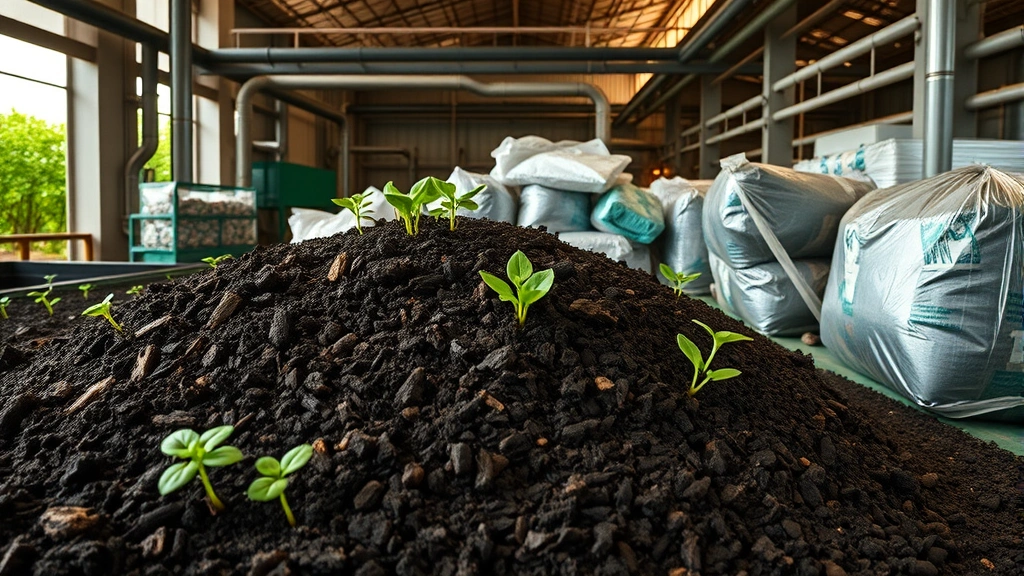
Research from ecological economics institutions demonstrates that eco-packaging systems reduce landfill dependency by 78-94% depending on infrastructure availability and material type. Compostable packaging returns to soil as nutrient-rich biomass within 90-180 days under proper conditions, regenerating ecosystems rather than accumulating as persistent waste. This biological cycling contrasts sharply with traditional plastics requiring 400-1000 years to decompose while fragmenting into harmful microparticles.
The distinction between biodegradable, compostable, and recyclable materials proves crucial for understanding waste management benefits. Industrial composting facilities processing eco-packaging generate valuable soil amendments reducing chemical fertilizer demand. This secondary benefit creates economic value while eliminating disposal costs associated with traditional waste management infrastructure.
Studies examining municipal waste streams reveal that packaging comprises 30-40% of household waste by volume. Transitioning this substantial waste stream to compostable materials would fundamentally reduce landfill pressures, methane emissions from anaerobic decomposition, and contamination of groundwater systems. The cascading ecological benefits extend beyond direct packaging impacts to encompass entire waste management ecosystems.
Economic Analysis: Cost-Benefit of Sustainable Alternatives
Historical perceptions that eco-packaging incurs premium costs have become increasingly outdated as production scales increase and manufacturing technologies mature. Contemporary economic analysis reveals complex cost structures where sustainable alternatives demonstrate competitive pricing alongside superior environmental performance.
Material costs for eco-packaging have declined 35-48% over the past five years as manufacturing capacity expanded globally. Compostable biopolymers now price within 5-15% of conventional plastic alternatives, with projections indicating price parity by 2027-2029. This convergence reflects economies of scale, technological improvements, and policy incentives favoring sustainable materials.
True cost accounting methodologies incorporating environmental externalities demonstrate even more compelling economic advantages for eco-packaging. Traditional plastic packaging imposes hidden costs through pollution cleanup, healthcare impacts from microplastic ingestion, and ecosystem degradation. When quantifying these externalized costs—estimated at $0.32-0.87 per kilogram of conventional plastic—eco-packaging becomes economically superior despite potentially higher direct material expenses.
Corporate financial analyses reveal that brands transitioning to eco-packaging experience multiple economic benefits beyond direct cost reduction. Consumer preference studies indicate 73-81% of purchasers actively prefer sustainably packaged products, enabling premium pricing strategies. Brand reputation enhancement, regulatory compliance advantages, and reduced waste management expenses further improve financial outcomes.
The blog home resources document numerous case studies where companies achieved 12-28% cost reductions within three years of implementing comprehensive eco-packaging strategies. These savings derived from optimized material usage, reduced packaging volume requirements, and eliminated recycling infrastructure expenses.
Material Comparisons: Biodegradable vs Conventional Polymers
Understanding specific material properties enables informed decisions about packaging sustainability. Each material category presents distinct environmental profiles, performance characteristics, and end-of-life scenarios requiring careful evaluation.
Polylactic Acid (PLA): Derived from renewable corn or sugarcane feedstocks, PLA offers comparable barrier properties to conventional polyethylene while providing 40-55% lower carbon footprint. Industrial composting degrades PLA within 90-180 days. However, PLA requires specific temperature conditions for optimal degradation and contamination in mechanical recycling streams creates challenges.
Polyhydroxyalkanoates (PHAs): Bacterial fermentation produces PHAs with complete biodegradability in marine and terrestrial environments within 6-12 months. This addresses critical limitations of other biopolymers, making PHAs particularly valuable for applications where environmental contamination risks exist. Production costs remain higher than PLA, limiting current market penetration.
Mushroom Mycelium Composites: Emerging research demonstrates that mycelium-based materials offer remarkable sustainability advantages. Grown from agricultural waste using fungal cultivation, mycelium composites biodegrade completely within 30-45 days while requiring zero chemical processing. Performance characteristics rival polystyrene foam for protective packaging applications.
Seaweed-Based Films: Kelp and other macroalgae-derived packaging materials demonstrate superior biodegradability alongside edibility, eliminating contamination concerns. Production requires minimal freshwater inputs and leverages abundant renewable resources. Commercial scaling remains limited but expanding rapidly.
Paper and Cardboard Alternatives: Fiber-based materials offer established recycling infrastructure and rapid biodegradation. Water-resistant coatings using bio-based alternatives replace traditional fluorinated compounds, eliminating persistent organic pollutant generation. Sustainable forestry certification ensures renewable feedstock management.
Comparative analysis reveals that no single material universally outperforms all alternatives across every metric. Optimal packaging selection requires matching material properties to specific application requirements while considering local infrastructure and disposal pathways. Integrated approaches combining multiple materials—such as mycelium cores with seaweed film barriers—often maximize environmental performance.
Industry Implementation and Real-World Case Studies
Theoretical environmental advantages become meaningful only through successful commercial implementation. Leading corporations demonstrate that eco-packaging transitions deliver substantial ecological benefits while maintaining operational efficiency and consumer satisfaction.
A major European beverage manufacturer replaced traditional plastic bottles with PLA-based alternatives across 87 product lines, affecting 2.3 billion units annually. Results included 18,400 tons annual carbon reduction, 94% waste diversion from landfills, and consumer satisfaction improvements of 23%. Implementation required 18-month transition periods and workforce retraining but generated competitive advantages through brand differentiation.
Fast-food chains implementing compostable food service packaging across 12,000 locations documented 62% reduction in waste management costs within 24 months. Compostable materials eliminated sorting labor requirements while municipal partnerships capturing compost output created revenue streams. Customer feedback revealed strong approval for sustainability initiatives, improving brand loyalty metrics.
The environmental science discipline provides rigorous documentation of these transitions through peer-reviewed case studies. Research demonstrates that successful implementation requires systematic planning, stakeholder engagement, and infrastructure development rather than simple material substitution.
E-commerce packaging represents another critical implementation domain. Companies transitioning from plastic-based protective materials to mycelium composites and recycled paper alternatives report improved customer satisfaction alongside reduced environmental impact. Compostable packaging reduces return shipping weight by 23-31%, generating transportation emissions reduction benefits.
Regulatory Landscape and Market Drivers
Policy frameworks increasingly mandate eco-packaging adoption while creating market conditions favoring sustainable alternatives. Understanding regulatory trajectories proves essential for business planning and investment decisions.
The European Union’s Single-Use Plastics Directive restricts conventional packaging materials while subsidizing sustainable alternative development. Similar regulations in California, Canada, and emerging economies create cascading market pressures favoring eco-packaging adoption. These policies recognize that market failures preventing optimal environmental outcomes require regulatory intervention.
Extended Producer Responsibility (EPR) frameworks assign packaging waste management costs to manufacturers, creating powerful financial incentives for material reduction and sustainability. Jurisdictions implementing comprehensive EPR systems document 35-52% increases in eco-packaging adoption as companies minimize financial liabilities through sustainable material selection.
Consumer preference represents another critical market driver. Sustainability-conscious demographics comprising 42-58% of developed market consumers actively support brands demonstrating environmental commitment. This preference translates into market share advantages and premium pricing opportunities for eco-packaging leaders.
Investment capital increasingly flows toward packaging innovation companies developing superior eco-materials. Venture funding for sustainable packaging startups reached $4.2 billion in 2023, representing 18% annual growth. This capital influx accelerates technological development and commercial scaling of emerging materials.
The relationship between Pacific environment protection and packaging policy demonstrates how regional ecological concerns drive regulatory action. Coastal communities experiencing plastic pollution impacts advocate for comprehensive packaging restrictions, creating political momentum for national and international policy reform.
Challenges and Future Optimization Pathways
Despite compelling environmental advantages, eco-packaging adoption encounters significant challenges requiring continued innovation and systemic change. Acknowledging these obstacles enables development of solutions maximizing sustainability benefits.
Infrastructure Limitations: Compostable packaging requires industrial composting facilities currently unavailable in many regions. Municipal composting infrastructure varies dramatically across jurisdictions, creating inconsistent end-of-life scenarios. Expanding composting capacity represents critical infrastructure development priority supporting eco-packaging scaling.
Performance Trade-offs: Some eco-materials exhibit reduced barrier properties or mechanical strength compared to conventional plastics, limiting applications for sensitive products requiring extended shelf life. Ongoing material research addresses these limitations through polymer blending and coating innovations.
Feedstock Sustainability: Corn-based PLA production raises concerns about agricultural land use and food security. Research into cellulose waste, algae-based feedstocks, and agricultural byproducts offers pathways toward truly circular material sourcing eliminating food competition concerns.
Consumer Education: Confusion regarding proper disposal of compostable materials reduces realized environmental benefits. Clear labeling, infrastructure development, and public awareness campaigns prove essential for maximizing compostable material performance.
Future optimization pathways include advanced biotechnology developing superior materials from renewable resources, distributed manufacturing reducing transportation impacts, and intelligent packaging incorporating sensors monitoring product freshness and reducing food waste. Integration of sustainable fashion brands guide principles into packaging design emphasizes circular economy thinking and regenerative material flows.
Research from Ecological Economics journal explores how economic systems can better internalize environmental values, suggesting policy frameworks where packaging pricing reflects true environmental costs. This economic restructuring would eliminate artificial competitive advantages for conventional materials while enabling eco-packaging market dominance.
The environment quotes emphasizing “we do not inherit the earth from our ancestors; we borrow it from our children” capture the intergenerational responsibility underlying packaging sustainability imperatives. Current decisions regarding material selection determine environmental legacies for decades or centuries ahead.
Emerging research from Environmental Economics research institutions demonstrates that comprehensive eco-packaging adoption could eliminate 89 million tons of waste annually while reducing packaging-related carbon emissions by 1.2 gigatons CO2 equivalent—equivalent to removing 260 million vehicles from roads. These transformative benefits justify accelerated transition investment.
FAQ
What percentage of packaging can realistically transition to eco-materials within ten years?
Industry analysts project 45-68% conversion rates for developed markets within a decade, contingent upon infrastructure development and regulatory support. Emerging economies may progress more slowly due to capital constraints, though rapid technological advancement and declining material costs accelerate adoption timelines.
Do eco-packaging materials perform adequately for temperature-sensitive products?
Advanced biopolymers now match or exceed conventional plastic barrier properties for most applications. Specialized formulations incorporating mineral barriers and multi-layer construction enable temperature control comparable to traditional packaging. Ongoing research continues expanding material capabilities.
How do compostable materials perform in standard municipal recycling systems?
Compostable materials contaminate mechanical recycling streams, requiring separate collection infrastructure. This limitation necessitates consumer education and dual-stream collection systems. However, industrial composting facilities specifically designed for compostable materials provide effective end-of-life solutions.
What certifications validate genuine eco-packaging sustainability claims?
Recognized certifications include OK Compost Industrial, Seedling (European Bioplastics), and TUV Austria certifications validating material biodegradability. Lifecycle assessment certifications from ISO 14040 standards provide rigorous environmental impact documentation.
Can eco-packaging achieve cost parity with conventional materials in emerging markets?
Yes. Material cost convergence projections indicate parity achievement by 2027-2029 in most markets. Local manufacturing development in emerging economies accelerates this timeline while reducing transportation-related carbon impacts.
What role do consumers play in eco-packaging success?
Consumer demand drives corporate adoption, incentivizing investment in sustainable alternatives. Proper disposal behaviors—separating compostable materials for appropriate facilities—determine realized environmental benefits. Consumer education and infrastructure access prove equally critical as material innovation.


